Institute for Neurodegenerative Diseases, Weill Institute for Neurosciences, University of California, San Francisco, California, United States of America.
Department of Neurology, University of California, San Francisco, California, United States of America.
PLoS Pathog. 2020 Feb 4;16(2):e1008222. doi: 10.1371/journal.ppat.1008222. eCollection 2020 Feb.
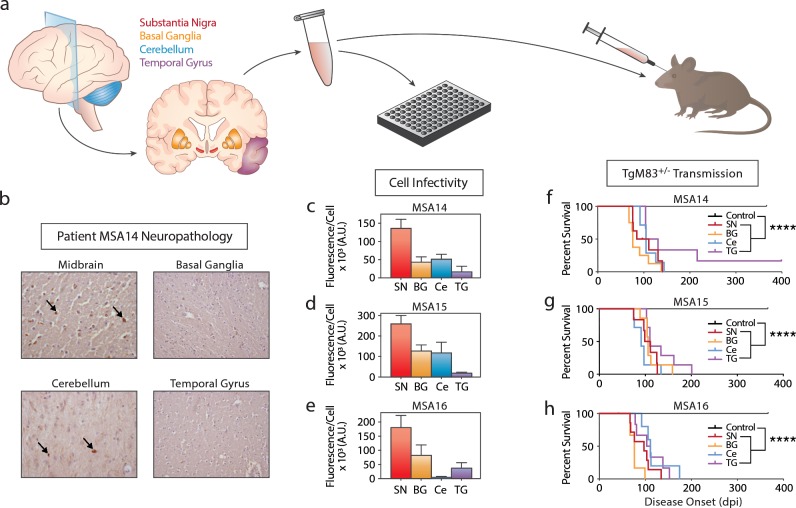
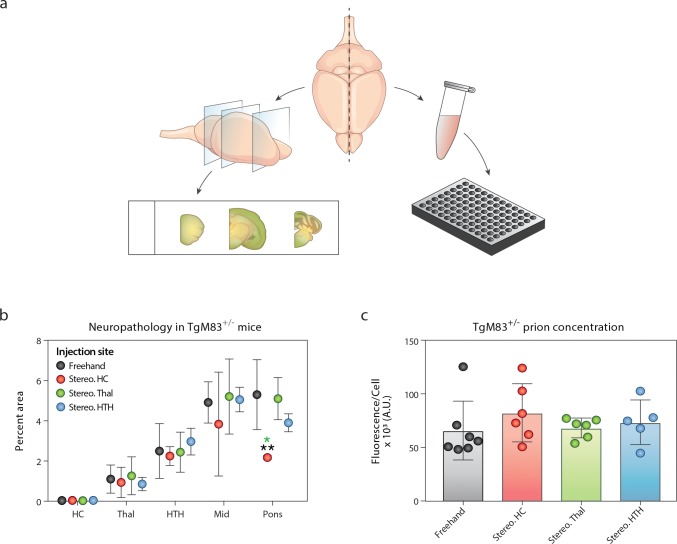
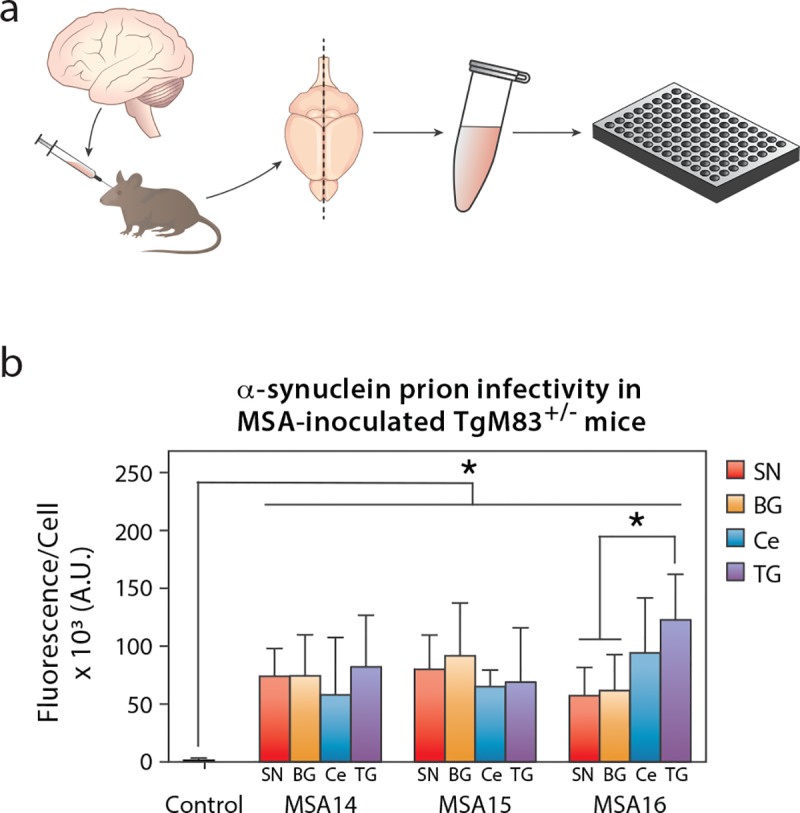
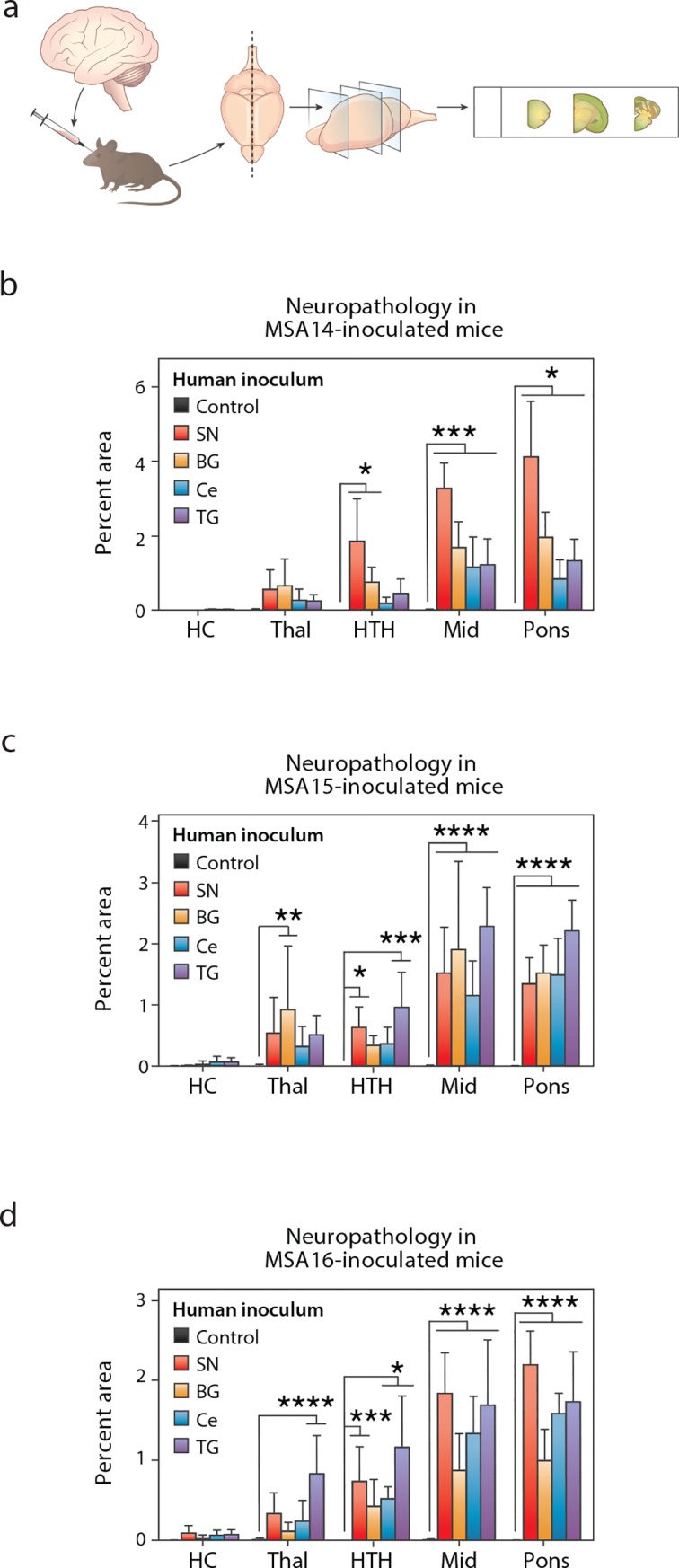
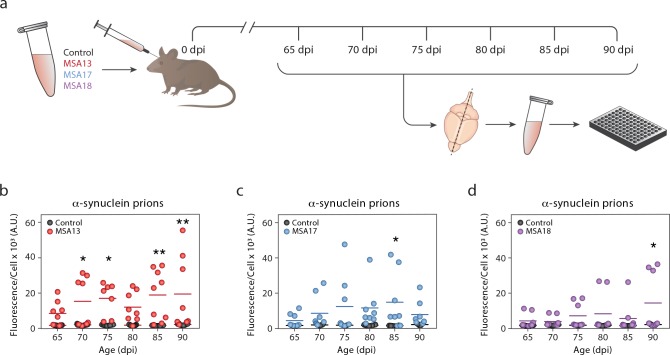
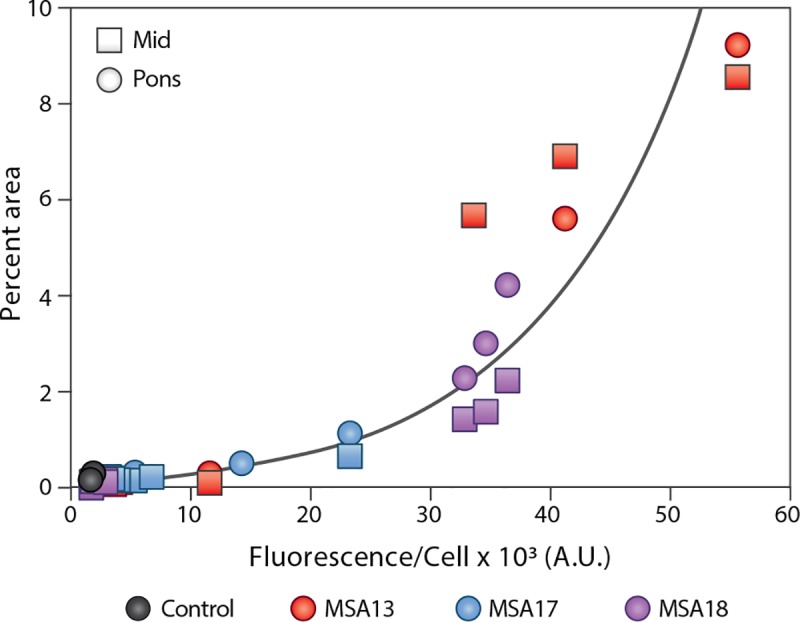
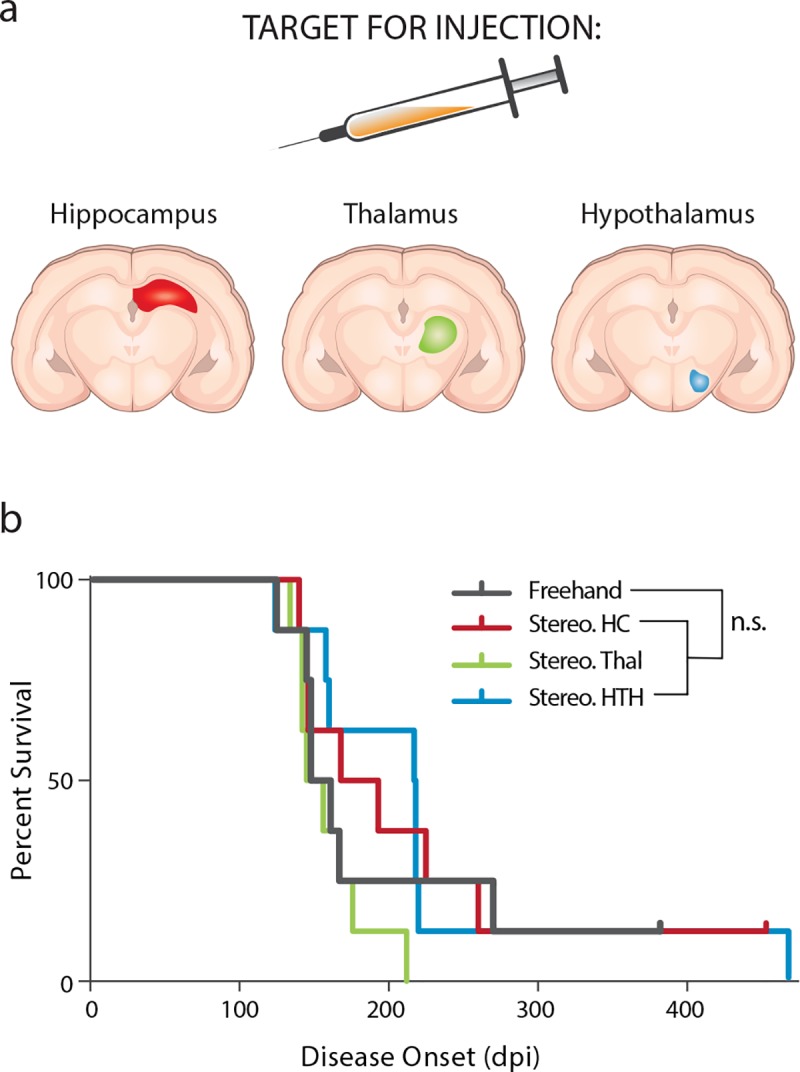
Multiple system atrophy (MSA), a progressive neurodegenerative disease characterized by autonomic dysfunction and motor impairment, is caused by the self-templated misfolding of the protein α-synuclein. With no treatment currently available, we sought to characterize the spread of α-synuclein in a transgenic mouse model of MSA prion propagation to support drug discovery programs for synucleinopathies. Brain homogenates from MSA patient samples or mouse-passaged MSA were inoculated either by standard freehand injection or stereotactically into TgM83+/- mice, which express human α-synuclein with the A53T mutation. Following disease onset, brains from the mice were tested for biologically active α-synuclein prions using a cell-based assay and examined for α-synuclein neuropathology. Inoculation studies using homogenates prepared from brain regions lacking detectable α-synuclein neuropathology transmitted neurological disease to mice. Terminal animals contained similar concentrations of α-synuclein prions; however, a time-course study where mice were terminated every five days through disease progression revealed that the kinetics of α-synuclein prion replication in the mice were variable. Stereotactic inoculation into the thalamus reduced variability in disease onset in the mice, although incubation times were consistent with standard inoculations. Using human samples with and without neuropathological lesions, we observed that α-synuclein prion formation precedes neuropathology in the brain, suggesting that disease in patients is not limited to brain regions containing neuropathological lesions.
多系统萎缩(MSA)是一种进行性神经退行性疾病,其特征是自主功能障碍和运动功能障碍,由蛋白α-突触核蛋白的自我模板错误折叠引起。由于目前尚无治疗方法,我们试图描述 MSA 朊病毒传播的α-突触核蛋白在转基因小鼠模型中的传播,以支持针对突触核蛋白病的药物发现计划。MSA 患者样本或经小鼠传播的 MSA 的脑匀浆通过标准徒手注射或立体定向注射到表达人α-突触核蛋白 A53T 突变的 TgM83+/- 小鼠中。在疾病发作后,使用基于细胞的测定法测试来自小鼠的脑是否存在具有生物活性的α-突触核蛋白朊病毒,并检查α-突触核蛋白神经病理学。使用未检测到α-突触核蛋白神经病理学的脑区制备的匀浆进行的接种研究将神经疾病传播给了小鼠。终末期动物中含有相似浓度的α-突触核蛋白朊病毒;然而,一项对疾病进展过程中每隔五天终止一次的小鼠的时间进程研究表明,小鼠中α-突触核蛋白朊病毒复制的动力学是可变的。立体定向接种到丘脑可减少小鼠疾病发作的变异性,尽管潜伏期与标准接种一致。使用有和没有神经病理学病变的人类样本,我们观察到α-突触核蛋白朊病毒的形成先于大脑中的神经病理学,这表明患者的疾病不仅限于含有神经病理学病变的脑区。