School of Management, Xuzhou University of Technology, Xuzhou, Jiangsu, China.
School of Economics and Management, Jiangsu Vocational Institute of Architectural Technology, Xuzhou, 221116, China.
Sci Rep. 2020 Feb 4;10(1):1826. doi: 10.1038/s41598-020-58814-w.
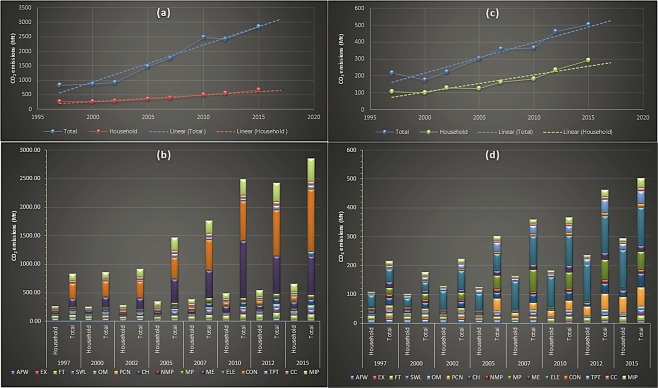
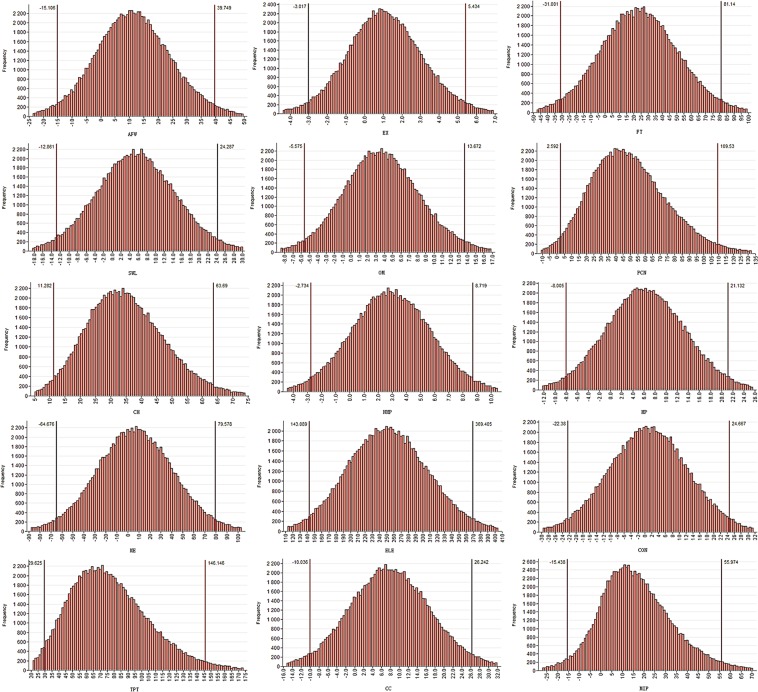
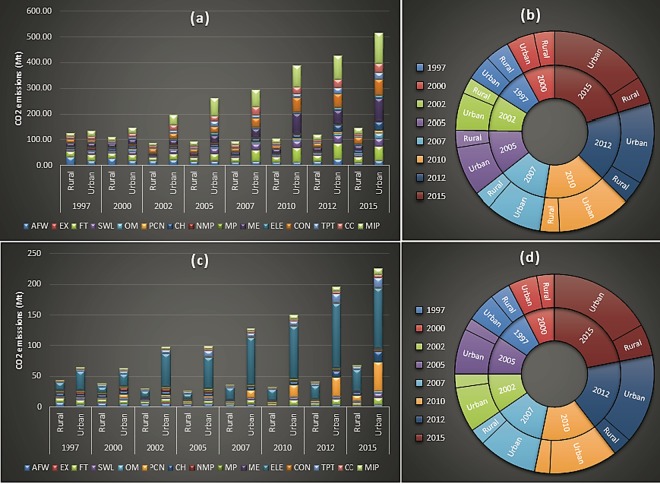
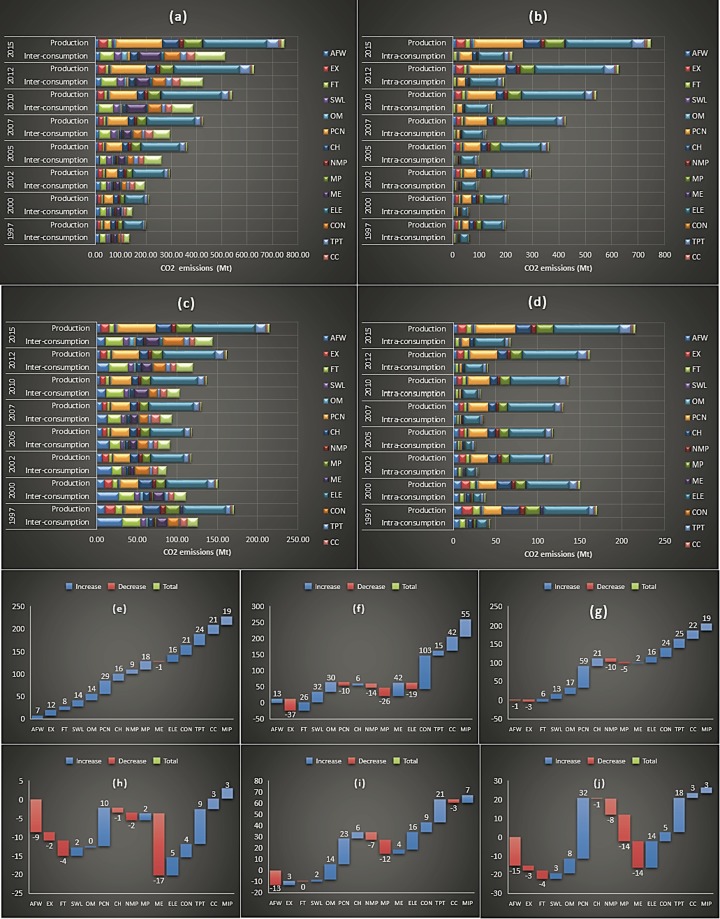
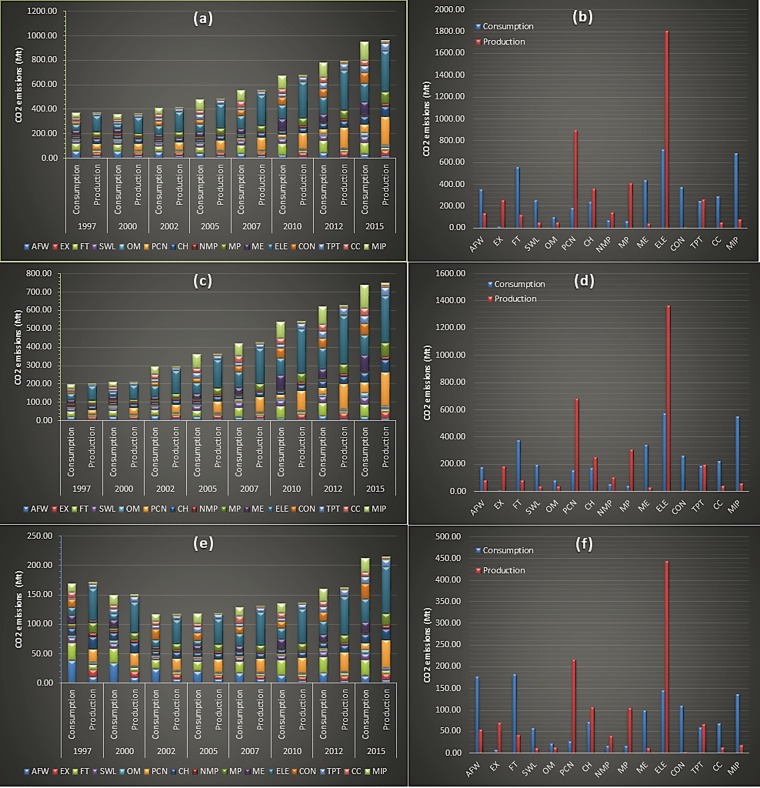
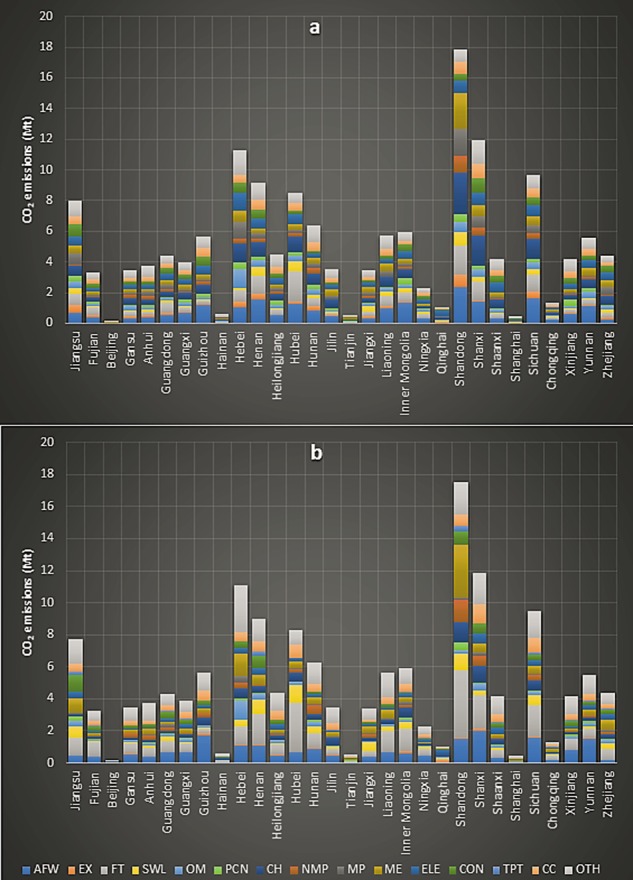
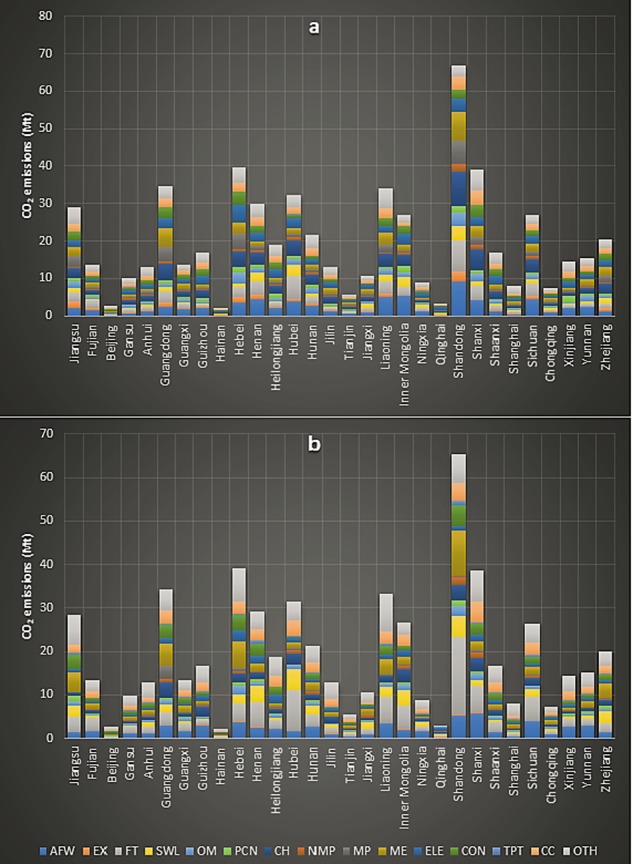
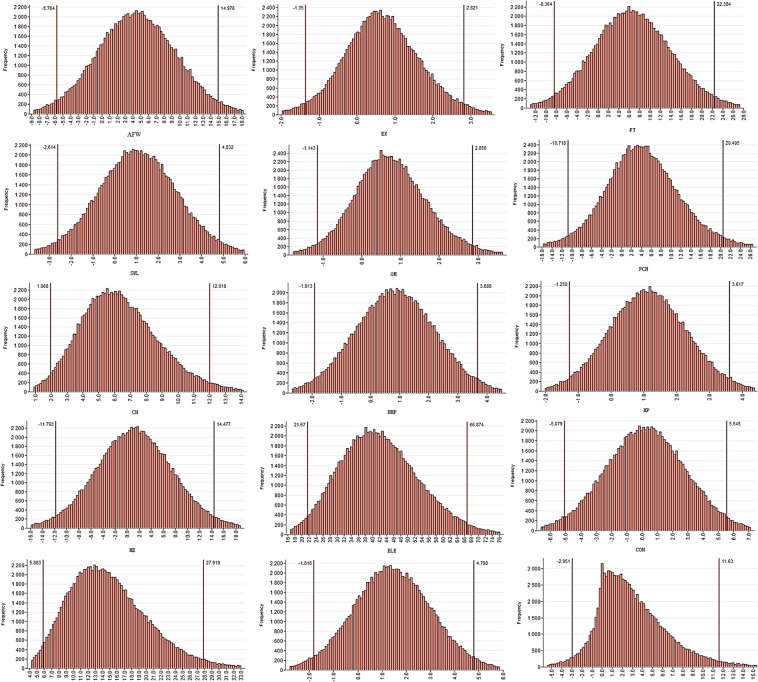
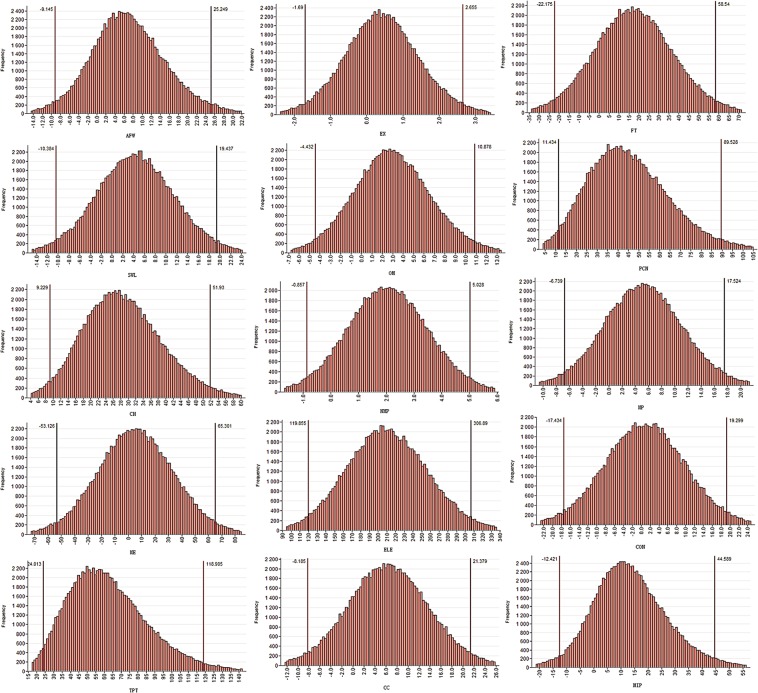
The final demand embedded emissions are mainly estimated by considering the intermediate industrial production. However, the industrial consumption embedded emissions are not well investigated. This study estimates both the industrial production and consumption embedded emissions of Chinese households. Our results indicate significant differences between household industrial production and consumption embedded emissions. These different patterns are due to the different set of emission multipliers, Leontief inverse vectors, and final pull effects employed in embedding the intermediate carbon consumption to final demand. "Electricity, Steam, Hot water production and supply" was the largest source of both urban and rural household's industrial production embedded emissions. The largest amount of urban household's industrial consumption embedded emissions was from 'Miscellaneous intangible products'; while, for rural households it was 'Food and Tobacco'. Shandong had the highest industrial embedded emissions from both approaches; however, the main sources of its embedded production and consumption emissions were different. This embedding of the intermediate industrial consumption emissions to household final demand provides new insights, for mitigating the household embedded carbon consumption. The uncertainty analysis indicated that sectors with bigger output values show higher uncertainty, and the input quantities of emission intensity and final demand were the main contributors to outcome uncertainties.
最终需求嵌入排放主要通过考虑中间工业生产来估算。然而,工业消费嵌入排放尚未得到很好的研究。本研究估计了中国家庭的工业生产和消费嵌入排放。我们的结果表明,家庭工业生产和消费嵌入排放之间存在显著差异。这些不同的模式是由于嵌入中间碳消费到最终需求时使用的不同排放乘数、里昂惕夫逆向量和最终拉动效应。“电力、蒸汽、热水生产和供应”是城市和农村家庭工业生产嵌入排放的最大来源。城市家庭工业消费嵌入排放的最大来源是“其他无形产品”;而对于农村家庭,最大的排放来源是“食品和烟草”。山东在这两种方法下都有最高的工业嵌入排放;然而,其嵌入生产和消费排放的主要来源是不同的。这种将中间工业消费排放嵌入家庭最终需求的方式提供了新的见解,有助于减少家庭嵌入的碳消费。不确定性分析表明,产出值较大的部门具有更高的不确定性,排放强度和最终需求的投入量是导致结果不确定性的主要因素。