Department of Pharmacology, Mbarara University of Science and Technology, P.O.BOX 1410, Mbarara, Uganda.
Department of Pharmacology, School of Medicine, College of Medicine and Health Sciences, Hawassa University, P.O.BOX 1560, Hawassa, Ethiopia.
BMC Complement Med Ther. 2020 Jan 13;20(1):2. doi: 10.1186/s12906-019-2794-z.
Echinops kebericho is widely used for treatment of a variety of diseases including infectious, non-infectious disease and fumigation during child birth. Antibacterial, antimalarial, anti-leshimania, anti-diarrheal and insect repellent activities have been elucidated. Its toxicity profile is not yet investigated and thus this study was to investigate acute and sub-acute toxicity of E. kebericho decoctions.
Acute toxicity study was performed in female Wistar albino rats with single oral dose and followed up to 14 days. The sub-acute oral dose toxicity studies were conducted in rats of both sexes in accordance with the repeated dose 28-day oral toxicity study in rodent OECD guidelines. Physical observations were made regularly during the study period while body weight was measured weekly. Organ weight, histopathology, clinical chemistry and hematology data were collected on the 29th day. Results were presented as mean ± standard deviation. One-way analysis of variance (ANOVA) was performed if assumptions were met; otherwise Kruskal-Wallis analysis was performed.
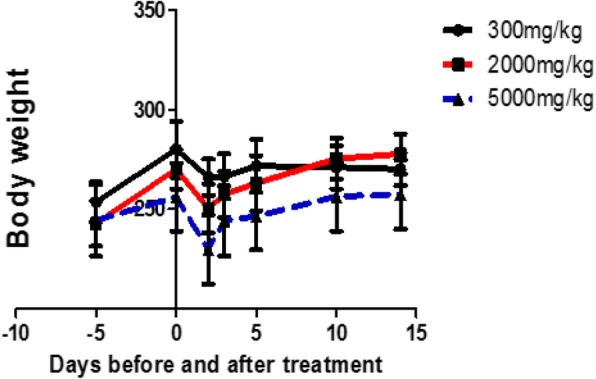
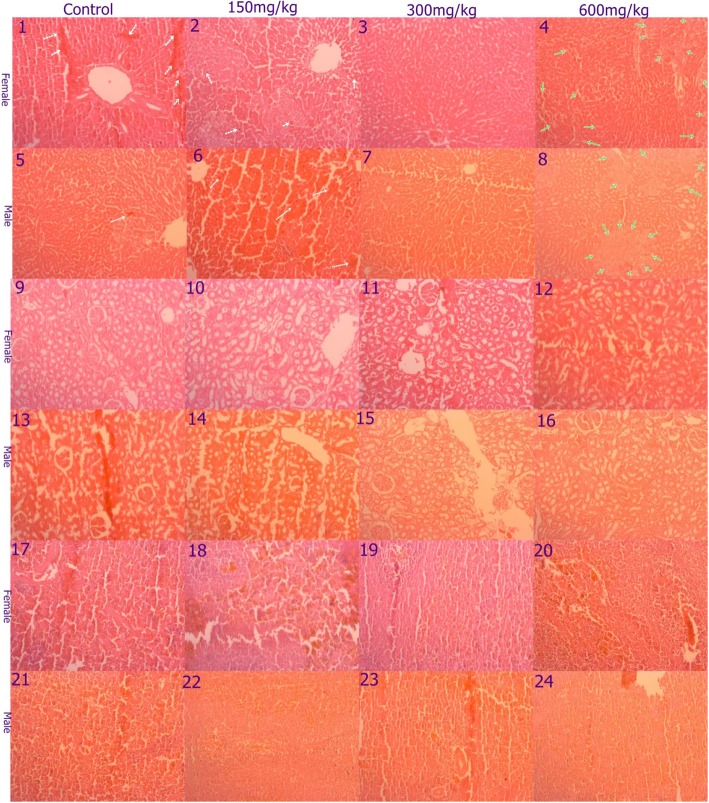
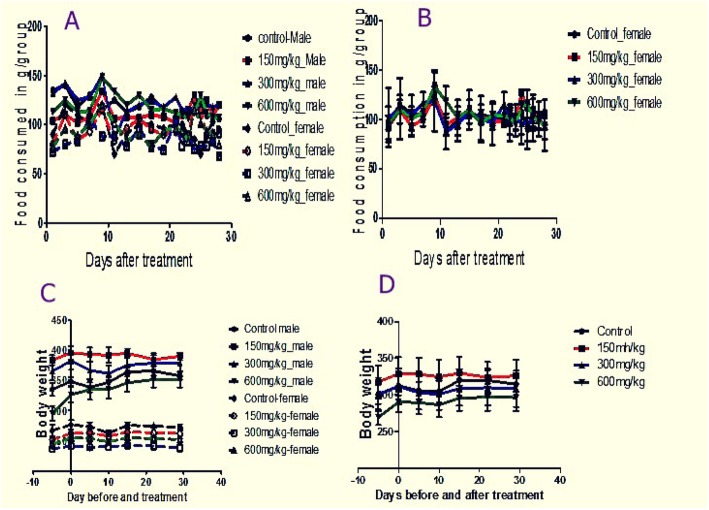
Oral administration of E. kebericho decoction showed no treatment-related mortality in female rats up to the dose of 5000 mg/kg. In sub-acute toxicity studies, no significant treatment-related abnormalities were observed compared to negative controls. Food consumption, body weight, organ weight, hematology, clinical chemistry, and histopathology did not show significant variation between controls and treatment groups. However, creatinine, relative lung weight, triglycerides, and monocytes were lower in treated compared to control groups. Significant variations between male and female groups in food consumption, relative organ weight, hematology, clinical chemistry were observed. Histolo-pathology of high-dose treated groups showed fatty liver.
Echinops kebericho showed LD of greater than 5000 mg/kg in acute toxicity study and is well tolerated up to the dose of 600 mg/kg body weight in sub-acute toxicity study.
沙苑藜被广泛用于治疗各种疾病,包括传染病、非传染性疾病和分娩时的熏蒸。其具有抗菌、抗疟、抗利什曼原虫、抗腹泻和驱虫活性。但其毒性概况尚未得到研究,因此本研究旨在调查沙苑藜汤剂的急性和亚急性毒性。
采用单次口服剂量的雌性 Wistar 白化大鼠进行急性毒性研究,并随访至 14 天。根据 OECD 啮齿动物重复剂量 28 天口服毒性研究的规定,对雌雄大鼠进行亚急性口服剂量毒性研究。在研究期间,定期进行体格观察,每周测量体重。在第 29 天收集器官重量、组织病理学、临床化学和血液学数据。结果表示为平均值±标准差。如果符合假设,则进行单因素方差分析(ANOVA);否则进行 Kruskal-Wallis 分析。
口服沙苑藜汤剂在雌性大鼠中,剂量高达 5000mg/kg 时,没有与治疗相关的死亡率。在亚急性毒性研究中,与阴性对照组相比,没有观察到与治疗相关的异常。与对照组相比,食物摄入量、体重、器官重量、血液学、临床化学和组织病理学没有显示出显著的变化。然而,与对照组相比,治疗组的肌酐、相对肺重、甘油三酯和单核细胞较低。在食物摄入量、相对器官重量、血液学、临床化学方面,雄性和雌性组之间存在显著差异。高剂量治疗组的组织病理学显示脂肪肝。
沙苑藜在急性毒性研究中的 LD 大于 5000mg/kg,在亚急性毒性研究中,高达 600mg/kg 体重的剂量是可以耐受的。