Department of Psychiatry, Asan Medical Center, University of Ulsan College of Medicine, Seoul, Korea.
Medical Corps, 1st fleet, Republic of Korea Navy, Donghae, Korea.
Int J Methods Psychiatr Res. 2020 Mar;29(1):e1818. doi: 10.1002/mpr.1818. Epub 2020 Feb 5.
Schizophrenia is a chronic and debilitating neuropsychiatric disorder. It has been suggested that impaired brain connectivity underlies the pathophysiology of schizophrenia. Network analysis has thus recently emerged in the field of schizophrenia research.
We investigated 48 schizophrenia patients and 24 healthy controls using network analysis and a machine learning method. A number of global and nodal network properties were estimated from graphs that were reconstructed using probabilistic brain tractography. These network properties were then compared between groups and used for machine learning to classify schizophrenia patients and healthy controls.
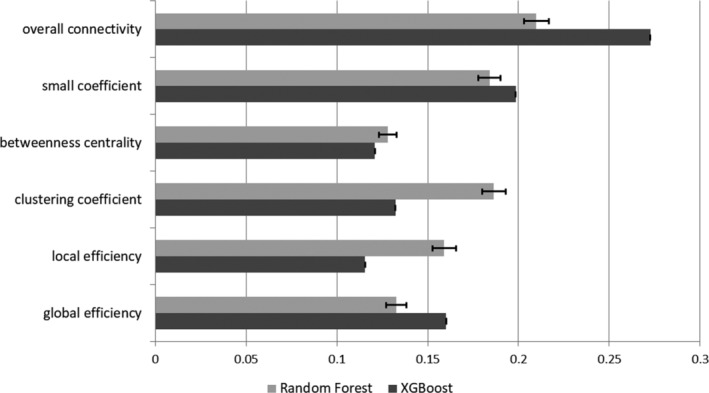
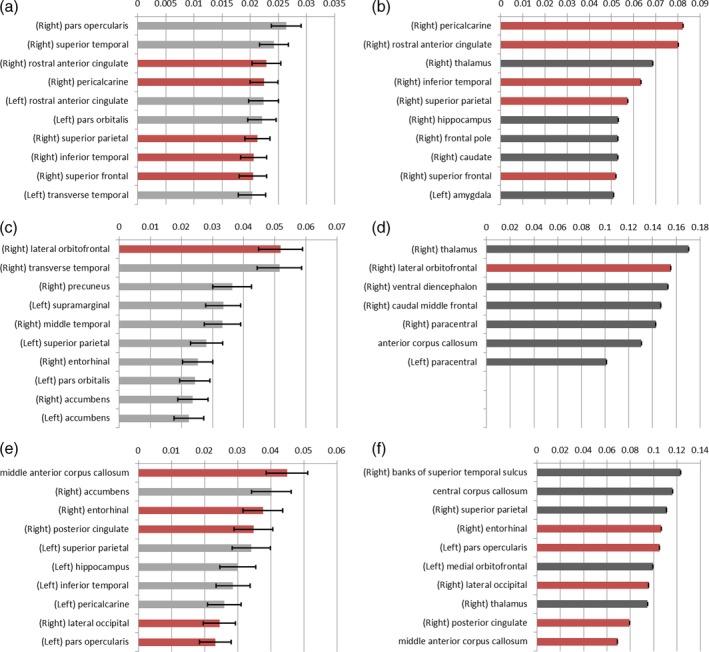
In classifying schizophrenia patients and healthy controls via network properties, the support vector machine, random forest, naïve Bayes, and gradient boosting machine learning models showed an encouraging level of performance. The overall connectivity was revealed as the most significant contributing feature to this classification among the global network properties. Among the nodal network properties, although the relative importance of each region of interest was not identical, there were still some patterns.
In conclusion, the possibility exists to classify schizophrenia patients and healthy controls using network properties, and we have found that there is a provisional pattern of involved brain regions among patients with schizophrenia.
精神分裂症是一种慢性且使人虚弱的神经精神疾病。有观点认为,大脑连接功能的损伤是精神分裂症病理生理学的基础。因此,网络分析最近在精神分裂症研究领域兴起。
我们使用网络分析和机器学习方法,对 48 名精神分裂症患者和 24 名健康对照者进行了研究。使用基于概率性脑束追踪的方法,从重建的图中估计了一系列全局和节点网络特性。然后在组间比较这些网络特性,并将其用于机器学习以对精神分裂症患者和健康对照者进行分类。
通过网络特性对精神分裂症患者和健康对照者进行分类时,支持向量机、随机森林、朴素贝叶斯和梯度提升机等机器学习模型显示出了令人鼓舞的性能。在全局网络特性中,整体连通性被揭示为这种分类的最重要贡献特征。在节点网络特性中,虽然每个感兴趣区域的相对重要性并不相同,但仍存在一些模式。
总之,使用网络特性对精神分裂症患者和健康对照者进行分类是有可能的,我们发现精神分裂症患者存在涉及的脑区的暂定模式。