Department of Psychiatry, Nagoya University, Graduate School of Medicine, Nagoya, Aichi, Japan.
Brain & Mind Research Center, Nagoya University, Nagoya, Aichi, Japan.
PLoS One. 2020 Nov 24;15(11):e0239615. doi: 10.1371/journal.pone.0239615. eCollection 2020.
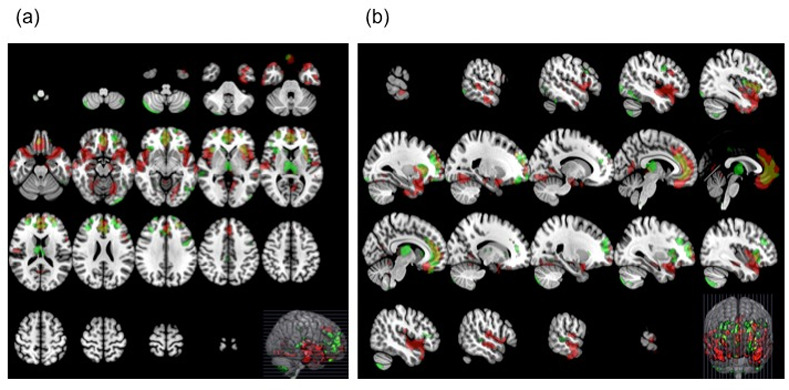
Structural brain alterations have been repeatedly reported in schizophrenia; however, the pathophysiology of its alterations remains unclear. Multivariate pattern recognition analysis such as support vector machines can classify patients and healthy controls by detecting subtle and spatially distributed patterns of structural alterations. We aimed to use a support vector machine to distinguish patients with schizophrenia from control participants on the basis of structural magnetic resonance imaging data and delineate the patterns of structural alterations that significantly contributed to the classification performance. We used independent datasets from different sites with different magnetic resonance imaging scanners, protocols and clinical characteristics of the patient group to achieve a more accurate estimate of the classification performance of support vector machines. We developed a support vector machine classifier using the dataset from one site (101 participants) and evaluated the performance of the trained support vector machine using a dataset from the other site (97 participants) and vice versa. We assessed the performance of the trained support vector machines in each support vector machine classifier. Both support vector machine classifiers attained a classification accuracy of >70% with two independent datasets indicating a consistently high performance of support vector machines even when used to classify data from different sites, scanners and different acquisition protocols. The regions contributing to the classification accuracy included the bilateral medial frontal cortex, superior temporal cortex, insula, occipital cortex, cerebellum, and thalamus, which have been reported to be related to the pathogenesis of schizophrenia. These results indicated that the support vector machine could detect subtle structural brain alterations and might aid our understanding of the pathophysiology of these changes in schizophrenia, which could be one of the diagnostic findings of schizophrenia.
结构性脑改变在精神分裂症中反复被报道;然而,其改变的病理生理学仍不清楚。支持向量机等多变量模式识别分析可以通过检测结构改变的细微和空间分布模式来对患者和健康对照进行分类。我们旨在使用支持向量机基于结构磁共振成像数据来区分精神分裂症患者和对照参与者,并描绘对分类性能有显著贡献的结构改变模式。我们使用来自不同地点的独立数据集,这些数据集具有不同的磁共振成像扫描仪、方案和患者组的临床特征,以实现对支持向量机分类性能的更准确估计。我们使用一个地点的数据集开发了一个支持向量机分类器(101 名参与者),并使用另一个地点的数据集(97 名参与者)评估训练后的支持向量机的性能,反之亦然。我们评估了每个支持向量机分类器中训练后的支持向量机的性能。两个支持向量机分类器在两个独立的数据集上都达到了>70%的分类准确率,这表明支持向量机的性能始终很高,即使用于对来自不同地点、扫描仪和不同采集方案的数据进行分类也是如此。对分类准确率有贡献的区域包括双侧内侧额皮质、颞上皮质、岛叶、枕叶、小脑和丘脑,这些区域已被报道与精神分裂症的发病机制有关。这些结果表明,支持向量机可以检测到细微的结构性脑改变,并可能有助于我们理解精神分裂症中这些改变的病理生理学,这可能是精神分裂症的一种诊断发现。