Tianjin Key Laboratory of Industrial Biological Systems and Process Engineering, Tianjin Institute of Industrial Biotechnology, Chinese Academy of Sciences, Tianjin, China.
Core Facility, Tianjin Institute of Industrial Biotechnology, Chinese Academy of Sciences, Tianjin, China.
Microbiologyopen. 2020 Apr;9(4):e997. doi: 10.1002/mbo3.997. Epub 2020 Feb 5.
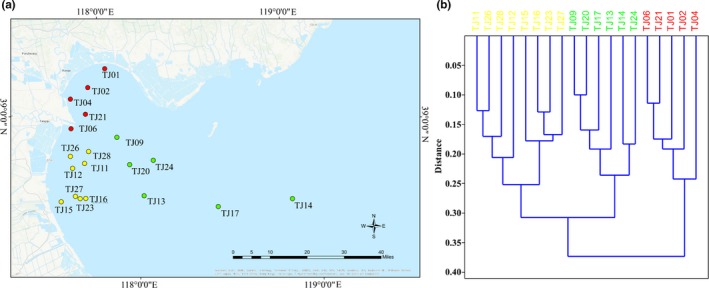
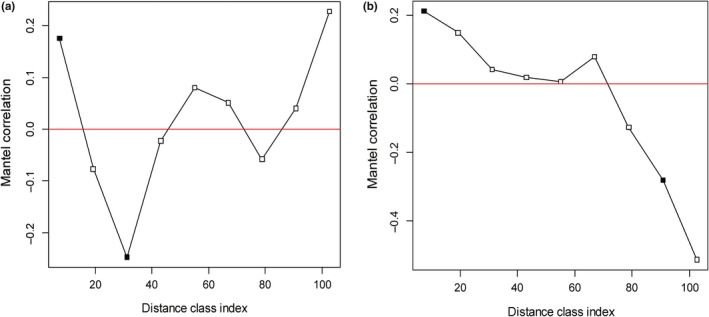
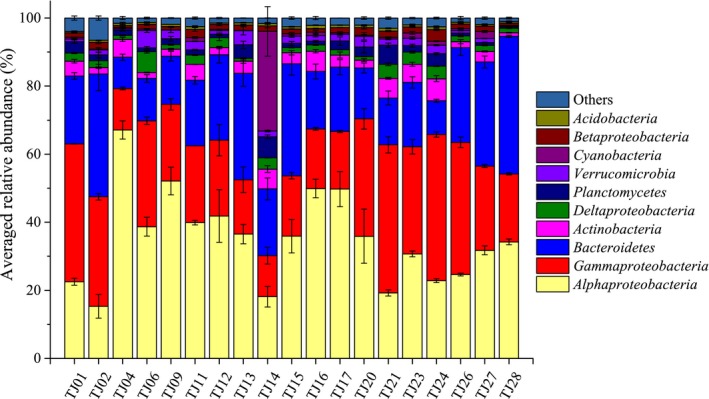
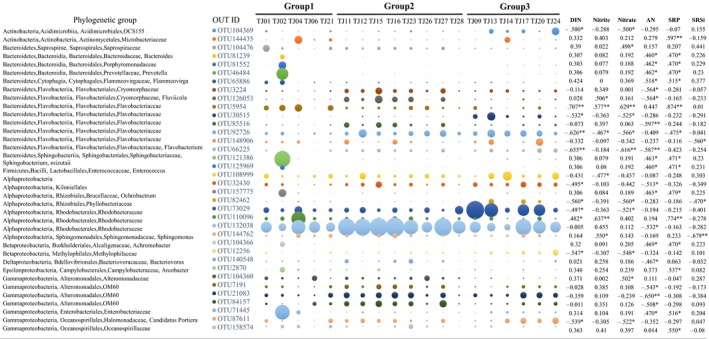
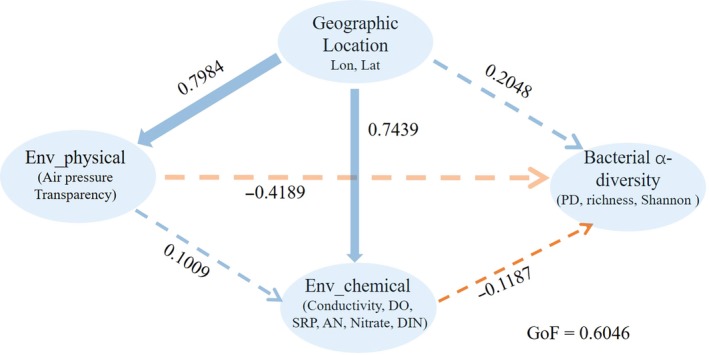
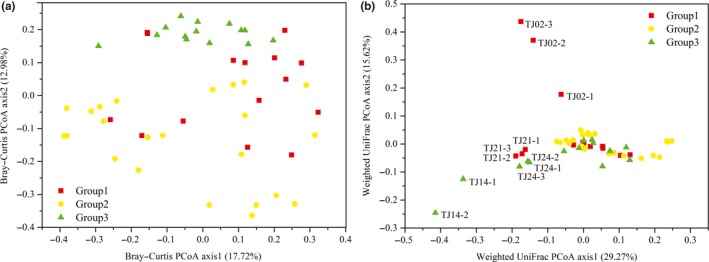
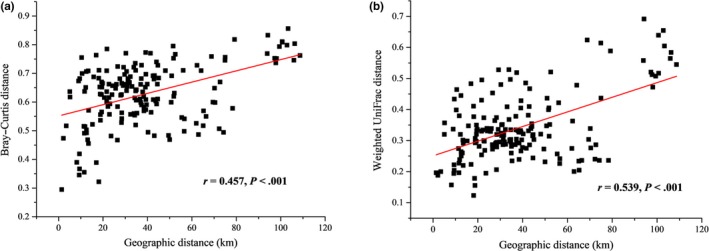
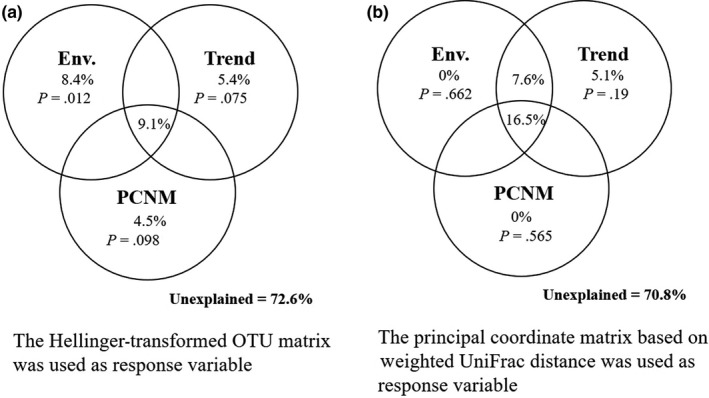
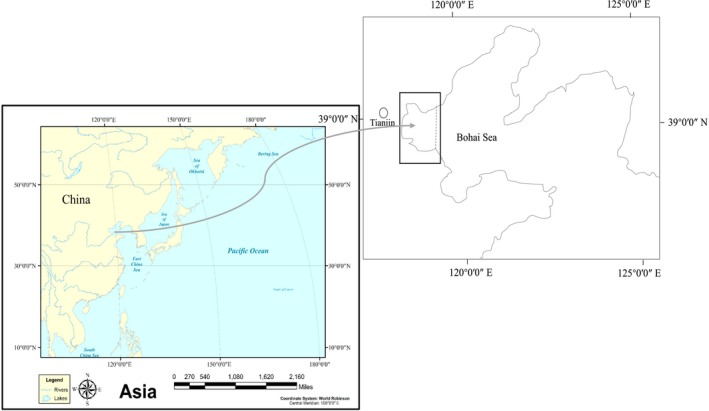
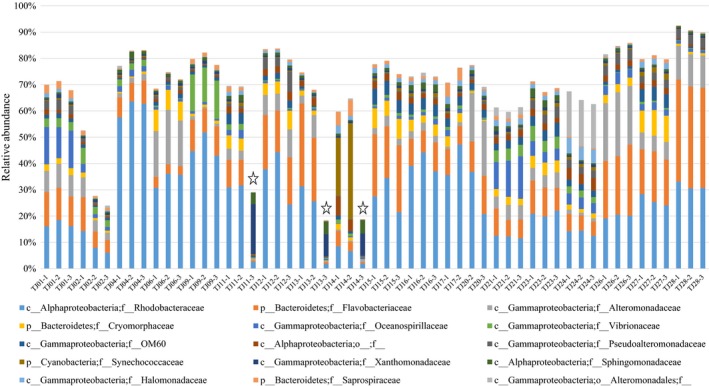
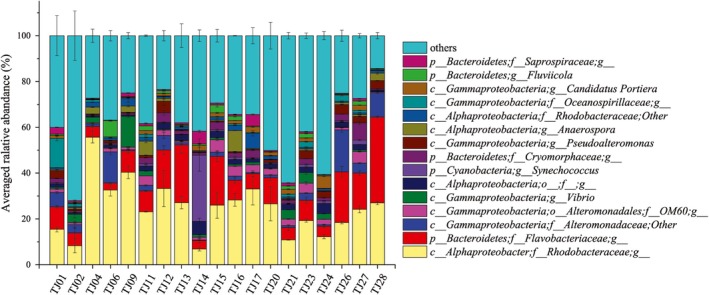
Parsing the relative importance of environmental (recent disturbances) and spatial factors (historical processes) in determining community structure is a core issue in ecology. The Bohai Bay is a typical semi-enclosed bay located in the north of China, surrounding by the metropolitan area with anthropogenic disturbances made it a complex marine coastal system with pollution gradients, where the distributions and determinants of bacterioplankton communities remain unclear. In this study, we collected surface water samples from 19 sites across Bohai Bay at about 100 km scale to investigate the relative roles of local environments and regional spatial factors in shaping bacterioplankton community composition (BCC). The environmental parameters in the sampling region showed gradient change according to the geographic variation. Several abundant OTUs were significantly correlated with the pollution parameters in the studied area, and 16 OTUs of them showed distinct distribution pattern in different polluted regions with obvious geographic segmentation, which indicated the effects of pollution gradient and dispersal limitation on specific taxon. The BCCs did not show obviously clustering effect between different polluted regions, which indicated the complexity for explaining the BCC variation in the studied region. The partial Mantel test revealed stronger spatial effects on beta diversity than those of local environmental factors, which indicated that dispersal limitation accounted more for the beta diversity than environmental heterogeneity. Furthermore, variation partitioning analysis (VPA) conducted by combining the environmental variables, linear trends, and principal coordinates of the variables from neighbor matrices (PCNM) showed that it was the joint effects of environmental and spatial factors contributed to the explained variation of BCC in the studied area. Considering the special human geography characteristics of Bohai Bay, the unmeasured biotic/abiotic factors, stochastic factors, and anthropogenic disturbances may be responsible for the unexplained variation of the BCC.
解析环境(近期干扰)和空间因素(历史过程)在确定群落结构中的相对重要性是生态学的核心问题。渤海湾是中国北方的一个典型半封闭海湾,周围是大都市,人为干扰使其成为一个具有污染梯度的复杂海洋沿海系统,其中细菌浮游生物群落的分布和决定因素尚不清楚。本研究以约 100km 的尺度从渤海湾 19 个站点采集表层水样,以调查局地环境和区域空间因素在塑造细菌浮游生物群落组成(BCC)中的相对作用。采样区域的环境参数根据地理变化呈梯度变化。一些丰富的 OTUs 与研究区域的污染参数显著相关,其中 16 个 OTUs 在不同污染区域表现出明显的分布模式,具有明显的地理分割,这表明污染梯度和扩散限制对特定分类群的影响。BCC 在不同污染区域之间没有明显的聚类效应,这表明解释研究区域 BCC 变化的复杂性。偏mantel 检验显示,空间因素对β多样性的影响强于局地环境因素,这表明扩散限制比环境异质性对β多样性的影响更大。此外,通过将环境变量、线性趋势和来自邻居矩阵的变量的主坐标(PCNM)结合起来进行的变异划分分析(VPA)表明,环境和空间因素的共同作用导致了研究区域 BCC 的解释变异。考虑到渤海湾特殊的人文地理特征,未测量的生物/非生物因素、随机因素和人为干扰可能是 BCC 未解释变异的原因。