Department of Medical Microbiology and Infection Control, Amsterdam UMC, VU University Amsterdam, Amsterdam, The Netherlands.
Department of Pediatrics, St Antonius Hospital, Nieuwegein, The Netherlands.
PLoS One. 2020 Feb 5;15(2):e0228133. doi: 10.1371/journal.pone.0228133. eCollection 2020.
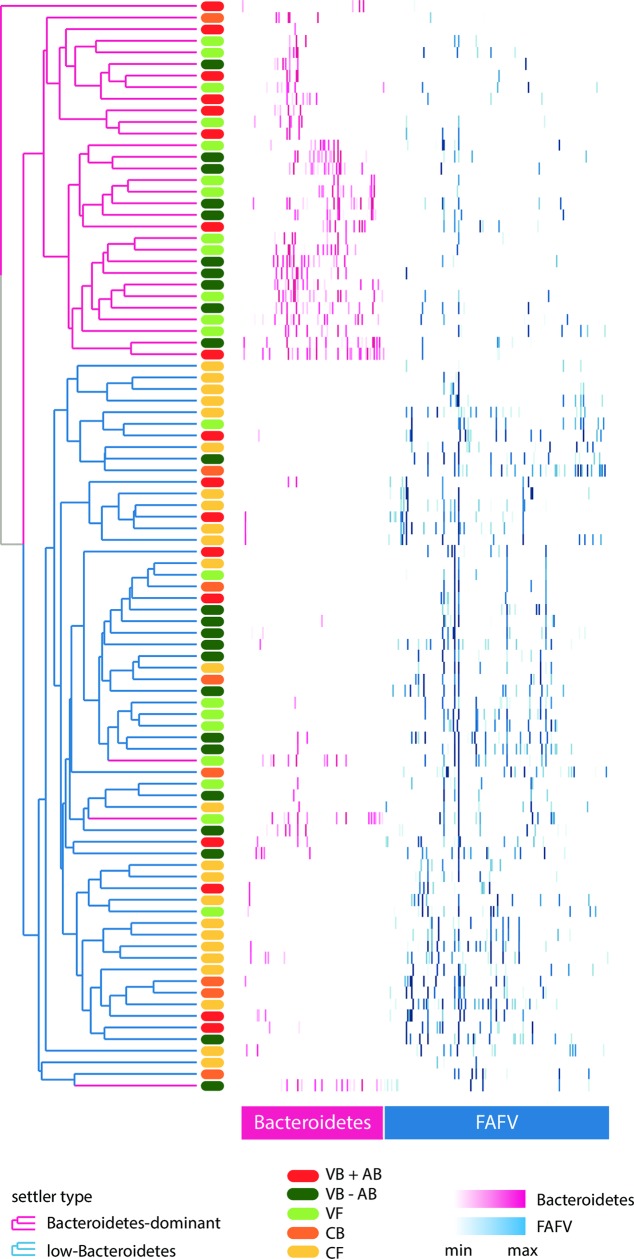
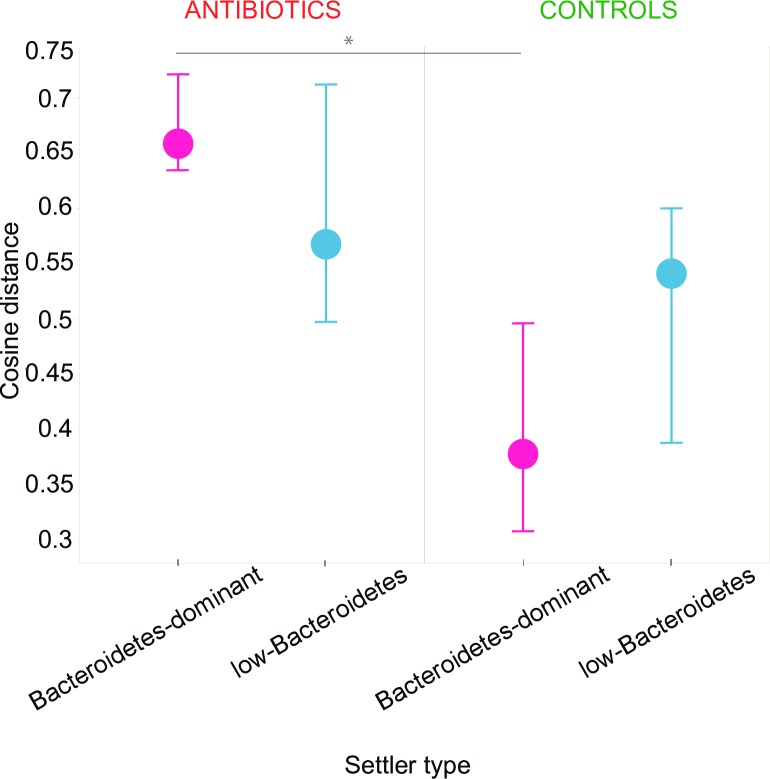
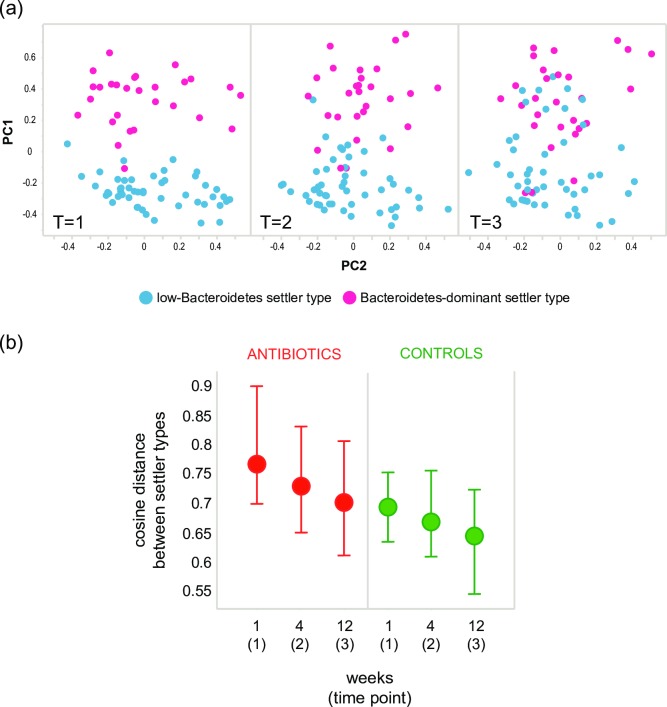
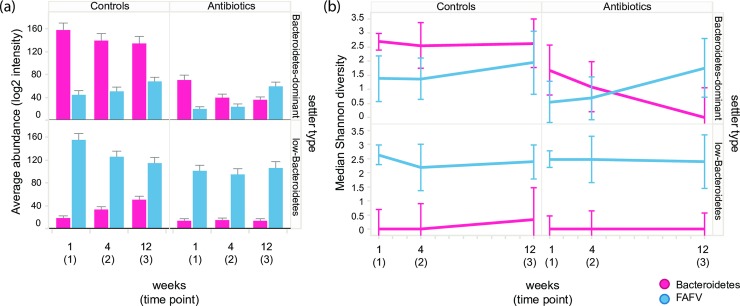
The neonatal period, during which the initial gut microbiota is acquired, is a critical phase. The healthy development of the infant's microbiome can be interrupted by external perturbations, like antibiotics, which are associated with profound effects on the gut microbiome and various disorders later in life. The aim of this study was to investigate the development of intestinal microbiota and the effect of antibiotic exposure during the first three months of life in term infants. Fecal samples were collected from healthy infants and infants who received antibiotics in the first week of life at one week, one month, and three months after birth. Microbial composition was analyzed using IS-pro and compared between antibiotics-treated and untreated infants. In total, 98 infants, divided into four groups based on feeding type and delivery mode, were analyzed. At one week of age, samples clustered into two distinct groups, which were termed "settler types", based on their Bacteroidetes abundance. Caesarean-born infants belonged to the low-Bacteroidetes settler type, but vaginally-born infants were divided between the two groups. The antibiotics effect was assessed within a subgroup of 45 infants, vaginally-born and exclusively breastfed, to minimize the effect of other confounders. Antibiotics administration resulted in lower Bacteroidetes diversity and/or a delay in Bacteroidetes colonization, which persisted for three months, and in a differential development of the microbiota. Antibiotics resulted in pronounced effects on the Bacteroidetes composition and dynamics. Finally, we hypothesize that stratification of children's cohorts based on settler types may reveal group effects that might otherwise be masked.
新生儿期是获得初始肠道微生物群的关键阶段。婴儿微生物组的健康发育可能会受到外部干扰,例如抗生素,这与肠道微生物组的深刻变化以及生命后期的各种疾病有关。本研究旨在调查足月婴儿肠道微生物群的发育和生命头三个月抗生素暴露的影响。从健康婴儿和出生后第一周接受抗生素的婴儿中收集粪便样本,分别在出生后一周、一个月和三个月进行检测。使用 IS-pro 分析微生物组成,并比较抗生素治疗组和未治疗组婴儿之间的差异。共分析了 98 名婴儿,根据喂养类型和分娩方式分为四组。在一周大时,根据拟杆菌属的丰度,样本聚类为两个不同的群体,称为“定居者类型”。剖宫产婴儿属于低拟杆菌定居者类型,而阴道分娩婴儿则分为两组。在一个亚组(45 名阴道分娩且纯母乳喂养的婴儿)中评估了抗生素的影响,以尽量减少其他混杂因素的影响。抗生素的使用导致拟杆菌属多样性降低和/或拟杆菌属定植延迟,持续三个月,并导致微生物群的不同发育。抗生素对拟杆菌属的组成和动态有显著影响。最后,我们假设根据定居者类型对儿童队列进行分层可能会揭示出其他情况下可能被掩盖的群体效应。