Gómez Jessica, Simirgiotis Mario J, Manrique Sofía, Lima Beatriz, Bórquez Jorge, Feresin Gabriela E, Tapia Alejandro
Instituto de Biotecnología-Instituto de Ciencias Básicas, Universidad Nacional de San Juan, Av. Libertador General San Martín 1109 (O), San Juan CP 5400, Argentina.
CONICET (Consejo Nacional de Ciencia y Tecnología), CABA, Buenos Aires C1405DJR, Argentina.
Antioxidants (Basel). 2020 Feb 1;9(2):123. doi: 10.3390/antiox9020123.
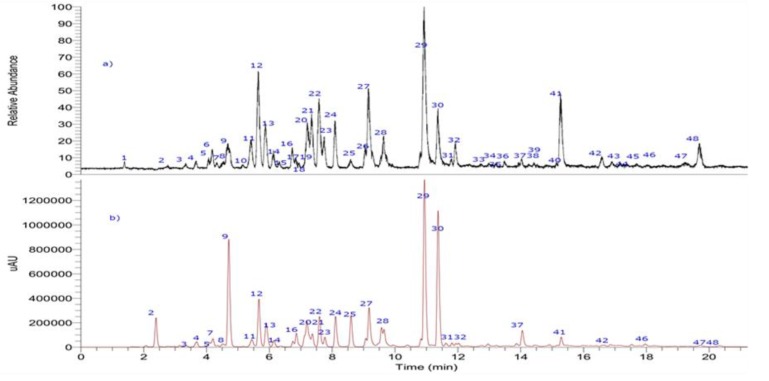
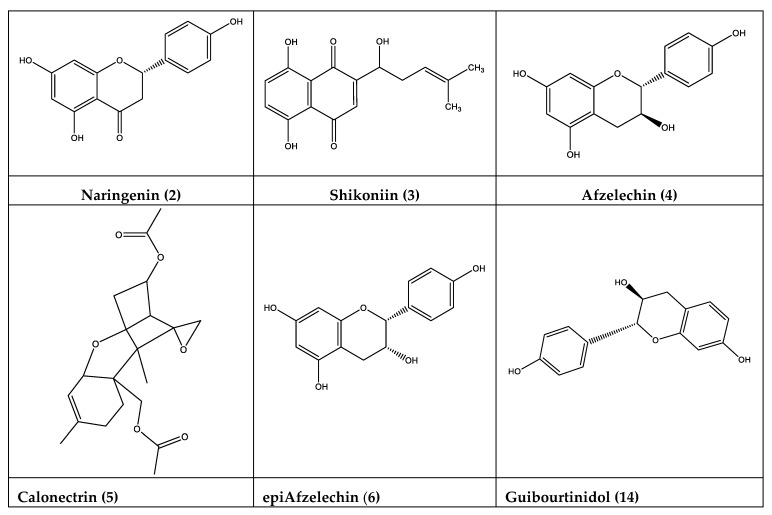
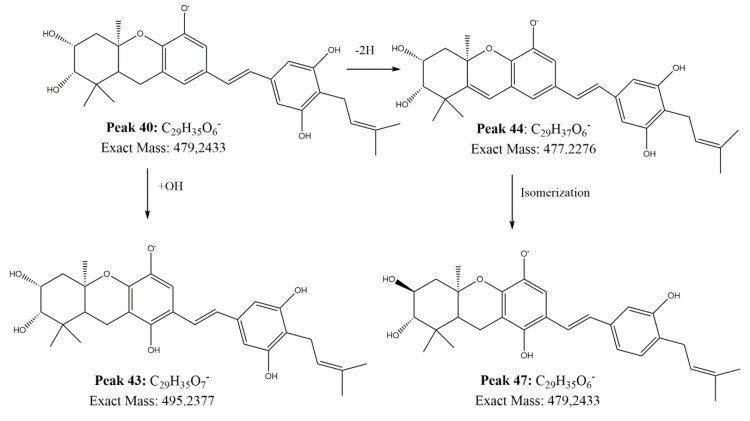
This research was designed to investigate the metabolite profiling, phenolics, and flavonoids content as well as the potential antioxidant and antibacterial, properties of orange-yellow resin from Cav (ZpRe). Metabolite profiling was obtained by a ultrahigh resolution liquid chromatography orbitrap MS analysis (UHPLC-ESI-OT-MS-MS). The antioxidant properties were screened by four methods: 2,2-diphenyl-1-picrylhydrazyl assay (DPPH), trolox equivalent antioxidant activity assay (TEAC), ferric-reducing antioxidant power assay (FRAP), and lipid peroxidation in erythrocytes (LP)). The antibacterial activity was evaluated according to the Clinical and Laboratory Standards Institute (CLSI) rules. The resin displayed a strong DPPH scavenging activity (IC = 25.72 µg/mL) and showed a percentage of inhibition of LP close to that of the reference compound catechin (70% at 100 µg ZpRe/mL), while a moderated effect was observed in the FRAP and TEAC assays. The resin showed a content of phenolic and flavonoid compounds of 391 mg GAE/g and 313 mg EQ/g respectively. Fifty phenolics compounds were identified by ultrahigh resolution liquid chromatography orbitrap MS analysis (UHPLC-PDA-OT-MS) analysis. Thirty-one compounds are reported for the first time, updating the knowledge on the chemical profile of this species. The importance of the biomolecules identified support traditional use of this endemic plant. Furthermore, additional pharmacological data is presented that increase the potential interest of this plant for industrial sustainable applications.
本研究旨在调查来自卡瓦(ZpRe)的橙黄色树脂的代谢物谱、酚类和黄酮类化合物含量以及潜在的抗氧化和抗菌特性。通过超高效液相色谱轨道阱质谱分析(UHPLC-ESI-OT-MS-MS)获得代谢物谱。通过四种方法筛选抗氧化特性:2,2-二苯基-1-苦基肼测定法(DPPH)、特洛克斯等效抗氧化活性测定法(TEAC)、铁还原抗氧化能力测定法(FRAP)和红细胞脂质过氧化测定法(LP)。根据临床和实验室标准研究所(CLSI)的规则评估抗菌活性。该树脂表现出较强的DPPH清除活性(IC = 25.72 µg/mL),并且对LP的抑制百分比接近参考化合物儿茶素(在100 µg ZpRe/mL时为70%),而在FRAP和TEAC测定中观察到中等效果。该树脂的酚类和黄酮类化合物含量分别为391 mg GAE/g和313 mg EQ/g。通过超高效液相色谱轨道阱质谱分析(UHPLC-PDA-OT-MS)鉴定出50种酚类化合物。首次报道了31种化合物,更新了对该物种化学概况的认识。所鉴定生物分子的重要性支持了这种特有植物的传统用途。此外,还提供了更多的药理学数据,增加了这种植物在工业可持续应用方面的潜在价值。