Zhou Mian, Aziz Monowar, Denning Naomi-Liza, Yen Hao-Ting, Ma Gaifeng, Wang Ping
Center for Immunology and Inflammation, the Feinstein Institutes for Medical Research, Manhasset, New York, USA.
Elmezzi Graduate School of Molecular Medicine, Manhasset, New York, USA.
JCI Insight. 2020 Mar 12;5(5):133715. doi: 10.1172/jci.insight.133715.
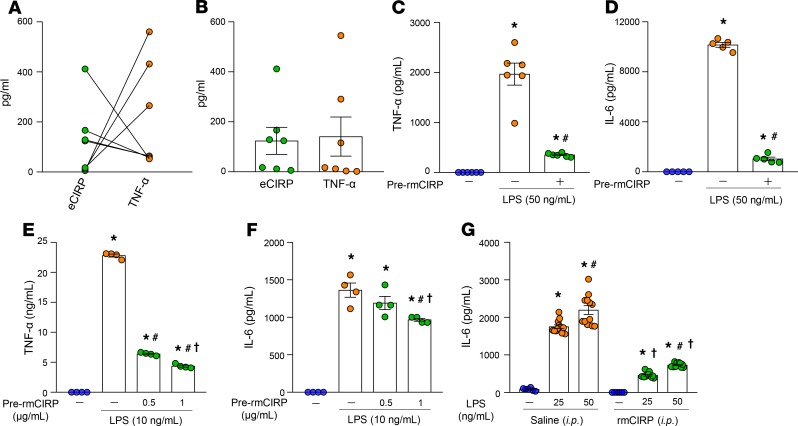
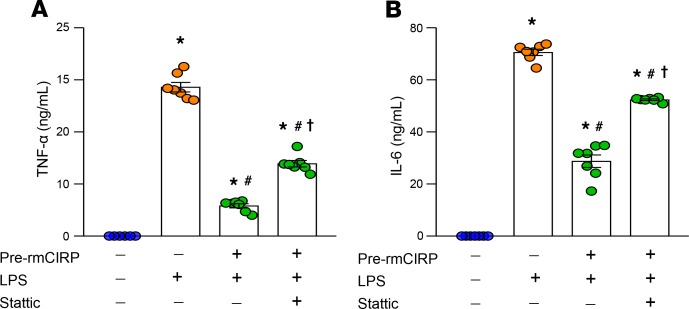
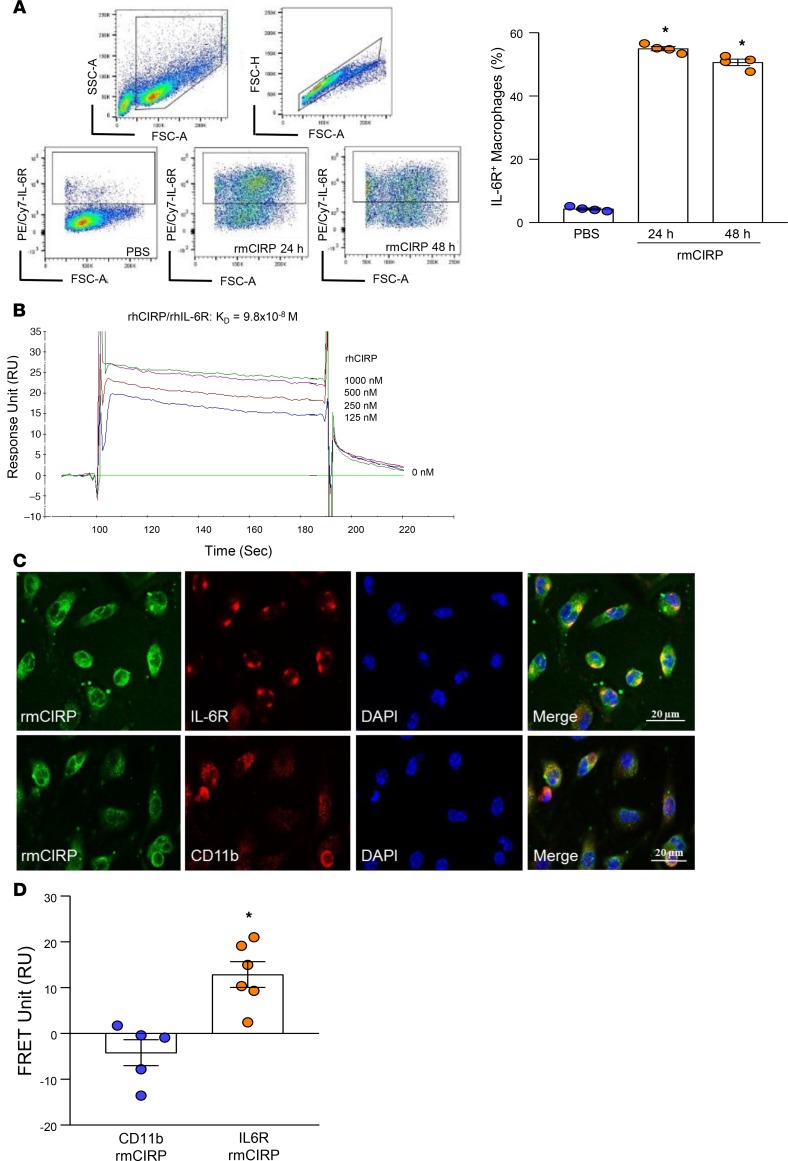
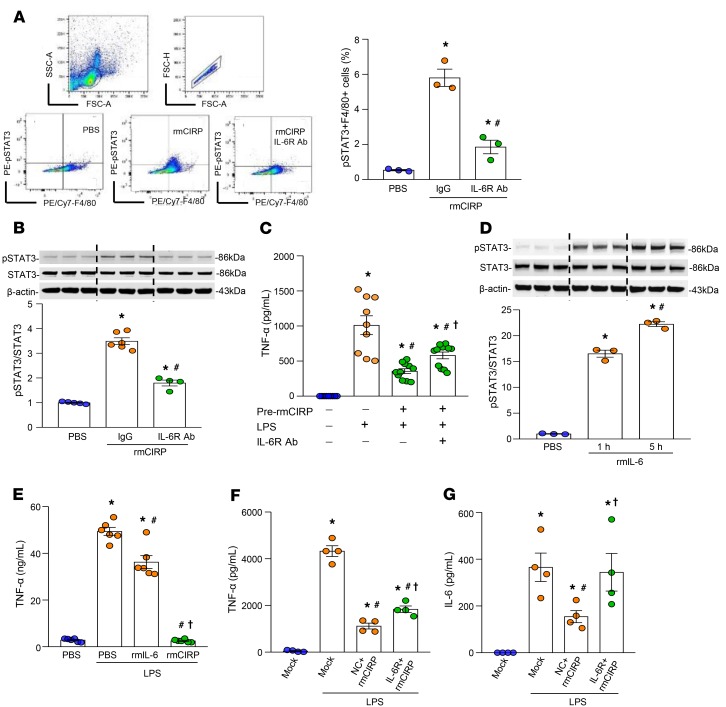
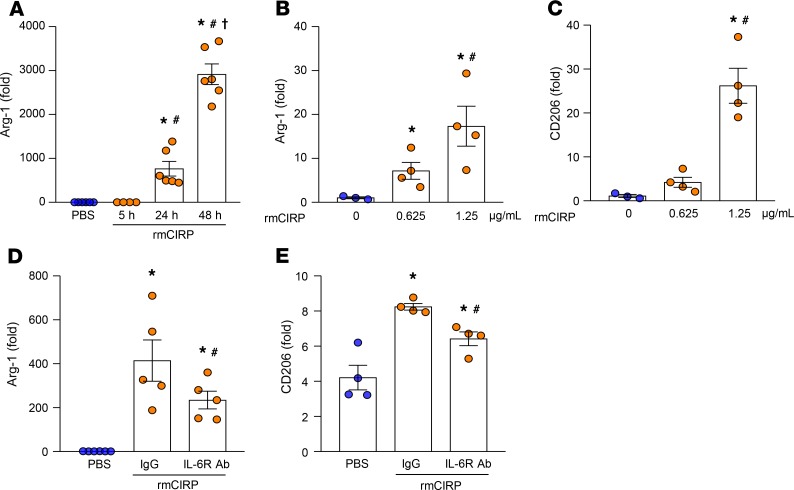
Extracellular cold-inducible RNA-binding protein (eCIRP) is a damage-associated molecular pattern, whose effect on macrophages is not entirely elucidated. Here we identified that eCIRP promotes macrophage endotoxin tolerance. Septic mice had higher serum levels of eCIRP; this was associated with a reduced ex vivo immune response of their splenocytes to LPS. Pretreatment of macrophages with recombinant murine CIRP (rmCIRP) resulted in a tolerance to LPS stimulation as demonstrated by a reduction of TNF-α production. We found that eCIRP increased phosphorylated STAT3 (p-STAT3) in macrophages. A STAT3 inhibitor, Stattic, rescued macrophages from rmCIRP-induced tolerance by restoring the release of TNF-α in response to LPS stimulation. We discovered strong binding affinity between eCIRP and IL-6 receptor (IL-6R) as revealed by Biacore, fluorescence resonance energy transfer (FRET), and their colocalization in macrophages by immunostaining assays. Blockade of IL-6R with its neutralizing Ab inhibited eCIRP-induced p-STAT3 and restored LPS-stimulated TNF-α release in macrophages. Incubation of macrophages with rmCIRP skewed them toward an M2 phenotype, while treatment with anti-IL-6R Ab prevented rmCIRP-induced M2 polarization. Thus, we have demonstrated that eCIRP activates p-STAT3 via a novel receptor, IL-6R, to promote macrophage endotoxin tolerance. Targeting eCIRP appears to be a new therapeutic option to correct immune tolerance in sepsis.
细胞外冷诱导RNA结合蛋白(eCIRP)是一种损伤相关分子模式,其对巨噬细胞的影响尚未完全阐明。在此,我们发现eCIRP可促进巨噬细胞内毒素耐受。脓毒症小鼠血清中的eCIRP水平较高;这与其脾细胞对LPS的体外免疫反应降低有关。用重组小鼠CIRP(rmCIRP)预处理巨噬细胞可导致对LPS刺激产生耐受,这通过TNF-α产生的减少得以证明。我们发现eCIRP可增加巨噬细胞中磷酸化STAT3(p-STAT3)的水平。一种STAT3抑制剂Stattic通过恢复对LPS刺激的TNF-α释放,使巨噬细胞从rmCIRP诱导的耐受中恢复。我们通过生物传感器、荧光共振能量转移(FRET)以及免疫染色分析发现eCIRP与白细胞介素-6受体(IL-6R)之间具有很强的结合亲和力。用其中和抗体阻断IL-6R可抑制eCIRP诱导的p-STAT3,并恢复巨噬细胞中LPS刺激的TNF-α释放。用rmCIRP孵育巨噬细胞会使其倾向于M2表型,而用抗IL-6R抗体处理可阻止rmCIRP诱导的M2极化。因此,我们证明eCIRP通过一种新的受体IL-6R激活p-STAT3,以促进巨噬细胞内毒素耐受。靶向eCIRP似乎是纠正脓毒症免疫耐受的一种新的治疗选择。