Jeon Ji-Hyeon, Kang Bitna, Lee Sowon, Jin Sojeong, Choi Min-Koo, Song Im-Sook
College of Pharmacy and Research Institute of Pharmaceutical Sciences, Kyungpook National University, Daegu 41566, Korea.
College of Pharmacy, Dankook University, Cheon-an 31116, Korea.
Pharmaceutics. 2020 Feb 3;12(2):129. doi: 10.3390/pharmaceutics12020129.
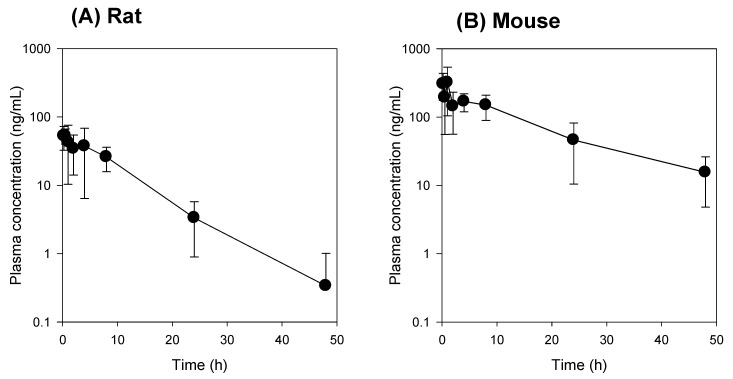
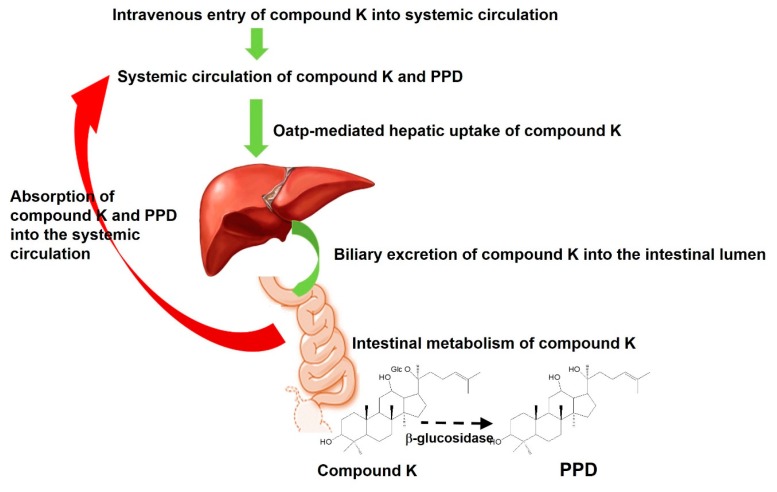
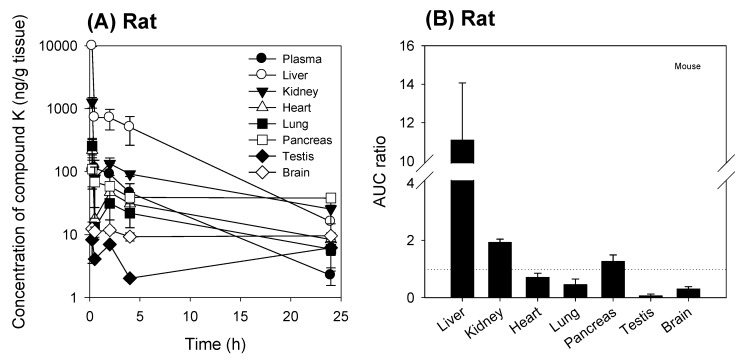
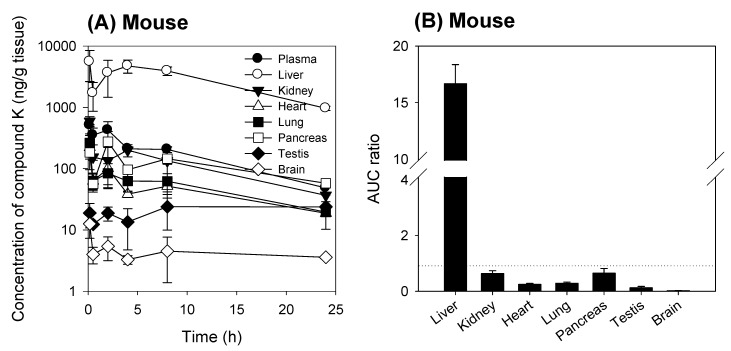
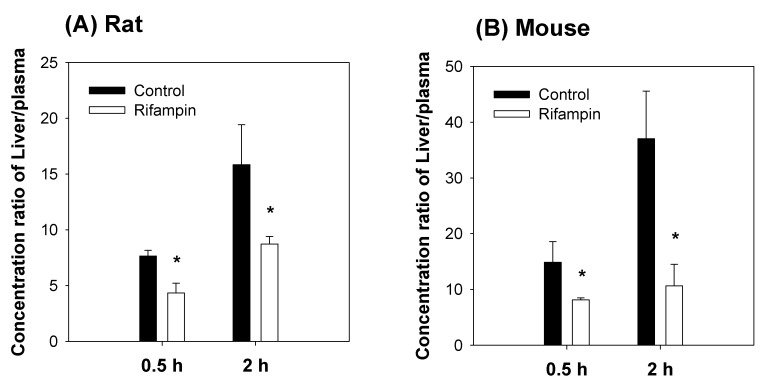
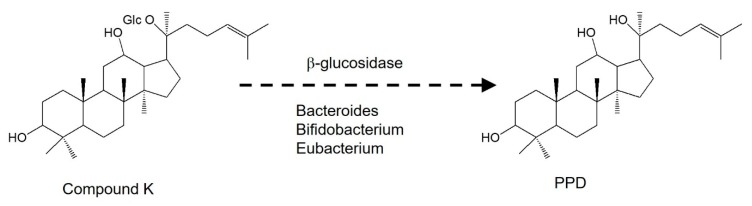
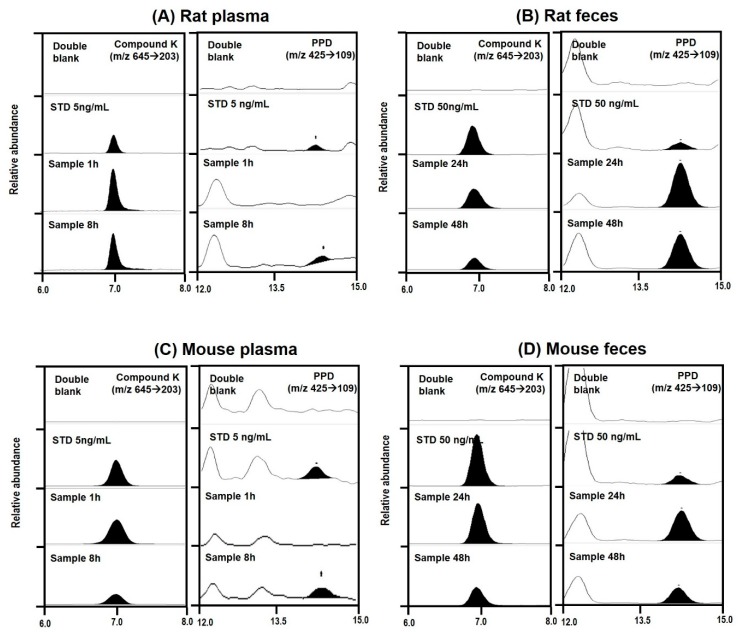
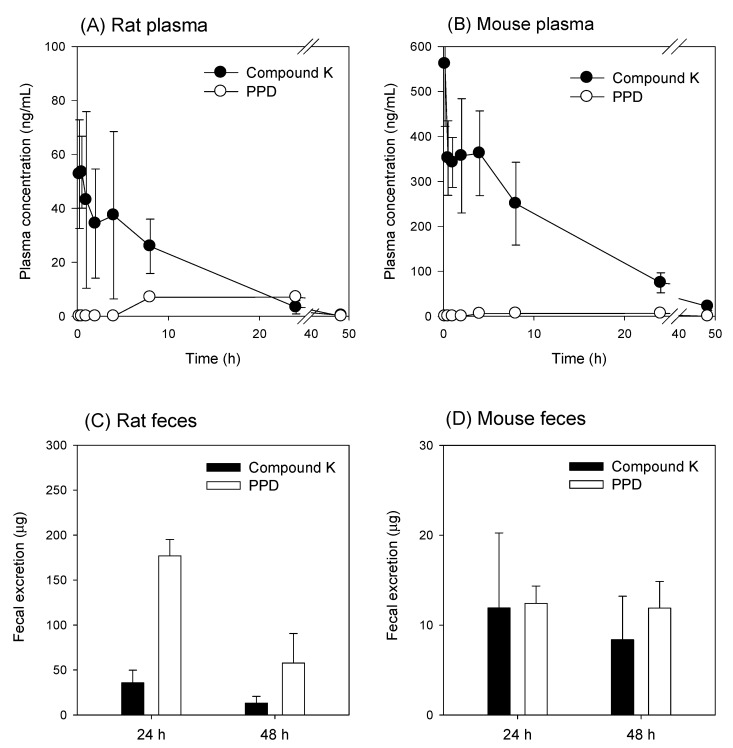
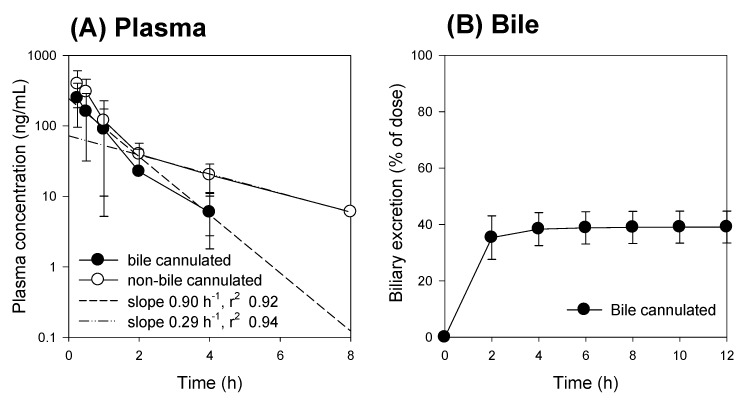
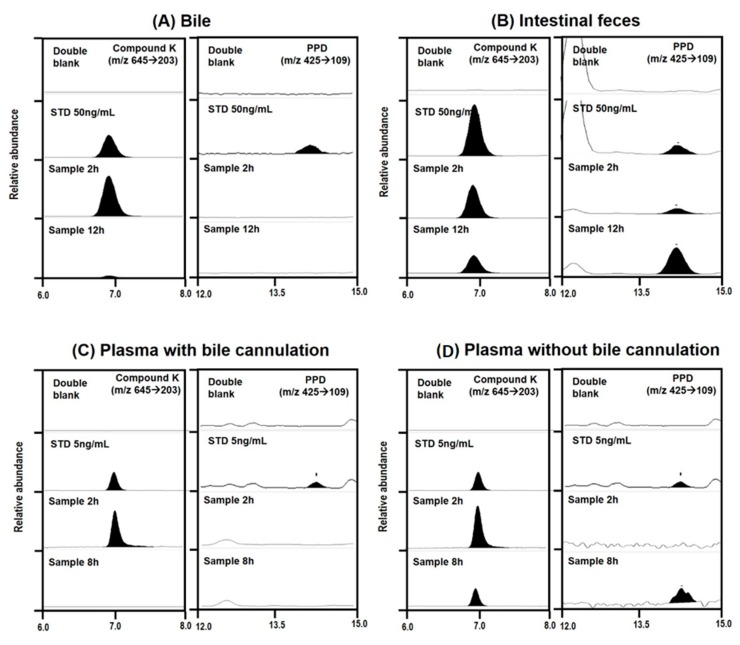
We aimed to investigate the plasma concentration, tissue distribution, and elimination of compound K following the intravenous administration of compound K (2 mg/kg) in rats and mice. The plasma concentrations of compound K in mice were much higher (about five-fold) than those in rats. In both rats and mice, compound K was mainly distributed in the liver and underwent biliary excretion. There was 28.4% fecal recovery of compound K in mice and 13.8% in rats, whereas its renal recovery was less than 0.1% in both rats and mice. Relative quantification of compound K and its metabolite protopanaxadiol (PPD) in rat bile and intestinal feces indicated that the metabolism from compound K into PPD occurred in the intestine but not in the plasma. Therefore, PPD detected in the plasma samples could have been absorbed from the intestine after metabolism in control rats, while PPD could not be detected in the plasma samples from bile duct cannulated rats. In conclusion, mice and rats shared common features such as exclusive liver distribution, major excretion pathway via biliary route, and intestinal metabolism to PPD. However, there were significant differences between rats and mice in the plasma concentrations of compound K and the fecal recovery of compound K and PPD.
我们旨在研究大鼠和小鼠静脉注射化合物K(2毫克/千克)后化合物K的血浆浓度、组织分布及消除情况。小鼠体内化合物K的血浆浓度比大鼠高得多(约五倍)。在大鼠和小鼠中,化合物K主要分布于肝脏并经胆汁排泄。化合物K在小鼠粪便中的回收率为28.4%,在大鼠中为13.8%,而其在大鼠和小鼠尿液中的回收率均小于0.1%。对大鼠胆汁和肠道粪便中化合物K及其代谢产物原人参二醇(PPD)的相对定量分析表明,化合物K向PPD的代谢发生在肠道而非血浆中。因此,对照大鼠血浆样本中检测到的PPD可能是在肠道代谢后从肠道吸收的,而胆管插管大鼠的血浆样本中未检测到PPD。总之,小鼠和大鼠具有共同特征,如仅分布于肝脏、主要经胆汁途径排泄以及在肠道代谢为PPD。然而,大鼠和小鼠在化合物K的血浆浓度以及化合物K和PPD的粪便回收率方面存在显著差异。