Department of Cardiovascular Diseases, The First Affiliated Hospital of Guangdong Pharmaceutical University, Guangzhou, Guangdong, 510080, People's Republic of China.
Lipids Health Dis. 2020 Feb 8;19(1):23. doi: 10.1186/s12944-019-1171-8.
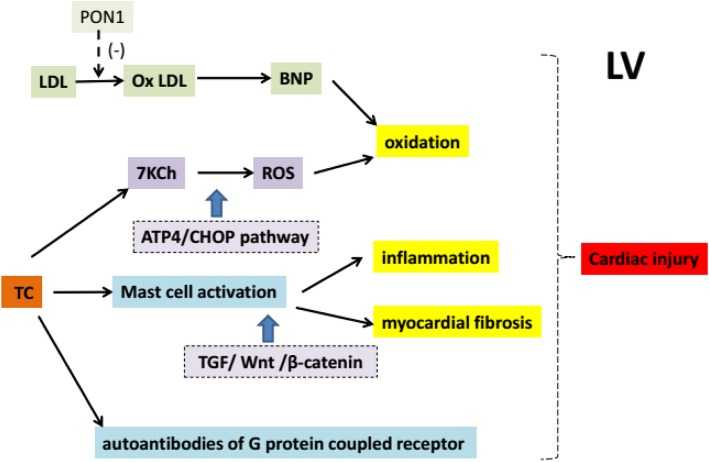
Hyperlipidemia is a common metabolic disorder and one of risk factors for cardiovascular disease. Clinical studies have shown that hyperlipidemia increases the risk of non-ischemic heart failure, while decreasing serum lipids can reverse heart dysfunction. Apart from indirectly affecting the function of the heart by promoting the development of atherosclerosis, hyperlipidemia also affects the systolic function and cardiac electrophysiological response of the heart directly, which may be related to gradual accumulation of cardiac lipids and consequent systemic oxidative stress, proinflammatory state and mitochondrial dysfunction. However, the mechanism underlying direct effects of hyperlipidemia on the heart are not fully understood. In this review, we provide an updated summary of recent experimental and clinical studies that focus on elucidating the mechanisms of the action of hyperlipidemia on cardiac function, the relationship between heart failure and serum lipids, and protective effects of lipid-lowering drugs on the heart. The exciting progress in this field supports the prospect of guiding early protection of the heart to benefit the patients with chronic hyperlipidemia and familial hyperlipidemia.
高脂血症是一种常见的代谢紊乱,也是心血管疾病的危险因素之一。临床研究表明,高脂血症会增加非缺血性心力衰竭的风险,而降低血清脂质可以逆转心脏功能障碍。除了通过促进动脉粥样硬化的发展间接影响心脏功能外,高脂血症还直接影响心脏的收缩功能和心脏电生理反应,这可能与心脏脂质的逐渐积累以及随之而来的全身氧化应激、促炎状态和线粒体功能障碍有关。然而,高脂血症对心脏的直接作用的机制尚不完全清楚。在这篇综述中,我们提供了最近的实验和临床研究的最新总结,这些研究集中在阐明高脂血症对心脏功能的作用机制、心力衰竭与血清脂质的关系以及降脂药物对心脏的保护作用。这一领域令人兴奋的进展支持了早期保护心脏的前景,以造福于慢性高脂血症和家族性高脂血症患者。