Fei Yanquan, Wang Yan, Pang Yilin, Wang Wenyan, Zhu Dan, Xie Meigui, Lan Shile, Wang Zheng
College of Bioscience and Biotechnology, Hunan Agricultural University, Changsha, China.
Front Physiol. 2020 Jan 22;10:1601. doi: 10.3389/fphys.2019.01601. eCollection 2019.
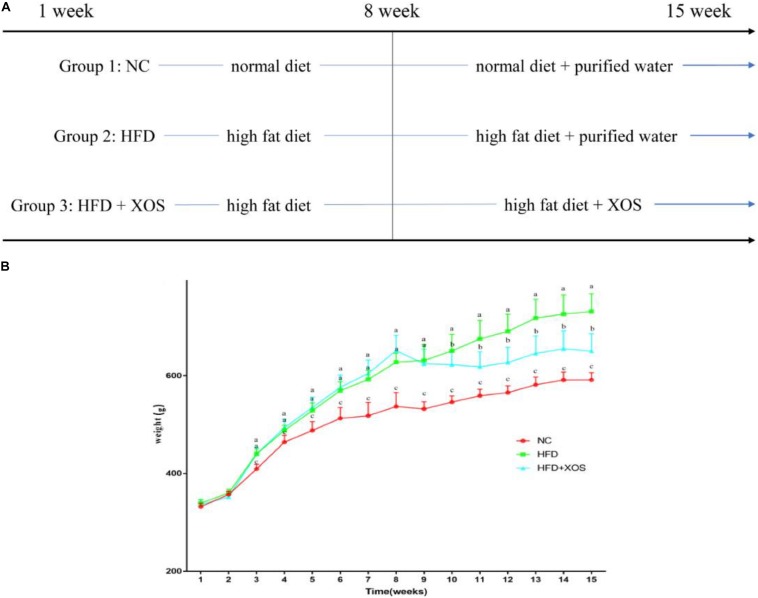
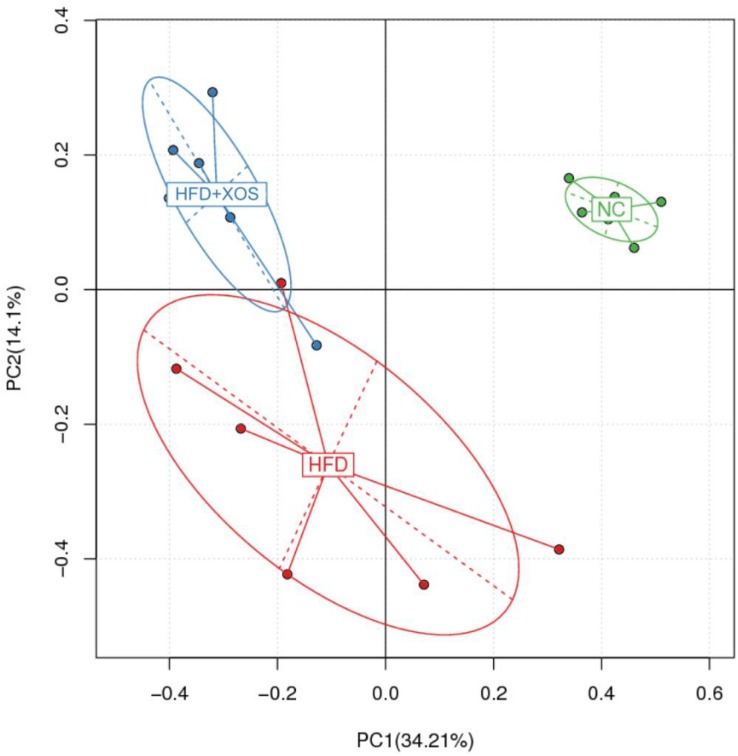
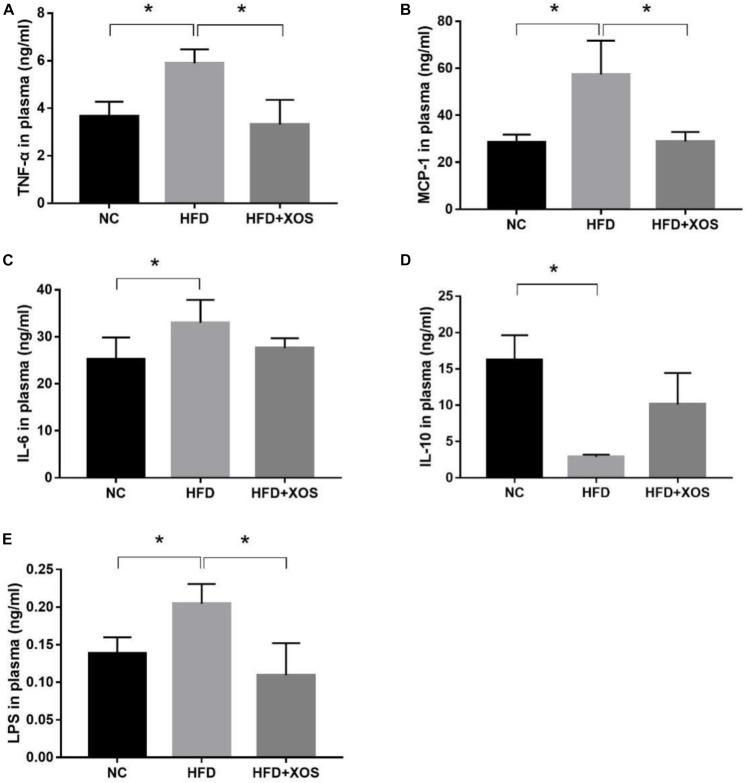
Obesity leads to colonic inflammation and may increase the risk of colorectal cancer. Xylooligosaccharide (XOS) exhibits strong antioxidant and excellent antibacterial properties, and can be utilized by gut microbes to maintain the ecological balance of the intestinal tract. In this study, we explored how XOS modulates the microbiota and regulates high fat diet (HFD) induced inflammation. We measured the changes in body weight and visceral coefficients in rats fed a high-fat diet. We also measured the expression levels of inflammatory factors in the plasma and colonic tissues of the rats using the enzyme-linked immunosorbent assay and real-time quantitative polymerase chain reaction. We analyzed the composition of fecal microorganisms and short chain fatty acid (SCFA) content using 16S rDNA and GC-MS. We found that XOS significantly counteracted HFD induced weight gain. Moreover, the plasma levels of monocyte chemoattractant protein-1, tumor necrosis factor (TNF-α) and lipopolysaccharide decreased in the XOS-treated rats. XOS treatment decreased TNF-α mRNA expression and increased occludin mRNA expression in the rat colon. We observed a reduction in the overall microbial abundance in the feces of the XOS-treated rats, although the proportion of Bacteroidetes/Firmicutes increased significantly and the number of beneficial bacteria increased in the form of dominant microbes. We found that both SCFA-producing bacteria and SCFA content increased in the gut of the XOS-treated rats. We identified a correlation between the abundance of and and SCFA content. Taken together, we propose that XOS can alleviate colonic inflammation by regulating gut microbial composition and enhancing SCFA content in the gut.
肥胖会导致结肠炎症,并可能增加患结直肠癌的风险。低聚木糖(XOS)具有强大的抗氧化和优异的抗菌特性,并且可被肠道微生物利用以维持肠道的生态平衡。在本研究中,我们探究了XOS如何调节微生物群并调控高脂饮食(HFD)诱导的炎症。我们测量了喂食高脂饮食的大鼠的体重和内脏系数变化。我们还使用酶联免疫吸附测定法和实时定量聚合酶链反应测量了大鼠血浆和结肠组织中炎症因子的表达水平。我们使用16S rDNA和气相色谱 - 质谱联用仪分析了粪便微生物的组成和短链脂肪酸(SCFA)含量。我们发现XOS显著抵消了HFD诱导的体重增加。此外,在接受XOS治疗的大鼠中,单核细胞趋化蛋白 -1、肿瘤坏死因子(TNF-α)和脂多糖的血浆水平降低。XOS治疗降低了大鼠结肠中TNF-α mRNA的表达并增加了闭合蛋白mRNA的表达。我们观察到接受XOS治疗的大鼠粪便中的总体微生物丰度降低,尽管拟杆菌门/厚壁菌门的比例显著增加,并且有益细菌的数量以优势微生物的形式增加。我们发现接受XOS治疗的大鼠肠道中产生SCFA的细菌和SCFA含量均增加。我们确定了[此处原文缺失相关内容]的丰度与SCFA含量之间的相关性。综上所述,我们提出XOS可通过调节肠道微生物组成和增加肠道中SCFA含量来减轻结肠炎症。