Li Fang, Li Qian, Zhang Yu, Zhou Xianrong, Yi Ruokun, Zhao Xin
Chongqing Collaborative Innovation Center for Functional Food, Chongqing Engineering Research Center of Functional Food, Chongqing Engineering Laboratory for Research and Development of Functional Food, Chongqing University of Education, Chongqing, China.
Department of Nuclear Medicine, Chongqing University Central Hospital/Chongqing Emergency Medical Center, Chongqing, China.
Front Pharmacol. 2021 Nov 22;12:791614. doi: 10.3389/fphar.2021.791614. eCollection 2021.
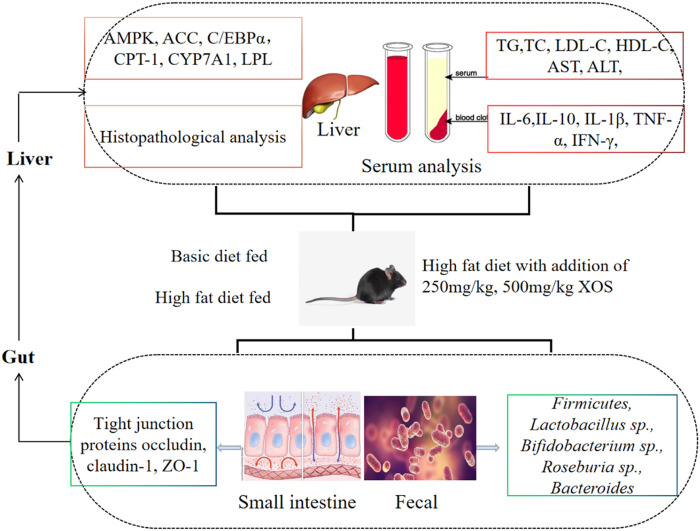
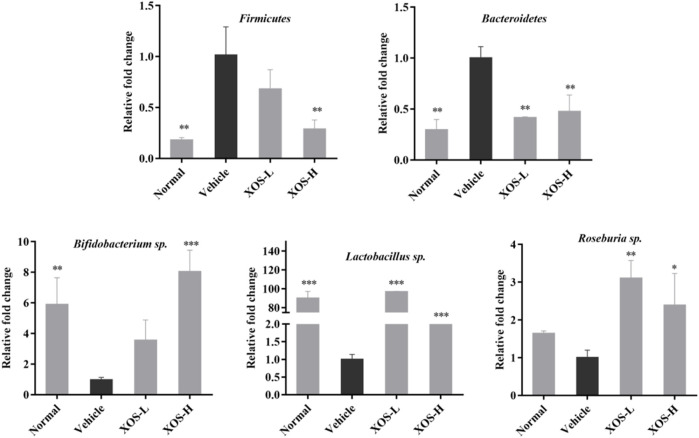
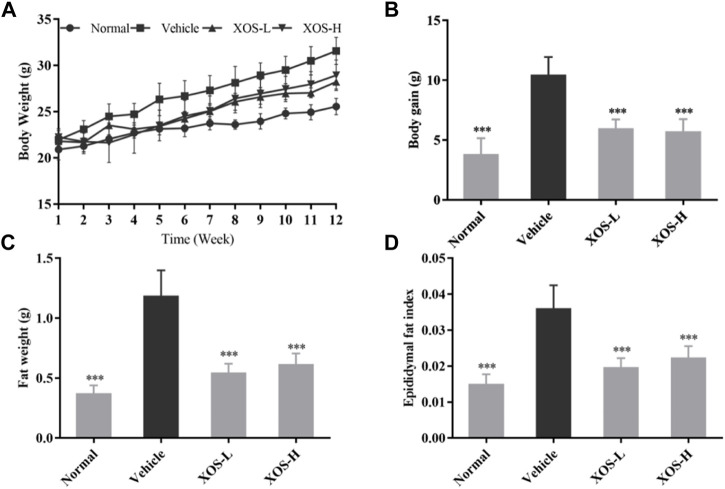
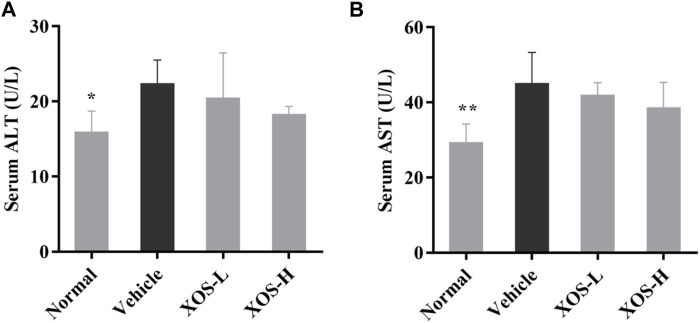
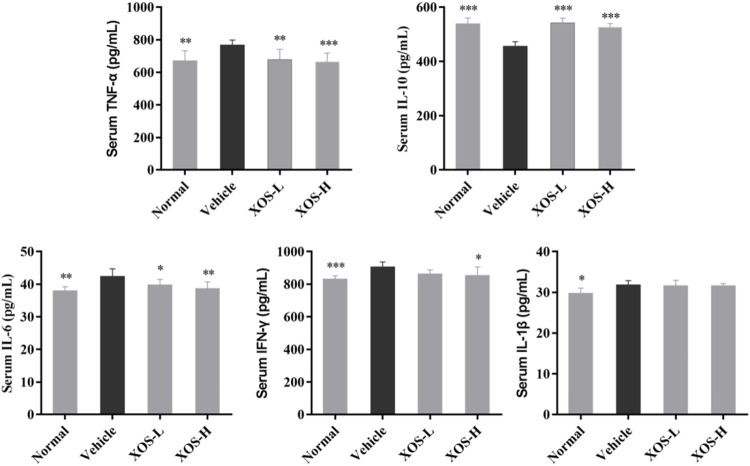
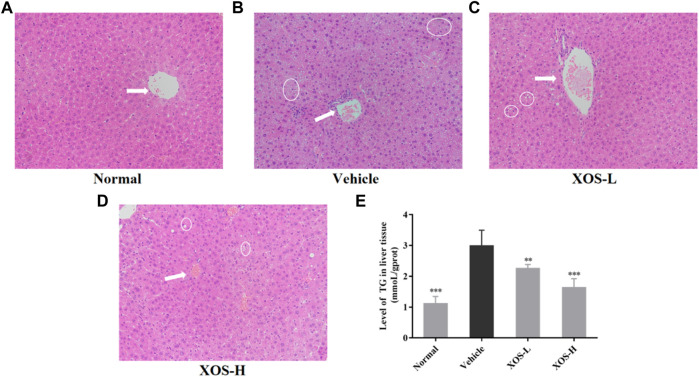
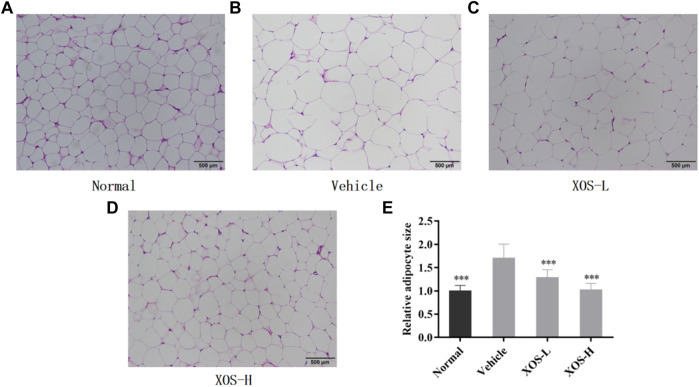
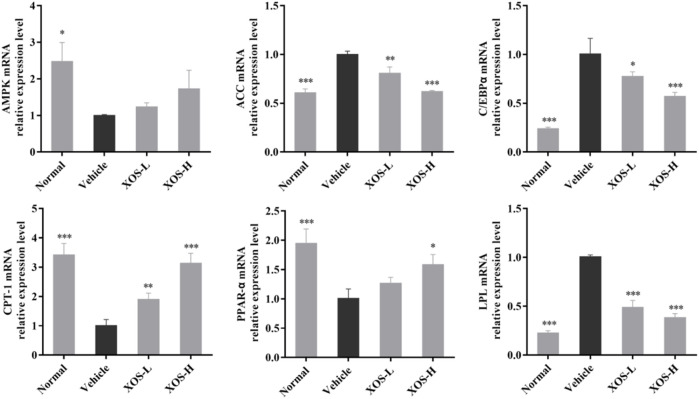
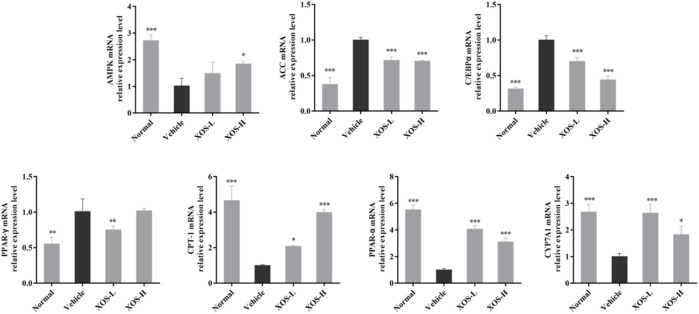
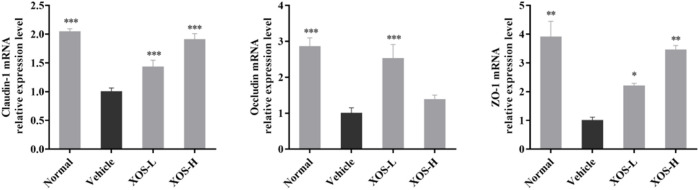
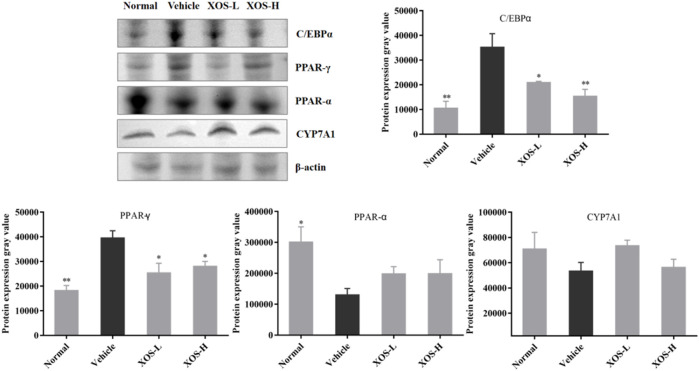
Xylooligosaccharide (XOS) is a source of prebiotics with multiple biological activities. The present study aimed to investigate the effects of XOS on mice fed a high-fat diet. Mice were fed either a normal diet or a high-fat diet supplemented without or with XOS (250 and 500 mg/kg), respectively, for 12 weeks. The results showed that the XOS inhibited mouse weight gain, decreased the epididymal adipose index, and improved the blood lipid levels, including triglyceride (TG), total cholesterol (TC), and low-density lipoprotein cholesterol (LDL-C) levels. Moreover, XOS reduced the activity of alanine aminotransferase (ALT) and aspartate aminotransferase (AST), and alleviated the damage to the liver caused by the high-fat diet. XOS also reduced hyperlipidemia-associated inflammatory responses. Additionally, quantitative real-time polymerase chain reaction results showed that XOS intervention activated the AMP-activated protein kinase (AMPK) pathway to regulate the fat synthesis, decomposition, and oxidation; upregulated the mRNA expression levels of carnitine palmitoyl transferase 1 (CPT-1), peroxisome proliferator-activated receptors α (PPAR-α), and cholesterol 7-alpha hydroxylase (CYP7A1); and downregulated the mRNA expression levels of acetyl-CoA carboxylase (ACC), CCAAT/enhancer-binding protein alpha (C/EBPα), and lipoprotein lipase (LPL). On the other hand, XOS enhanced the mRNA expression levels of zonula occludens-1 (ZO-1), occludin, and claudin-1 in the small intestine; increased the strength of the intestinal barrier; and optimized the composition of the intestinal microbiota. Therefore, it was concluded that XOS regulated the intestinal barrier, changed the intestinal microecology, and played an important role in preventing hyperlipidemia through the unique anatomical advantages of the gut-liver axis.
低聚木糖(XOS)是一种具有多种生物活性的益生元来源。本研究旨在探讨XOS对高脂饮食小鼠的影响。将小鼠分别喂食正常饮食或添加或不添加XOS(250和500毫克/千克)的高脂饮食,持续12周。结果表明,XOS抑制小鼠体重增加,降低附睾脂肪指数,并改善血脂水平,包括甘油三酯(TG)、总胆固醇(TC)和低密度脂蛋白胆固醇(LDL-C)水平。此外,XOS降低了丙氨酸氨基转移酶(ALT)和天冬氨酸氨基转移酶(AST)的活性,并减轻了高脂饮食对肝脏造成的损伤。XOS还减少了与高脂血症相关的炎症反应。此外,定量实时聚合酶链反应结果表明,XOS干预激活了AMP激活的蛋白激酶(AMPK)途径,以调节脂肪的合成、分解和氧化;上调了肉碱棕榈酰转移酶1(CPT-1)、过氧化物酶体增殖物激活受体α(PPAR-α)和胆固醇7-α羟化酶(CYP7A1)的mRNA表达水平;并下调了乙酰辅酶A羧化酶(ACC)、CCAAT/增强子结合蛋白α(C/EBPα)和脂蛋白脂肪酶(LPL)的mRNA表达水平。另一方面,XOS提高了小肠中紧密连接蛋白1(ZO-1)、闭合蛋白和Claudin-1的mRNA表达水平;增加了肠道屏障的强度;并优化了肠道微生物群的组成。因此,得出结论,XOS通过肠-肝轴的独特解剖学优势调节肠道屏障,改变肠道微生态,并在预防高脂血症中发挥重要作用。