Wimmer Franziska, Beisel Chase L
Helmholtz Institute for RNA-Based Infection Research (HIRI), Helmholtz Centre for Infection Research (HZI), Würzburg, Germany.
Medical Faculty, University of Würzburg, Würzburg, Germany.
Front Microbiol. 2020 Jan 22;10:3078. doi: 10.3389/fmicb.2019.03078. eCollection 2019.
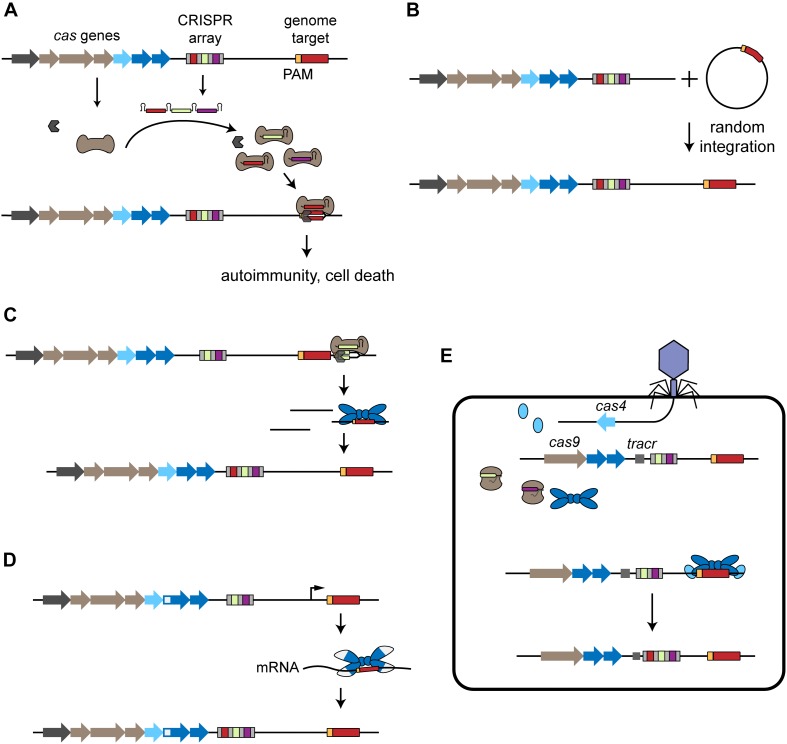
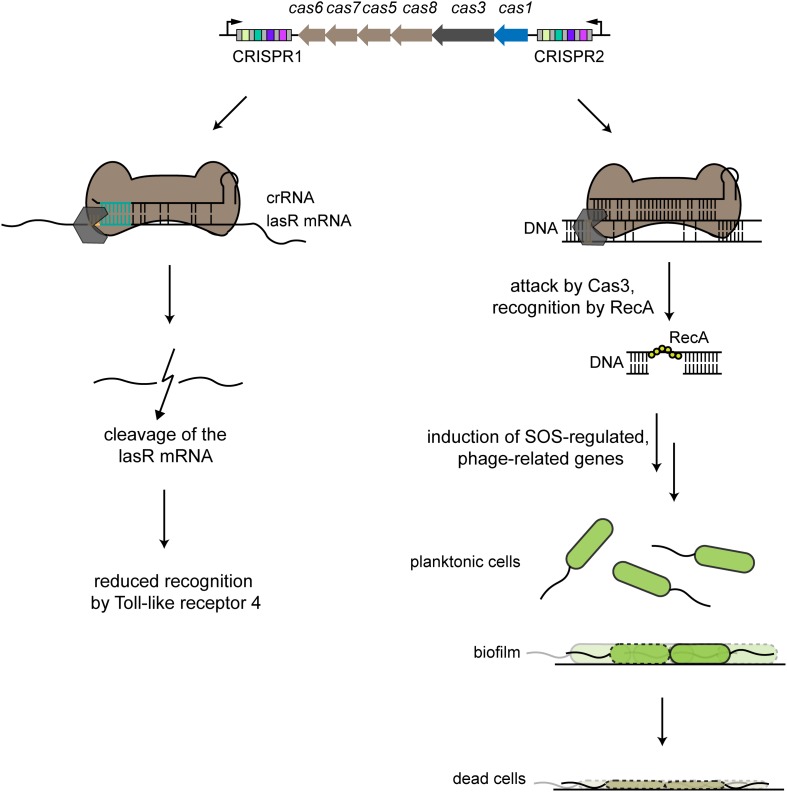
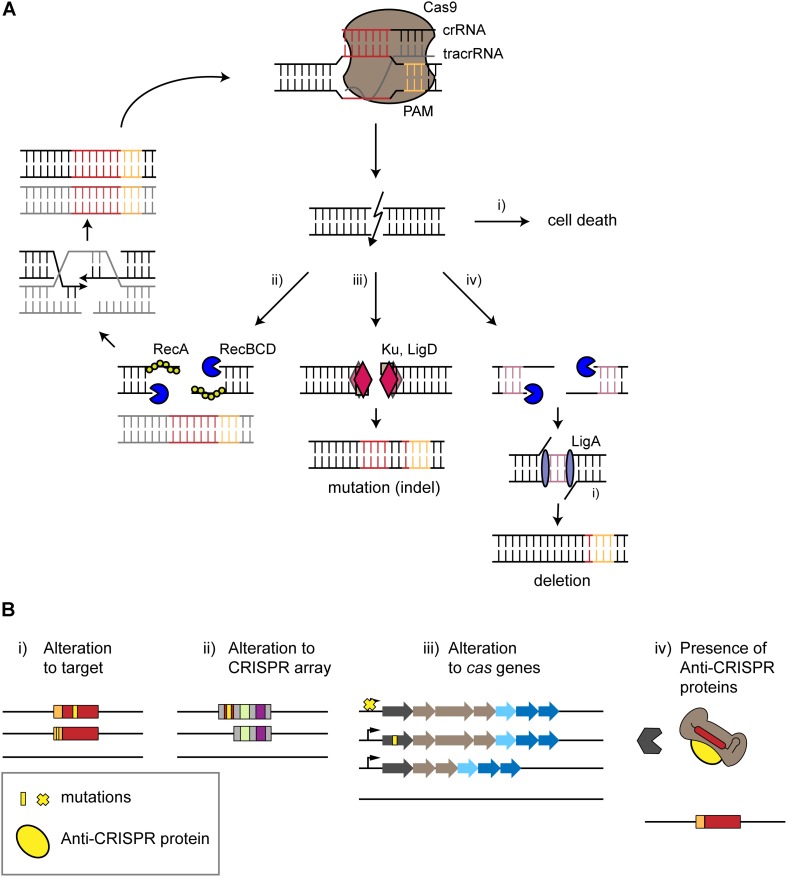
CRISPR-Cas immune systems in bacteria and archaea record prior infections as spacers within each system's CRISPR arrays. Spacers are normally derived from invasive genetic material and direct the immune system to complementary targets as part of future infections. However, not all spacers appear to be derived from foreign genetic material and instead can originate from the host genome. Their presence poses a paradox, as self-targeting spacers would be expected to induce an autoimmune response and cell death. In this review, we discuss the known frequency of self-targeting spacers in natural CRISPR-Cas systems, how these spacers can be incorporated into CRISPR arrays, and how the host can evade lethal attack. We also discuss how self-targeting spacers can become the basis for alternative functions performed by CRISPR-Cas systems that extend beyond adaptive immunity. Overall, the acquisition of genome-targeting spacers poses a substantial risk but can aid in the host's evolution and potentially lead to or support new functionalities.
细菌和古细菌中的CRISPR-Cas免疫系统将先前的感染记录为每个系统CRISPR阵列中的间隔序列。间隔序列通常来源于入侵的遗传物质,并在未来感染时作为免疫系统的一部分引导其靶向互补目标。然而,并非所有间隔序列似乎都来源于外源遗传物质,相反,它们可能起源于宿主基因组。它们的存在构成了一个悖论,因为自我靶向的间隔序列预计会引发自身免疫反应并导致细胞死亡。在这篇综述中,我们讨论了天然CRISPR-Cas系统中自我靶向间隔序列的已知频率、这些间隔序列如何被整合到CRISPR阵列中,以及宿主如何避免致命攻击。我们还讨论了自我靶向间隔序列如何能够成为CRISPR-Cas系统执行的超越适应性免疫的其他功能的基础。总体而言,获取靶向基因组的间隔序列带来了重大风险,但有助于宿主的进化,并有可能导致或支持新的功能。