Chen Jiahui, Wang Jianying, Wang Minjia, Liang Ruirui, Lu Yi, Zhang Qiang, Chen Qin, Niu Bing
Shanghai Key Laboratory of Bio-Energy Crops, School of Life Sciences, Shanghai University, Shanghai, China.
Tech Ctr Anim Plant & Food Inspect & Quarantine, Shanghai Customs, Shanghai, China.
Front Vet Sci. 2020 Jan 21;6:511. doi: 10.3389/fvets.2019.00511. eCollection 2019.
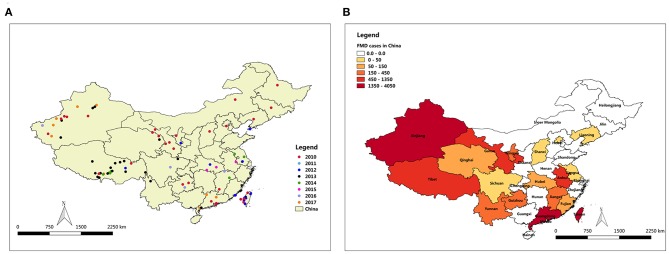
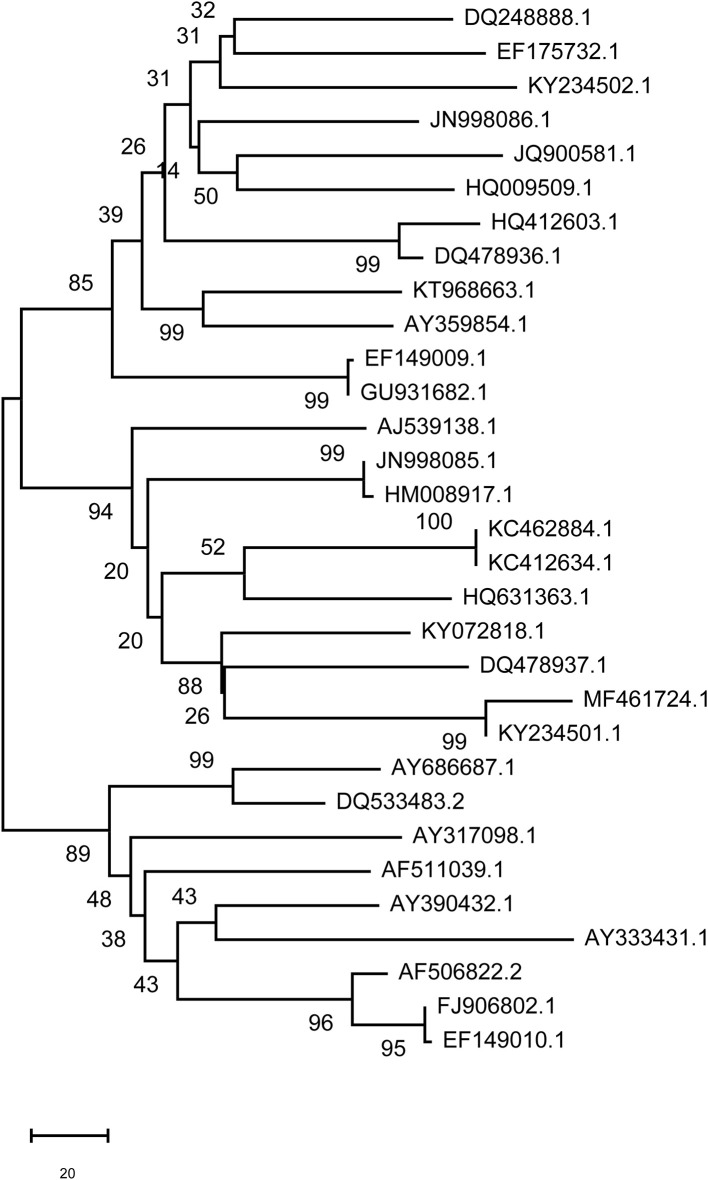
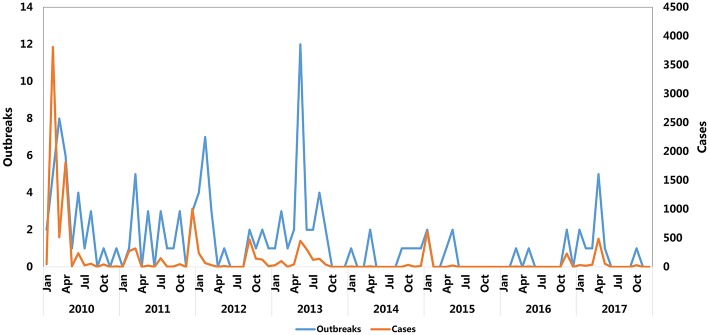
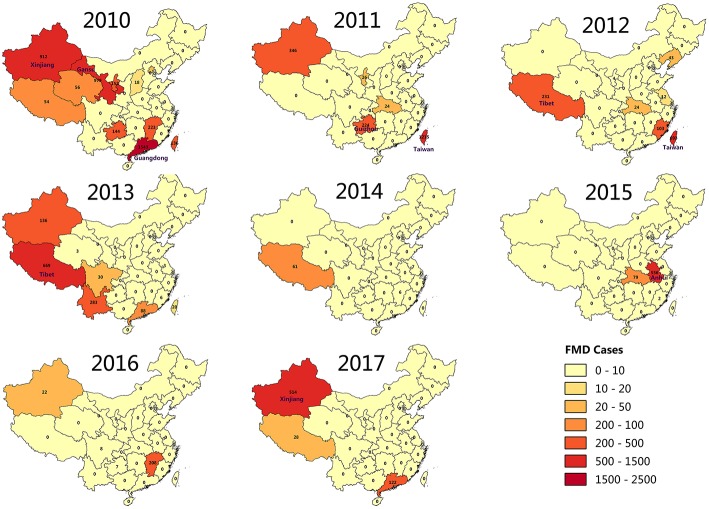
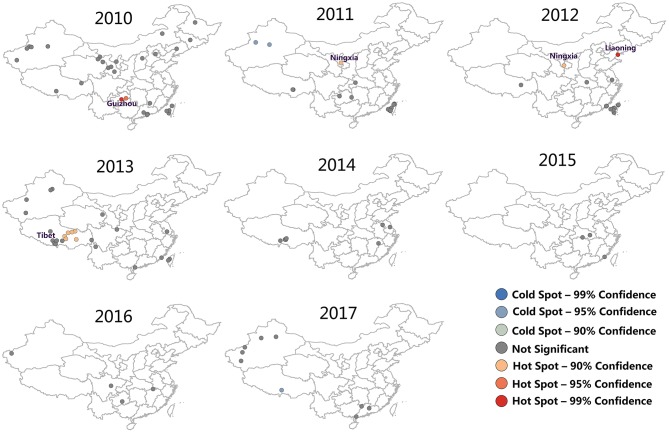
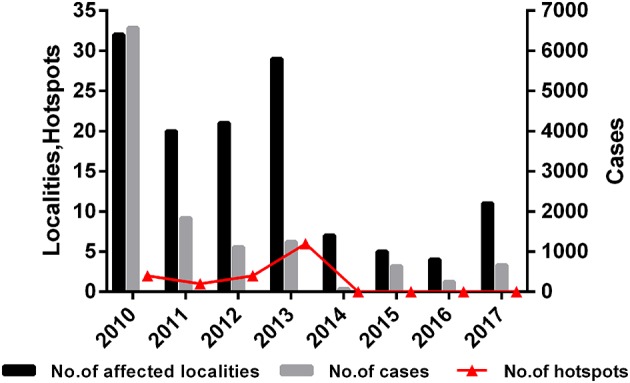
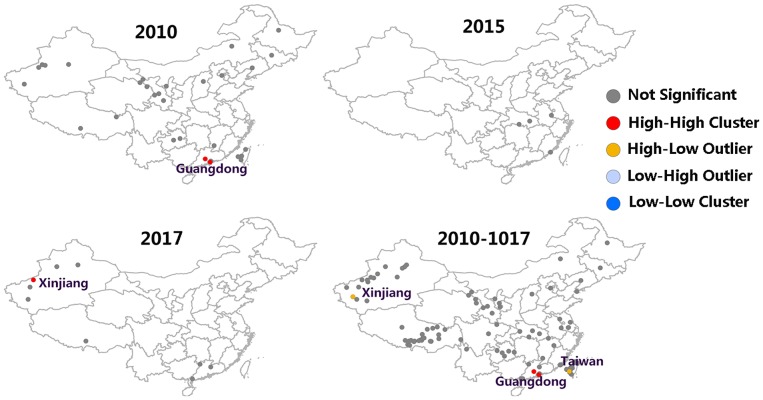
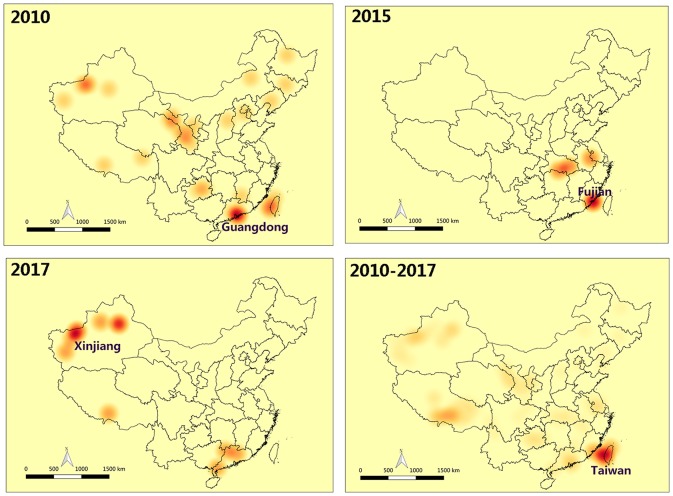
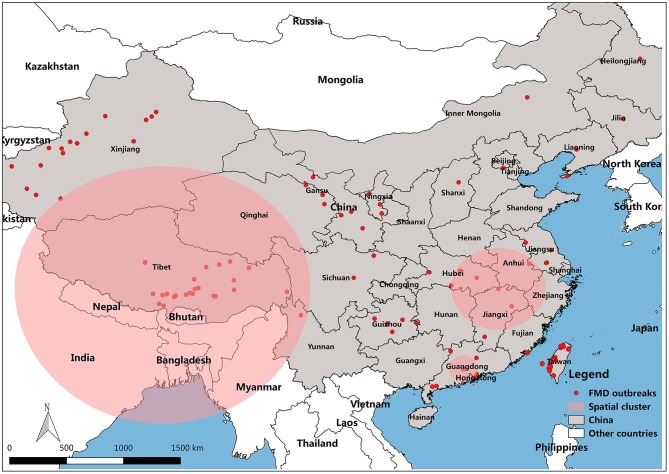
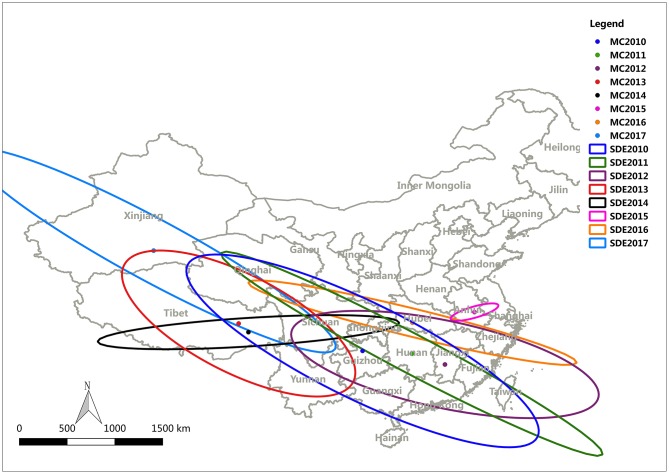
Foot-and-mouth disease (FMD) is a highly contagious disease of livestock and seriously affects the development of animal husbandry. It is necessary to defend the spread of FMD. To explore the distribution characteristics and transmission of FMD between 2010 and 2017 in China, Global Moran's I test and Getis-Ord Gi index were used to analyze the spatial cluster. A space-time permutation scan statistic was applied to analyze the spatio-temporal pattern. GIS-based method was employed to create a map representing the distribution pattern, directional trend, and hotspots for each outbreak. The number of cases was defined as the number of animals with FMD for the above analysis. We also constructed a phylogenetic tree to compare the homology and variation of FMD virus (FMDV) to provide a clue for the potential development of an effective vaccine. The results indicated that the FMD outbreaks in China had obvious time patterns and clusters in space and space-time, with the outbreaks concentrated in the first half of each year. The outbreaks of FMD decreased each year from 2010 with an obvious downward trend of hotspots. Spatial analysis revealed that the distribution of FMD outbreaks in 2010, 2015, and 2017 exhibited a clustered pattern. Space-time scanning revealed that the spatio-temporal clusters were centered in Guangdong, Tibet and the junction of Wuhan, Jiangxi, Anhui. Comparison of the spatial analysis and space-time analysis of FMD outbreaks revealed that Guangdong was the same cluster of the two in 2010. In addition, the directional trend analysis indicated that the FMD transmission was oriented northwest-southeast. The findings demonstrated that FMDV in China can be divided into three pedigrees and the homology of these strains is very high while comparing the first FMDV strain with the others. The data provide a basis for the effective monitoring and prevention of FMD, and for the development of an FMD vaccine in China.
口蹄疫(FMD)是一种家畜的高度传染性疾病,严重影响畜牧业发展。抵御口蹄疫传播很有必要。为探究2010年至2017年中国口蹄疫的分布特征及传播情况,采用全局莫兰指数(Global Moran's I test)和Getis-Ord Gi指数分析空间聚类,应用时空置换扫描统计量分析时空格局,采用基于地理信息系统(GIS)的方法绘制代表每次疫情分布格局、方向趋势和热点的地图。上述分析中病例数定义为患口蹄疫动物的数量。我们还构建了系统发育树以比较口蹄疫病毒(FMDV)的同源性和变异情况,为有效疫苗的潜在研发提供线索。结果表明,中国口蹄疫疫情在时间上有明显模式,在空间和时空上有聚类现象,疫情集中在每年上半年。口蹄疫疫情自2010年起逐年减少,热点呈明显下降趋势。空间分析显示,2010年、2015年和2017年口蹄疫疫情分布呈聚类模式。时空扫描显示,时空聚类集中在广东、西藏以及武汉、江西、安徽交界处。口蹄疫疫情空间分析与时空分析比较显示,2010年广东是两者的同一聚类。此外,方向趋势分析表明,口蹄疫传播方向为西北-东南。研究结果表明,中国的口蹄疫病毒可分为三个谱系,与首个口蹄疫病毒株相比,其他毒株的同源性很高。这些数据为中国口蹄疫的有效监测和预防以及口蹄疫疫苗研发提供了依据。