Center for Alcohol and Addiction Studies, Brown University.
Psychol Addict Behav. 2020 Aug;34(5):579-589. doi: 10.1037/adb0000561. Epub 2020 Feb 10.
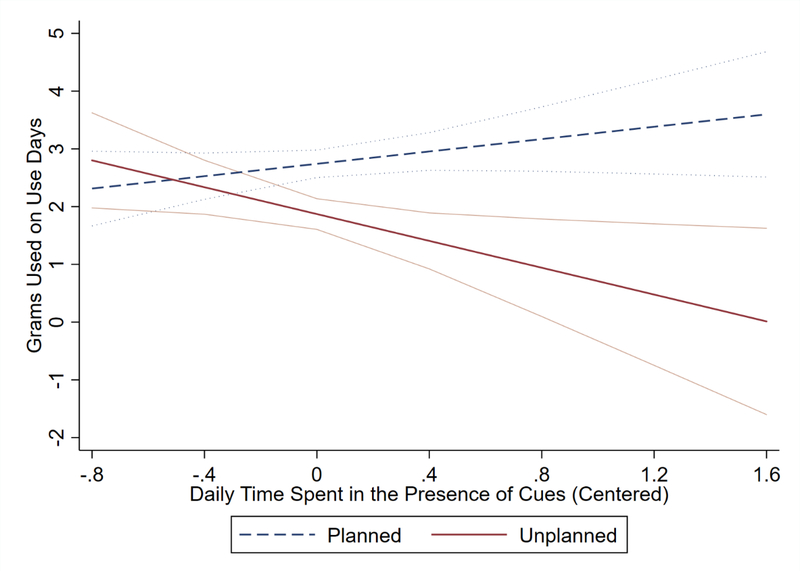
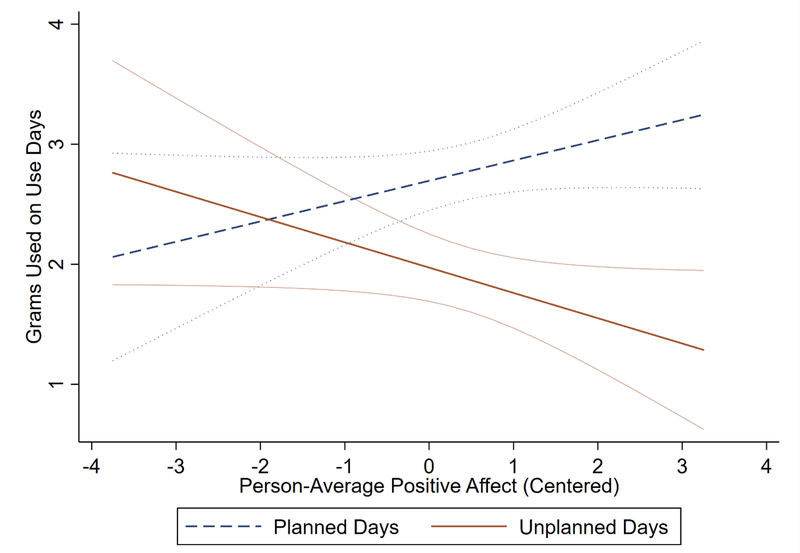
Difficulty regulating substance use is a core feature of addiction that can manifest as unplanned use. This study sought to identify internal and situational influences on unplanned marijuana use among youth ages 15 to 24 years (N = 85; 48% female; 27% age <18 years). Additionally, we disentangled person-level associations from within-person day-to-day influences. Ecological momentary assessment methods captured affective (positive: energized, excited, sociable, happy, relaxed; negative: bored, tense, sad, stressed) and situational factors in real-world settings during a 1-week monitoring period. Participants reported no plan to use on 51% of days (269/527), and youth ultimately used marijuana on 35% of these unplanned days. At the day level, on days when youth spent more time in the presence of marijuana-related cues than they typically do, they used more grams on planned days and less on unplanned days. Regardless of use plans, youth were more likely to use on days when they spent more time with using friends and if they reported greater availability of marijuana in general across the monitoring period. At the person level, youth who generally reported higher positive affect, relative to other participants, used more on planned days and less on unplanned days. Regardless of use plans, youth who generally reported greater craving and time in the presence of marijuana-related cues used more grams, whereas youth who generally reported greater negative affect used less. Together, findings revealed several factors, with clear clinical relevance, which may explain why some youth struggle to control their marijuana use. (PsycInfo Database Record (c) 2020 APA, all rights reserved).
难以控制物质使用是成瘾的核心特征,可能表现为计划外使用。本研究旨在确定 15 至 24 岁(48%为女性;27%年龄<18 岁)青年中计划外使用大麻的内在和情境影响。此外,我们还从个体内在的日常影响中分离出个体水平的关联。在为期 1 周的监测期间,生态瞬时评估方法在真实环境中捕捉了情感(积极:精力充沛、兴奋、善于交际、快乐、放松;消极:无聊、紧张、悲伤、压力)和情境因素。参与者报告在 51%的日子(269/527)没有计划使用大麻,最终在这些无计划的日子里有 35%的人使用了大麻。在每天的水平上,当年轻人在大麻相关线索的存在时间比平时多的时候,他们在计划使用大麻的日子里使用的大麻量会增加,而在无计划使用大麻的日子里使用的大麻量会减少。无论使用计划如何,当年轻人与使用大麻的朋友共度的时间更多,或者在整个监测期间报告大麻普遍更容易获得时,他们更有可能使用大麻。在个体水平上,与其他参与者相比,总体上报告积极情绪较高的年轻人在计划使用大麻的日子里使用的大麻量更多,在无计划使用大麻的日子里使用的大麻量更少。无论使用计划如何,总体上报告更强的渴望和在大麻相关线索存在时间的年轻人使用的大麻量更多,而总体上报告更多的负面情绪的年轻人使用的大麻量更少。总的来说,研究结果揭示了一些具有明显临床意义的因素,这些因素可能解释了为什么有些年轻人难以控制他们的大麻使用。(PsycInfo 数据库记录(c)2020 APA,保留所有权利)。