Cao Peng, Li Chenxu, Wang Han, Yu Zhiyin, Xu Xi, Wang Xiangjing, Zhao Junwei, Xiang Wensheng
Key Laboratory of Agricultural Microbiology of Heilongjiang Province, Northeast Agricultural University, No. 600 Changjiang Road, Xiangfang District, Harbin 150030, China.
State Key Laboratory for Biology of Plant Diseases and Insect Pests, Institute of Plant Protection, Chinese Academy of Agricultural Sciences, Beijing 100193, China.
Microorganisms. 2020 Feb 10;8(2):236. doi: 10.3390/microorganisms8020236.
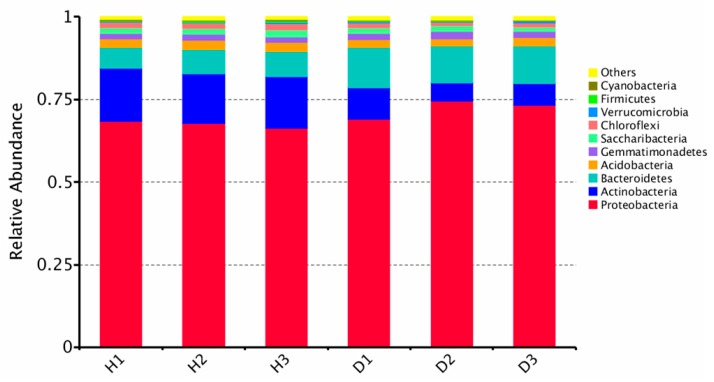
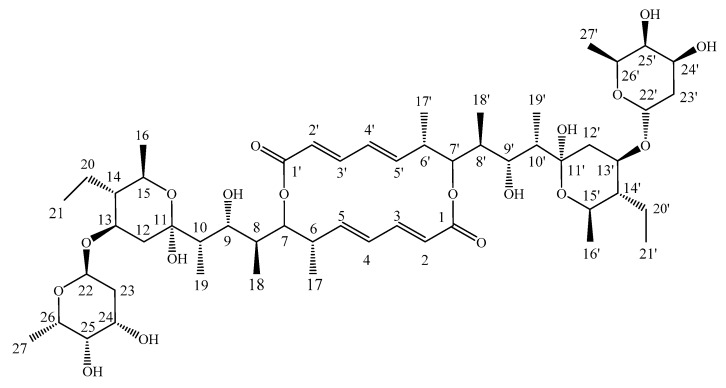
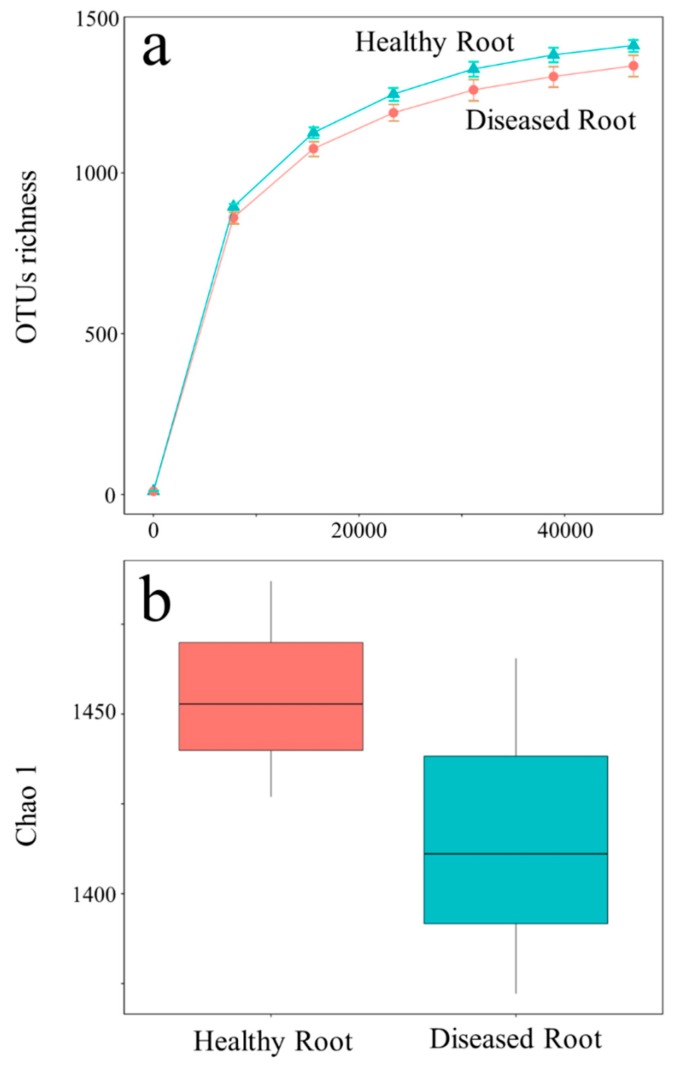
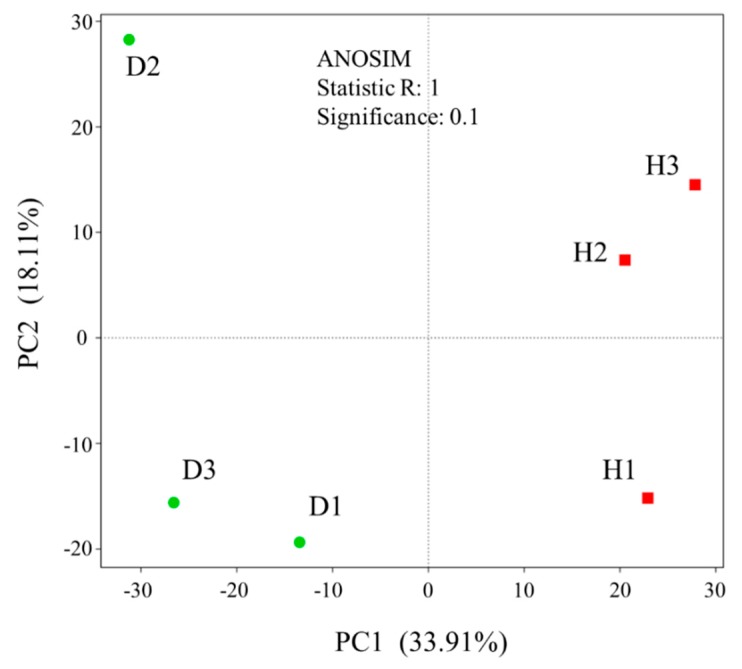
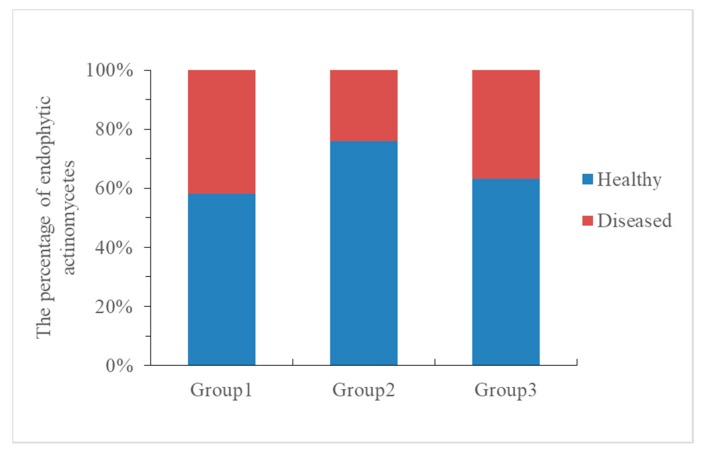
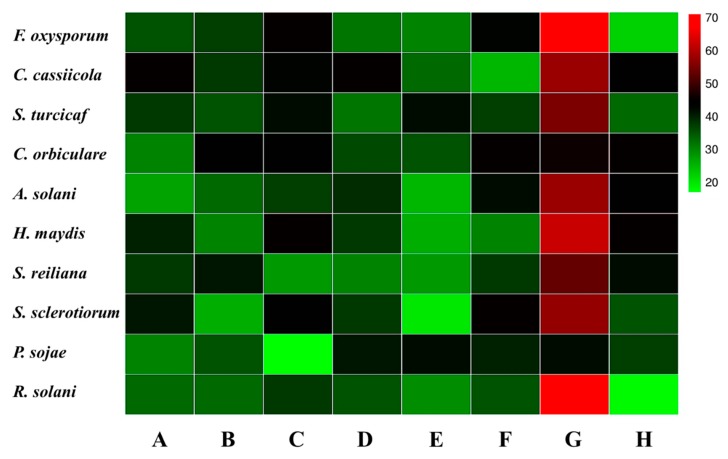
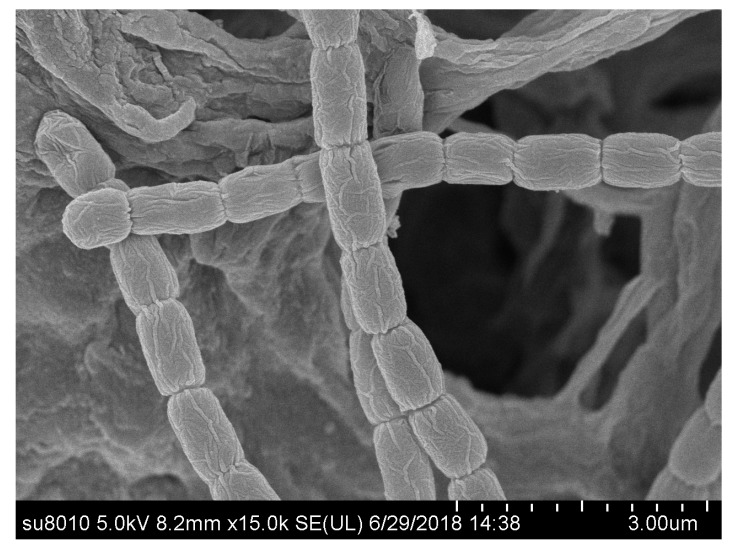
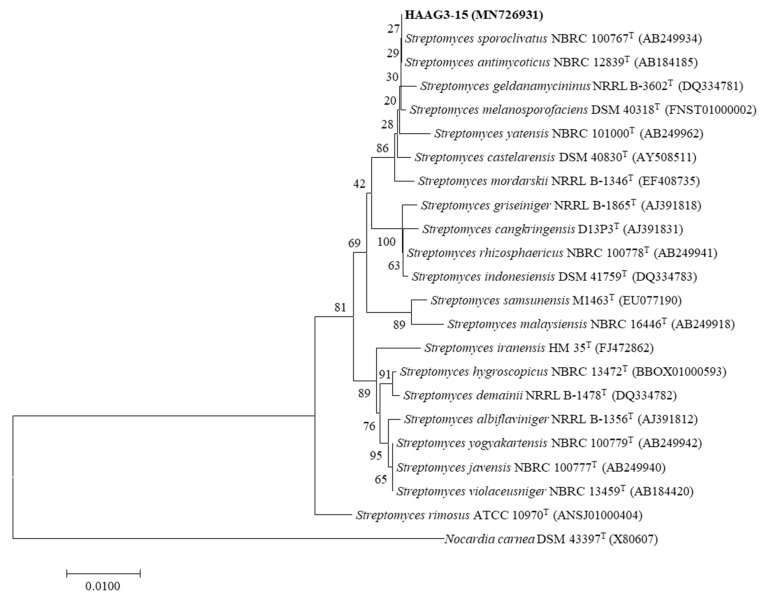
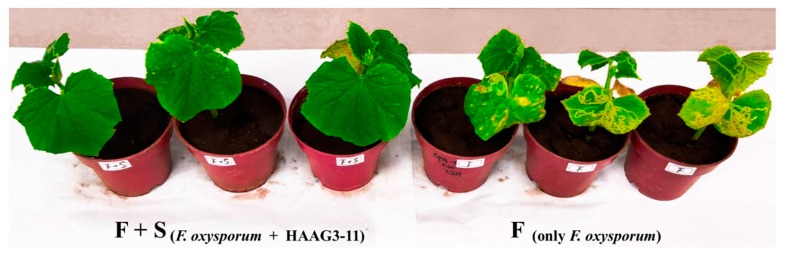
Microorganisms related to plant roots are vital for plant growth and health and considered to be the second genome of the plant. When the plant is attacked by plant pathogens, the diversity and community structure of plant-associated microbes might be changed. The goal of this study is to characterize differences in root-associated endophytic actinobacterial community composition and antifungal activity between Fusarium wilt diseased and healthy cucumber and screen actinobacteria for potential biological control of Fusarium wilt of cucumber. In the present research, three healthy plants (also termed "islands") and three obviously diseased plants (naturally infected by F. oxysporum f. sp. cucumerinum) nearby the islands collected from the cucumber continuous cropping greenhouse were chosen as samples. Results of culture-independent and culture-dependent analysis demonstrated that actinomycetes in the healthy roots were significantly more abundant than those of diseased roots. Moreover, there were seven strains with antifungal activity against F. oxysporum f. sp. cucumerinum in healthy cucumber roots, but only one strain in diseased cucumber roots. Out of these eight strains, the isolate HAAG3-15 was found to be best as it had the strongest antifungal activity against F. oxysporum f. sp. cucumerinum, and also exhibited broad-spectrum antifungal activity. Thus, strain HAAG3-15 was selected for studying its biocontrol efficacy under greenhouse conditions. The results suggested that the disease incidence and disease severity indices of cucumber Fusarium wilt greatly decreased (p < 0.05) while the height and shoot fresh weight of cucumber significantly increased (p < 0.05) after inoculating strain HAAG3-15. On the basis of morphological characteristics, physiological and biochemical properties and 100% 16S ribosomal RNA (rRNA) gene sequence similarity with Streptomyces sporoclivatus NBRC 100767, the isolate was assigned to the genus Streptomyces. Moreover, azalomycin B was isolated and identified as the bioactive compound of strain HAAG3-15 based on analysis of spectra using a bioactivity-guided method. The stronger antifungal activity against F. oxysporum f. sp. cucumerinum, the obvious effect on disease prevention and growth promotion on cucumber seedlings in the greenhouse assay, and the excellent broad-spectrum antifungal activities suggest that strain HAAG3-15 could be developed as a potential biocontrol agent against F. oxysporum f. sp. cucumerinum used in organic agriculture. These results suggested that the healthy root nearby the infected plant is a good source for isolating biocontrol and plant growth-promoting endophytes.
与植物根系相关的微生物对植物生长和健康至关重要,被认为是植物的第二基因组。当植物受到植物病原体攻击时,与植物相关的微生物的多样性和群落结构可能会发生变化。本研究的目的是表征枯萎病黄瓜和健康黄瓜根际内生放线菌群落组成和抗真菌活性的差异,并筛选对黄瓜枯萎病具有潜在生物防治作用的放线菌。在本研究中,从黄瓜连作温室中选取了三株健康植株(也称为“岛株”)和三株在这些岛株附近明显患病的植株(自然感染黄瓜尖孢镰刀菌)作为样本。非培养依赖性和培养依赖性分析结果表明,健康根中的放线菌比患病根中的放线菌明显更丰富。此外,健康黄瓜根中有七株对黄瓜尖孢镰刀菌具有抗真菌活性的菌株,而患病黄瓜根中只有一株。在这八株菌株中,分离株HAAG3-15被发现是最好的,因为它对黄瓜尖孢镰刀菌具有最强的抗真菌活性,并且还表现出广谱抗真菌活性。因此,选择菌株HAAG3-15研究其在温室条件下的生物防治效果。结果表明,接种菌株HAAG3-15后,黄瓜枯萎病的发病率和病情严重程度指数大幅下降(p < 0.05),而黄瓜的株高和地上部鲜重显著增加(p < 0.05)。根据形态特征、生理生化特性以及与橄榄色链霉菌NBRC 100767的16S核糖体RNA(rRNA)基因序列100%相似性,该分离株被归为链霉菌属。此外,基于生物活性导向的光谱分析,分离并鉴定了氮杂霉素B为菌株HAAG3-15的生物活性化合物。对黄瓜尖孢镰刀菌较强的抗真菌活性、在温室试验中对黄瓜幼苗防病促生长的明显效果以及优异的广谱抗真菌活性表明,菌株HAAG3-15可开发成为有机农业中用于防治黄瓜尖孢镰刀菌的潜在生物防治剂。这些结果表明,感染植株附近的健康根是分离生物防治和促进植物生长的内生菌的良好来源。