State Key Laboratory of Medical Genomics, Shanghai Institute of Hematology, Rui Jin Hospital, School of Medicine and School of Life Sciences and Biotechnology, Shanghai Jiao Tong University, Shanghai, China.
State Key Laboratory of Microbial Metabolism, School of Life Sciences and Biotechnology, Shanghai Jiao Tong University, Shanghai, China.
Cancer Sci. 2020 Apr;111(4):1279-1290. doi: 10.1111/cas.14351. Epub 2020 Mar 10.
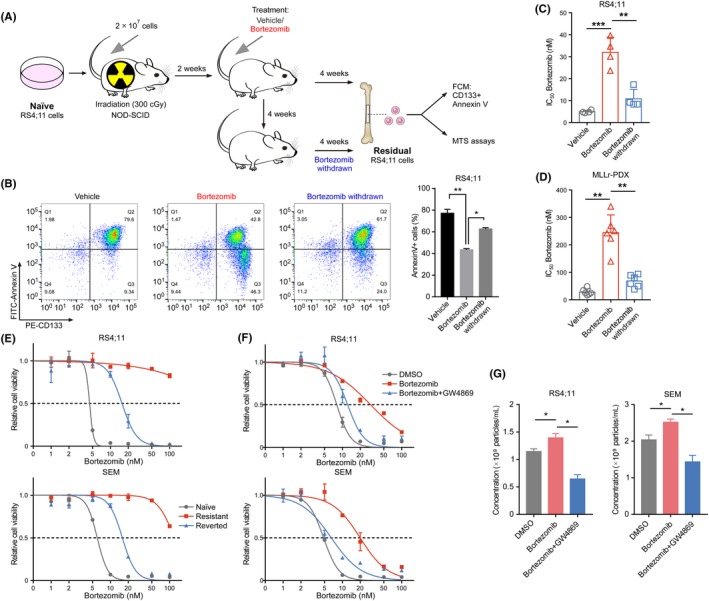
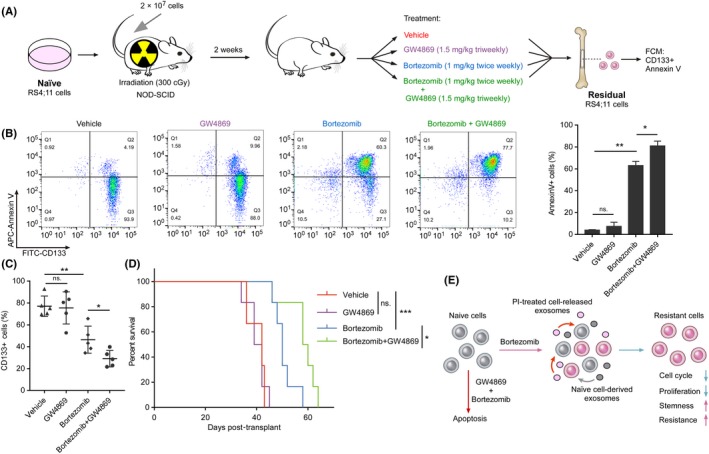
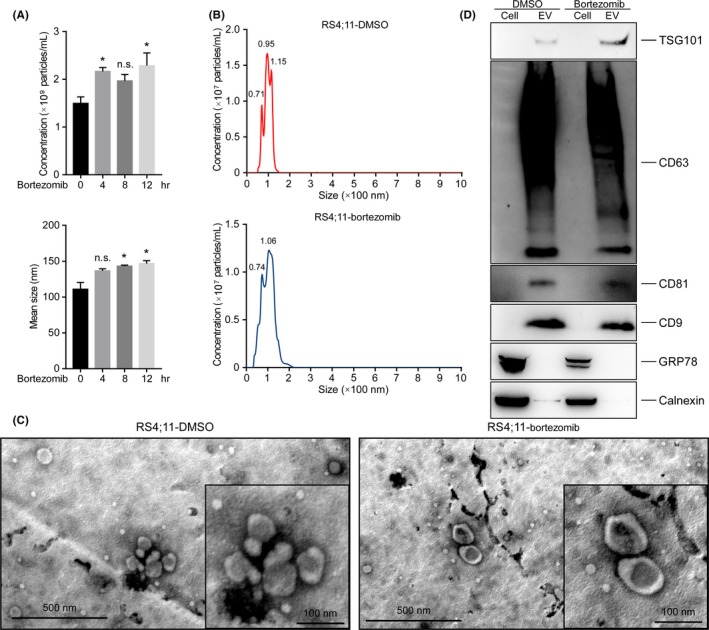
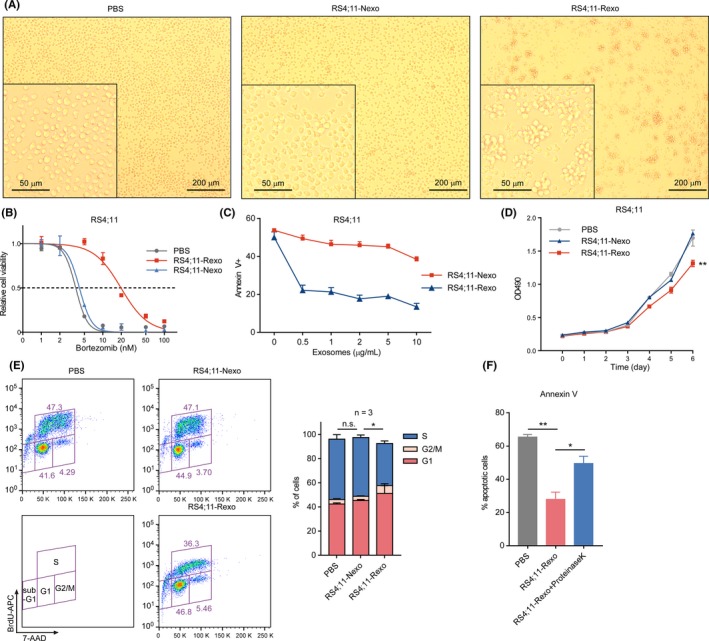
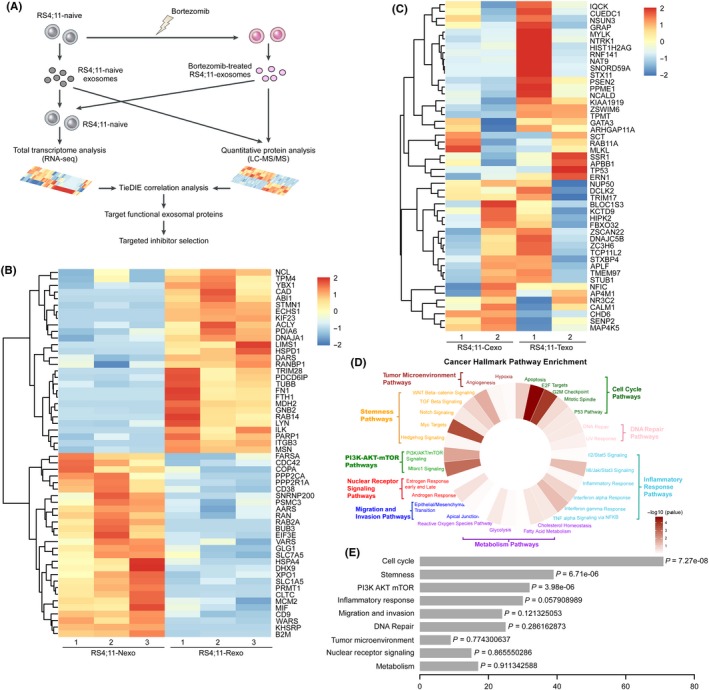
Proteasome inhibitors significantly improve cancer outcomes, but their use is eventually followed by proteasome inhibitor resistance and relapse. Current understanding of proteasome inhibitor resistance is limited to cell-autonomous mechanisms; whether non-autonomous mechanisms can be implicated in the development of proteasome inhibitor resistance is unclear. Here, we show that proteasome inhibitor tolerance can be transmitted non-autonomously through exosome-mediated intercellular interactions. We revealed that reversible proteasome inhibitor resistance can be transmitted from cells under therapy stress to naïve sensitive cells through exosome-mediated cell cycle arrest and enhanced stemness in mixed-lineage leukemia cells. Integrated multi-omics analysis using the Tied Diffusion through Interacting Events algorithm identified several candidate exosomal proteins that may serve as predictors for proteasome inhibitor resistance and potential therapeutic targets for treating refractory mixed-lineage leukemia. Furthermore, inhibiting the secretion of exosomes is a promising strategy for reversing proteasome inhibitor resistance in vivo, which provides a novel proof of principle for the treatment of other refractory or relapsed cancers.
蛋白酶体抑制剂显著改善了癌症的预后,但它们的使用最终会导致蛋白酶体抑制剂耐药和复发。目前对蛋白酶体抑制剂耐药性的理解仅限于细胞自主机制;非自主机制是否会参与蛋白酶体抑制剂耐药性的发展尚不清楚。在这里,我们表明蛋白酶体抑制剂耐受性可以通过外体介导的细胞间相互作用非自主传递。我们揭示了可逆的蛋白酶体抑制剂耐药性可以通过外体介导的细胞周期停滞和增强混合谱系白血病细胞的干性,从处于治疗压力下的细胞传递到幼稚敏感细胞。使用通过相互作用事件的捆绑扩散算法进行的综合多组学分析确定了几种候选外体蛋白,这些蛋白可能作为蛋白酶体抑制剂耐药性的预测因子和治疗难治性混合谱系白血病的潜在治疗靶点。此外,抑制外体的分泌是逆转体内蛋白酶体抑制剂耐药性的一种很有前途的策略,为治疗其他难治性或复发性癌症提供了新的原理证明。