López-Gil Elena, Moreno Sandra, Ortego Javier, Borrego Belén, Lorenzo Gema, Brun Alejandro
Animal Health Research Centre (CISA), National Institute for Agriculture and Food Research and Technology (INIA), Valdeolmos, 28130 Madrid, Spain.
Vaccines (Basel). 2020 Feb 12;8(1):82. doi: 10.3390/vaccines8010082.
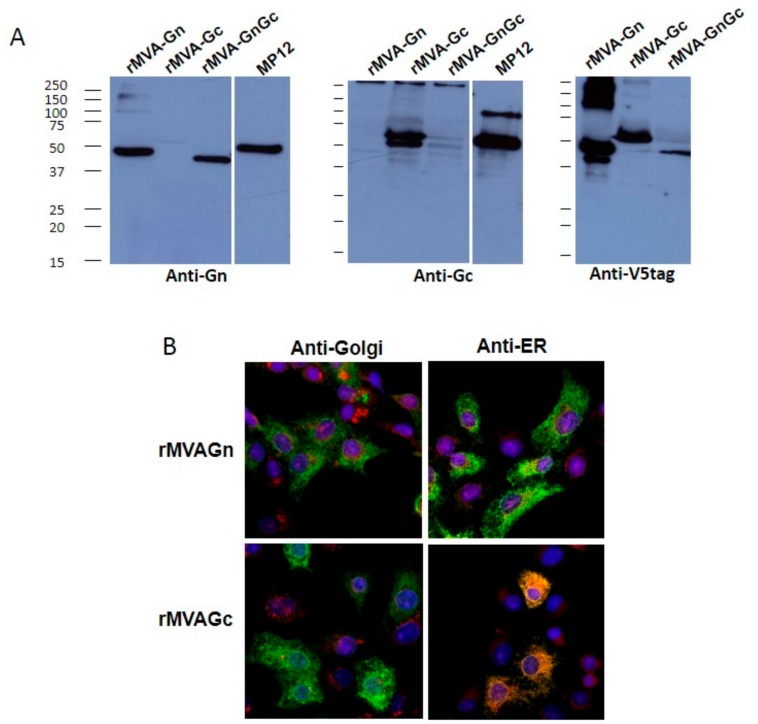
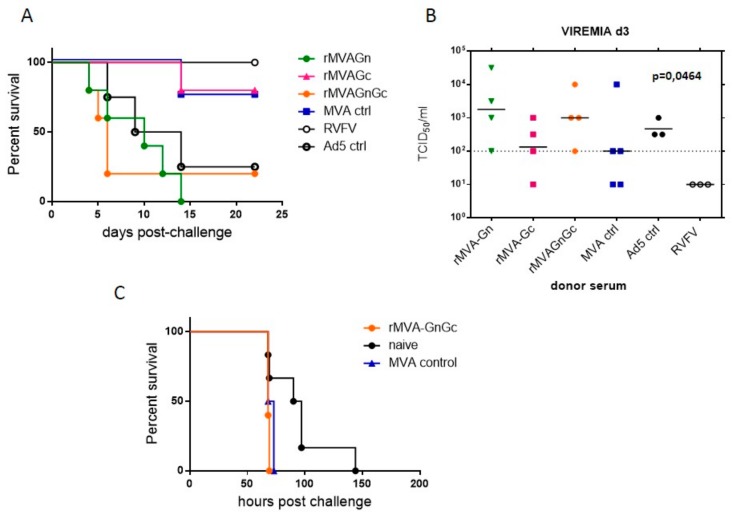
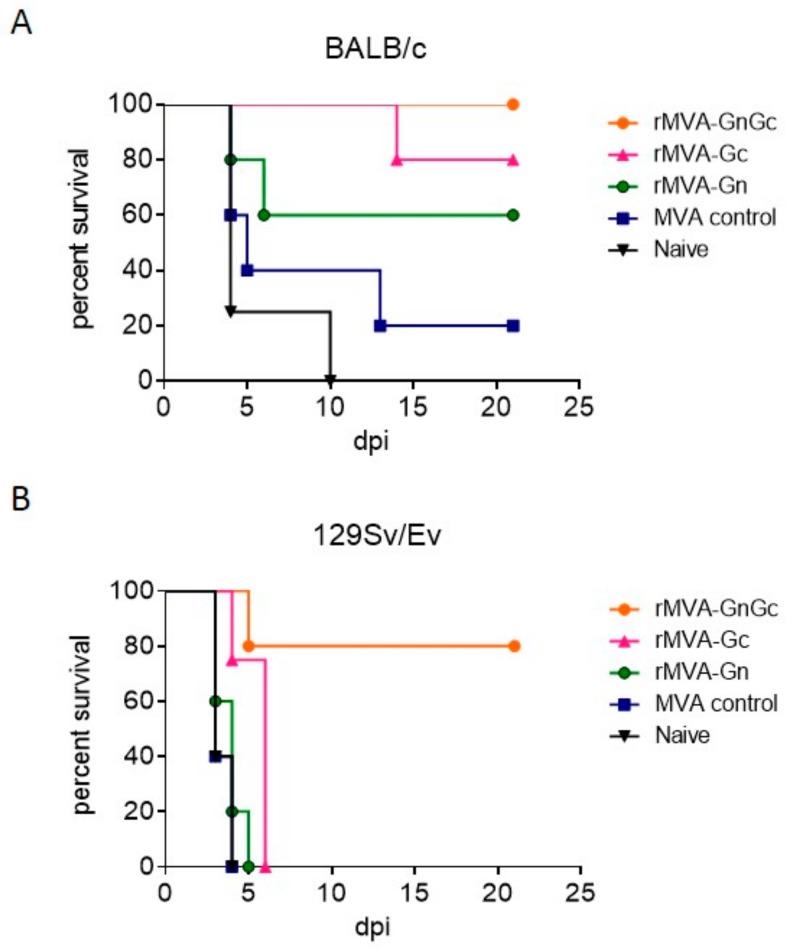
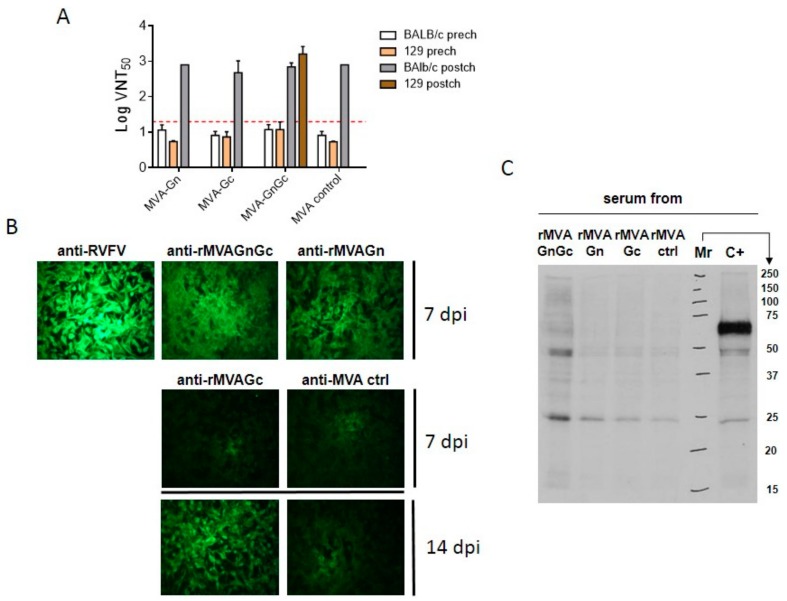
In vitro neutralizing antibodies have been often correlated with protection against Rift Valley fever virus (RVFV) infection. We have reported previously that a single inoculation of sucrose-purified modified vaccinia Ankara (MVA) encoding RVFV glycoproteins (rMVAGnGc) was sufficient to induce a protective immune response in mice after a lethal RVFV challenge. Protection was related to the presence of glycoprotein specific CD8+ cells, with a low-level detection of in vitro neutralizing antibodies. In this work we extended those observations aimed to explore the role of humoral responses after MVA vaccination and to study the contribution of each glycoprotein antigen to the protective efficacy. Thus, we tested the efficacy and immune responses in BALB/c mice of recombinant MVA viruses expressing either glycoprotein Gn (rMVAGn) or Gc (rMVAGc). In the absence of serum neutralizing antibodies, our data strongly suggest that protection of vaccinated mice upon the RVFV challenge can be achieved by the activation of cellular responses mainly directed against Gc epitopes. The involvement of cellular immunity was stressed by the fact that protection of mice was strain dependent. Furthermore, our data suggest that the rMVA based single dose vaccination elicits suboptimal humoral immune responses against Gn antigen since disease in mice was exacerbated upon virus challenge in the presence of rMVAGnGc or rMVAGn immune serum. Thus, Gc-specific cellular immunity could be an important component in the protection after the challenge observed in BALB/c mice, contributing to the elimination of infected cells reducing morbidity and mortality and counteracting the deleterious effect of a subneutralizing antibody immune response.
体外中和抗体通常与抵御裂谷热病毒(RVFV)感染的保护作用相关。我们之前报道过,单次接种编码RVFV糖蛋白的蔗糖纯化改良痘苗病毒安卡拉株(MVA)(rMVAGnGc)足以在致死性RVFV攻击后诱导小鼠产生保护性免疫反应。保护作用与糖蛋白特异性CD8+细胞的存在有关,体外中和抗体的检测水平较低。在这项研究中,我们扩展了这些观察结果,旨在探讨MVA疫苗接种后体液免疫反应的作用,并研究每种糖蛋白抗原对保护效力的贡献。因此,我们测试了表达糖蛋白Gn(rMVAGn)或Gc(rMVAGc)的重组MVA病毒在BALB/c小鼠中的效力和免疫反应。在没有血清中和抗体的情况下,我们的数据强烈表明,接种疫苗的小鼠在受到RVFV攻击后的保护作用可通过主要针对Gc表位的细胞反应激活来实现。小鼠的保护作用具有品系依赖性这一事实强调了细胞免疫的参与。此外,我们的数据表明,基于rMVA的单剂量疫苗接种引发的针对Gn抗原的体液免疫反应次优,因为在存在rMVAGnGc或rMVAGn免疫血清的情况下,病毒攻击会使小鼠疾病加重。因此,Gc特异性细胞免疫可能是BALB/c小鼠受到攻击后保护作用的一个重要组成部分,有助于清除感染细胞,降低发病率和死亡率,并抵消亚中和抗体免疫反应的有害影响。