Cope Thomas E, Shtyrov Yury, MacGregor Lucy J, Holland Rachel, Pulvermüller Friedemann, Rowe James B, Patterson Karalyn
Department of Clinical Neurosciences, University of Cambridge, UK; MRC Cognition and Brain Sciences Unit, University of Cambridge, UK.
MRC Cognition and Brain Sciences Unit, University of Cambridge, UK; Center of Functionally Integrative Neuroscience, Aarhus University, Denmark; Institute for Cognitive Neuroscience, NRU Higher School of Economics, Moscow, Russia.
Cortex. 2020 May;126:107-118. doi: 10.1016/j.cortex.2019.12.025. Epub 2020 Jan 24.
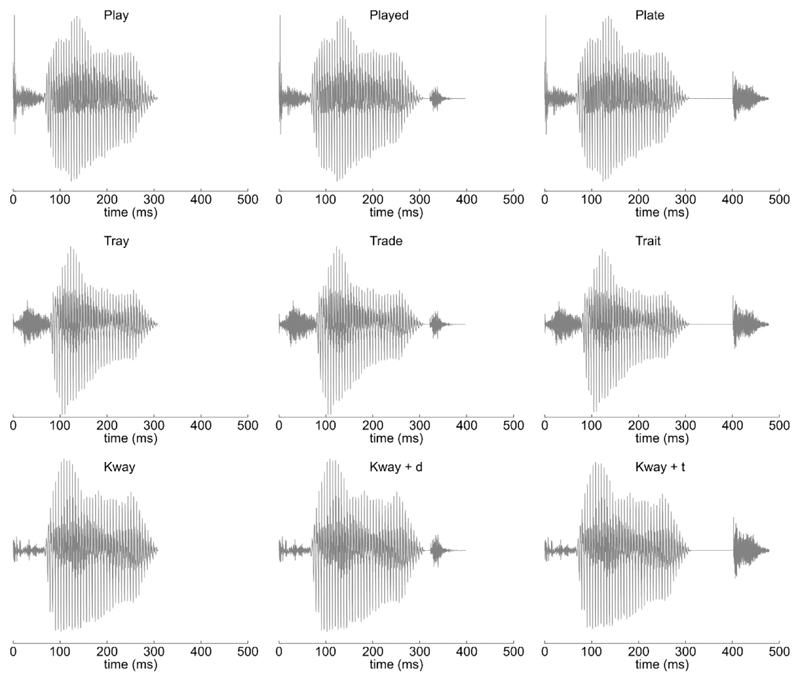
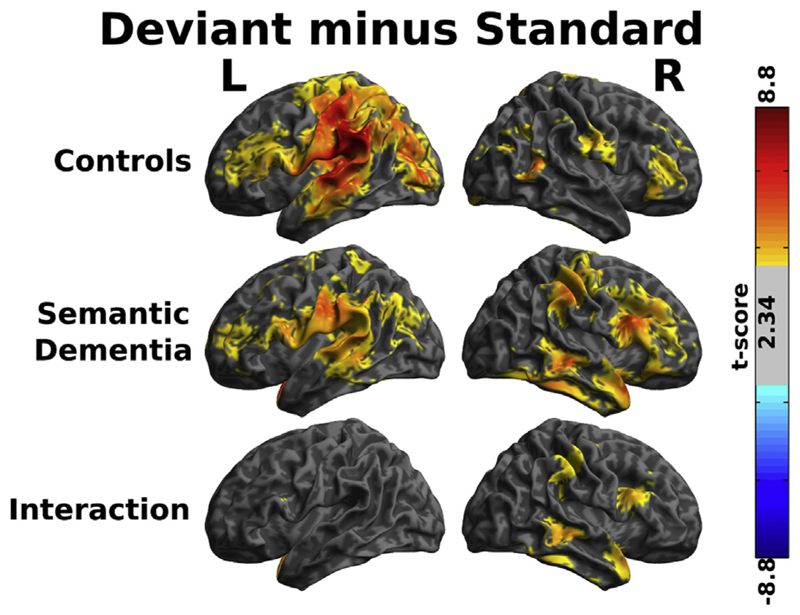
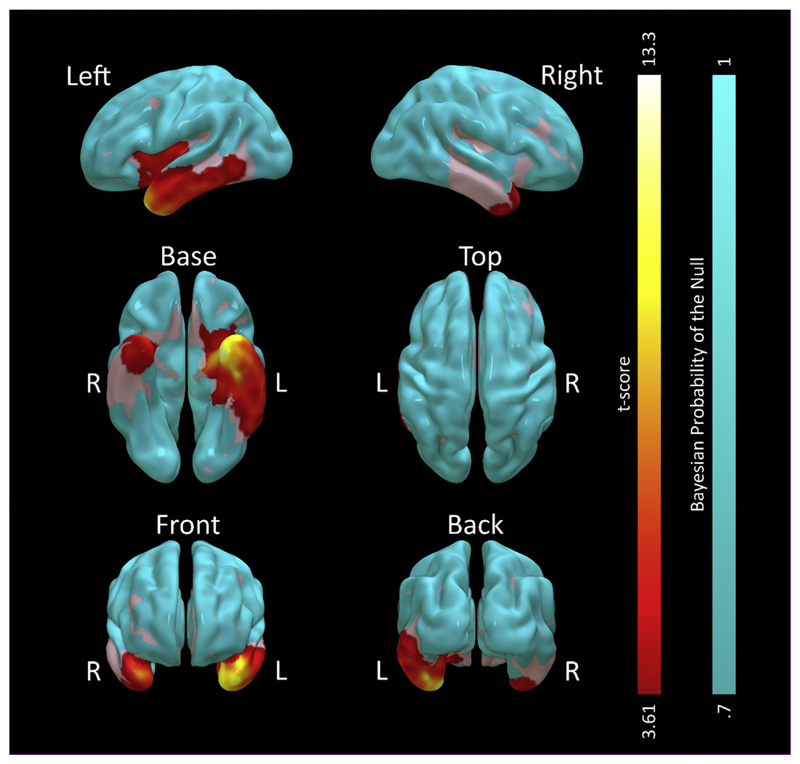
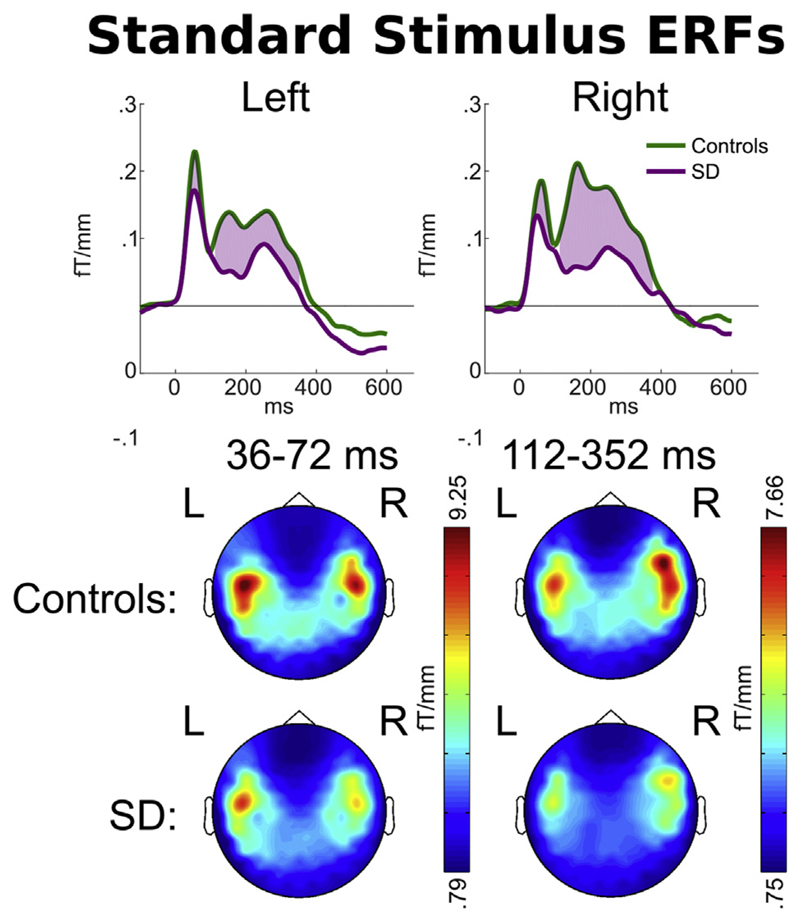
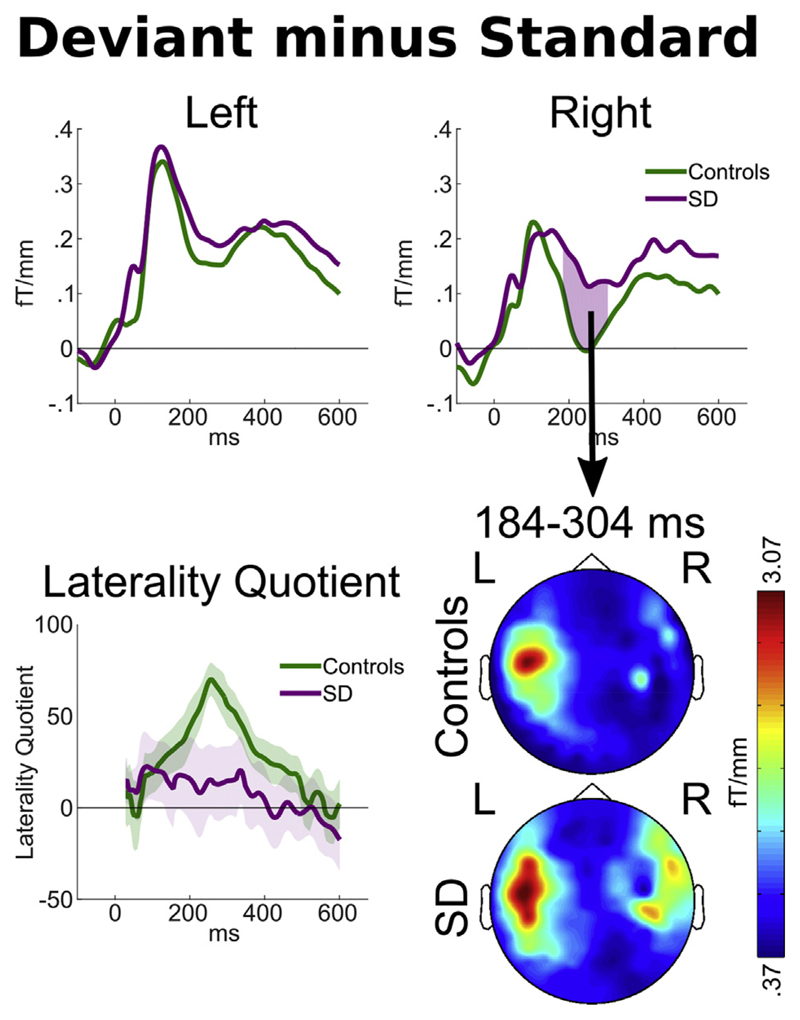
In the healthy human brain, the processing of language is strongly lateralised, usually to the left hemisphere, while the processing of complex non-linguistic sounds recruits brain regions bilaterally. Here we asked whether the anterior temporal lobes, strongly implicated in semantic processing, are critical to this special treatment of spoken words. Nine patients with semantic dementia (SD) and fourteen age-matched controls underwent magnetoencephalography and structural MRI. Voxel based morphometry demonstrated the stereotypical pattern of SD: severe grey matter loss restricted to the anterior temporal lobes, with the left side more affected. During magnetoencephalography, participants listened to word sets in which identity and meaning were ambiguous until word completion, for example PLAYED versus PLATE. Whereas left-hemispheric responses were similar across groups, patients demonstrated increased right hemisphere activity 174-294 msec after stimulus disambiguation. Source reconstructions confirmed recruitment of right-sided analogues of language regions in SD: atrophy of anterior temporal lobes was associated with increased activity in right temporal pole, middle temporal gyrus, inferior frontal gyrus and supramarginal gyrus. Overall, the results indicate that anterior temporal lobes are necessary for normal and efficient lateralised processing of word identity by the language network.
在健康人的大脑中,语言处理强烈地偏向一侧,通常是左半球,而复杂的非语言声音处理则会双侧激活脑区。在这里,我们探讨了在语义处理中起重要作用的颞叶前部,对于口语单词的这种特殊处理是否至关重要。9名语义性痴呆(SD)患者和14名年龄匹配的对照者接受了脑磁图和结构MRI检查。基于体素的形态测量显示了SD的典型模式:严重的灰质损失局限于颞叶前部,左侧受影响更严重。在脑磁图检查期间,参与者听一些单词组,这些单词在完成之前身份和意义都不明确,例如PLAYED和PLATE。虽然各组左半球的反应相似,但患者在刺激消除歧义后174 - 294毫秒显示右半球活动增加。源重建证实了SD患者右侧类似语言区域的激活:颞叶前部萎缩与右颞极、颞中回、额下回和缘上回的活动增加有关。总体而言,结果表明颞叶前部对于语言网络正常和高效地对单词身份进行偏侧化处理是必要的。