Department of Ophthalmology, Second Hospital of JiLin University, No.218 Zi-Qiang St, ChangChun, 130041, China.
Department of Hemooncolog, Second Hospital of JiLin University, ChangChun, 130041, China.
Cell Commun Signal. 2020 Feb 17;18(1):27. doi: 10.1186/s12964-019-0498-0.
Excessive light exposure is a detrimental environmental factor that plays a critical role in the pathogenesis of retinal degeneration. However, the mechanism of light-induced death of retina/photoreceptor cells remains unclear. The mammalian/mechanistic target of rapamycin (mTOR) and Poly (ADP-ribose) polymerase-1 (PARP-1) have become the primary targets for treating many neurodegenerative disorders. The aim of this study was to elucidate the mechanisms underlying light-induced photoreceptor cell death and whether the neuroprotective effects of mTOR and PARP-1 inhibition against death are mediated through apoptosis-inducing factor (AIF).
Propidium iodide (PI)/Hoechst staining, lentiviral-mediated short hairpin RNA (shRNA), Western blot analysis, cellular fraction separation, plasmid transient transfection, laser confocal microscopy, a mice model, electroretinography (ERG), and hematoxylin-eosin (H & E) staining were employed to explore the mechanisms by which rapamycin/3-Aminobenzamide (3AB) exert neuroprotective effects of mTOR/PARP-1 inhibition in light-injured retinas.
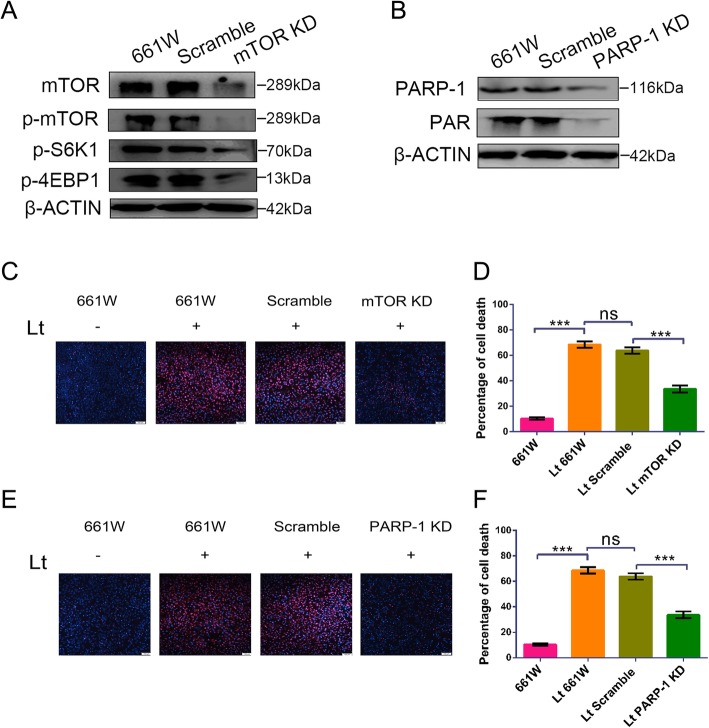
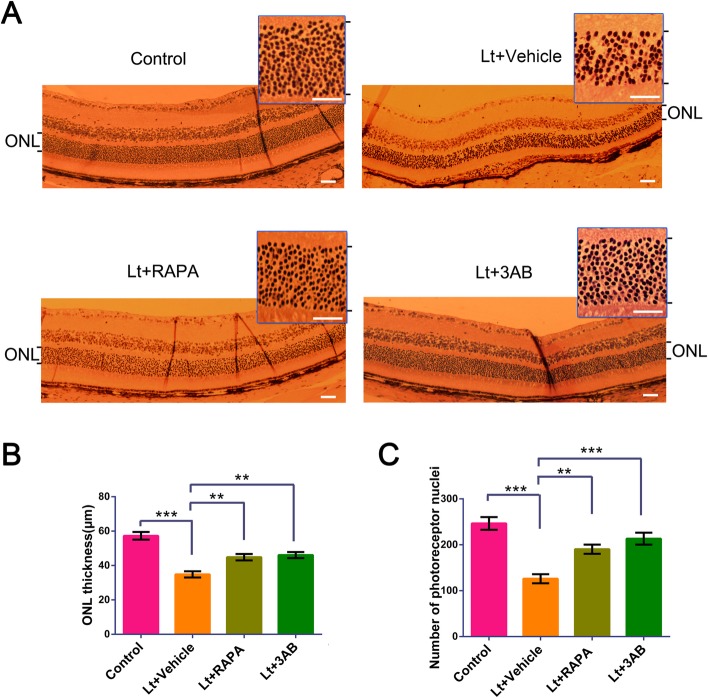
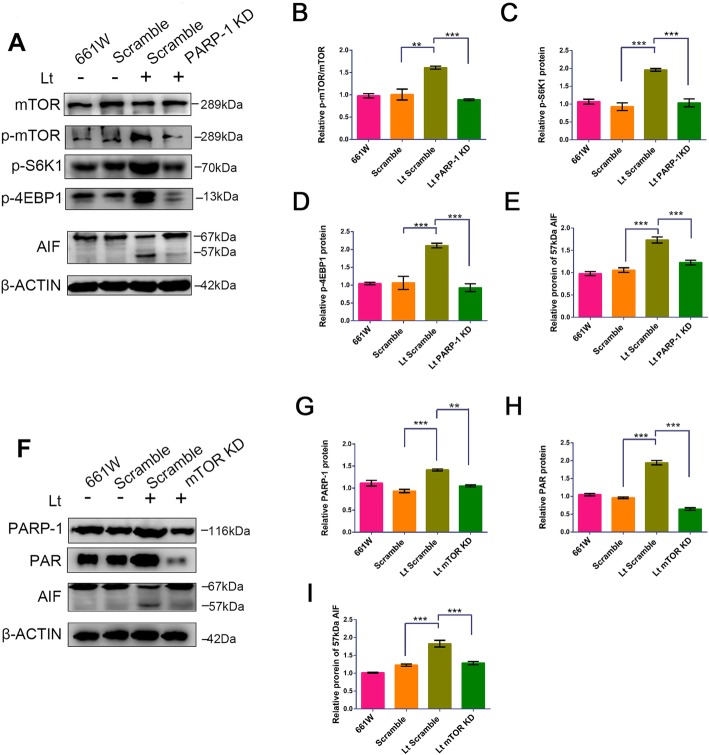
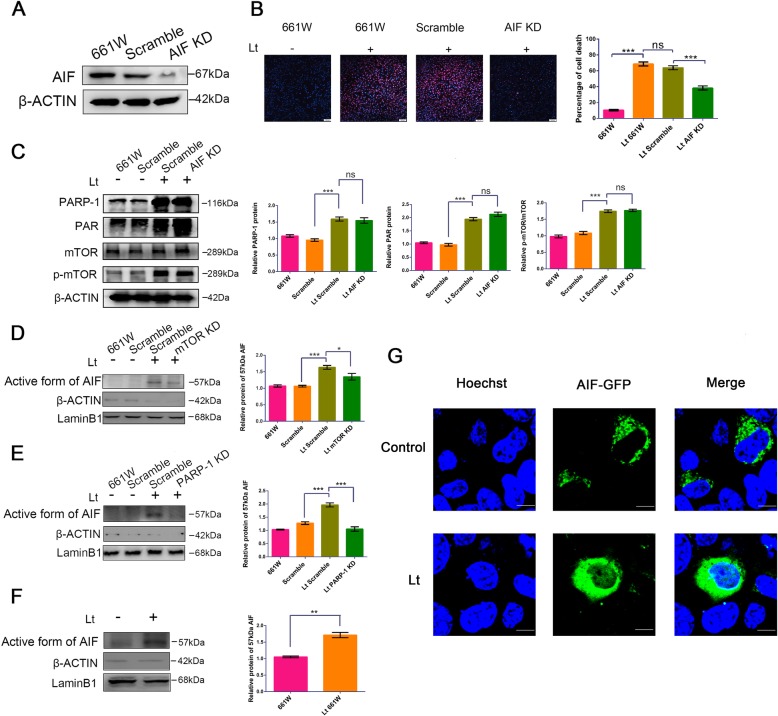
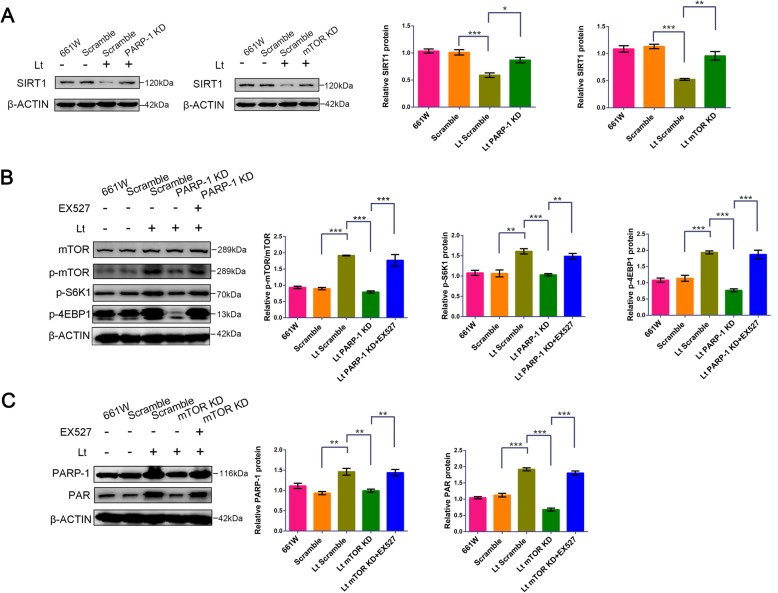
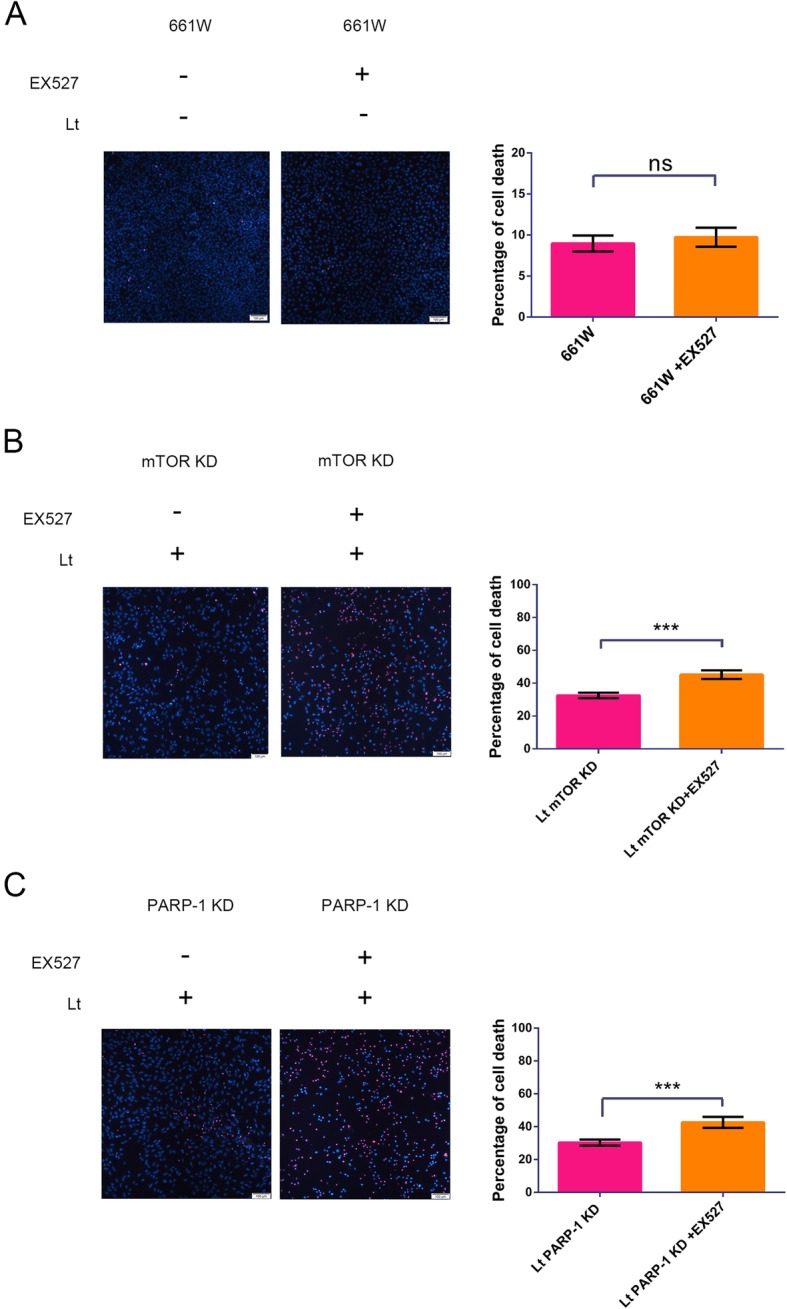
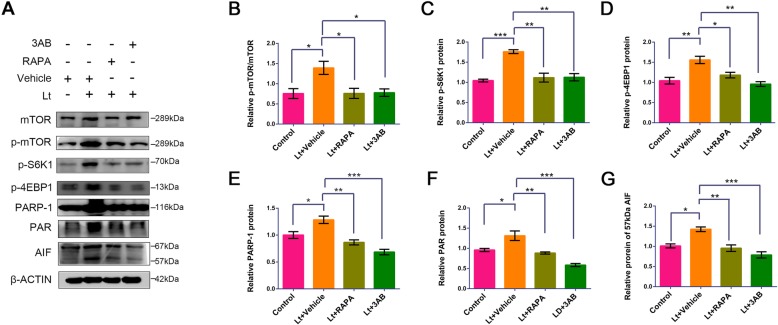
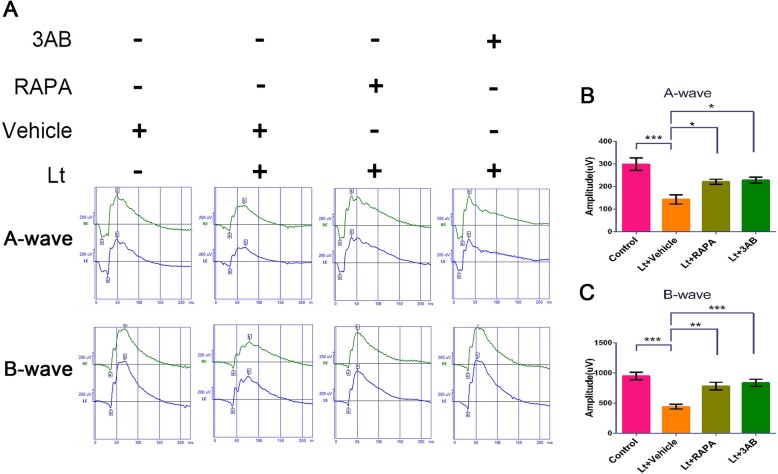
A parthanatos-like death mechanism was evaluated in light-injured 661 W cells that are an immortalized photoreceptor-like cell line that exhibit cellular and biochemical feature characteristics of cone photoreceptor cells. The death process featured over-activation of PARP-1 and AIF nuclear translocation. Either PARP-1 or AIF knockdown played a significantly protective role for light-damaged photoreceptors. More importantly, crosstalk was observed between mTOR and PARP-1 signaling and mTOR could have regulated parthanatos via the intermediate factor sirtuin 1 (SIRT1). The parthanatos-like injury was also verified in vivo, wherein either PARP-1 or mTOR inhibition provided significant neuroprotection against light-induced injury, which is evinced by both structural and functional retinal analysis. Overall, these results elucidate the mTOR-regulated parthanatos death mechanism in light-injured photoreceptors/retinas and may facilitate the development of novel neuroprotective therapies for retinal degeneration diseases.
Our results demonstrate that inhibition of the mTOR/PARP-1 axis exerts protective effects on photoreceptors against visible-light-induced parthanatos. These protective effects are conducted by regulating the downstream factors of AIF, while mTOR possibly interacts with PARP-1 via SIRT1 to regulate parthanatos. Video Abstract Schematic diagram of mTOR interacting with PARP-1 to regulate visible light-induced parthanatos. Increased ROS caused by light exposure penetrates the nuclear membrane and causes nuclear DNA strand breaks. PARP-1 detects DNA breaks and synthesizes PAR polymers to initiate the DNA repair system that consumes a large amount of cellular NAD+. Over-production of PAR polymers prompts the release of AIF from the mitochondria and translocation to the nucleus, which leads to parthanatos. Activated mTOR may interact with PARP-1 via SIRT1 to regulate visible light-induced parthanatos.
过度光照是一种有害的环境因素,在视网膜变性的发病机制中起着关键作用。然而,光诱导视网膜/光感受器细胞死亡的机制仍不清楚。哺乳动物/雷帕霉素靶蛋白(mTOR)和多聚(ADP-核糖)聚合酶-1(PARP-1)已成为治疗许多神经退行性疾病的主要靶点。本研究旨在阐明光诱导光感受器细胞死亡的机制,以及 mTOR 和 PARP-1 抑制对细胞死亡的神经保护作用是否通过凋亡诱导因子(AIF)介导。
碘化丙啶(PI)/Hoechst 染色、慢病毒介导的短发夹 RNA(shRNA)、Western blot 分析、细胞分离、质粒瞬时转染、激光共聚焦显微镜、小鼠模型、视网膜电图(ERG)和苏木精-伊红(H & E)染色用于研究雷帕霉素/3-氨基苯甲酰胺(3AB)通过 mTOR/PARP-1 抑制在光损伤视网膜中发挥神经保护作用的机制。
评估了光损伤的 661W 细胞中的一种类似 parthanatos 的死亡机制,661W 细胞是一种永生化的光感受器样细胞系,具有 cone 光感受器细胞的细胞和生化特征。死亡过程的特征是 PARP-1 和 AIF 核转位过度激活。PARP-1 或 AIF 的敲低对光损伤的光感受器均发挥显著的保护作用。更重要的是,mTOR 和 PARP-1 信号之间存在串扰,mTOR 可以通过中间因子 sirtuin 1(SIRT1)调节 parthanatos。体内也验证了类似 parthanatos 的损伤,其中 PARP-1 或 mTOR 抑制对光诱导损伤提供了显著的神经保护作用,这可以通过结构和功能视网膜分析来证明。总的来说,这些结果阐明了 mTOR 调节的光损伤光感受器/视网膜中的 parthanatos 死亡机制,并可能有助于开发用于治疗视网膜变性疾病的新型神经保护疗法。
我们的结果表明,抑制 mTOR/PARP-1 轴对光感受器具有保护作用,可防止可见光诱导的 parthanatos。这些保护作用是通过调节 AIF 的下游因子来实现的,而 mTOR 可能通过 SIRT1 与 PARP-1 相互作用来调节 parthanatos。