Department of Chemistry and Chemical Biology, Harvard University, Cambridge, United States.
Department of Chemistry and Molecular Biology, University of California, Irvine, Irvine, United States.
Elife. 2020 Feb 18;9:e50845. doi: 10.7554/eLife.50845.
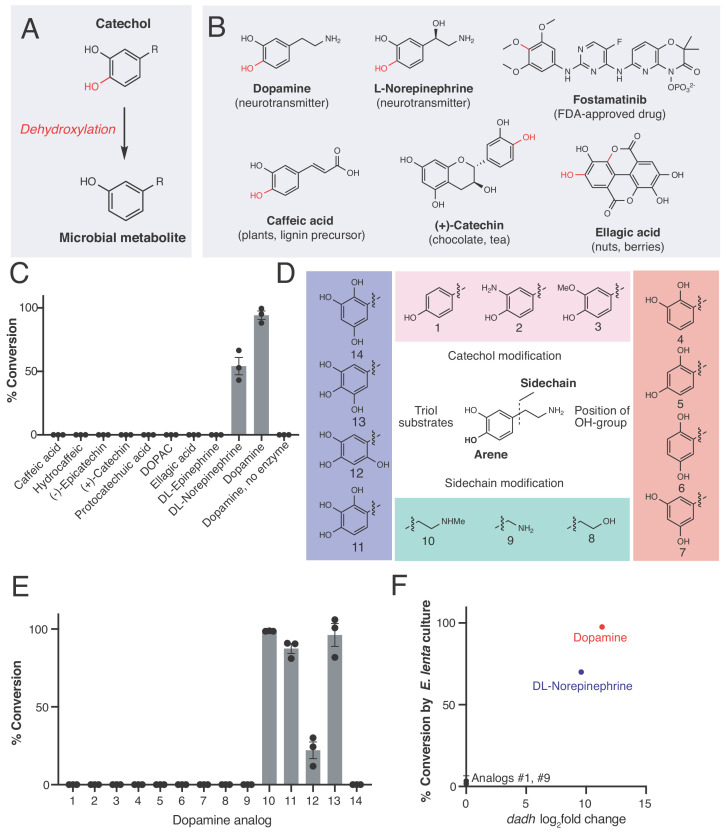
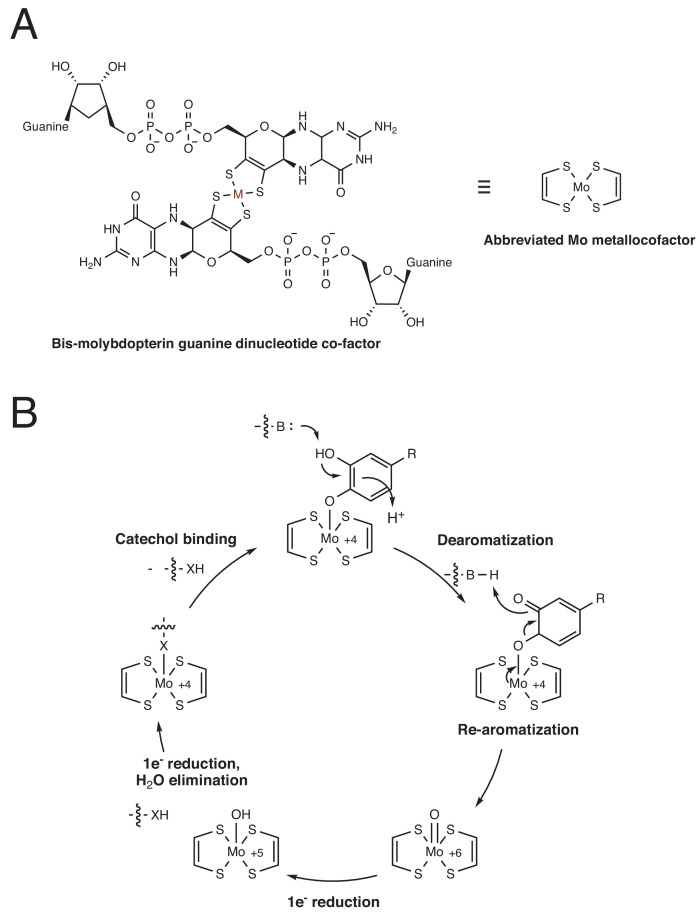
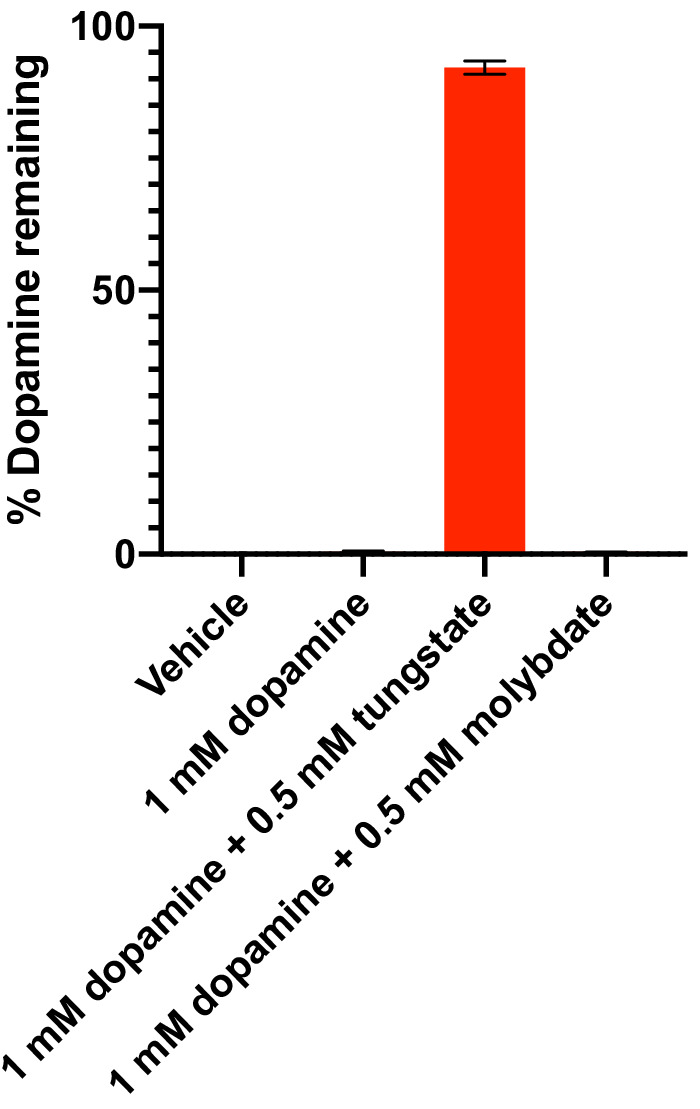
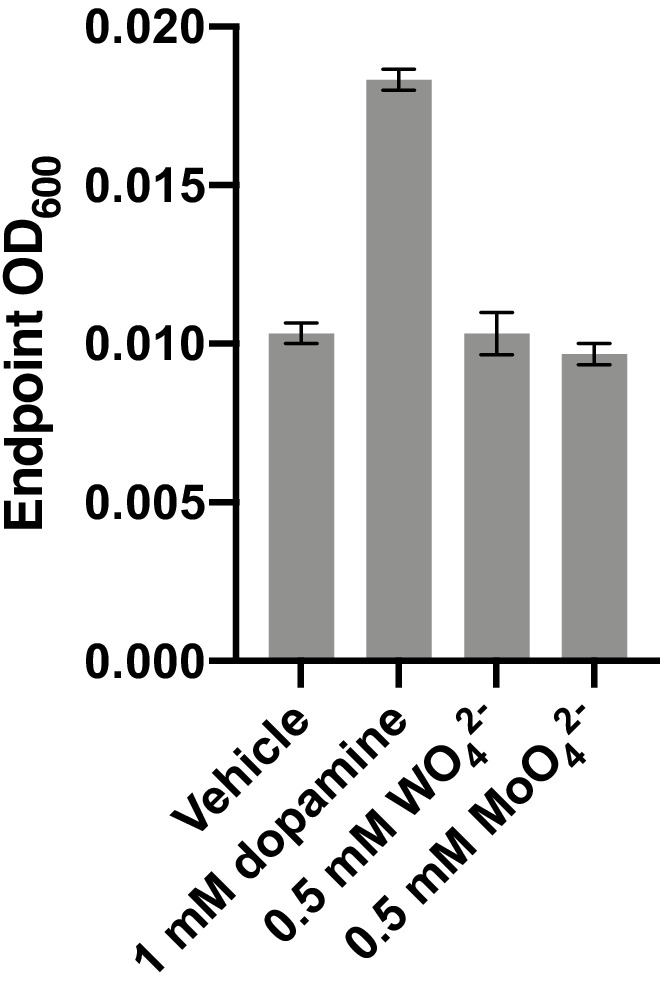
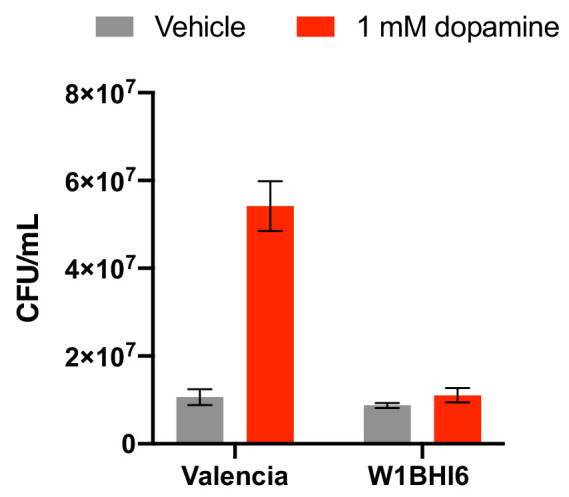
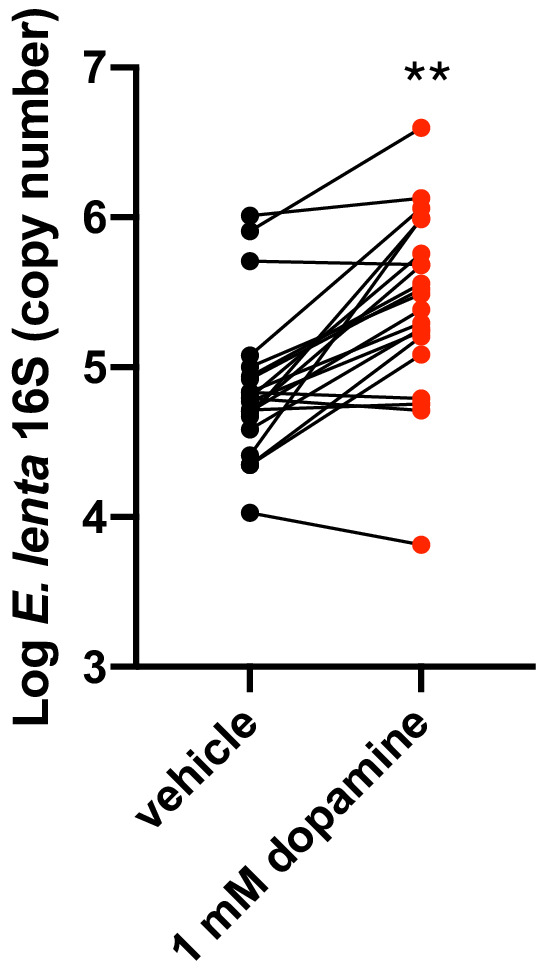
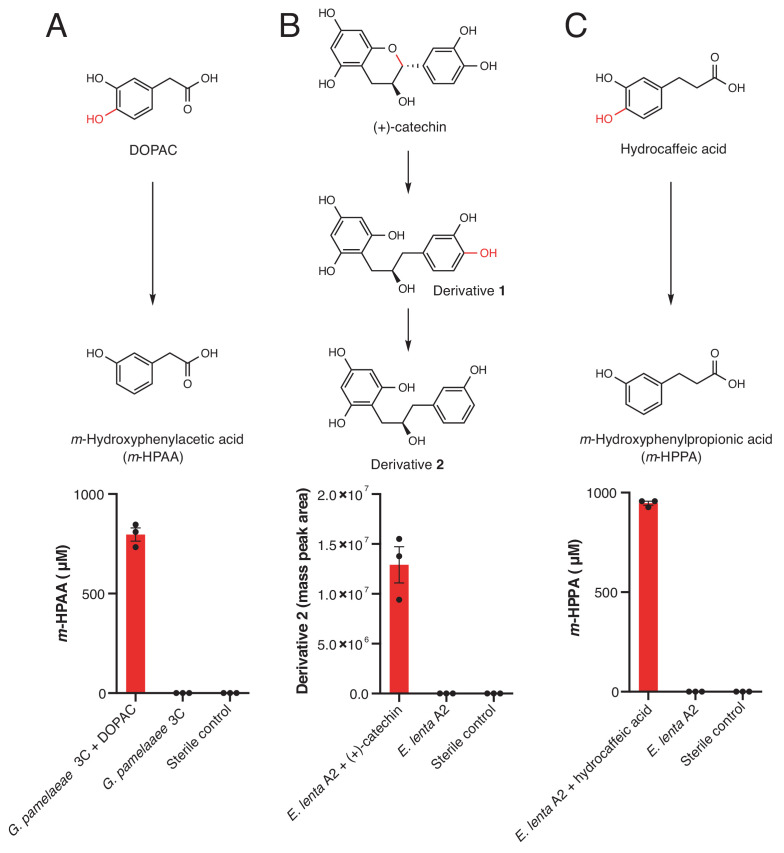
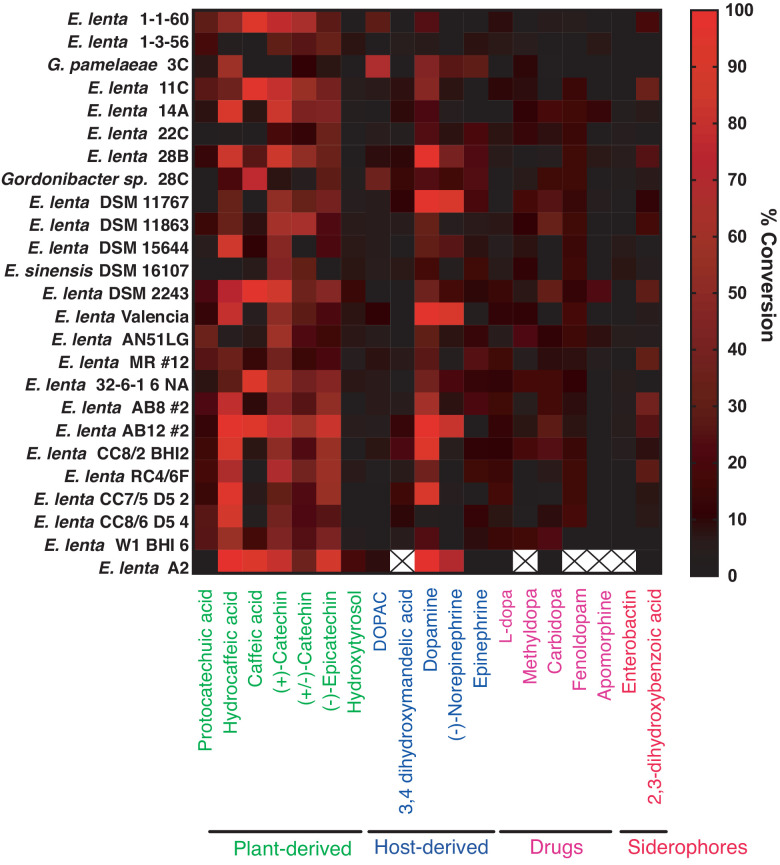
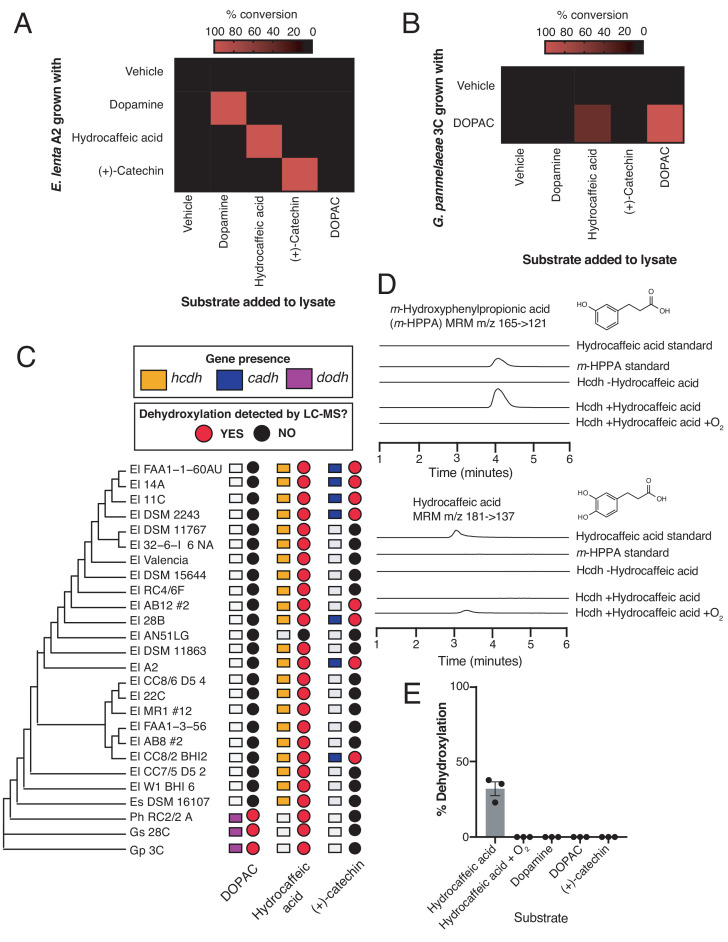
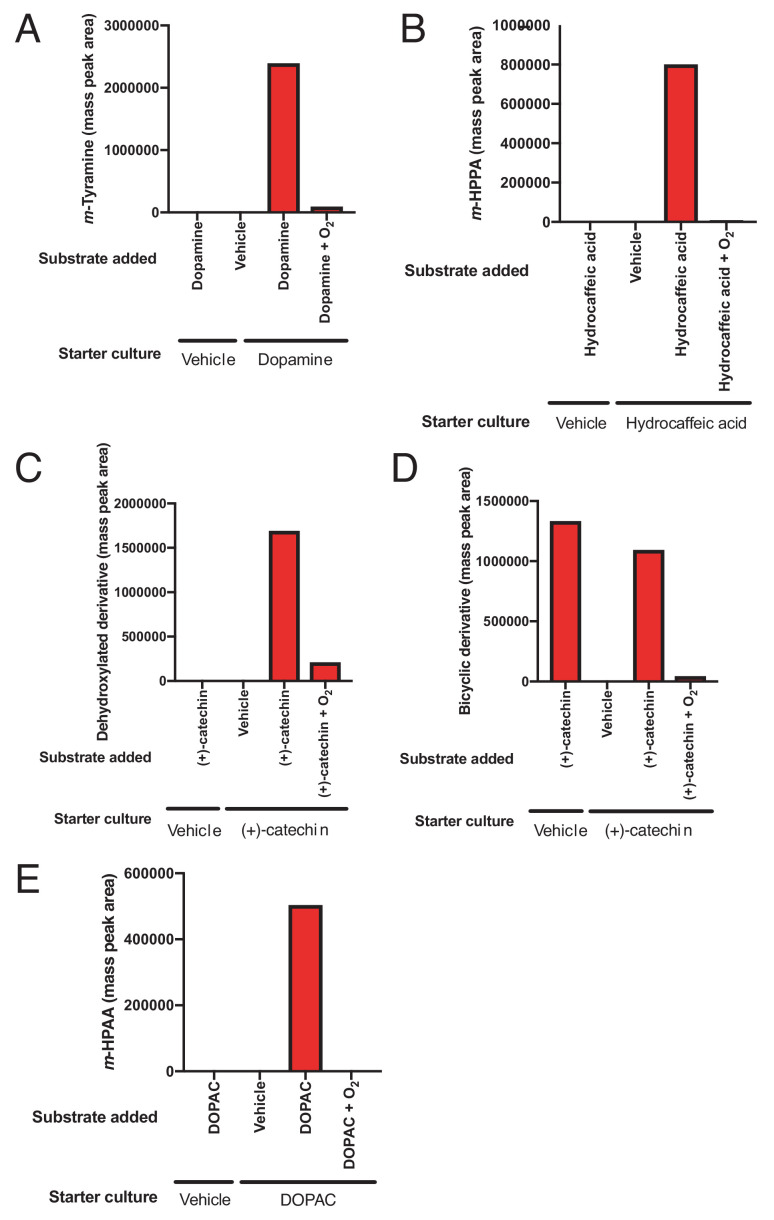
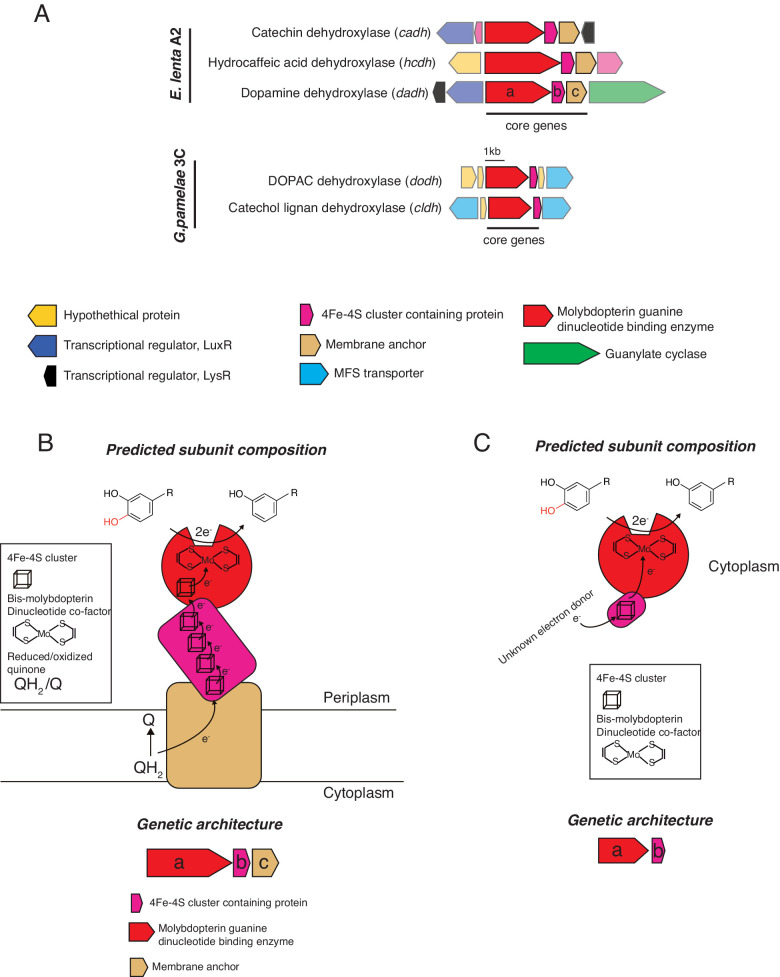
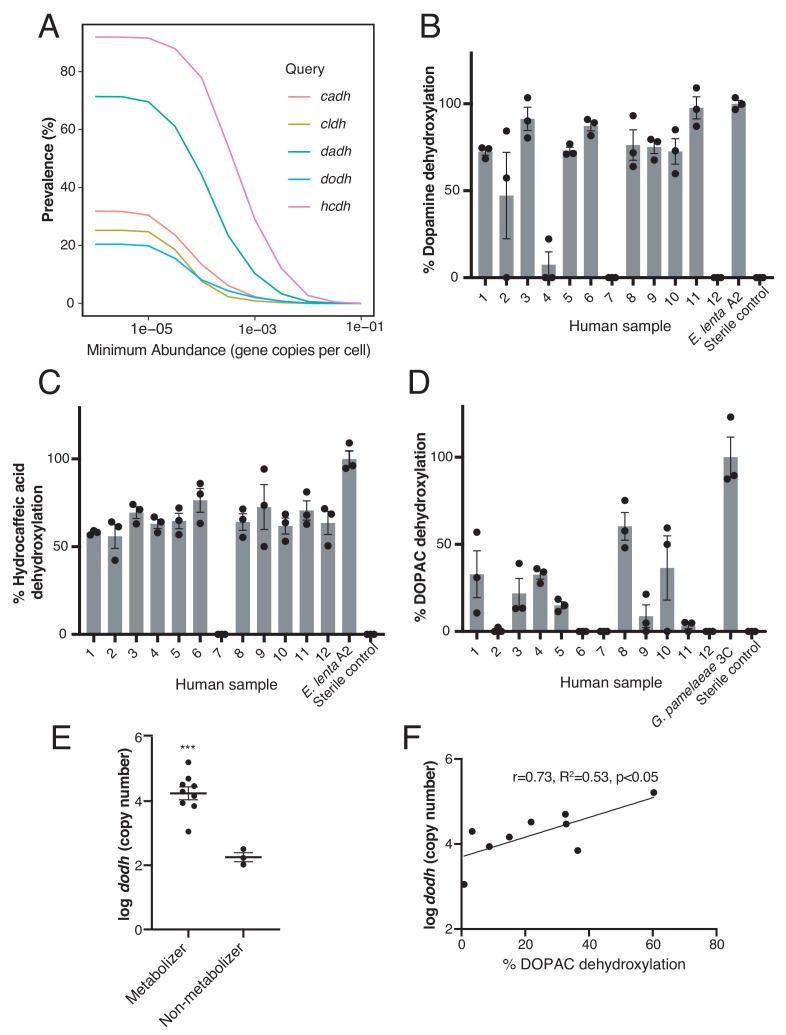
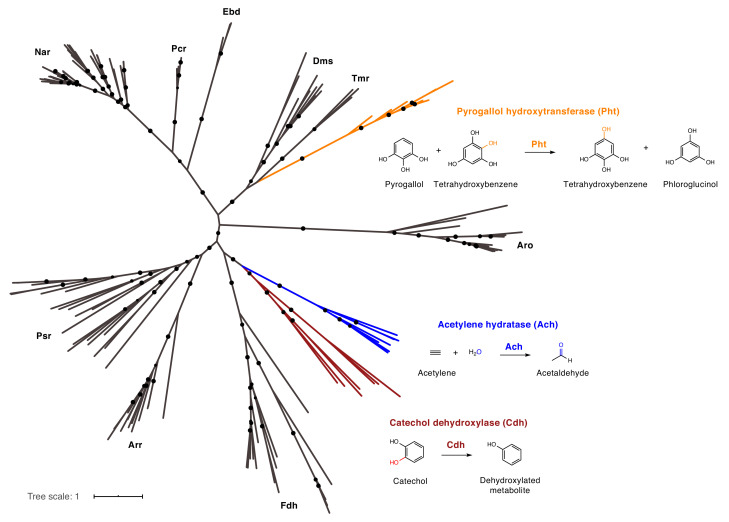
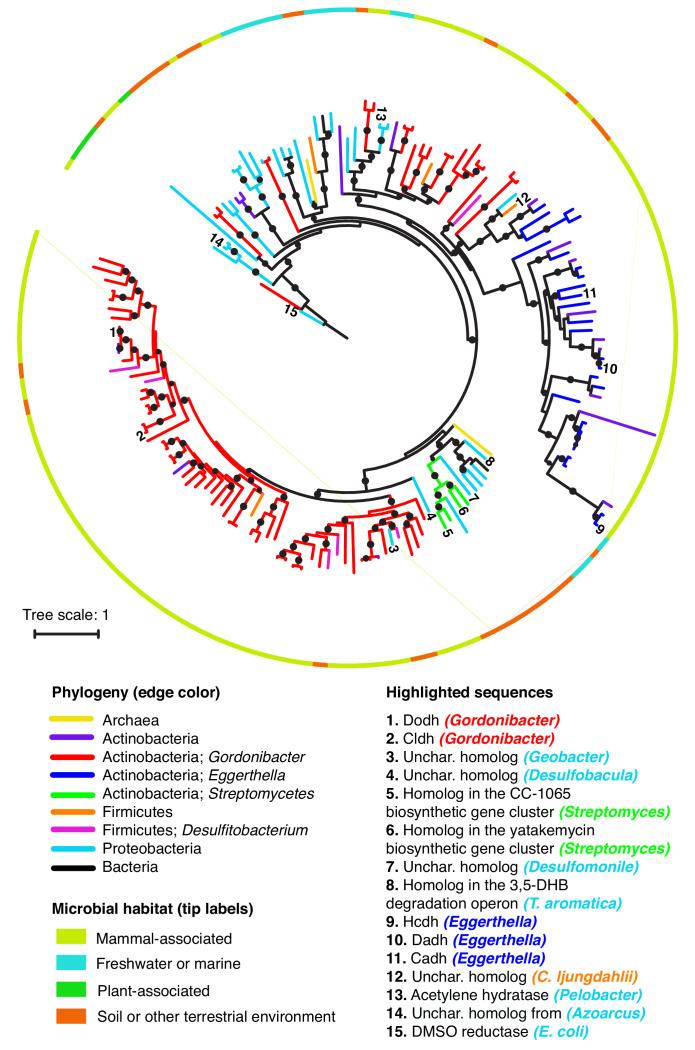
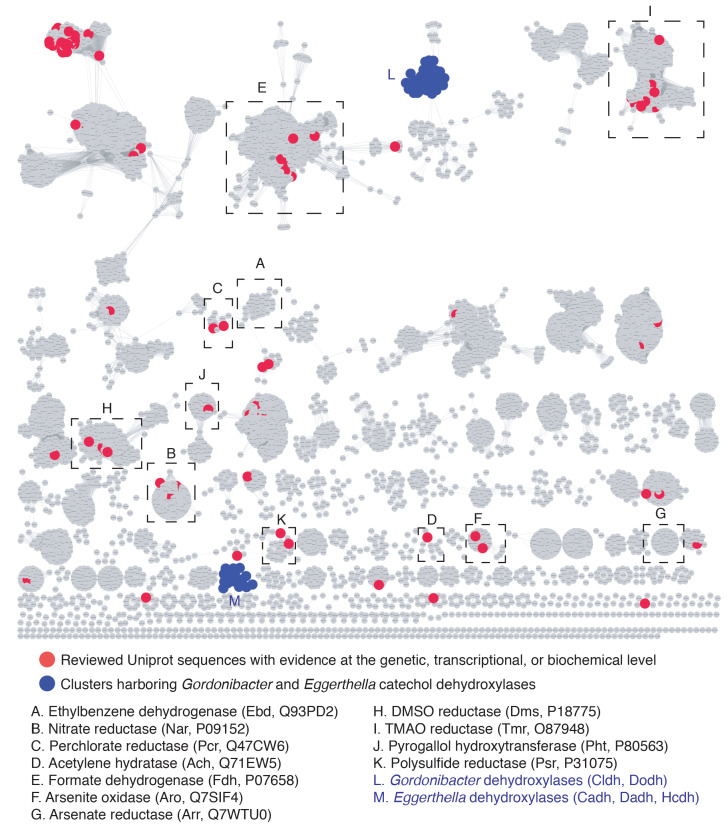
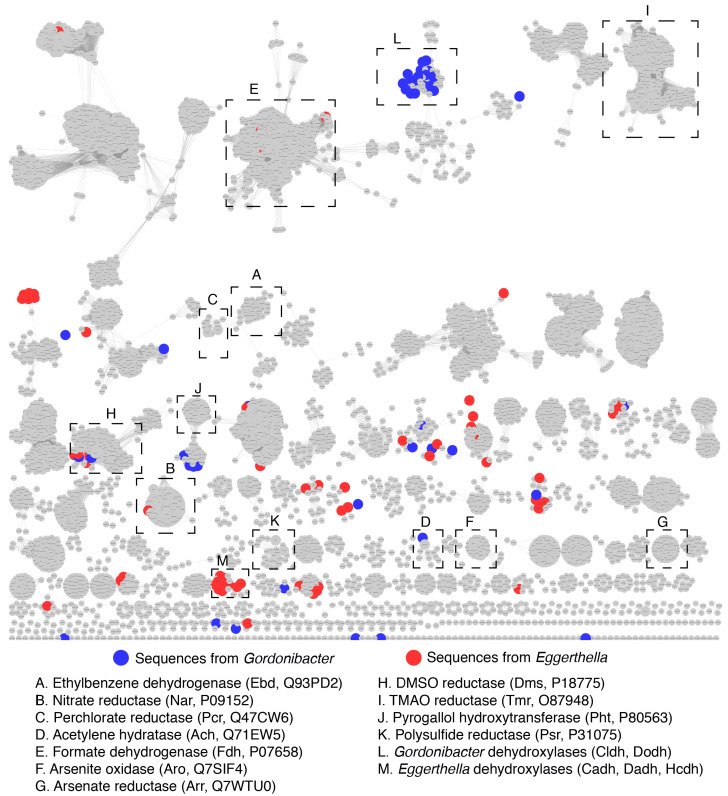
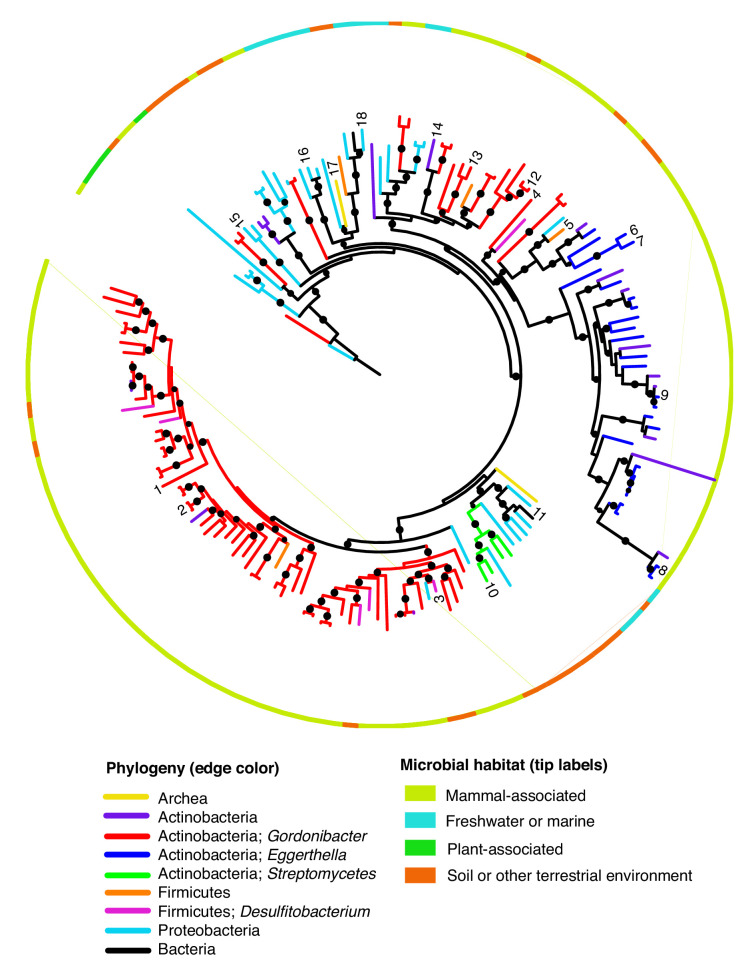
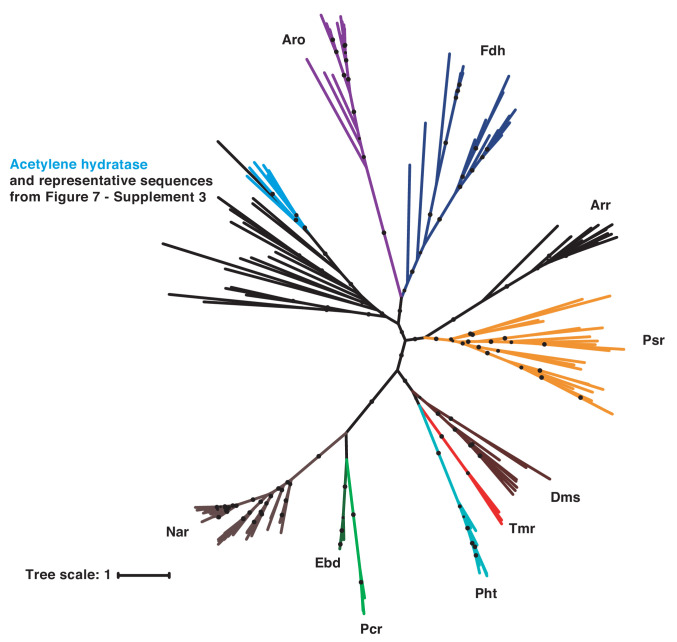
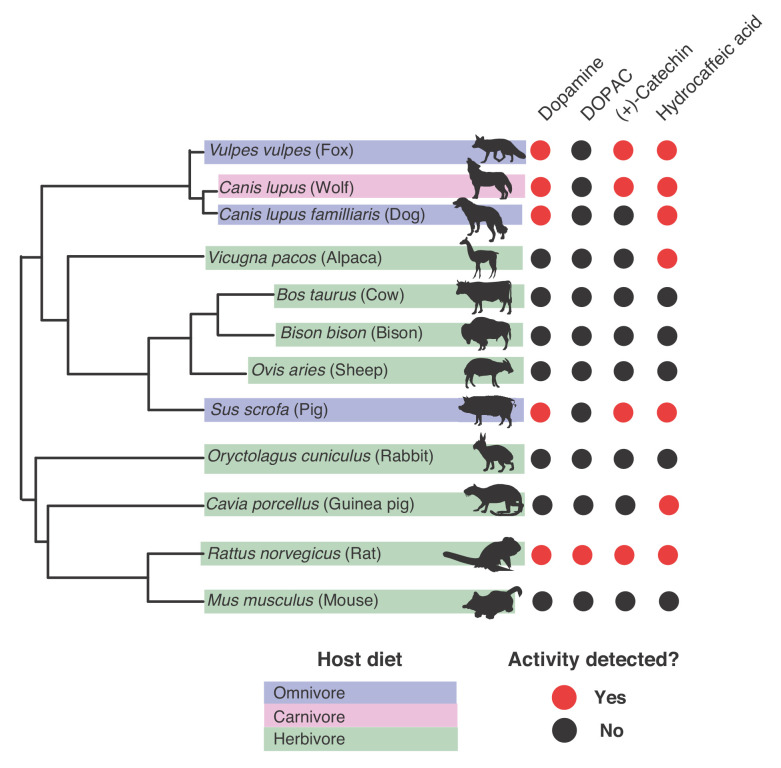
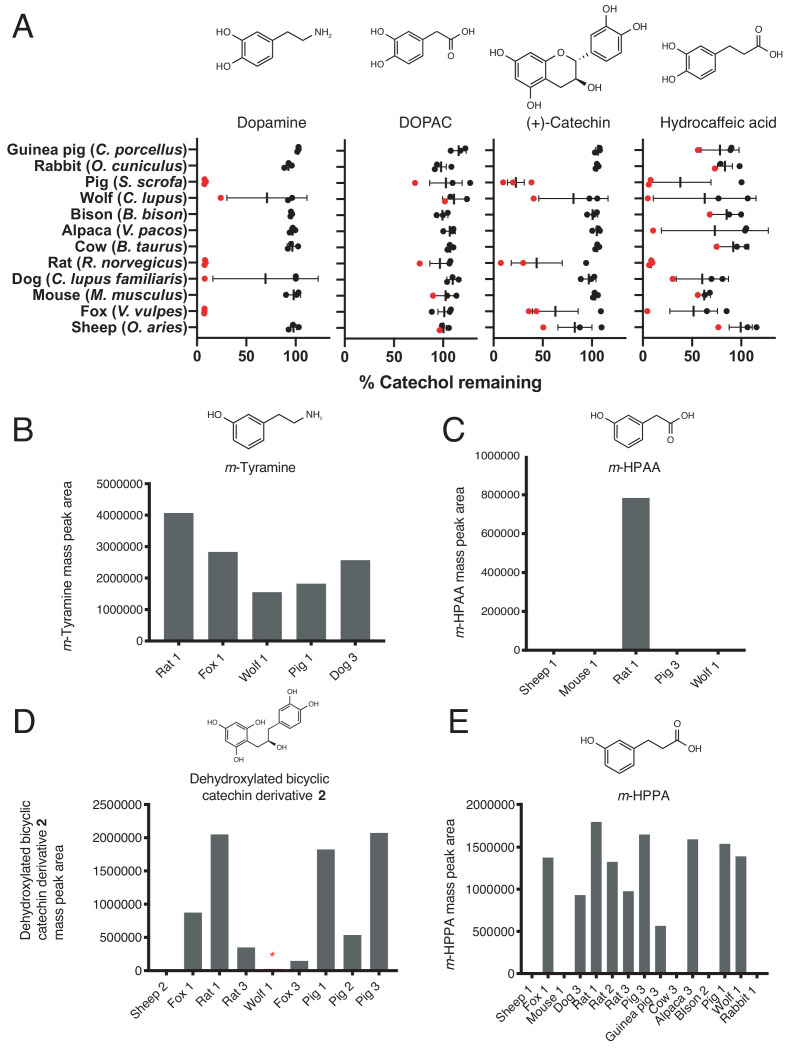
Catechol dehydroxylation is a central chemical transformation in the gut microbial metabolism of plant- and host-derived small molecules. However, the molecular basis for this transformation and its distribution among gut microorganisms are poorly understood. Here, we characterize a molybdenum-dependent enzyme from the human gut bacterium that dehydroxylates catecholamine neurotransmitters. Our findings suggest that this activity enables to use dopamine as an electron acceptor. We also identify candidate dehydroxylases that metabolize additional host- and plant-derived catechols. These dehydroxylases belong to a distinct group of largely uncharacterized molybdenum-dependent enzymes that likely mediate primary and secondary metabolism in multiple environments. Finally, we observe catechol dehydroxylation in the gut microbiotas of diverse mammals, confirming the presence of this chemistry in habitats beyond the human gut. These results suggest that the chemical strategies that mediate metabolism and interactions in the human gut are relevant to a broad range of species and habitats.
儿茶酚的脱羟基化作用是肠道微生物代谢植物和宿主来源的小分子的核心化学反应。然而,这种转化的分子基础及其在肠道微生物中的分布仍知之甚少。在这里,我们从人类肠道细菌 中鉴定出一种钼依赖的酶,它能使儿茶酚胺神经递质脱羟基化。我们的研究结果表明,这种活性使 能够将多巴胺作为电子受体。我们还鉴定出了其他能代谢宿主和植物来源儿茶酚的候选脱羟酶。这些脱羟酶属于一个独特的、尚未充分研究的钼依赖酶组,可能在多种环境中参与初级和次级代谢。最后,我们在不同哺乳动物的肠道微生物群中观察到儿茶酚的脱羟基化作用,证实了这种化学物质存在于人类肠道以外的环境中。这些结果表明,介导人类肠道中代谢和相互作用的化学策略与广泛的物种和栖息地相关。