Pratama Akbar Adjie, Jiménez Diego Javier, Chen Qian, Bunk Boyke, Spröer Cathrin, Overmann Jörg, van Elsas Jan Dirk
Department of Microbial Ecology, Groningen Institute for Evolutionary Life Sciences, University of Groningen, The Netherlands.
Microbiomes and Bioenergy Research Group, Department of Biological Sciences, Universidad de los Andes, Bogotá, Colombia.
Genome Biol Evol. 2020 Apr 1;12(4):325-344. doi: 10.1093/gbe/evaa031.
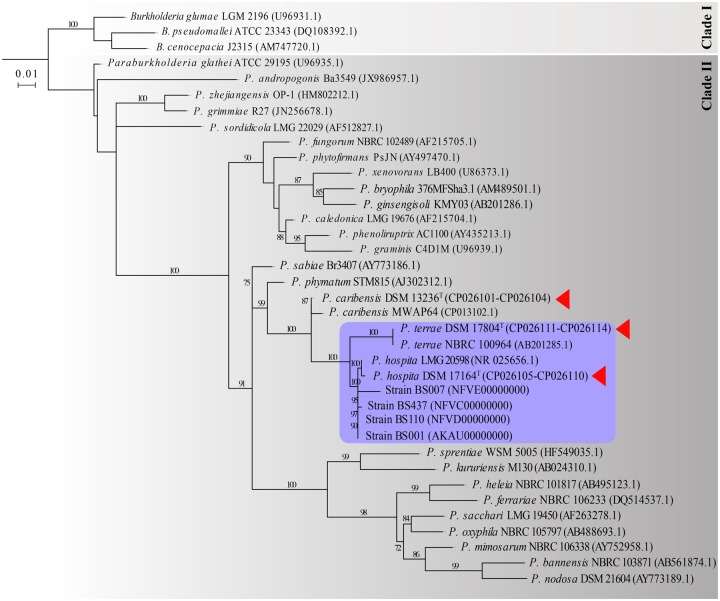
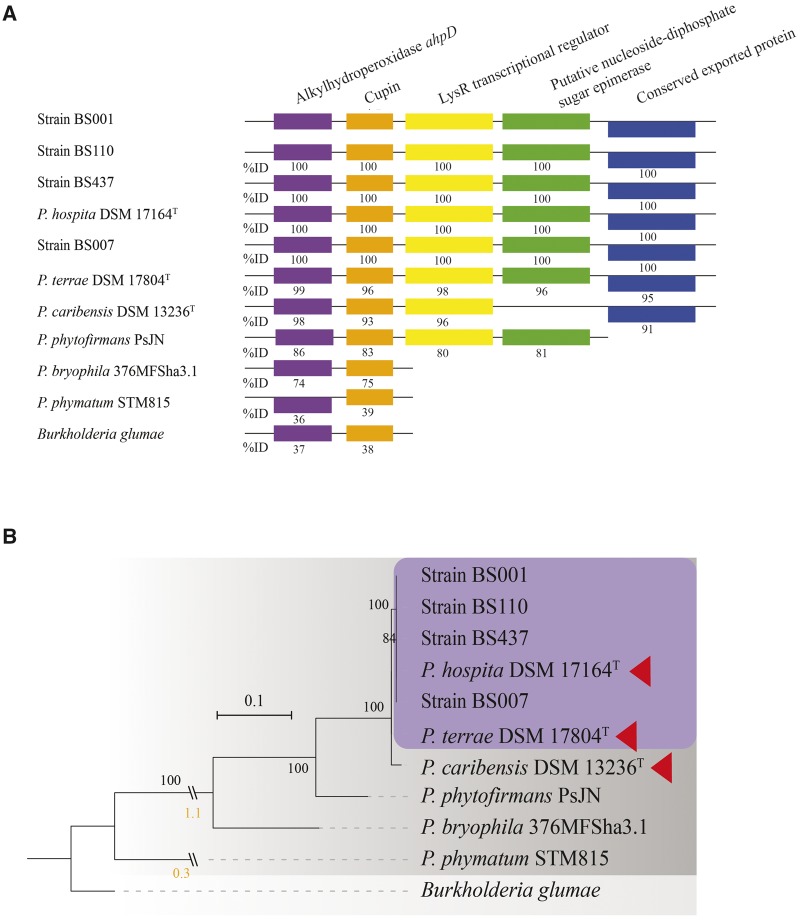
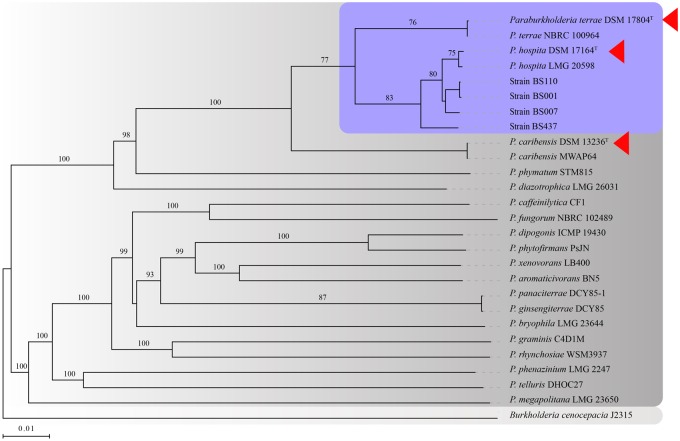
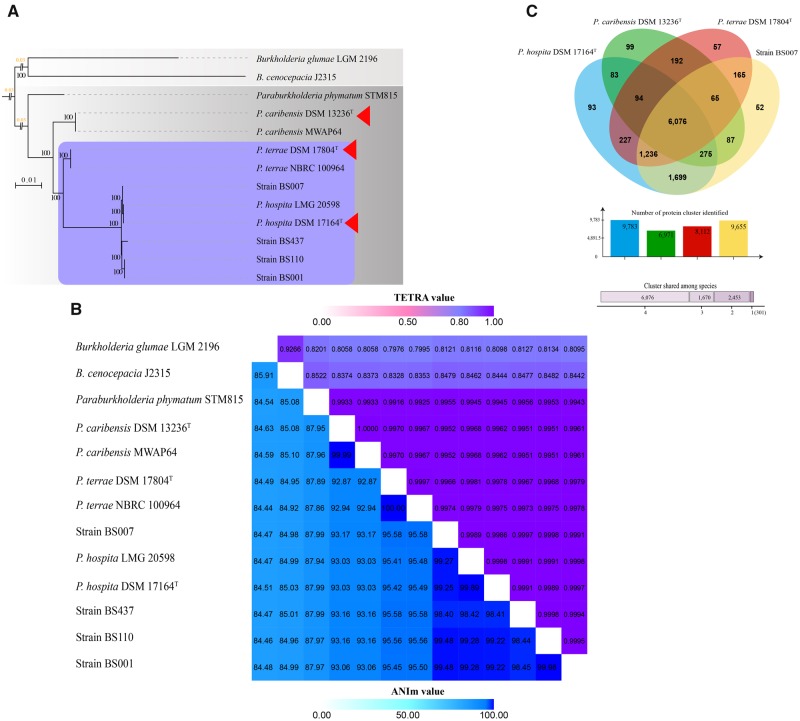
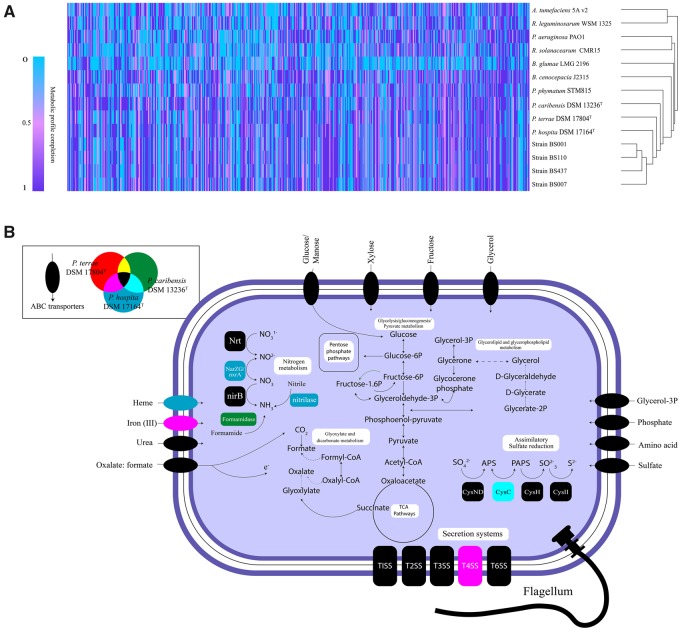
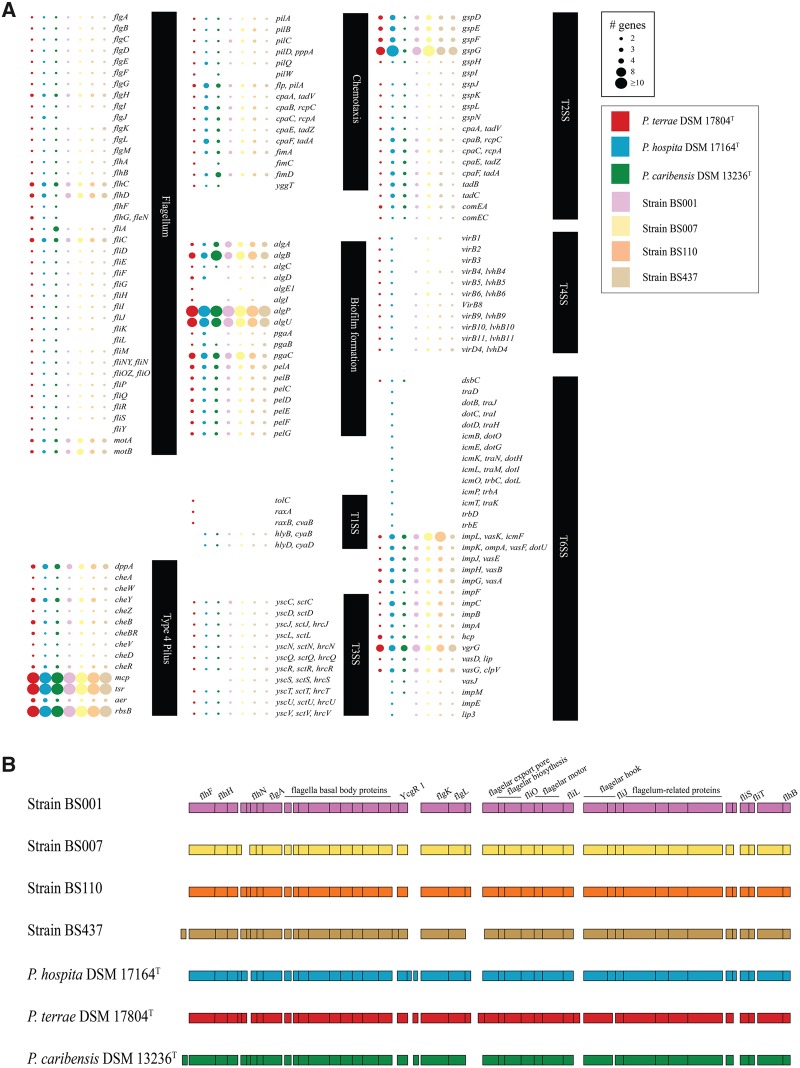
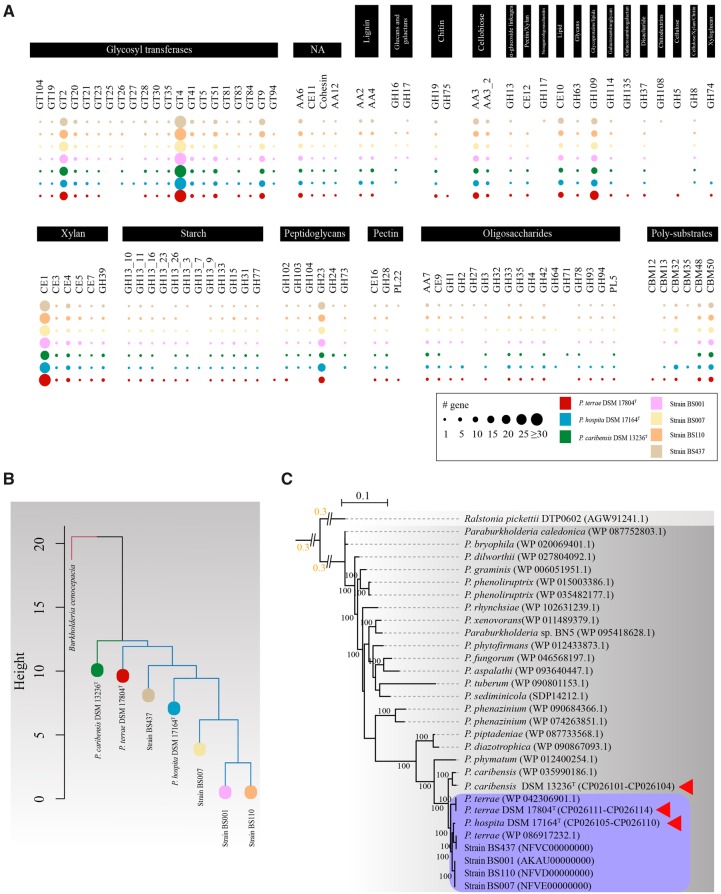
The fungal-interactive (fungiphilic) strains BS001, BS007, BS110, and BS437 have previously been preliminarily assigned to the species Paraburkholderia terrae. However, in the (novel) genus Paraburkholderia, an as-yet unresolved subgroup exists, that clusters around Paraburkholderia hospita (containing the species P. terrae, P. hospita, and Paraburkholderia caribensis). To shed light on the precise relationships across the respective type strains and the novel fungiphiles, we here compare their genomic and ecophysiological features. To reach this goal, the genomes of the three type strains, with sizes ranging from 9.0 to 11.5 Mb, were de novo sequenced and the high-quality genomes analyzed. Using whole-genome, ribosomal RNA and marker-gene-concatenate analyses, close relationships between P. hospita DSM 17164T and P. terrae DSM 17804T, versus more remote relationships to P. caribensis DSM 13236T, were found. All four fungiphilic strains clustered closely to the two-species cluster. Analyses of average nucleotide identities (ANIm) and tetranucleotide frequencies (TETRA) confirmed the close relationships between P. hospita DSM 17164T and P. terrae DSM 17804T (ANIm = 95.42; TETRA = 0.99784), as compared with the similarities of each one of these strains to P. caribensis DSM 13236T. A species cluster was thus proposed. Furthermore, high similarities of the fungiphilic strains BS001, BS007, BS110, and BS437 with this cluster were found, indicating that these strains also make part of it, being closely linked to P. hospita DSM 17164T (ANIm = 99%; TETRA = 0.99). We propose to coin this cluster the P. hospita species cluster (containing P. hospita DSM 17164T, P. terrae DSM 17804T, and strains BS001, BS007, BS110, and BS437), being clearly divergent from the closely related species P. caribensis (type strain DSM 13236T). Moreover, given their close relatedness to P. hospita DSM 17164T within the cluster, we propose to rename the four fungiphilic strains as members of P. hospita. Analysis of migratory behavior along with fungal growth through soil revealed both P. terrae DSM 17804T and P. hospita DSM 17164T (next to the four fungiphilic strains) to be migration-proficient, whereas P. caribensis DSM 13236T was a relatively poor migrator. Examination of predicted functions across the genomes of the seven investigated strains, next to several selected additional ones, revealed the common presence of features in the P. hospita cluster strains that are potentially important in interactions with soil fungi. Thus, genes encoding specific metabolic functions, biofilm formation (pelABCDEFG, pgaABCD, alginate-related genes), motility/chemotaxis, type-4 pili, and diverse secretion systems were found.
之前已初步将具有真菌交互作用(嗜真菌)的菌株BS001、BS007、BS110和BS437归为地伯克霍尔德菌属(Paraburkholderia terrae)。然而,在(新的)伯克霍尔德菌属中,存在一个尚未解决的亚群,该亚群围绕医院伯克霍尔德菌(Paraburkholderia hospita)聚集(包含地伯克霍尔德菌、医院伯克霍尔德菌和加勒比伯克霍尔德菌(Paraburkholderia caribensis))。为了阐明各模式菌株与新型嗜真菌菌株之间的确切关系,我们在此比较它们的基因组和生态生理特征。为实现这一目标,对大小在9.0至11.5 Mb之间的三个模式菌株的基因组进行了从头测序,并对高质量基因组进行了分析。通过全基因组、核糖体RNA和标记基因串联分析,发现医院伯克霍尔德菌DSM 17164T和地伯克霍尔德菌DSM 17804T之间关系密切,而与加勒比伯克霍尔德菌DSM 13236T的关系较远。所有四个嗜真菌菌株都紧密聚集在这个包含两个物种的簇中。平均核苷酸同一性(ANIm)和四核苷酸频率(TETRA)分析证实了医院伯克霍尔德菌DSM 17164T和地伯克霍尔德菌DSM 17804T之间的密切关系(ANIm = 95.42;TETRA = 0.99784),与这两个菌株中任何一个与加勒比伯克霍尔德菌DSM 13236T的相似性相比。因此,提出了一个物种簇。此外,发现嗜真菌菌株BS001、BS007、BS110和BS437与这个簇具有高度相似性,表明这些菌株也是该簇的一部分,与医院伯克霍尔德菌DSM 17164T紧密相连(ANIm = 99%;TETRA = 0.99)。我们建议将这个簇命名为医院伯克霍尔德菌物种簇(包含医院伯克霍尔德菌DSM 17164T、地伯克霍尔德菌DSM 17804T以及菌株BS001、BS007、BS110和BS437),它与密切相关的物种加勒比伯克霍尔德菌(模式菌株DSM 13236T)明显不同。此外,鉴于它们在簇内与医院伯克霍尔德菌DSM 17164T的密切相关性,我们建议将这四个嗜真菌菌株重新命名为医院伯克霍尔德菌的成员。对沿真菌在土壤中生长的迁移行为分析表明,地伯克霍尔德菌DSM 17804T和医院伯克霍尔德菌DSM 17164T(以及四个嗜真菌菌株)具有良好的迁移能力,而加勒比伯克霍尔德菌DSM 13236T的迁移能力相对较差。对七个研究菌株以及几个选定的其他菌株的基因组预测功能进行检查,发现医院伯克霍尔德菌簇菌株中普遍存在一些在与土壤真菌相互作用中可能重要的特征。因此,发现了编码特定代谢功能、生物膜形成(pelABCDEFG、pgaABCD、藻酸盐相关基因)、运动性/趋化性、IV型菌毛和多种分泌系统的基因。