College of Veterinary Medicine, Inner Mongolia Agricultural University, Hohhot, 010018, Inner Mongolia Autonomous Region, People's Republic of China.
State Key Laboratory of Veterinary Etiological Biology, Key Laboratory of Veterinary Parasitology of Gansu Province, Lanzhou Veterinary Research Institute, Chinese Academy of Agricultural Sciences, Lanzhou, 730046, Gansu, People's Republic of China.
Parasit Vectors. 2020 Feb 18;13(1):84. doi: 10.1186/s13071-020-3970-1.
Infection with the apicomplexan protozoan parasite T. gondii can cause severe and potentially fatal cerebral and ocular disease, especially in immunocompromised individuals. The anticoccidial ionophore drug monensin has been shown to have anti-Toxoplasma gondii properties. However, the comprehensive molecular mechanisms that underlie the effect of monensin on T. gondii are still largely unknown. We hypothesized that analysis of T. gondii transcriptional changes induced by monensin treatment can reveal new aspects of the mechanism of action of monensin against T. gondii.
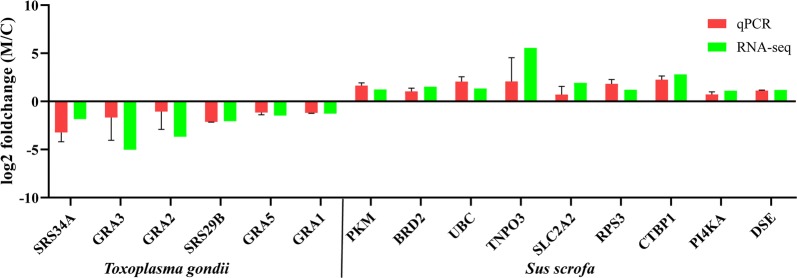
Porcine kidney (PK)-15 cells were infected with tachyzoites of T. gondii RH strain. Three hours post-infection, PK-15 cells were treated with 0.1 μM monensin, while control cells were treated with medium only. PK-15 cells containing intracellular tachyzoites were harvested at 6 and 24 h post-treatment, and the transcriptomic profiles of T. gondii-infected PK-15 cells were examined using high-throughput RNA sequencing (RNA-seq). Quantitative real-time PCR was used to verify the expression of 15 differentially expressed genes (DEGs) identified by RNA-seq analysis.
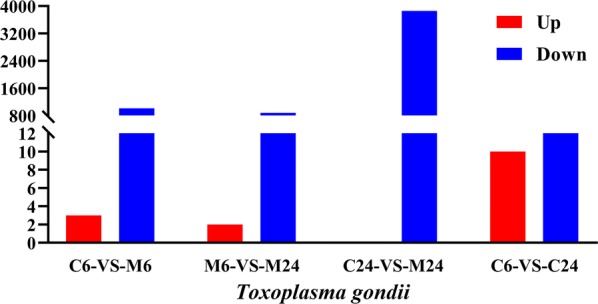
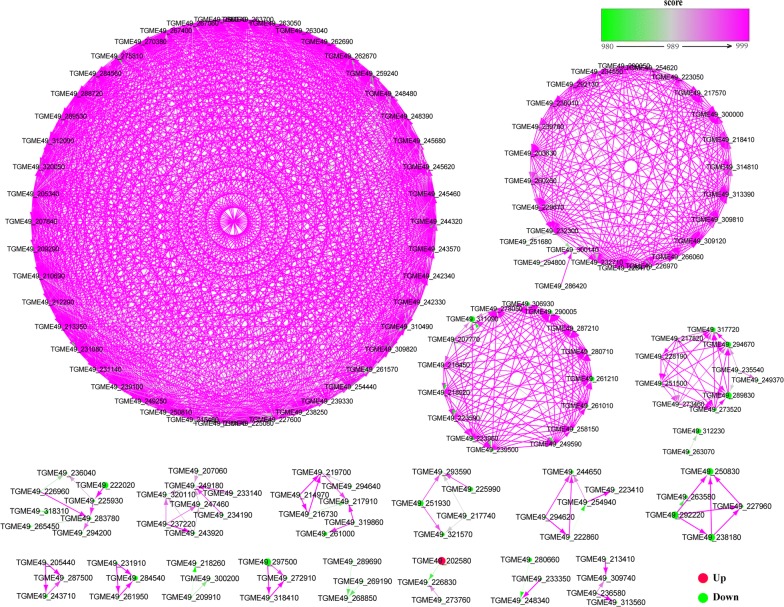
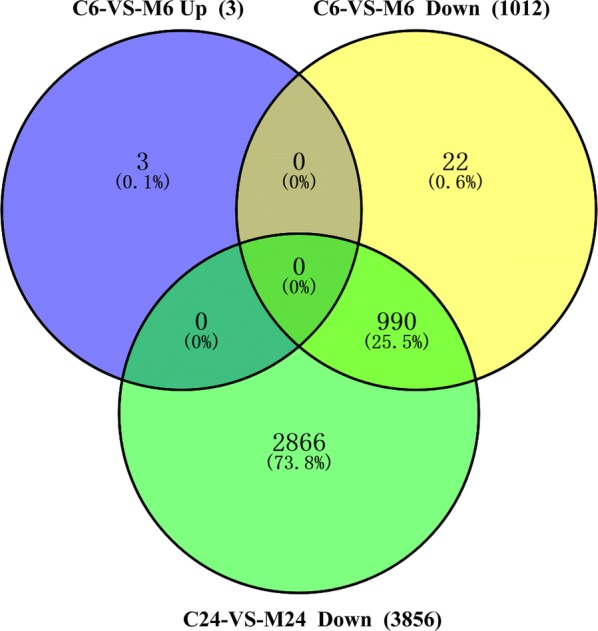
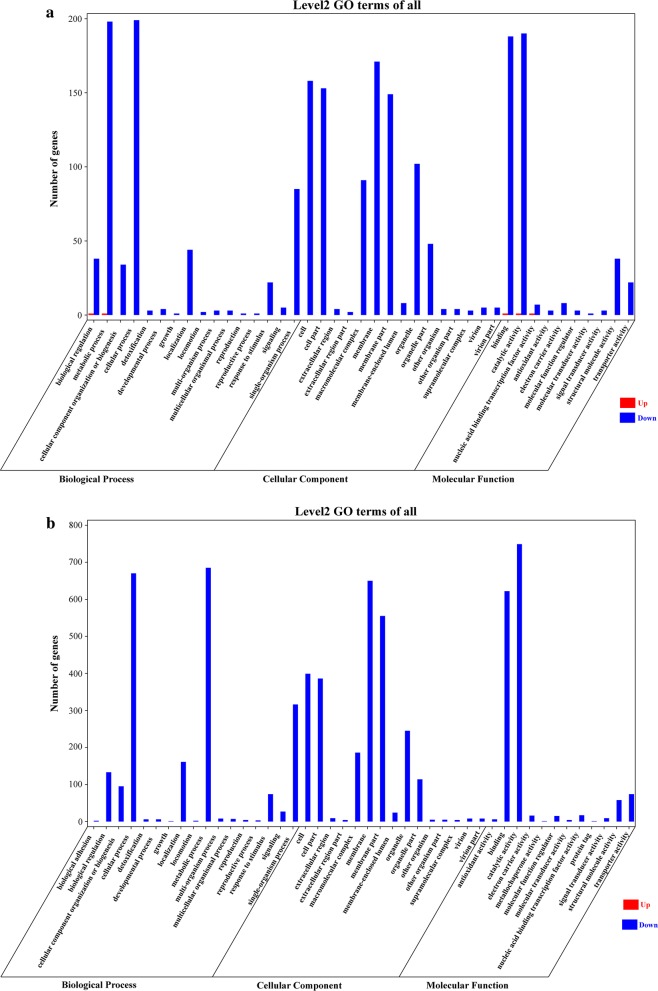
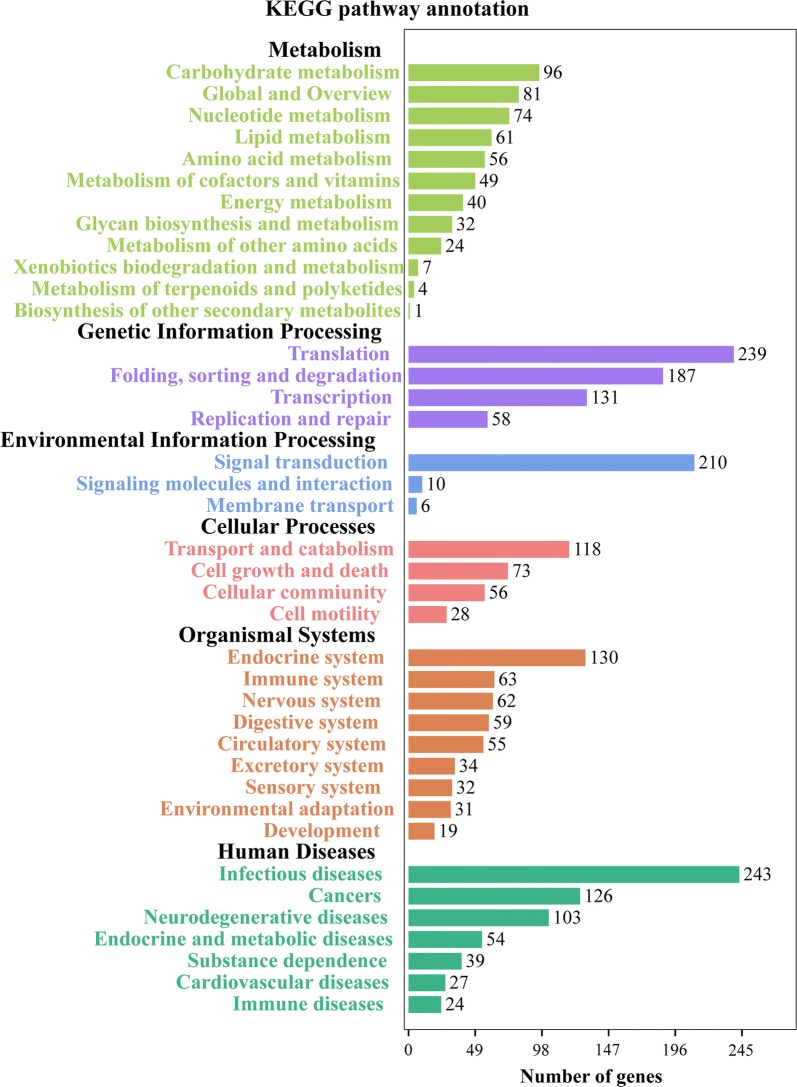
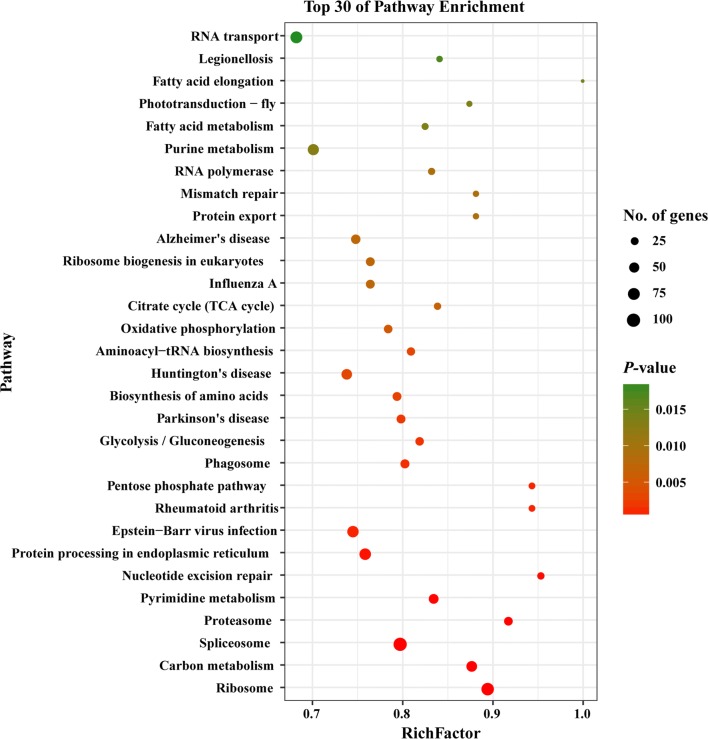
A total of 4868 downregulated genes and three upregulated genes were identified in monensin-treated T. gondii, indicating that most of T. gondii genes were suppressed by monensin. Kyoto Encyclopedia of Genes and Genomes (KEGG) pathway enrichment analysis of T. gondii DEGs showed that T. gondii metabolic and cellular pathways were significantly downregulated. Spliceosome, ribosome, and protein processing in endoplasmic reticulum were the top three most significantly enriched pathways out of the 30 highly enriched pathways detected in T. gondii. This result suggests that monensin, via down-regulation of protein biosynthesis in T. gondii, can limit the parasite growth and proliferation.
Our findings provide a comprehensive insight into T. gondii genes and pathways with altered expression following monensin treatment. These data can be further explored to achieve better understanding of the specific mechanism of action of monensin against T. gondii.
感染顶复亚门原虫寄生虫弓形虫会导致严重且潜在致命的大脑和眼部疾病,尤其是在免疫功能低下的个体中。抗球虫离子载体药物莫能菌素已被证明具有抗弓形虫的特性。然而,莫能菌素对弓形虫作用的综合分子机制在很大程度上仍不清楚。我们假设分析莫能菌素处理诱导的弓形虫转录变化可以揭示莫能菌素作用机制的新方面。
猪肾(PK)-15 细胞感染弓形虫 RH 株速殖子。感染后 3 小时,用 0.1 μM 莫能菌素处理 PK-15 细胞,而对照细胞用培养基处理。用莫能菌素处理后 6 小时和 24 小时收获含有细胞内速殖子的 PK-15 细胞,并用高通量 RNA 测序(RNA-seq)检测弓形虫感染的 PK-15 细胞的转录组谱。用实时定量 PCR 验证 RNA-seq 分析鉴定的 15 个差异表达基因(DEG)的表达。
莫能菌素处理的弓形虫中鉴定出 4868 个下调基因和 3 个上调基因,表明莫能菌素抑制了大多数弓形虫基因的表达。弓形虫 DEG 的京都基因与基因组百科全书(KEGG)通路富集分析表明,弓形虫代谢和细胞途径显著下调。剪接体、核糖体和内质网蛋白加工是在检测到的 30 个高度富集的通路中前三个最显著富集的通路。这一结果表明,莫能菌素通过下调弓形虫中的蛋白质生物合成,可以限制寄生虫的生长和增殖。
我们的研究结果为莫能菌素处理后弓形虫基因和表达改变提供了全面的见解。这些数据可以进一步探索,以更好地理解莫能菌素对弓形虫的具体作用机制。