The Catholic Univ. of America, United States.
J Biomed Opt. 2020 Feb;25(2):1-17. doi: 10.1117/1.JBO.25.2.026002.
We introduce an application of machine learning trained on optical phase features of epithelial and mesenchymal cells to grade cancer cells' morphologies, relevant to evaluation of cancer phenotype in screening assays and clinical biopsies.
Our objective was to determine quantitative epithelial and mesenchymal qualities of breast cancer cells through an unbiased, generalizable, and linear score covering the range of observed morphologies.
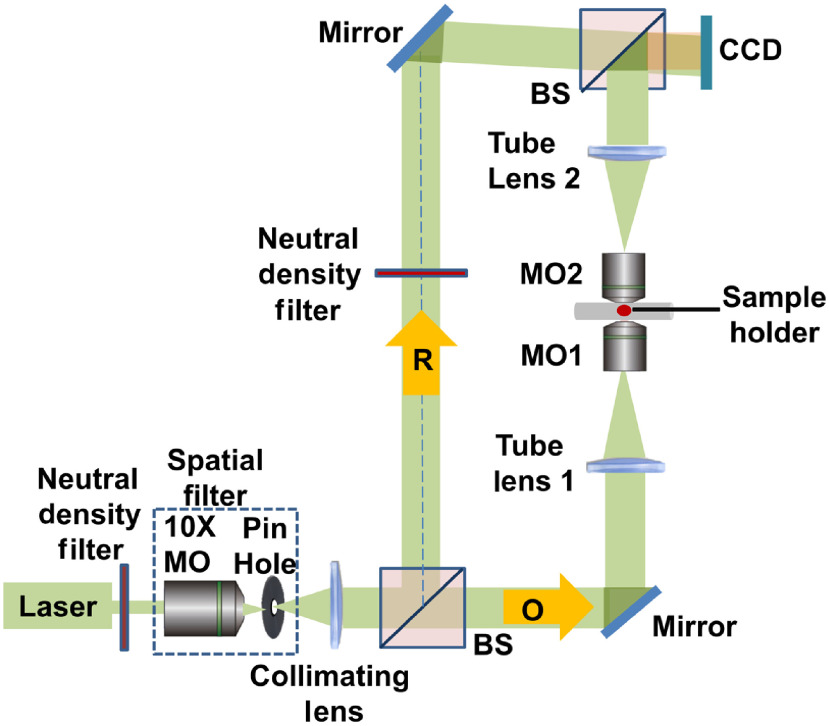
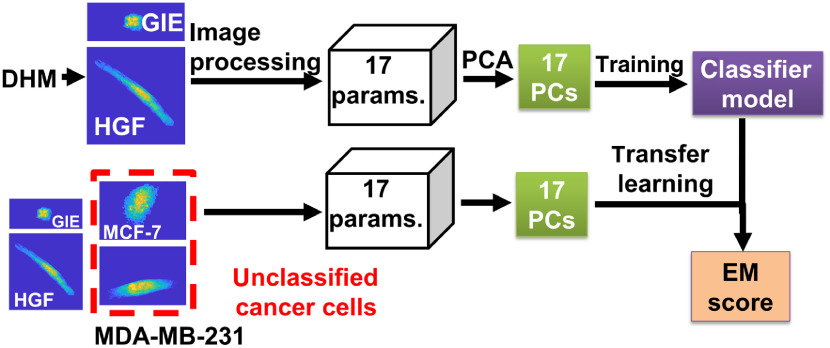
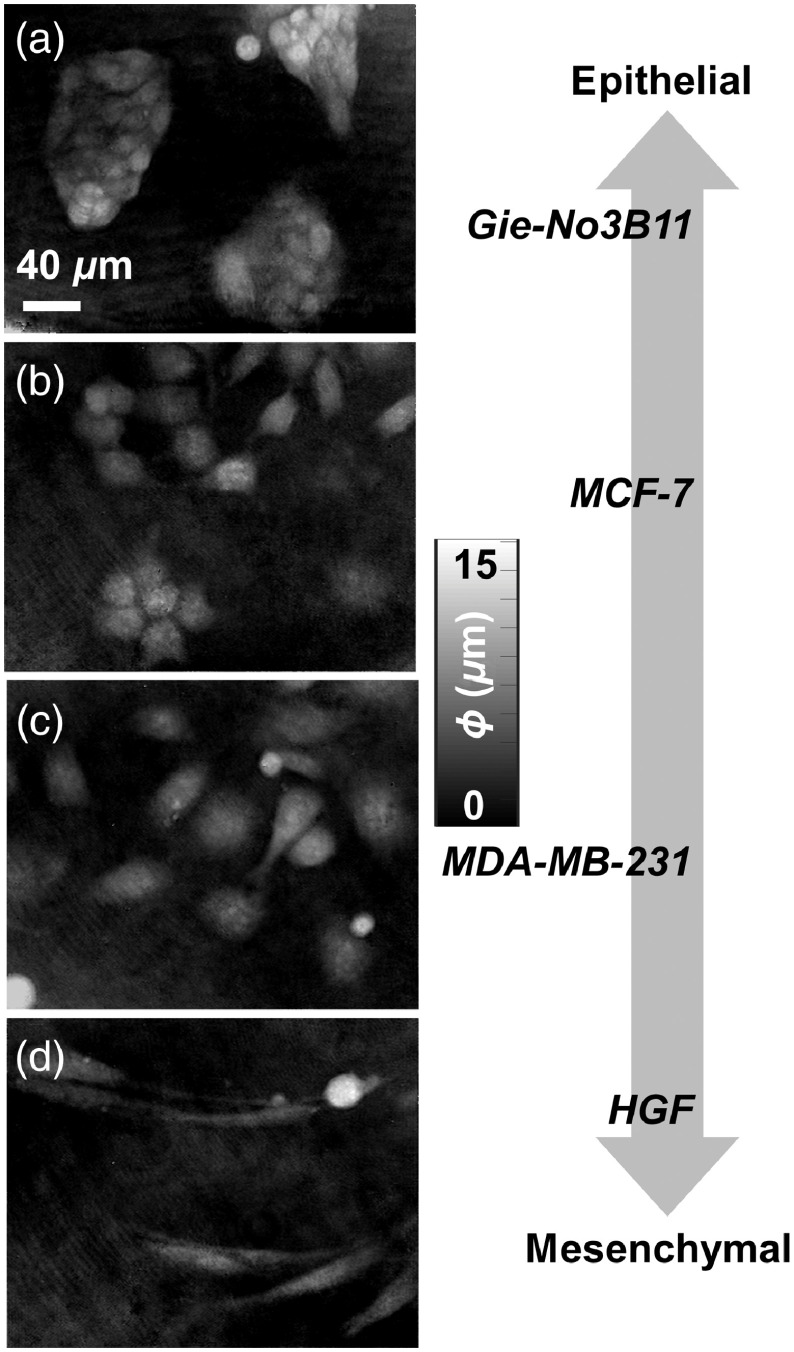
Digital holographic microscopy was used to generate phase height maps of noncancerous epithelial (Gie-No3B11) and fibroblast (human gingival) cell lines, as well as MDA-MB-231 and MCF-7 breast cancer cell lines. Several machine learning algorithms were evaluated as binary classifiers of the noncancerous cells that graded the cancer cells by transfer learning.
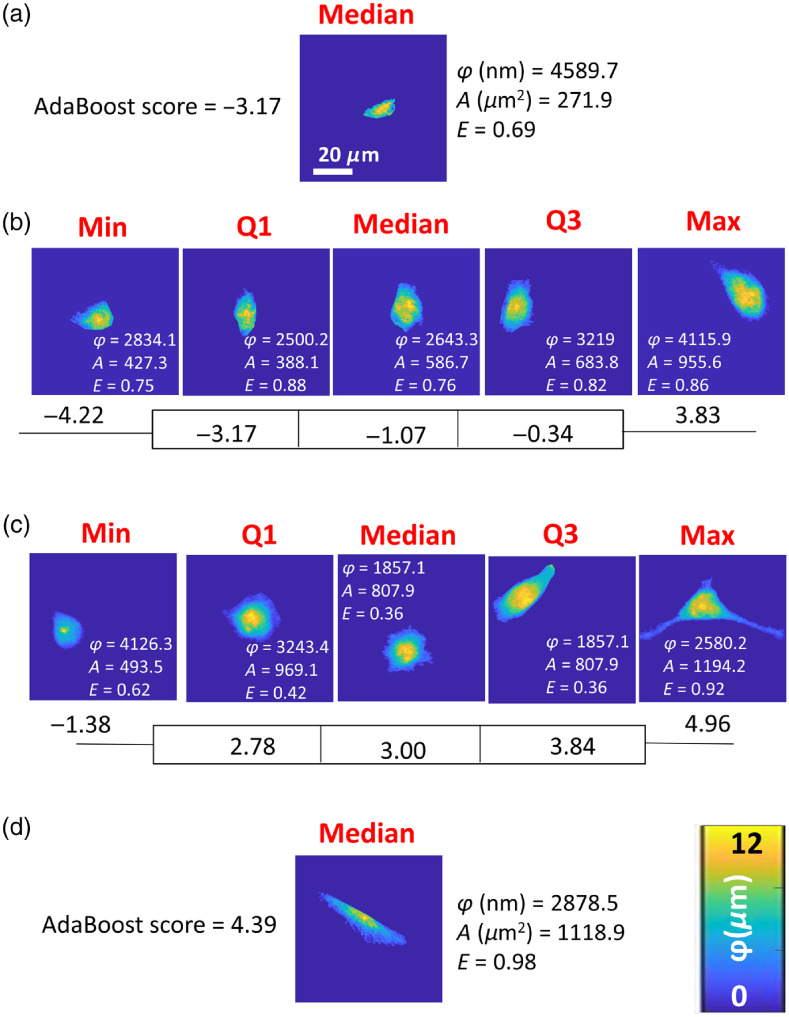
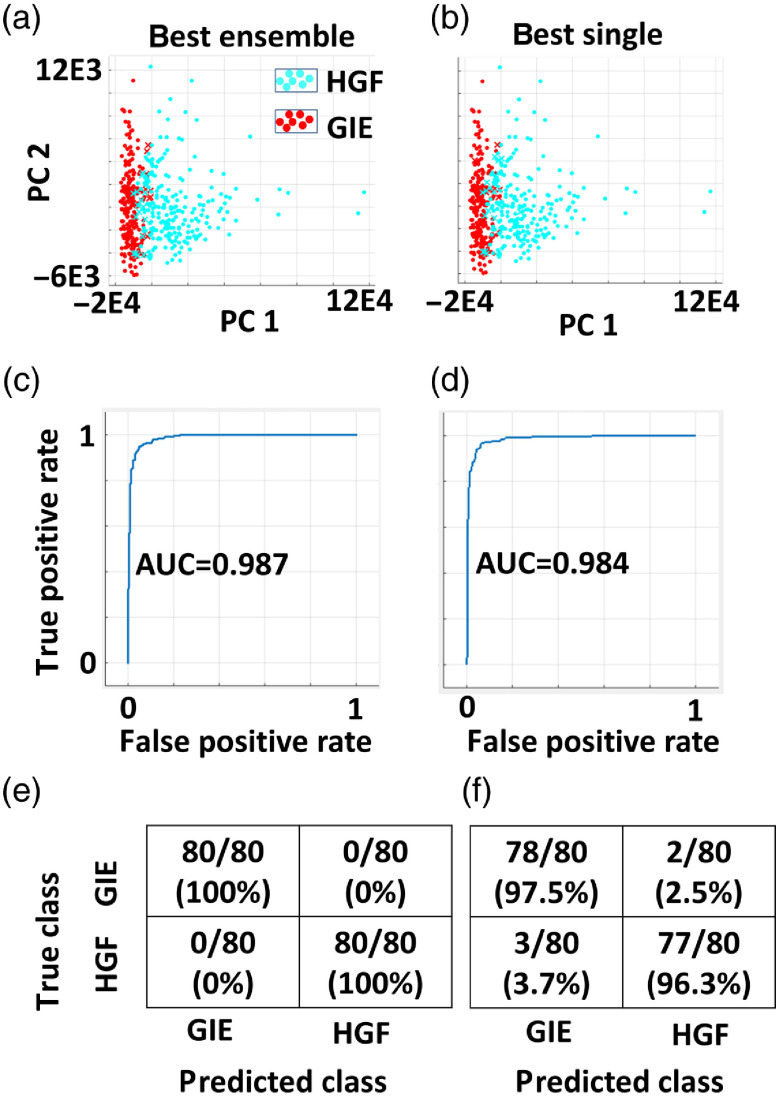
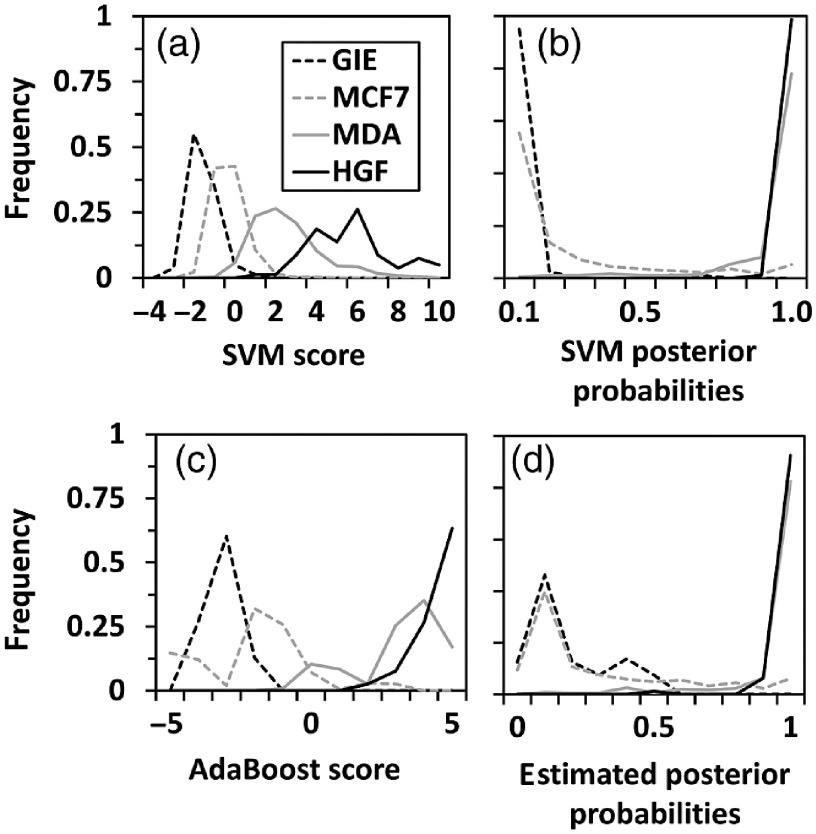
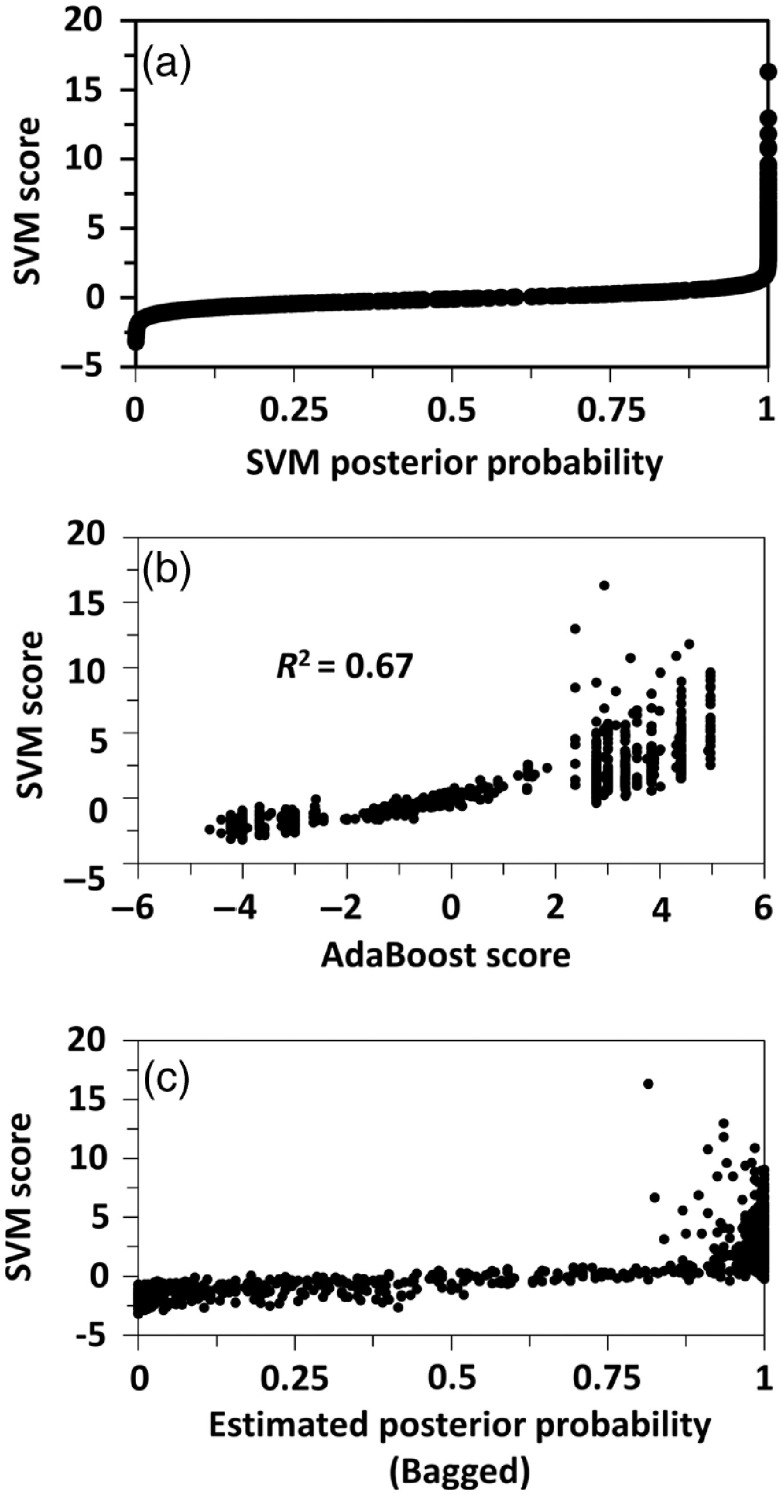
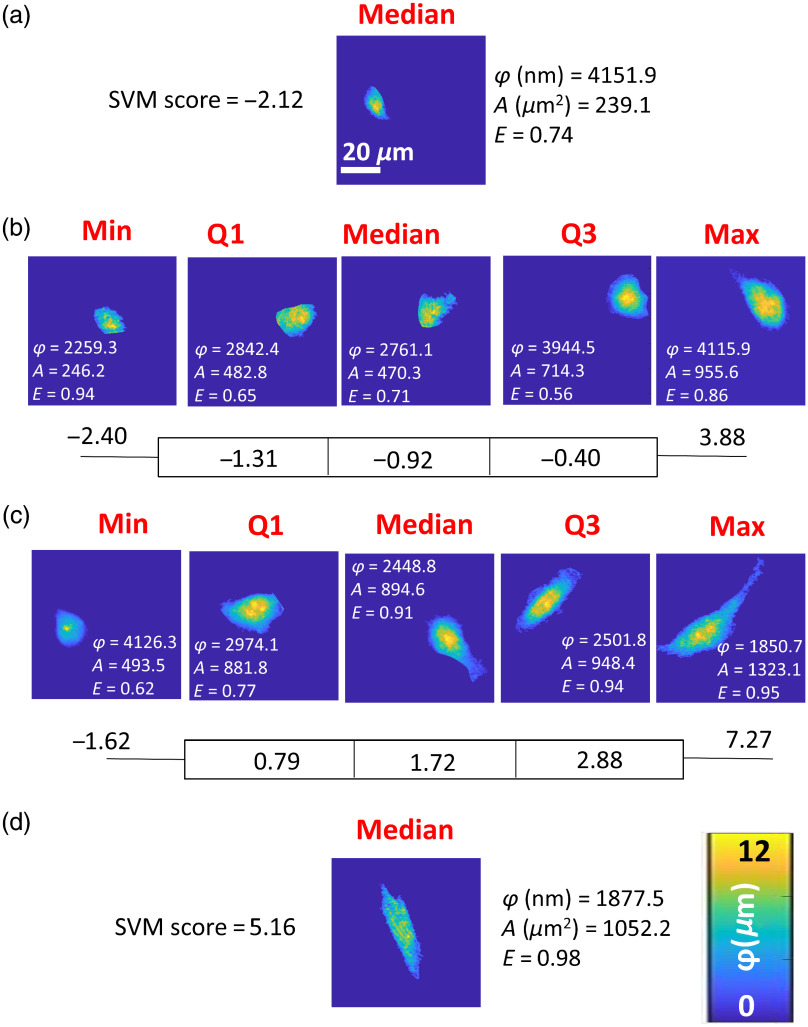
Epithelial and mesenchymal cells were classified with 96% to 100% accuracy. Breast cancer cells had scores in between the noncancer scores, indicating both epithelial and mesenchymal morphological qualities. The MCF-7 cells skewed toward epithelial scores, while MDA-MB-231 cells skewed toward mesenchymal scores. Linear support vector machines (SVMs) produced the most distinct score distributions for each cell line.
The proposed epithelial-mesenchymal score, derived from linear SVM learning, is a sensitive and quantitative approach for detecting epithelial and mesenchymal characteristics of unknown cells based on well-characterized cell lines. We establish a framework for rapid and accurate morphological evaluation of single cells and subtle phenotypic shifts in imaged cell populations.
我们介绍了一种应用机器学习对上皮细胞和间充质细胞的光学相位特征进行训练,以对癌细胞的形态进行分级,这与筛选试验和临床活检中评估癌症表型相关。
我们的目的是通过一个涵盖观察到的形态范围的无偏、可推广和线性评分,确定乳腺癌细胞的定量上皮和间充质特性。
数字全息显微镜用于生成非癌上皮(Gie-No3B11)和成纤维细胞(人牙龈)细胞系以及 MDA-MB-231 和 MCF-7 乳腺癌细胞系的相位高度图。评估了几种机器学习算法作为非癌细胞的二进制分类器,通过迁移学习对癌细胞进行分级。
上皮细胞和间充质细胞的分类准确率达到 96%至 100%。乳腺癌细胞的评分介于非癌评分之间,表明具有上皮和间充质形态特征。MCF-7 细胞偏向于上皮评分,而 MDA-MB-231 细胞偏向于间充质评分。线性支持向量机(SVM)产生了每个细胞系最独特的评分分布。
基于线性 SVM 学习得出的拟议上皮-间充质评分是一种敏感和定量的方法,可根据特征明确的细胞系检测未知细胞的上皮和间充质特征。我们建立了一个快速准确评估单细胞形态和成像细胞群体中细微表型变化的框架。