German Federal Institute for Risk Assessment, Department of Chemical & Product Safety, Max-Dohrn-Straße 8-10, 10589 Berlin, Germany.
Int J Mol Sci. 2020 Feb 14;21(4):1278. doi: 10.3390/ijms21041278.
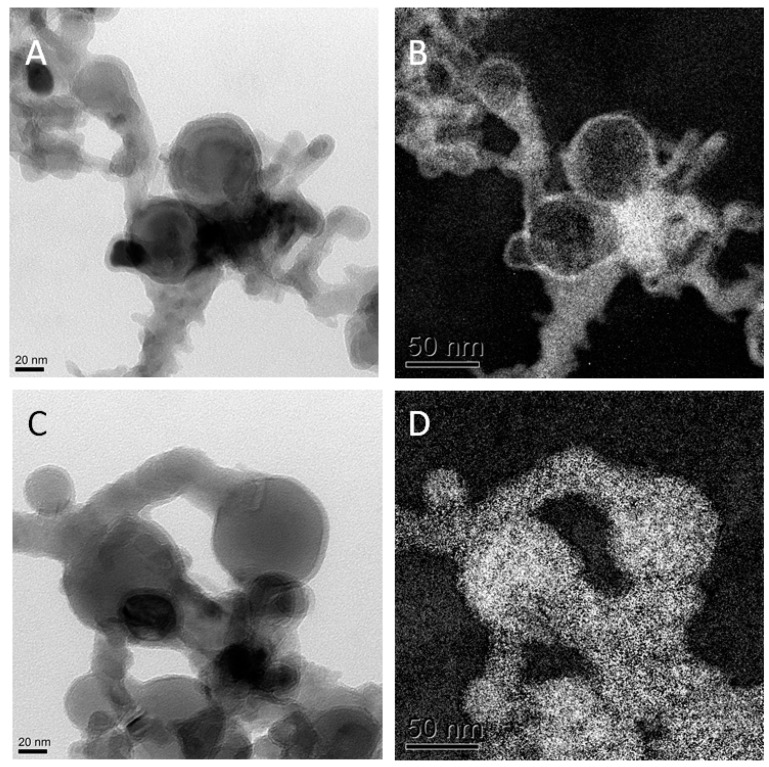
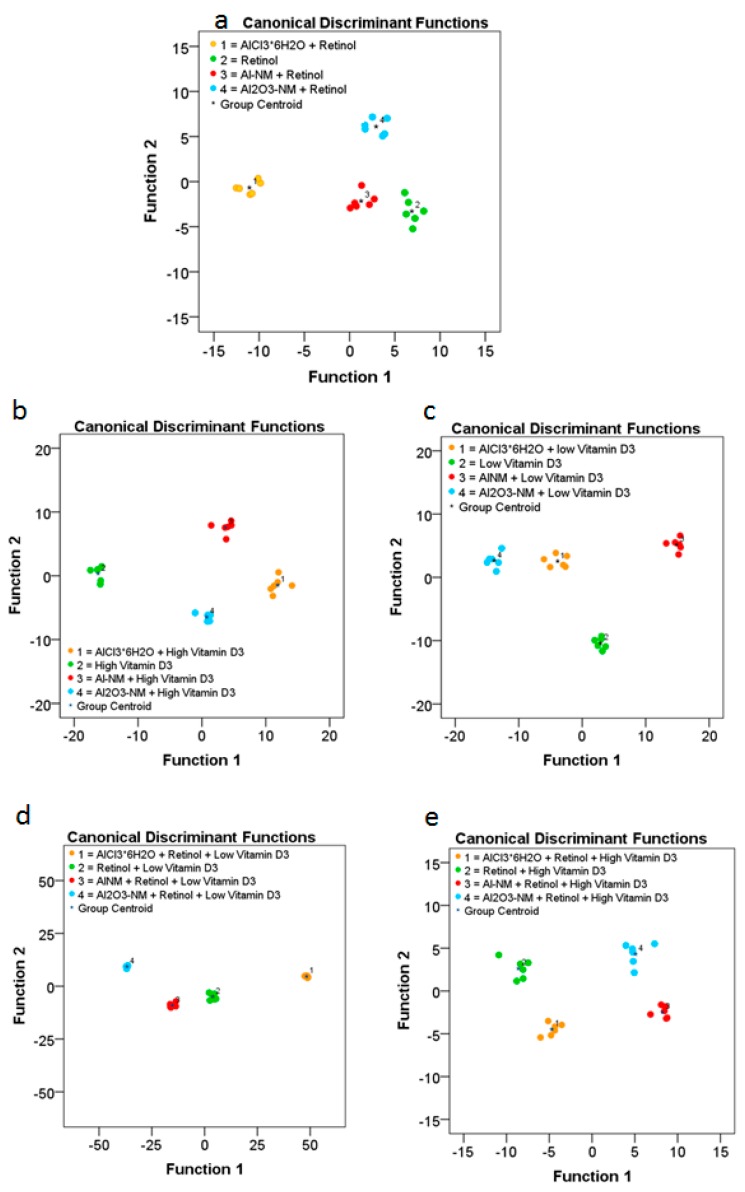
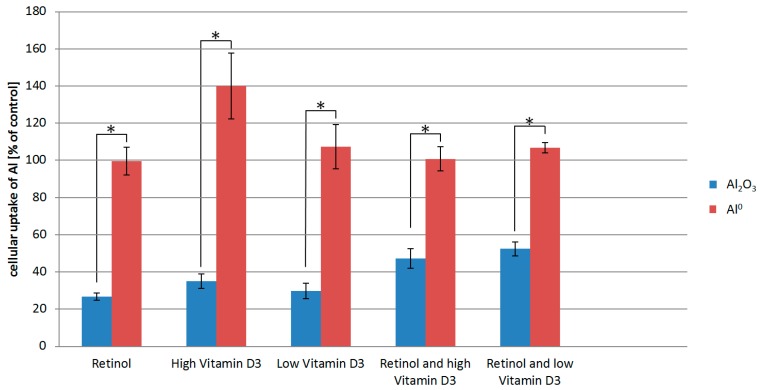
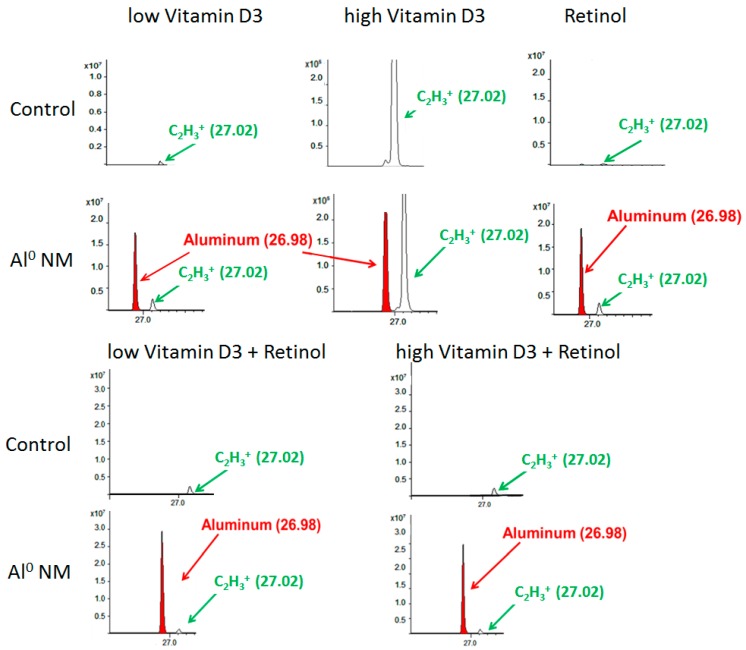
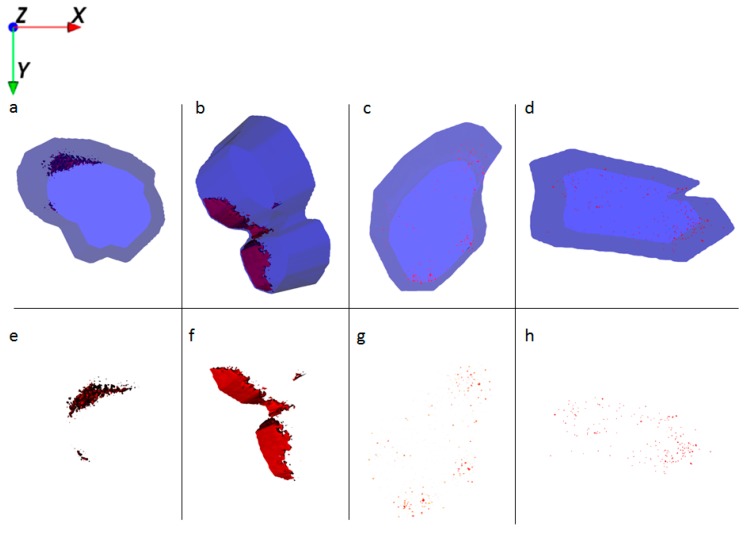
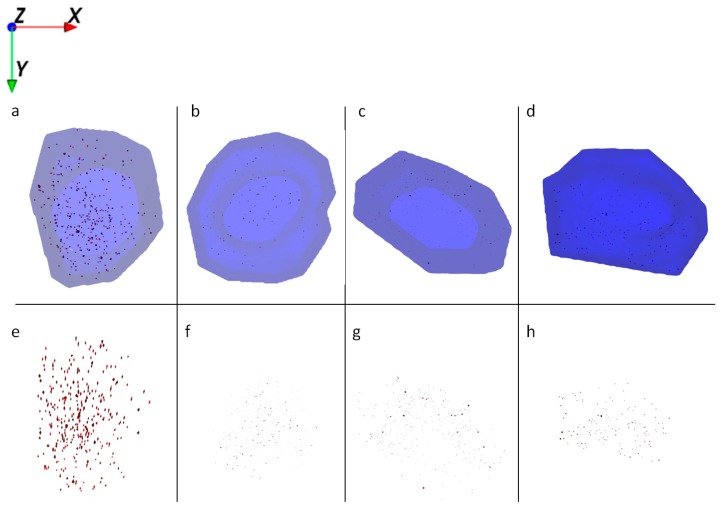
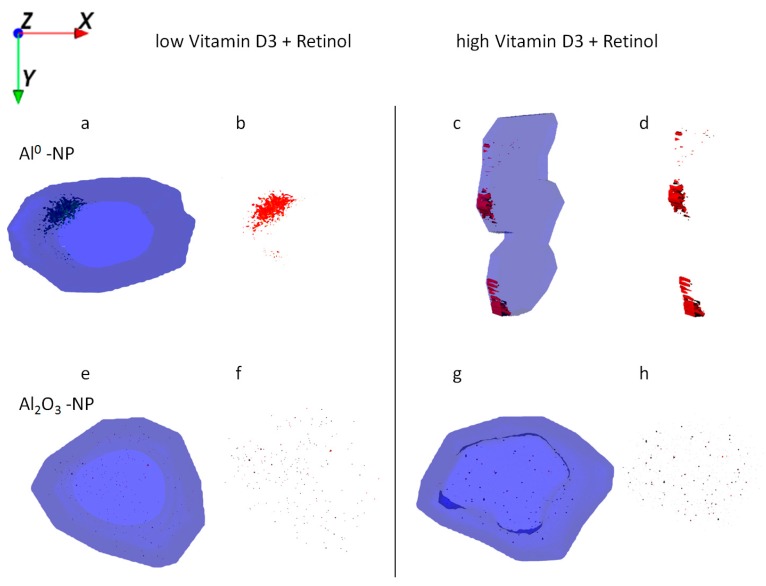
Aluminum (Al) is extensively used for the production of different consumer products, agents, as well as pharmaceuticals. Studies that demonstrate neurotoxicity and a possible link to Alzheimer's disease trigger concern about potential health risks due to high Al intake. Al in cosmetic products raises the question whether a possible interaction between Al and retinol (vitamin A) and cholecalciferol (vitamin D3) metabolism might exist. Understanding the uptake mechanisms of ionic or elemental Al and Al nanomaterials (Al NMs) in combination with bioactive substances are important for the assessment of possible health risk associated. Therefore, we studied the uptake and distribution of Al oxide (AlO) and metallic Al NMs in the human keratinocyte cell line HaCaT. Possible alterations of the metabolic pattern upon application of the two Al species together with vitamin A or D3 were investigated. Time-of-flight secondary ion mass spectrometry (ToF-SIMS) imaging and inductively coupled plasma mass spectrometry (ICP-MS) were applied to quantify the cellular uptake of Al NMs.
铝(Al)广泛用于生产各种消费品、试剂以及药品。研究表明,铝具有神经毒性,并可能与阿尔茨海默病有关,这引发了人们对高铝摄入可能带来的健康风险的担忧。化妆品中的铝引发了一个问题,即铝是否可能与视黄醇(维生素 A)和胆钙化醇(维生素 D3)代谢之间存在相互作用。了解离子态或元素态铝以及铝纳米材料(Al NMs)与生物活性物质的摄取机制对于评估相关的潜在健康风险非常重要。因此,我们研究了人角质形成细胞系 HaCaT 中氧化铝(AlO)和金属 Al NMs 的摄取和分布。研究了两种铝物种与维生素 A 或 D3 一起应用时代谢模式的可能变化。飞行时间二次离子质谱(ToF-SIMS)成像和电感耦合等离子体质谱(ICP-MS)用于定量细胞摄取 Al NMs。