Department of Biology, Kyung Hee University, Seoul, 02447, Republic of Korea.
Department of Bio and Brain Engineering, KAIST, Daejeon, 34141, Republic of Korea.
Nat Commun. 2020 Feb 19;11(1):951. doi: 10.1038/s41467-020-14562-z.
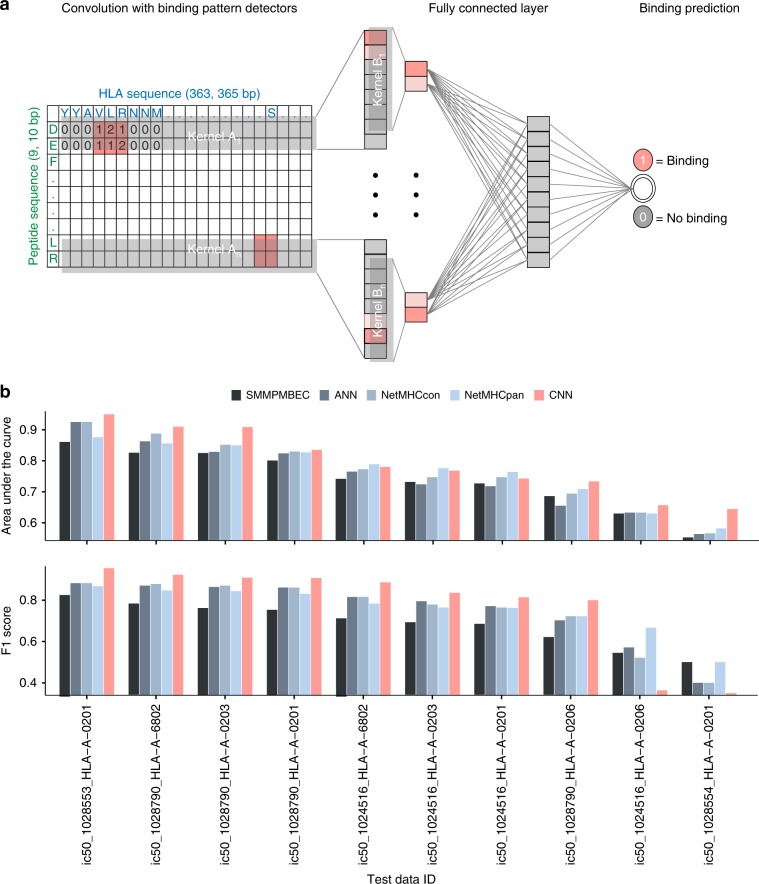
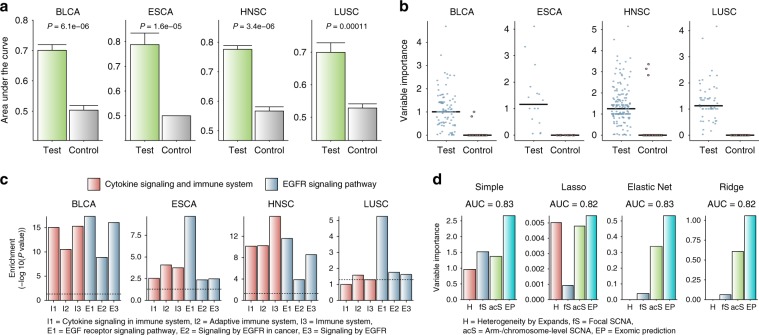
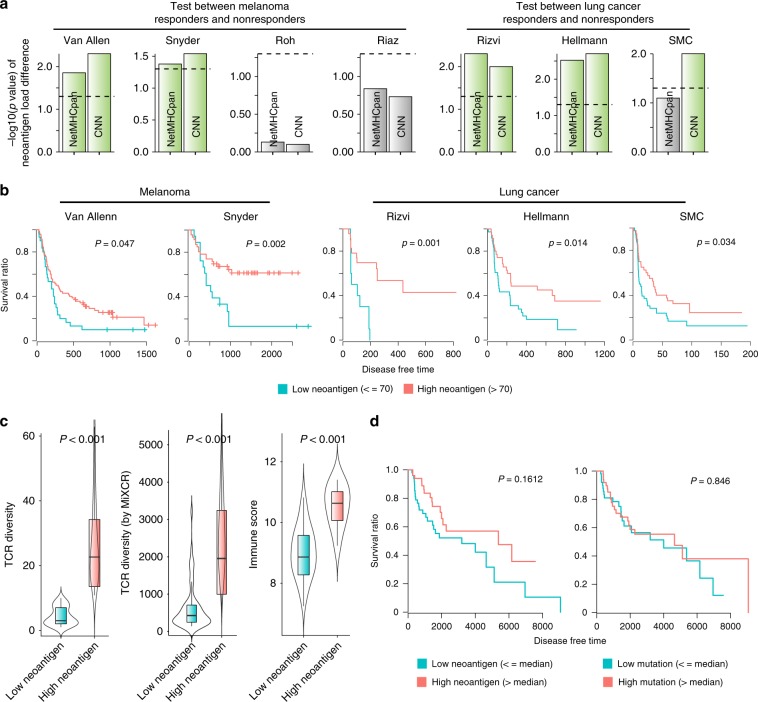
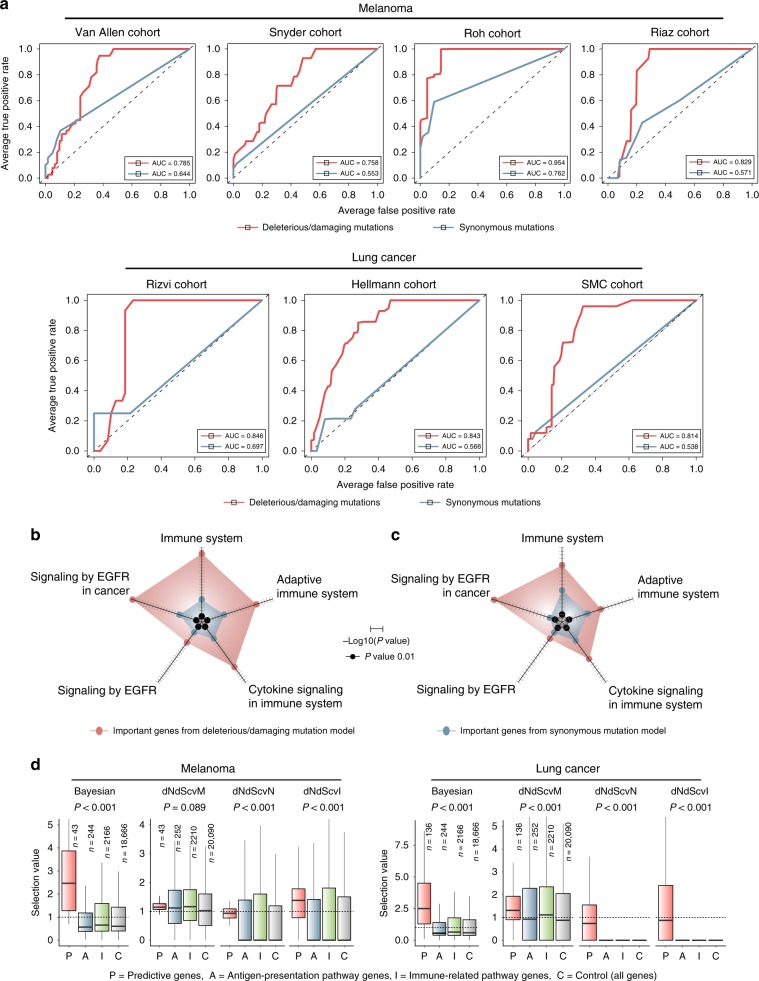
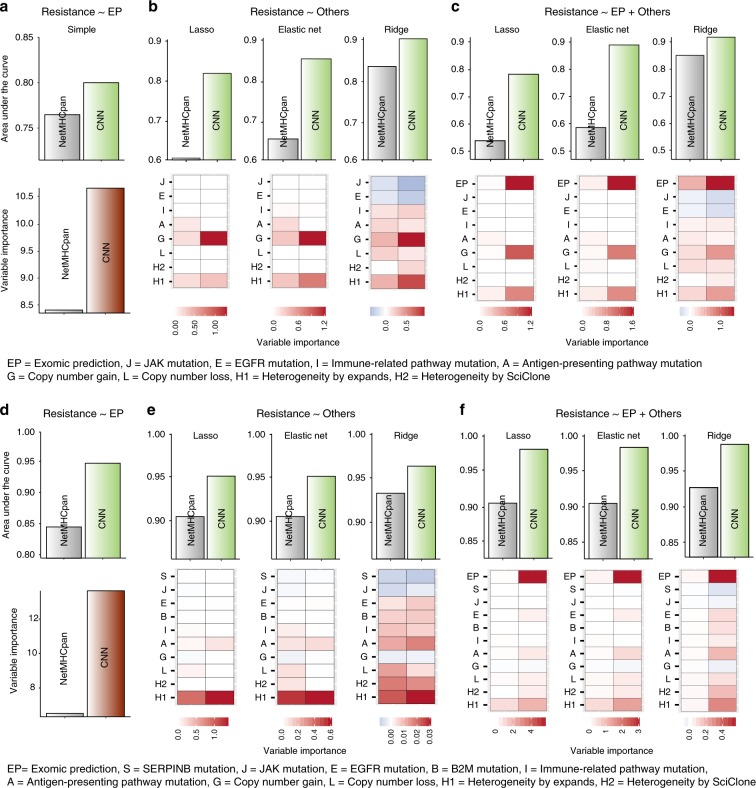
Neoantigen burden is regarded as a fundamental determinant of response to immunotherapy. However, its predictive value remains in question because some tumours with high neoantigen load show resistance. Here, we investigate our patient cohort together with a public cohort by our algorithms for the modelling of peptide-MHC binding and inter-cohort genomic prediction of therapeutic resistance. We first attempt to predict MHC-binding peptides at high accuracy with convolutional neural networks. Our prediction outperforms previous methods in > 70% of test cases. We then develop a classifier that can predict resistance from functional mutations. The predictive genes are involved in immune response and EGFR signalling, whereas their mutation patterns reflect positive selection. When integrated with our neoantigen profiling, these anti-immunogenic mutations reveal higher predictive power than known resistance factors. Our results suggest that the clinical benefit of immunotherapy can be determined by neoantigens that induce immunity and functional mutations that facilitate immune evasion.
新抗原负担被认为是免疫治疗反应的一个基本决定因素。然而,其预测价值仍存在争议,因为一些具有高新抗原负荷的肿瘤表现出耐药性。在这里,我们通过我们的算法对患者队列和公共队列进行了研究,以对肽-MHC 结合进行建模,并对治疗耐药性进行组间基因组预测。我们首先尝试使用卷积神经网络以高精度预测 MHC 结合肽。我们的预测在超过 70%的测试案例中优于以前的方法。然后,我们开发了一种可以从功能突变预测耐药性的分类器。预测基因涉及免疫反应和 EGFR 信号通路,而它们的突变模式反映了正选择。当与我们的新抗原分析相结合时,这些抗免疫突变比已知的耐药因素具有更高的预测能力。我们的结果表明,免疫治疗的临床获益可以由诱导免疫的新抗原和促进免疫逃逸的功能突变来决定。