Arlidge William N S, Bull Joseph W, Addison Prue F E, Burgass Michael J, Gianuca Dimas, Gorham Taylor M, Jacob Céline, Shumway Nicole, Sinclair Samuel P, Watson James E M, Wilcox Chris, Milner-Gulland E J
PhD student.
Professor at the University of Oxford's Department of Zoology, in Oxford, United Kingdom.
Bioscience. 2018 May 1;68(5):336-347. doi: 10.1093/biosci/biy029. Epub 2018 Apr 18.
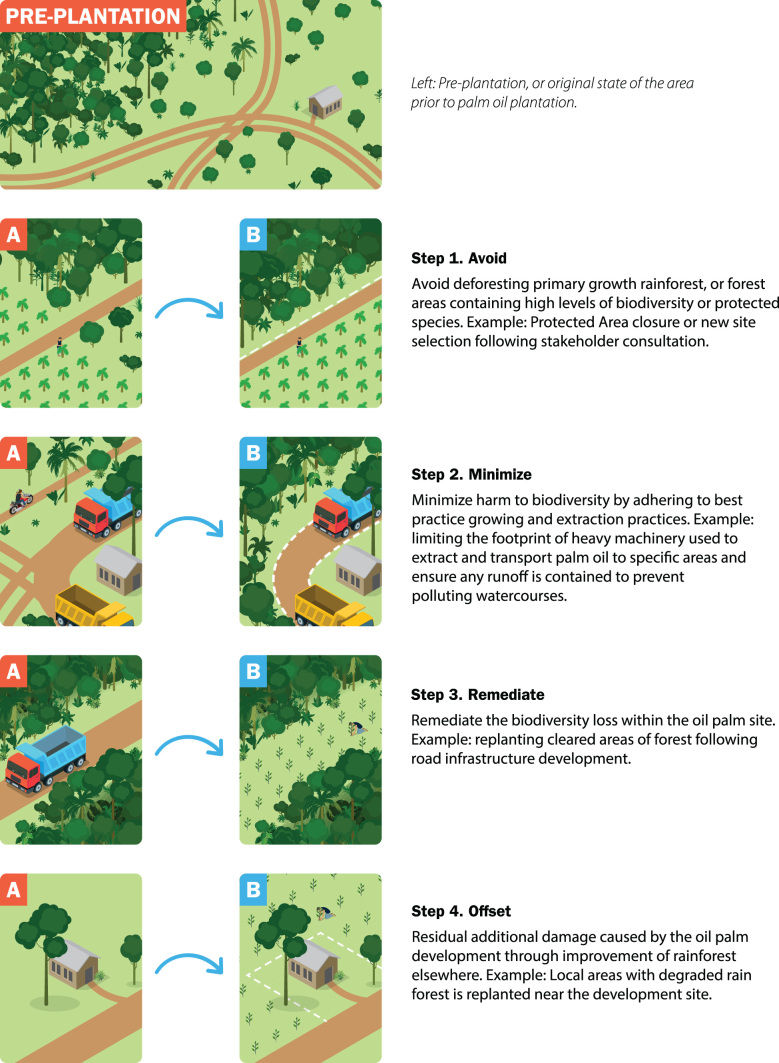
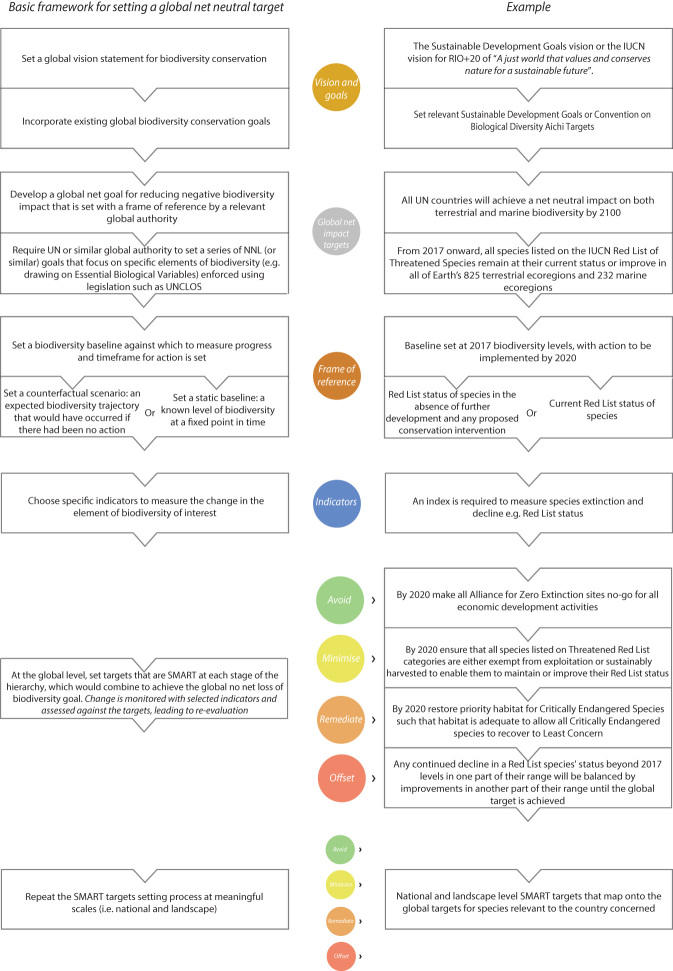
Efforts to conserve biodiversity comprise a patchwork of international goals, national-level plans, and local interventions that, overall, are failing. We discuss the potential utility of applying the mitigation hierarchy, widely used during economic development activities, to all negative human impacts on biodiversity. Evaluating all biodiversity losses and gains through the mitigation hierarchy could help prioritize consideration of conservation goals and drive the empirical evaluation of conservation investments through the explicit consideration of counterfactual trends and ecosystem dynamics across scales. We explore the challenges in using this framework to achieve global conservation goals, including operationalization and monitoring and compliance, and we discuss solutions and research priorities. The mitigation hierarchy's conceptual power and ability to clarify thinking could provide the step change needed to integrate the multiple elements of conservation goals and interventions in order to achieve successful biodiversity outcomes.
保护生物多样性的努力包括一系列国际目标、国家层面的计划和地方干预措施,但总体而言这些努力正遭遇失败。我们探讨将经济发展活动中广泛使用的缓解层级应用于人类对生物多样性的所有负面影响的潜在效用。通过缓解层级评估所有生物多样性的损失和收益,有助于优先考虑保护目标,并通过明确考虑跨尺度的反事实趋势和生态系统动态,推动对保护投资进行实证评估。我们探讨了使用这一框架实现全球保护目标所面临的挑战,包括实施、监测和合规方面,并讨论了解决方案和研究重点。缓解层级的概念力量及其澄清思路的能力,可能提供实现成功生物多样性成果所需的变革,以整合保护目标和干预措施的多个要素。