Schneider Hannah M, Klein Stephanie P, Hanlon Meredith T, Nord Eric A, Kaeppler Shawn, Brown Kathleen M, Warry Andrew, Bhosale Rahul, Lynch Jonathan P
Department of Plant Science, The Pennsylvania State University, University Park, PA, USA.
Department of Agronomy, University of Wisconsin, Madison, WI, USA.
J Exp Bot. 2020 May 30;71(10):3185-3197. doi: 10.1093/jxb/eraa084.
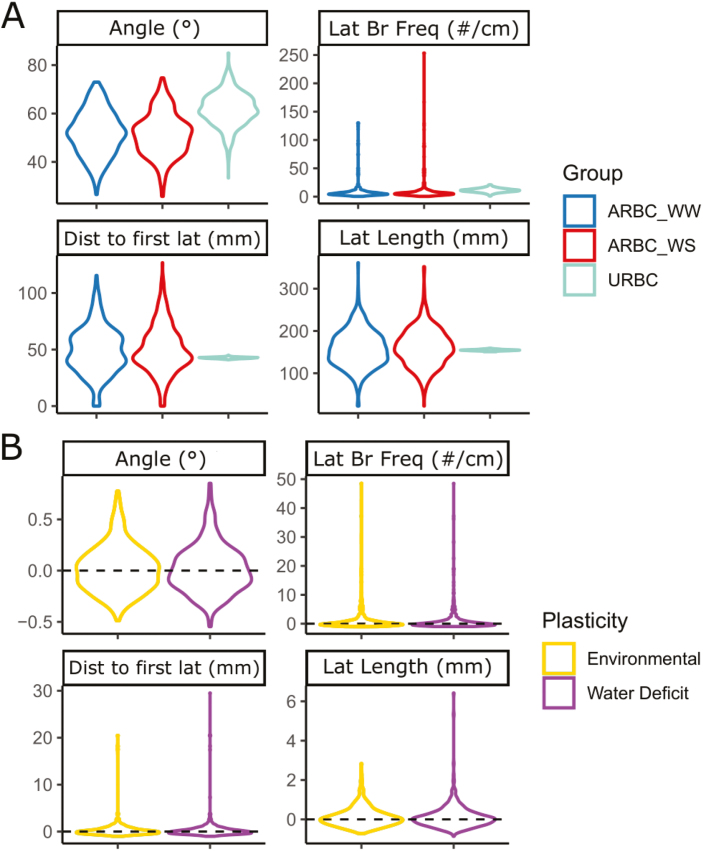
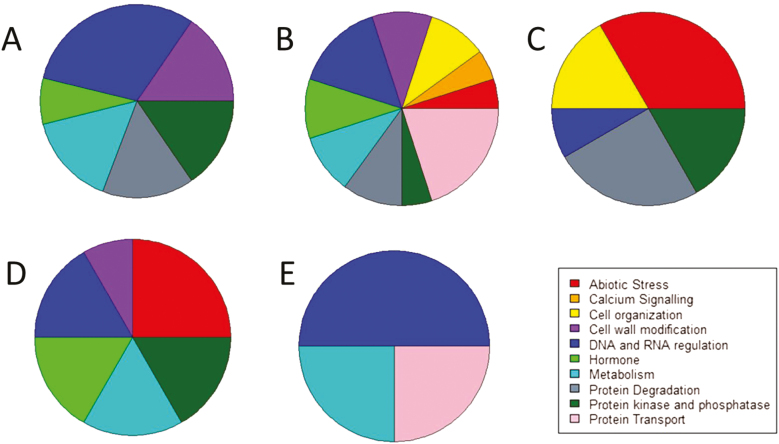
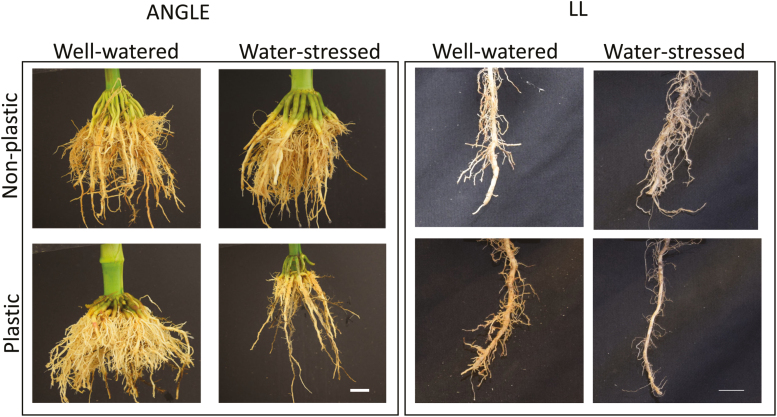
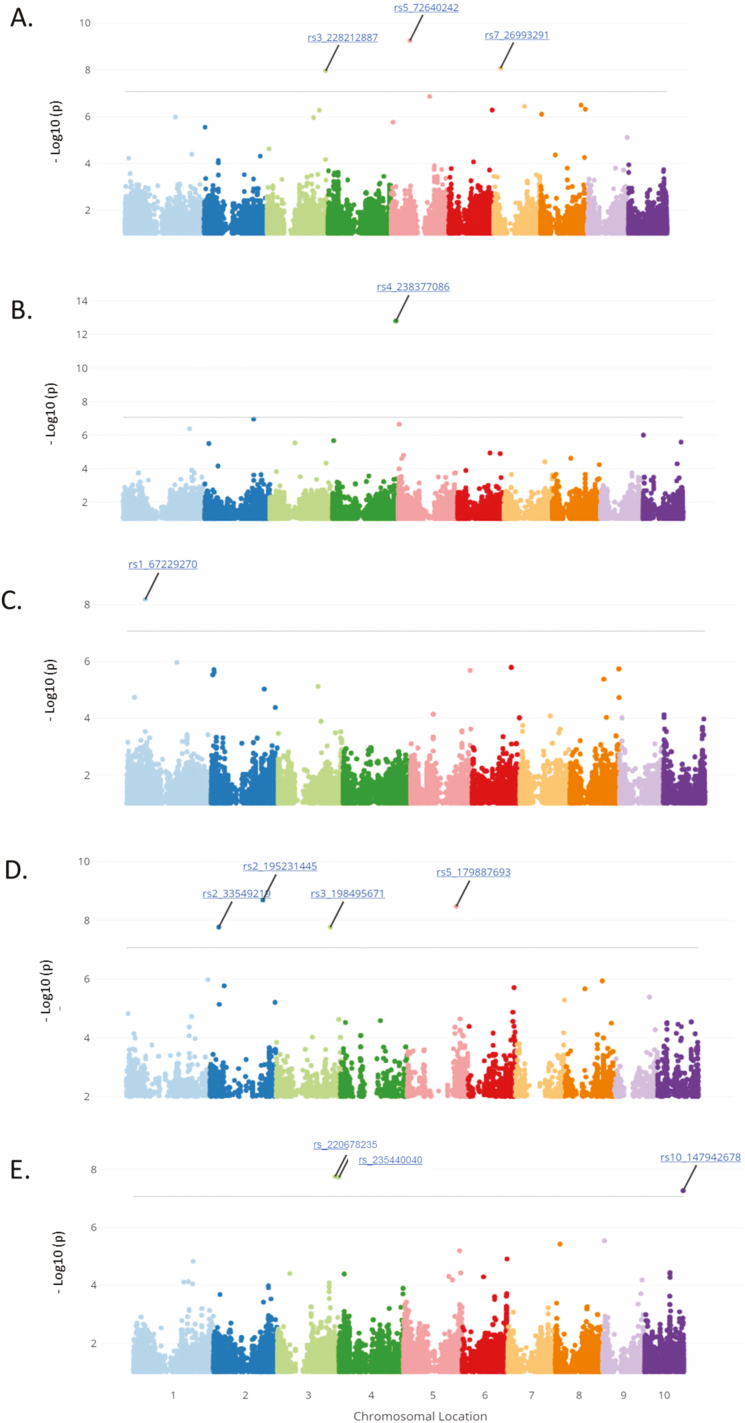
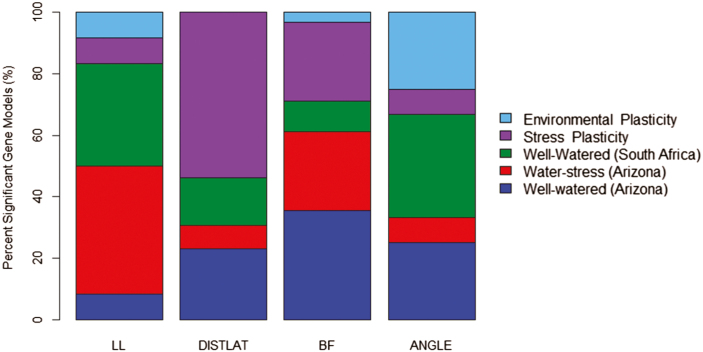
Root phenotypes regulate soil resource acquisition; however, their genetic control and phenotypic plasticity are poorly understood. We hypothesized that the responses of root architectural phenes to water deficit (stress plasticity) and different environments (environmental plasticity) are under genetic control and that these loci are distinct. Root architectural phenes were phenotyped in the field using a large maize association panel with and without water deficit stress for three seasons in Arizona and without water deficit stress for four seasons in South Africa. All root phenes were plastic and varied in their plastic response. We identified candidate genes associated with stress and environmental plasticity and candidate genes associated with phenes in well-watered conditions in South Africa and in well-watered and water-stress conditions in Arizona. Few candidate genes for plasticity overlapped with those for phenes expressed under each condition. Our results suggest that phenotypic plasticity is highly quantitative, and plasticity loci are distinct from loci that control phene expression in stress and non-stress, which poses a challenge for breeding programs. To make these loci more accessible to the wider research community, we developed a public online resource that will allow for further experimental validation towards understanding the genetic control underlying phenotypic plasticity.
根系表型调控土壤资源获取;然而,其遗传控制和表型可塑性却鲜为人知。我们推测,根系结构表型对水分亏缺的响应(胁迫可塑性)以及对不同环境的响应(环境可塑性)受遗传控制,且这些基因座是不同的。利用一个大型玉米关联群体,在亚利桑那州对有水分亏缺胁迫和无水分亏缺胁迫的情况进行了三个季节的田间根系结构表型分析,并在南非对无水分亏缺胁迫的情况进行了四个季节的分析。所有根系表型均具有可塑性,且其可塑性反应各不相同。我们鉴定出了与胁迫可塑性和环境可塑性相关的候选基因,以及与南非水分充足条件下和亚利桑那州水分充足及水分胁迫条件下的表型相关的候选基因。可塑性的候选基因与每种条件下表达的表型的候选基因很少重叠。我们的结果表明,表型可塑性具有高度的数量性状特征,可塑性基因座与控制胁迫和非胁迫条件下表型表达的基因座不同,这给育种计划带来了挑战。为了让更广泛的研究群体更容易获取这些基因座,我们开发了一个公共在线资源,这将有助于进一步进行实验验证,以了解表型可塑性背后的遗传控制。