Nitti Mariapaola, Furfaro Anna Lisa, Mann Giovanni E
Department of Experimental Medicine, University of Genoa, Genoa, Italy.
King's British Heart Foundation Centre of Research Excellence, School of Cardiovascular Medicine & Sciences, Faculty of Life Sciences & Medicine, King's College London, London, United Kingdom.
Front Physiol. 2020 Jan 29;11:23. doi: 10.3389/fphys.2020.00023. eCollection 2020.
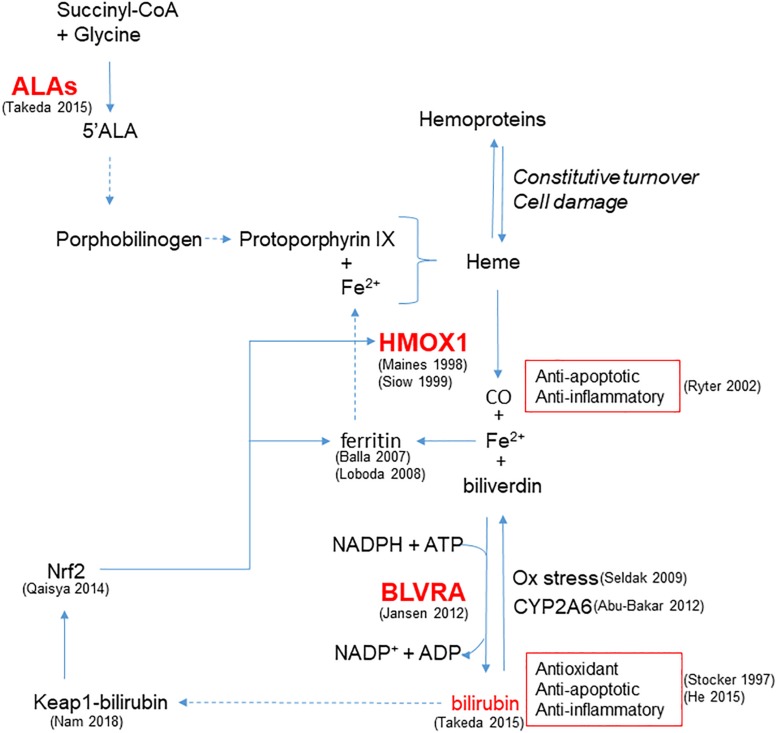
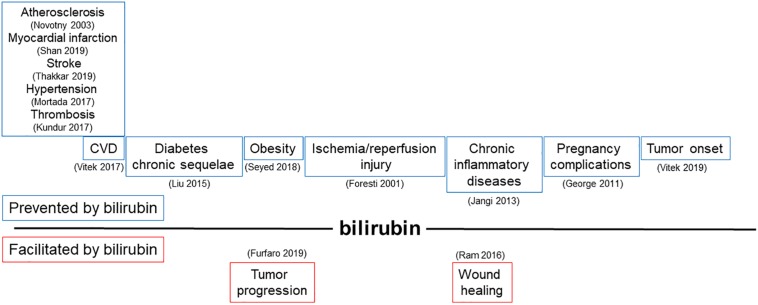
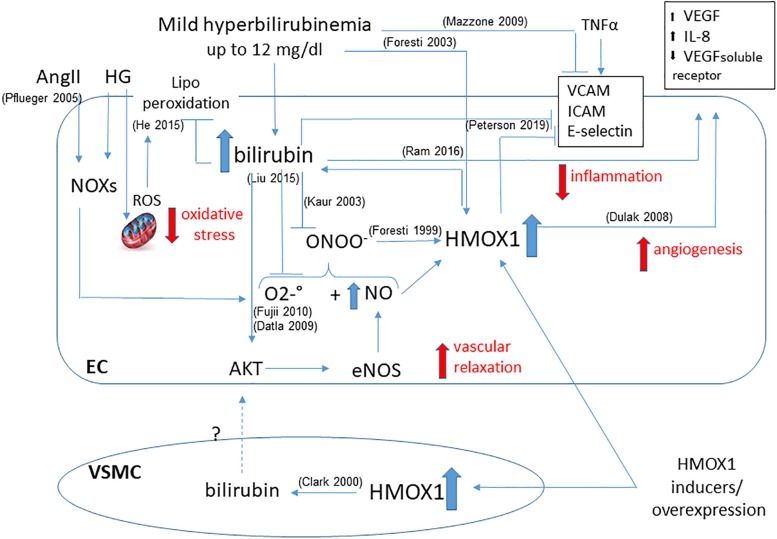
Among antioxidants in the human body, bilirubin has been recognized over the past 20 years to afford protection against different chronic conditions, including inflammation and cardiovascular disease. Moderate increases in plasma concentration and cellular bilirubin generation from metabolism of heme via heme oxygenase (HMOX) in virtually all tissues can modulate endothelial and vascular function and exert antioxidant and anti-inflammatory roles. This review aims to provide an up-to-date and critical overview of the molecular mechanisms by which bilirubin derived from plasma or from HMOX1 activation in vascular cells affects endothelial function. Understanding the molecular actions of bilirubin may critically improve the management not only of key cardiovascular diseases, but also provide insights into a broad spectrum of pathologies driven by endothelial dysfunction. In this context, therapeutic interventions aimed at mildly increasing serum bilirubin as well as bilirubin generated endogenously by endothelial HMOX1 should be considered.
在人体的抗氧化剂中,胆红素在过去20年里已被公认为能抵御包括炎症和心血管疾病在内的各种慢性疾病。血浆浓度适度升高以及几乎所有组织中通过血红素加氧酶(HMOX)对血红素进行代谢产生的细胞胆红素,可调节内皮和血管功能,并发挥抗氧化和抗炎作用。本综述旨在对血浆来源的胆红素或血管细胞中HMOX1激活产生的胆红素影响内皮功能的分子机制进行最新的批判性概述。了解胆红素的分子作用不仅可能显著改善主要心血管疾病的管理,还能为深入了解由内皮功能障碍引发的广泛病理状况提供思路。在此背景下,应考虑旨在适度提高血清胆红素以及内皮HMOX1内源性产生的胆红素的治疗干预措施。