Emerg Infect Dis. 2020 Mar;26(3):523-532. doi: 10.3201/eid2603.190947.
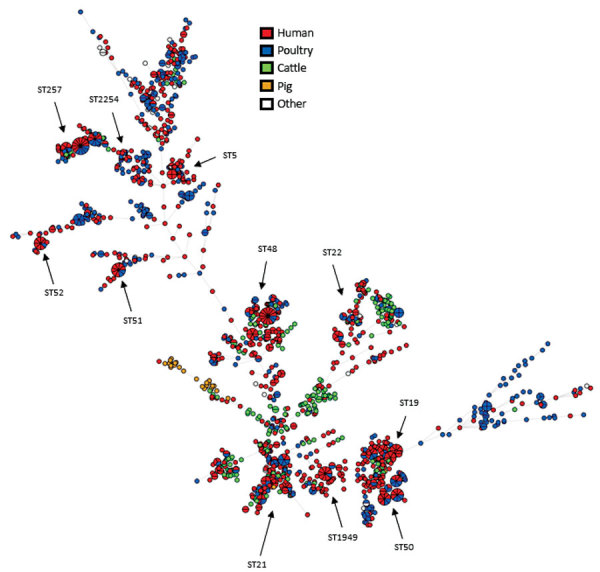
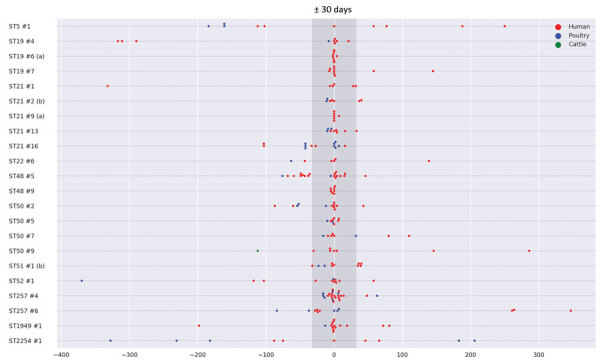
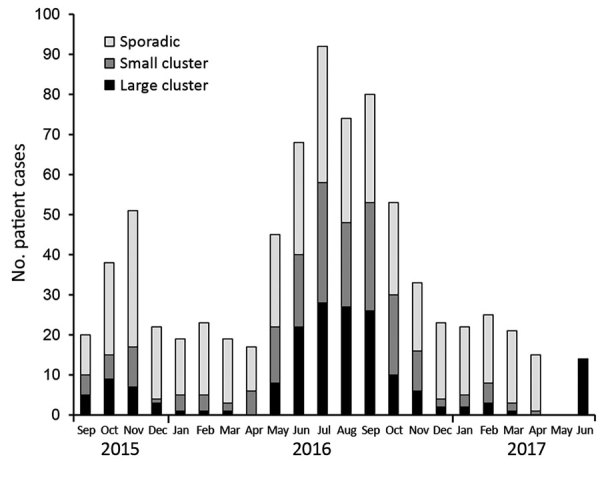
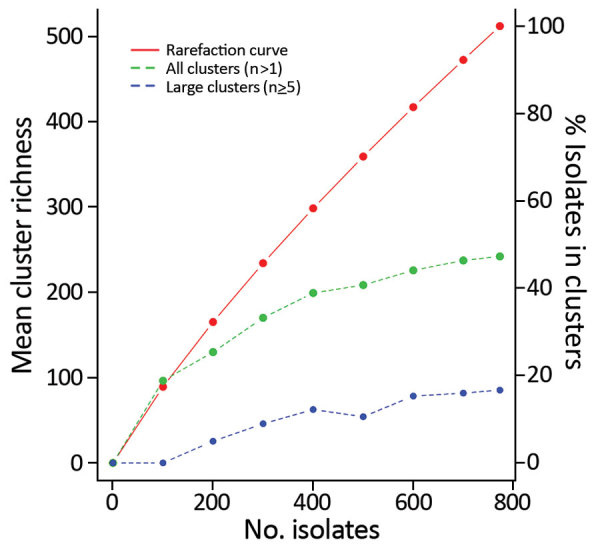
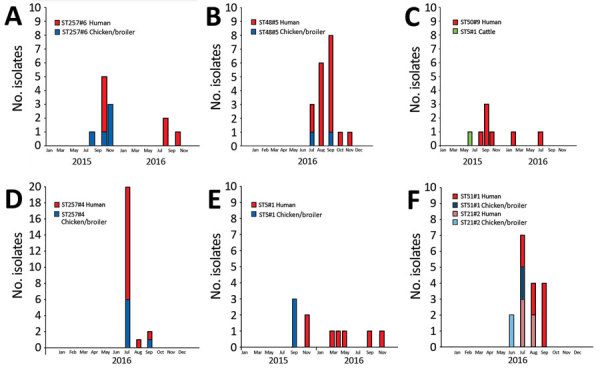
In industrialized countries, the leading cause of bacterial gastroenteritis is Campylobacter jejuni. However, outbreaks are rarely reported, which may reflect limitations of surveillance, for which molecular typing is not routinely performed. To determine the frequency of genetic clusters among patients and to find links to concurrent isolates from poultry meat, broiler chickens, cattle, pigs, and dogs, we performed whole-genome sequencing on 1,509 C. jejuni isolates from 774 patients and 735 food or animal sources in Denmark during 2015-2017. We found numerous clusters; 366/774 (47.3%) clinical isolates formed 104 clusters of >2 isolates. A total of 41 patient clusters representing 199/366 (54%) patients matched a potential source, primarily domestic chickens/broilers. This study revealed serial outbreaks and numerous matches to concurrent food and animal isolates and highlighted the potential of whole-genome sequencing for improving routine surveillance of C. jejuni by enhancing outbreak detection, source tracing, and potentially prevention of human infections.
在工业化国家,细菌性胃肠炎的主要病原体是空肠弯曲菌。然而,很少有暴发的报道,这可能反映了监测的局限性,因为分子分型并非常规进行。为了确定患者之间遗传群集的频率,并找到与同时从禽肉、肉鸡、牛、猪和狗分离的菌株之间的联系,我们对 2015-2017 年丹麦的 774 名患者和 735 个食物或动物来源的 1509 株空肠弯曲菌进行了全基因组测序。我们发现了许多群集;774 株临床分离株中有 366 株(47.3%)形成了 104 个>2 株的群集。共有 41 个代表 199/366(54%)患者的患者群集与潜在的来源相匹配,主要是国内的鸡/肉鸡。这项研究揭示了连续暴发和与同时的食物和动物分离株的大量匹配,并强调了全基因组测序通过增强暴发检测、来源追踪和潜在的预防人类感染,从而改善空肠弯曲菌常规监测的潜力。