School of Environmental Sciences, UEA, Norwich, United Kingdom.
European Centre for Disease Prevention and Control, Stockholm, Sweden.
Euro Surveill. 2019 Mar;24(13). doi: 10.2807/1560-7917.ES.2019.24.13.180028.
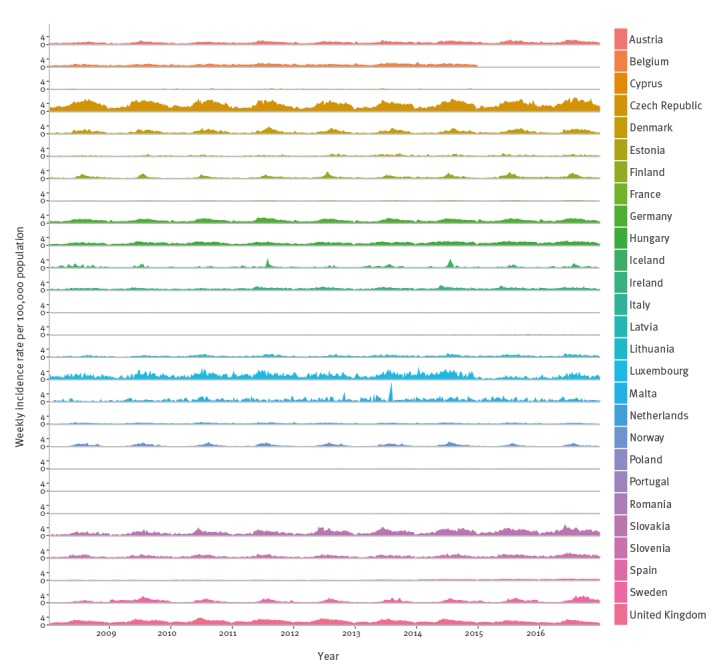
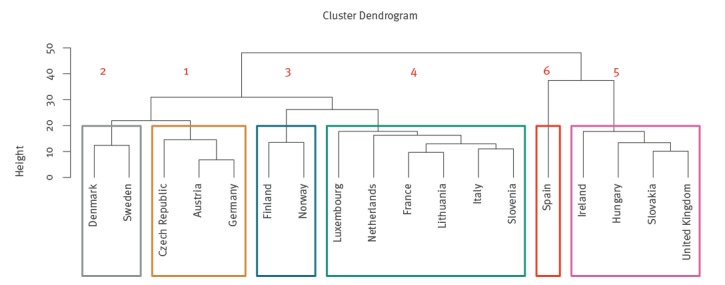
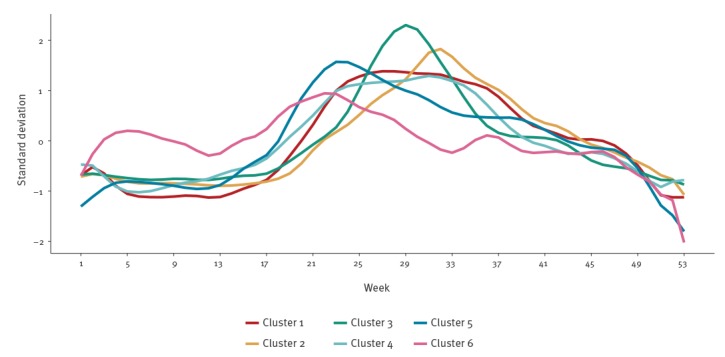
BackgroundCampylobacteriosis is the most commonly reported food-borne infection in the European Union, with an annual number of cases estimated at around 9 million. In many countries, campylobacteriosis has a striking seasonal peak during early/mid-summer. In the early 2000s, several publications reported on campylobacteriosis seasonality across Europe and associations with temperature and precipitation. Subsequently, many European countries have introduced new measures against this food-borne disease.AimTo examine how the seasonality of campylobacteriosis varied across Europe from 2008-16, to explore associations with temperature and precipitation, and to compare these results with previous studies. We also sought to assess the utility of the European Surveillance System TESSy for cross-European seasonal analysis of campylobacteriosis.MethodsWard's Minimum Variance Clustering was used to group countries with similar seasonal patterns of campylobacteriosis. A two-stage multivariate meta-analysis methodology was used to explore associations with temperature and precipitation.ResultsNordic countries had a pronounced seasonal campylobacteriosis peak in mid- to late summer (weeks 29-32), while most other European countries had a less pronounced peak earlier in the year. The United Kingdom, Ireland, Hungary and Slovakia had a slightly earlier peak (week 24). Campylobacteriosis cases were positively associated with temperature and, to a lesser degree, precipitation.ConclusionAcross Europe, the strength and timing of campylobacteriosis peaks have remained similar to those observed previously. In addition, TESSy is a useful resource for cross-European seasonal analysis of infectious diseases such as campylobacteriosis, but its utility depends upon each country's reporting infrastructure.
弯曲菌病是欧盟最常报告的食源性感染,估计每年有 900 万例。在许多国家,弯曲菌病在初夏至仲夏期间有明显的季节性高峰。在 21 世纪初,有几篇出版物报告了欧洲各地弯曲菌病的季节性及其与温度和降水的关系。此后,许多欧洲国家采取了新的措施来防治这种食源性疾病。目的:研究 2008-16 年期间欧洲弯曲菌病的季节性变化情况,探讨与温度和降水的关系,并将这些结果与以前的研究进行比较。我们还评估了欧洲监测系统 TESSy 在欧洲范围内进行弯曲菌病季节性分析的效用。方法:使用 Ward 最小方差聚类将具有相似弯曲菌病季节性模式的国家进行分组。采用两阶段多变量荟萃分析方法来探讨与温度和降水的关系。结果:北欧国家在夏末(第 29-32 周)有明显的弯曲菌病季节性高峰,而其他大多数欧洲国家的高峰则出现在年初。英国、爱尔兰、匈牙利和斯洛伐克的高峰略早(第 24 周)。弯曲菌病病例与温度呈正相关,与降水的相关性稍弱。结论:在整个欧洲,弯曲菌病高峰的强度和时间与以前观察到的相似。此外,TESSy 是一种用于弯曲菌病等传染病的欧洲范围内季节性分析的有用资源,但它的效用取决于每个国家的报告基础设施。