Department of Physics and Mathematics, School of Science and Technology, Nottingham Trent University, Nottingham, Clifton Campus, NG11 8NS, United Kingdom.
Exercise and Health Research Group, Sport, Health and Performance Enhancement (SHAPE) Research Centre, School of Science and Technology, Nottingham Trent University, Clifton Campus, NG11 8NS, United Kingdom.
Sci Rep. 2020 Feb 24;10(1):3313. doi: 10.1038/s41598-020-59847-x.
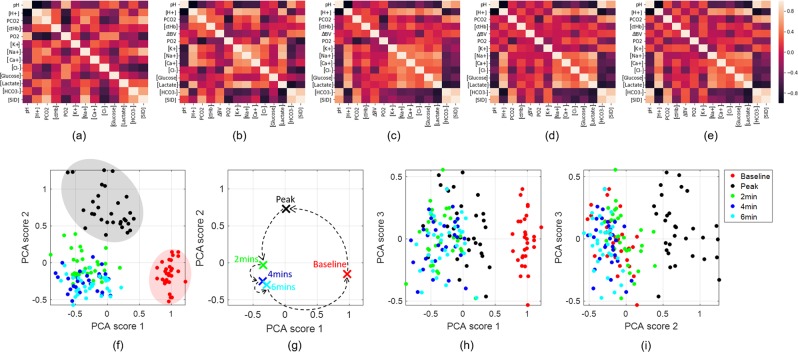
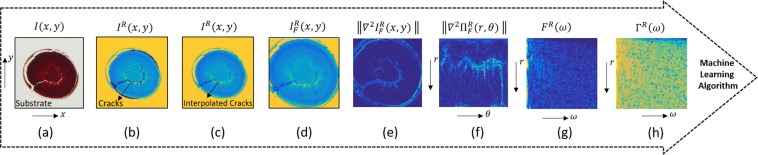
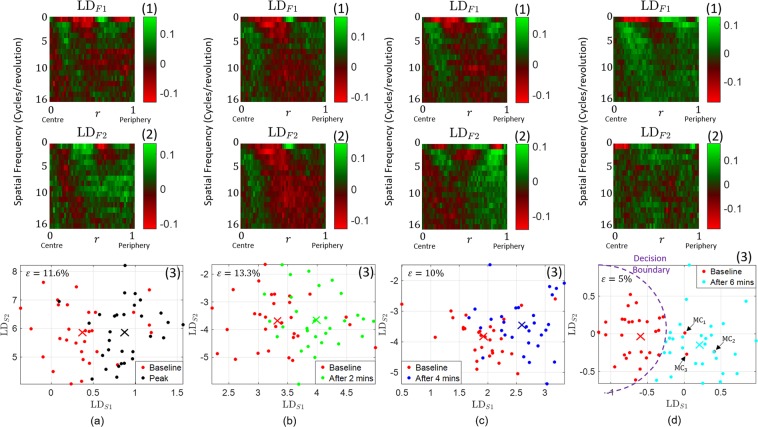
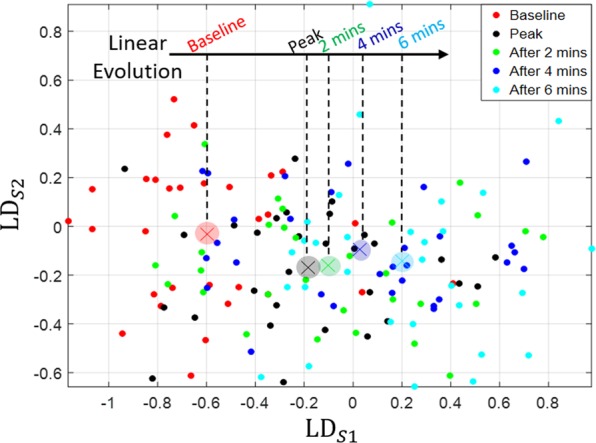
One of the most interesting and everyday natural phenomenon is the formation of different patterns after the evaporation of liquid droplets on a solid surface. The analysis of dried patterns from blood droplets has recently gained a lot of attention, experimentally and theoretically, due to its potential application in diagnostic medicine and forensic science. This paper presents evidence that images of dried blood droplets have a signature revealing the exhaustion level of the person, and discloses an entirely novel approach to studying human dried blood droplet patterns. We took blood samples from 30 healthy young male volunteers before and after exhaustive exercise, which is well known to cause large changes to blood chemistry. We objectively and quantitatively analysed 1800 images of dried blood droplets, developing sophisticated image processing analysis routines and optimising a multivariate statistical machine learning algorithm. We looked for statistically relevant correlations between the patterns in the dried blood droplets and exercise-induced changes in blood chemistry. An analysis of the various measured physiological parameters was also investigated. We found that when our machine learning algorithm, which optimises a statistical model combining Principal Component Analysis (PCA) as an unsupervised learning method and Linear Discriminant Analysis (LDA) as a supervised learning method, is applied on the logarithmic power spectrum of the images, it can provide up to 95% prediction accuracy, in discriminating the physiological conditions, i.e., before or after physical exercise. This correlation is strongest when all ten images taken per volunteer per condition are averaged, rather than treated individually. Having demonstrated proof-of-principle, this method can be applied to identify diseases.
一种最有趣和日常的自然现象是,在固体表面上的液滴蒸发后会形成不同的图案。由于其在诊断医学和法医学中的潜在应用,最近对干燥血滴图案的分析在实验和理论上都引起了很多关注。本文提供的证据表明,干燥血滴的图像具有揭示人的疲劳程度的特征,并揭示了一种全新的研究人类干燥血滴图案的方法。我们从 30 名健康年轻男性志愿者身上采集了血液样本,这些志愿者在进行剧烈运动之前和之后,剧烈运动众所周知会导致血液化学成分发生巨大变化。我们客观地定量分析了 1800 张干燥血滴的图像,开发了复杂的图像处理分析例程,并优化了多变量统计机器学习算法。我们寻找了干燥血滴中的图案与运动引起的血液化学成分变化之间存在统计学相关性。还研究了对各种测量生理参数的分析。我们发现,当我们的机器学习算法应用于图像的对数功率谱时,该算法优化了一个统计模型,该模型将主成分分析(PCA)作为无监督学习方法和线性判别分析(LDA)作为监督学习方法相结合,可以提供高达 95%的预测准确性,从而可以区分生理条件,即运动前或运动后。当对每个志愿者每种条件下拍摄的十张图像进行平均处理而不是单独处理时,这种相关性最强。在证明了原理之后,该方法可用于识别疾病。