Laboratory of Systems and Synthetic Biology, Wageningen University & Research, Stippeneg, 4 6708WE, Wageningen, The Netherlands.
Departamento de Economía Aplicada, University of Burgos, Plaza Infanta Doña Elena, s/n, 09001, Burgos, Spain.
Sci Rep. 2020 Feb 24;10(1):3232. doi: 10.1038/s41598-020-60101-7.
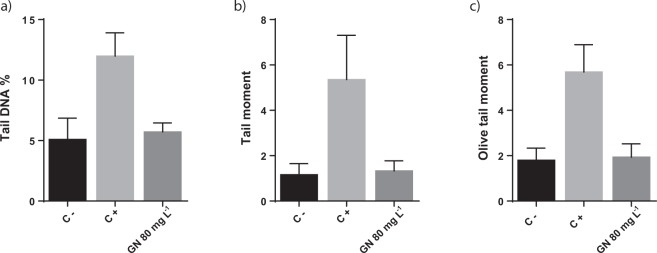
Graphene nanomaterials have attracted a great interest during the last years for different applications, but their possible impact on different biological systems remains unclear. Here, an assessment to understand the toxicity of commercial polycarboxylate functionalized graphene nanoplatelets (GN) on the unicellular fungal model Saccharomyces cerevisiae was performed. While cell proliferation was not negatively affected even in the presence of 800 mg L of the nanomaterial for 24 hours, oxidative stress was induced at a lower concentration (160 mg L), after short exposure periods (2 and 4 hours). No DNA damage was observed under a comet assay analysis under the studied conditions. In addition, to pinpoint the molecular mechanisms behind the early oxidative damage induced by GN and to identify possible toxicity pathways, the transcriptome of S. cerevisiae exposed to 160 and 800 mg L of GN was studied. Both GN concentrations induced expression changes in a common group of genes (337), many of them related to the fungal response to reduce the nanoparticles toxicity and to maintain cell homeostasis. Also, a high number of genes were only differentially expressed in the GN800 condition (3254), indicating that high GN concentrations can induce severe changes in the physiological state of the yeast.
近年来,由于不同的应用,石墨烯纳米材料引起了极大的关注,但它们对不同生物系统的可能影响仍不清楚。在这里,我们评估了商用多羧基功能化石墨烯纳米片(GN)对单细胞真菌模型酿酒酵母的毒性。虽然在 24 小时内即使存在 800mg/L 的纳米材料,细胞增殖也没有受到负面影响,但在短暴露时间(2 和 4 小时)下,在较低浓度(160mg/L)下诱导了氧化应激。在彗星试验分析中,在研究条件下未观察到 DNA 损伤。此外,为了查明 GN 诱导的早期氧化损伤背后的分子机制,并确定可能的毒性途径,研究了暴露于 160 和 800mg/L GN 的酿酒酵母的转录组。两种 GN 浓度都诱导了一组共同基因(337 个)的表达变化,其中许多与真菌响应有关,以降低纳米颗粒的毒性并维持细胞内稳态。此外,大量基因仅在 GN800 条件下差异表达(3254 个),表明高浓度的 GN 可以诱导酵母生理状态的严重变化。