Slovenian NMR Center, National Institute of Chemistry, Hajdrihova 19, SI-1000 Ljubljana, Slovenia.
EN-FIST Centre of Excellence, Trg OF 13, SI-1000 Ljubljana, Slovenia.
Nucleic Acids Res. 2020 Apr 17;48(7):3975-3986. doi: 10.1093/nar/gkaa118.
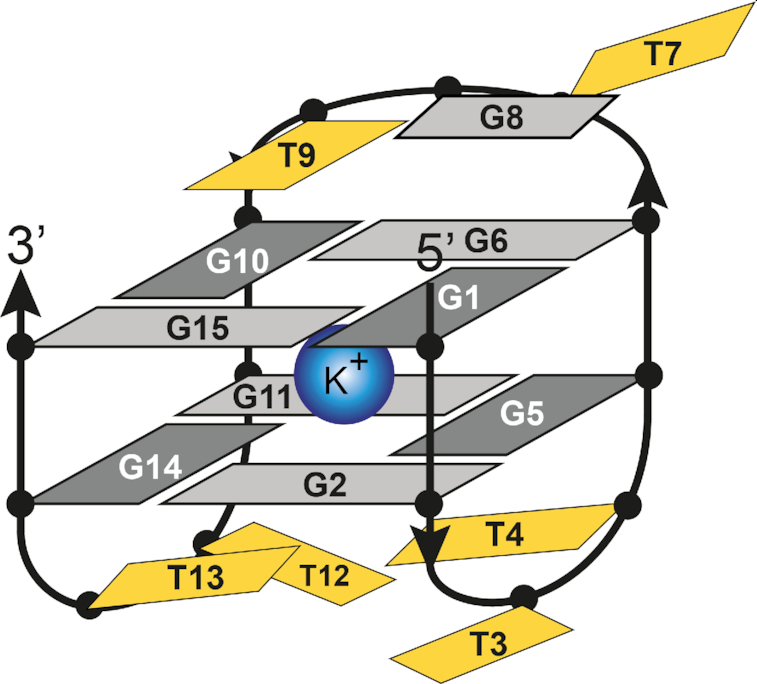
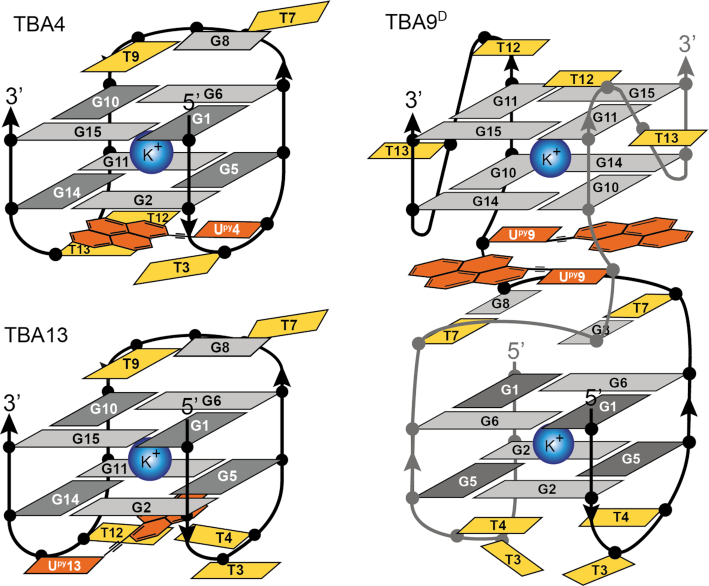
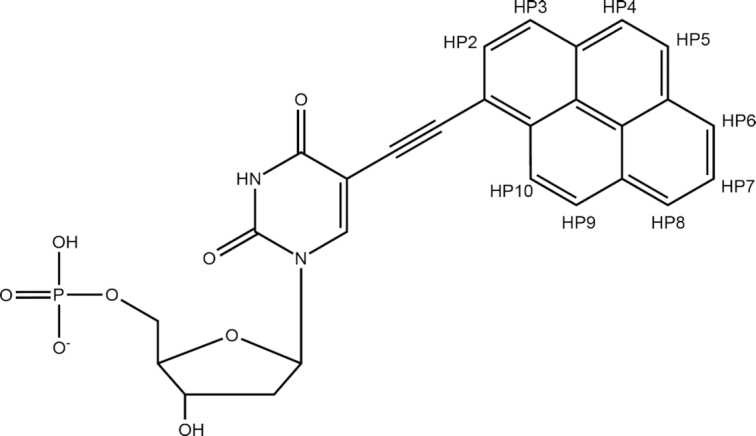
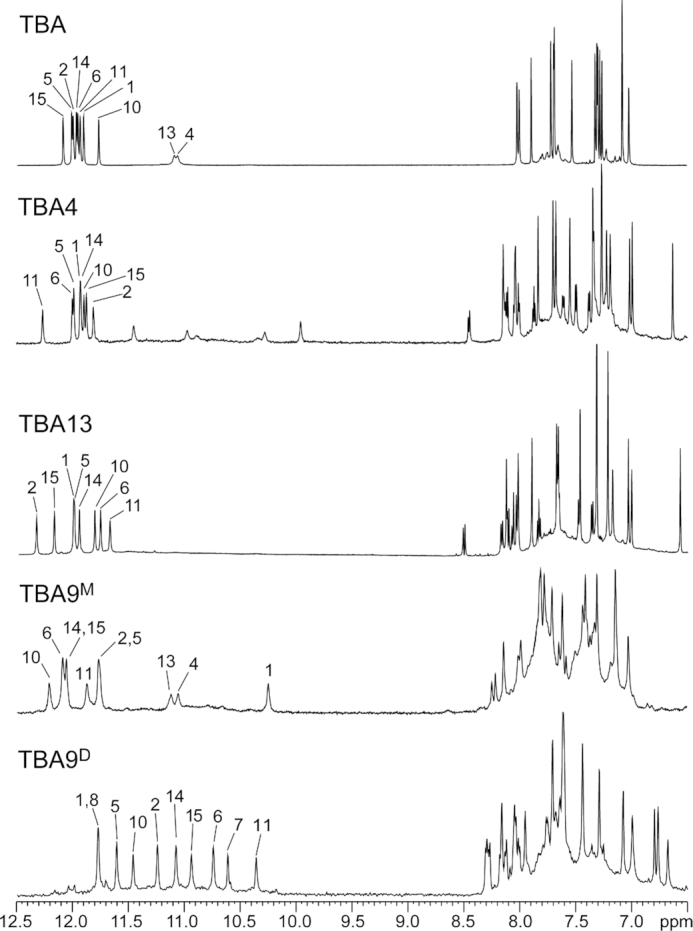
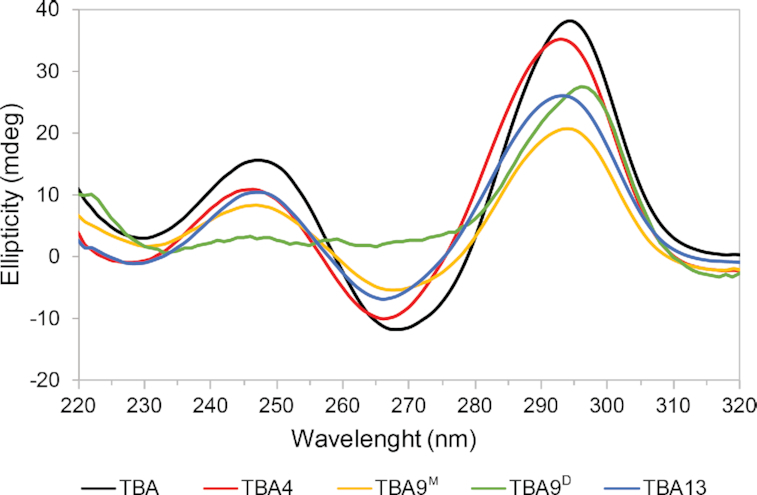
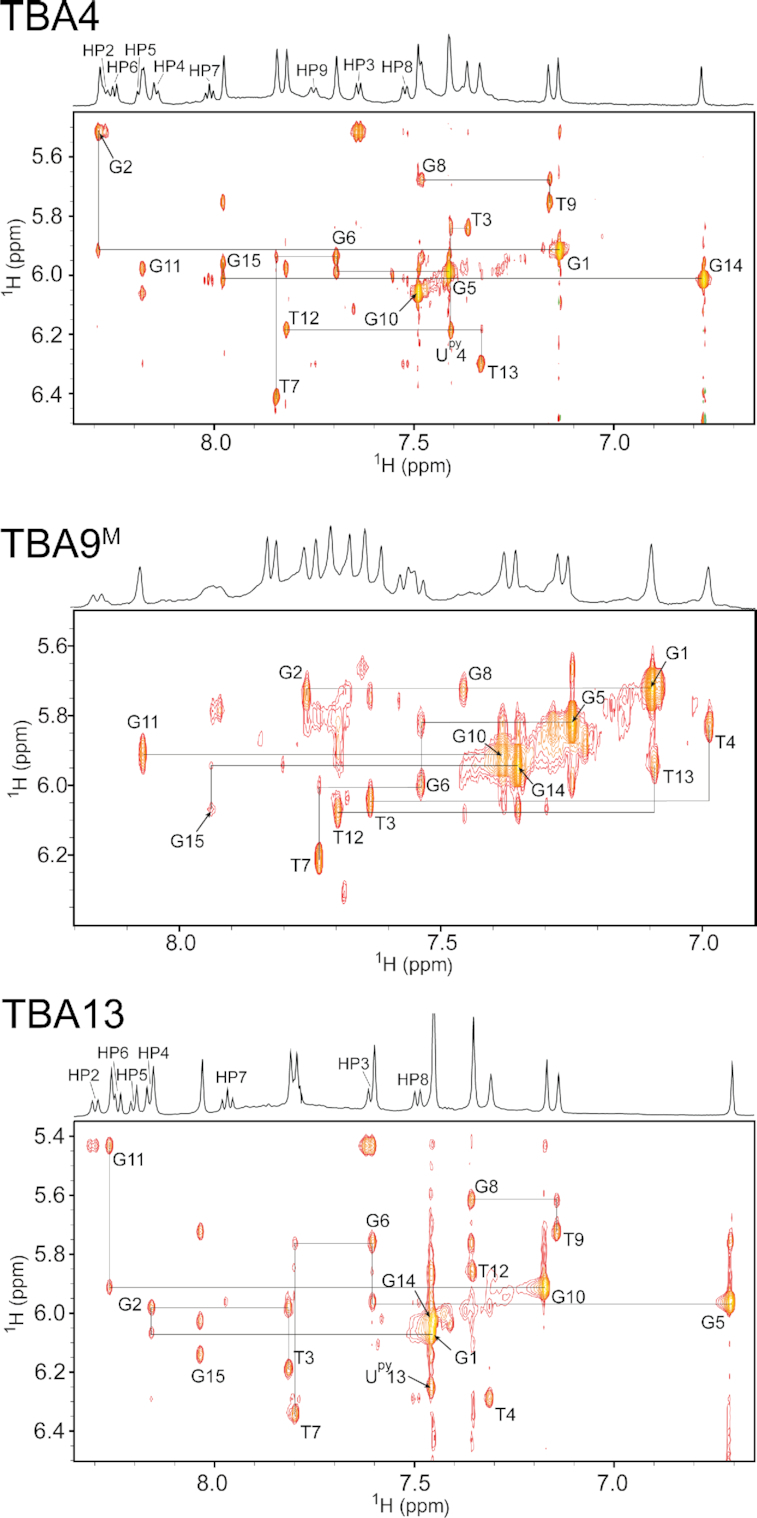
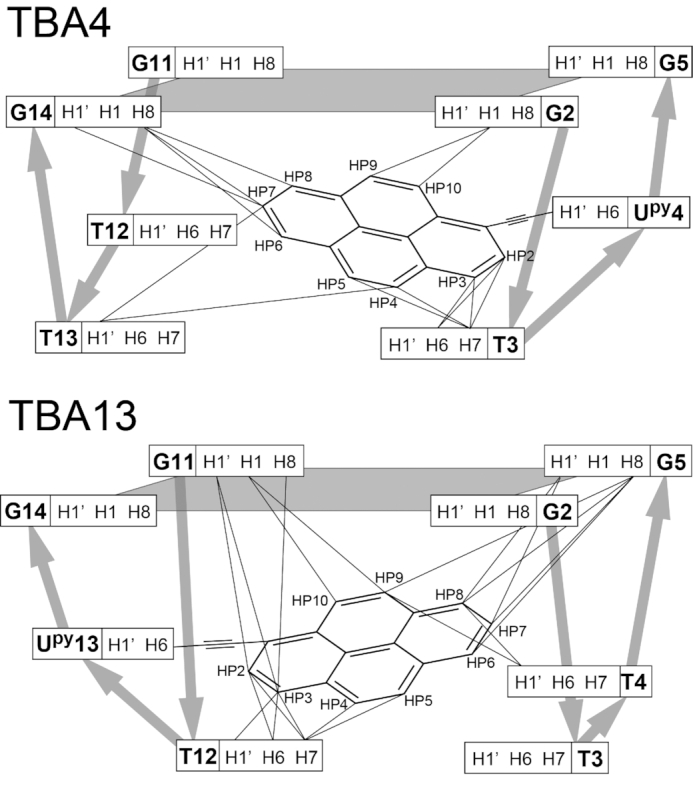
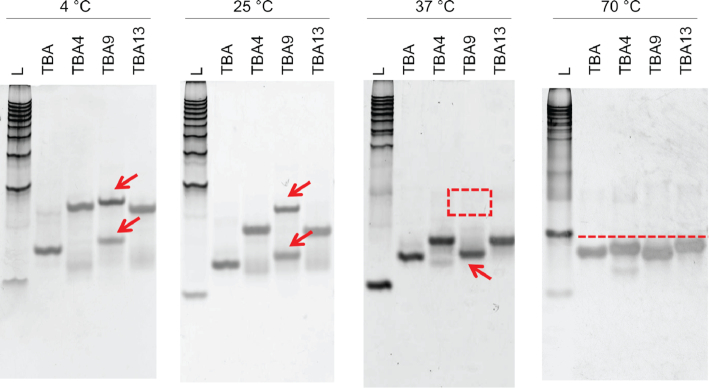
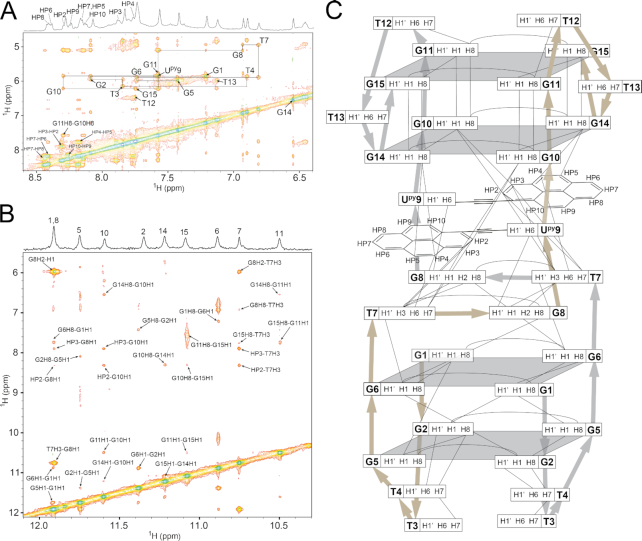
Guanine-rich regions of the human genome can adopt non-canonical secondary structures. Their role in regulating gene expression has turned them into promising targets for therapeutic intervention. Ligands based on polyaromatic moieties are especially suitable for targeting G-quadruplexes utilizing their size complementarity to interact with the large exposed surface area of four guanine bases. A predictable way of (de)stabilizing specific G-quadruplex structures through efficient base stacking of polyaromatic functional groups could become a valuable tool in our therapeutic arsenal. We have investigated the effect of pyrene-modified uridine nucleotides incorporated at several positions of the thrombin binding aptamer (TBA) as a model system. Characterization using spectroscopic and biophysical methods provided important insights into modes of interaction between pyrene groups and the G-quadruplex core as well as (de)stabilization by enthalpic and entropic contributions. NMR data demonstrated that incorporation of pyrene group into G-rich oligonucleotide such as TBA may result in significant changes in 3D structure such as formation of novel dimeric topology. Site specific structural changes induced by stacking of the pyrene moiety on nearby nucleobases corelate with distinct thrombin binding affinities and increased resistance against nuclease degradation.
富含鸟嘌呤的人类基因组区域可以采用非典型的二级结构。它们在调节基因表达方面的作用使它们成为治疗干预的有前途的靶点。基于多芳基部分的配体特别适合利用其大小互补性与四个鸟嘌呤碱基的大暴露表面相互作用来靶向 G-四链体。通过多芳基官能团的有效碱基堆积来预测性地(去)稳定特定的 G-四链体结构,可能成为我们治疗武器库中的有价值工具。我们已经研究了将芘基修饰的尿嘧啶核苷酸掺入血栓结合适体(TBA)的几个位置作为模型系统的效果。使用光谱和生物物理方法进行的表征提供了关于芘基基团与 G-四链体核心之间相互作用模式以及焓和熵贡献(去)稳定的重要见解。NMR 数据表明,将芘基基团掺入富含鸟嘌呤的寡核苷酸(如 TBA)中可能导致 3D 结构发生显著变化,例如形成新的二聚拓扑结构。由于芘基部分在附近核碱基上的堆积而引起的特定位置结构变化与独特的凝血酶结合亲和力和增加对核酸酶降解的抗性相关。