Laboratory of Comparative Psychology and Behavioral Ecology, Department of Psychology, Converse College, Spartanburg, South Carolina, United States of America.
Laboratory of Comparative Psychology and Behavioral Biology, Department of Psychology, Oklahoma State University, Stillwater, Oklahoma, United States of America.
PLoS One. 2020 Feb 25;15(2):e0228161. doi: 10.1371/journal.pone.0228161. eCollection 2020.
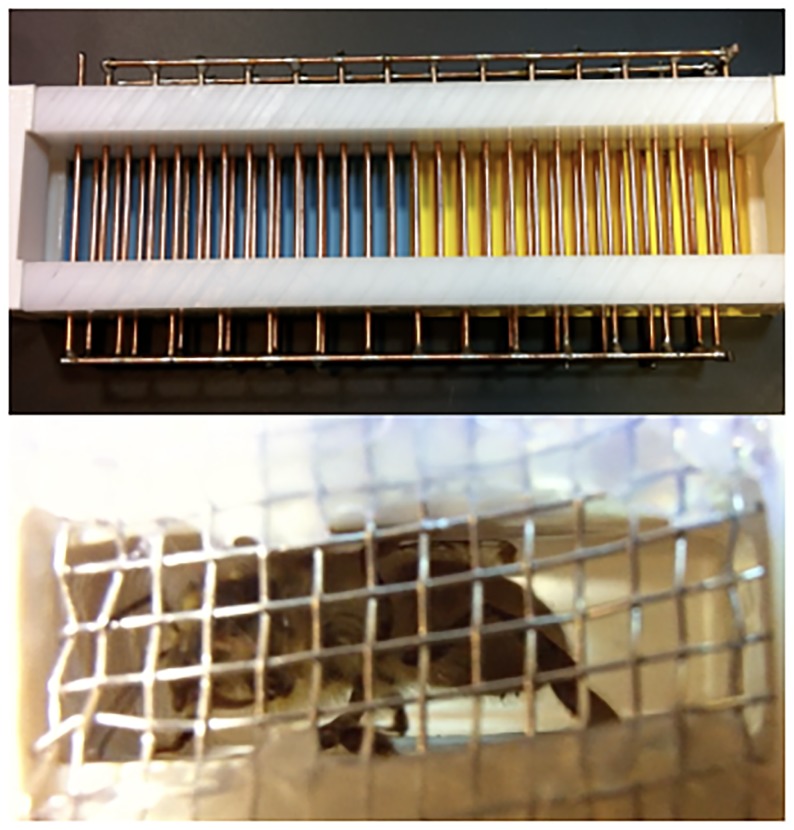
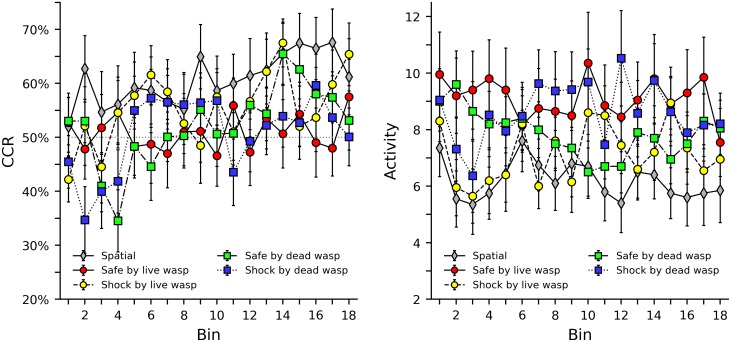
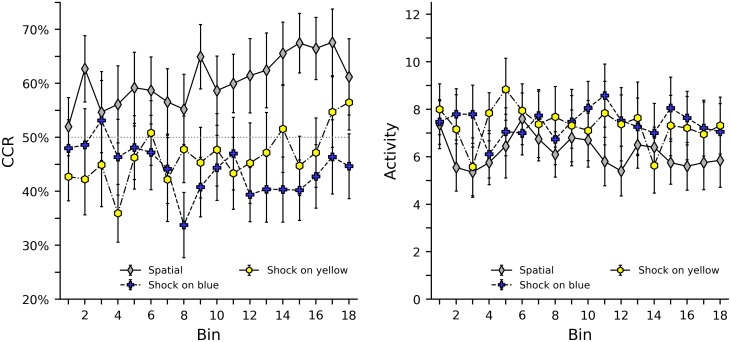
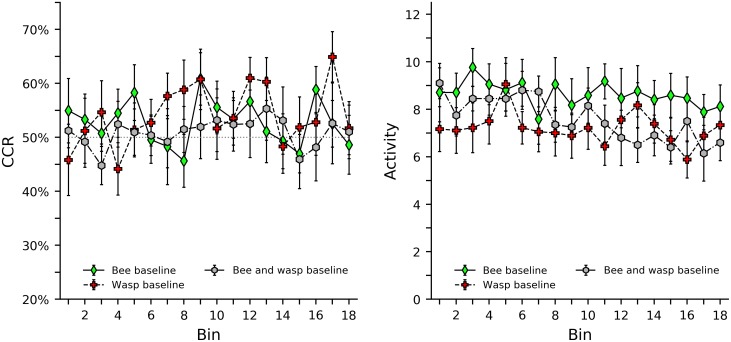
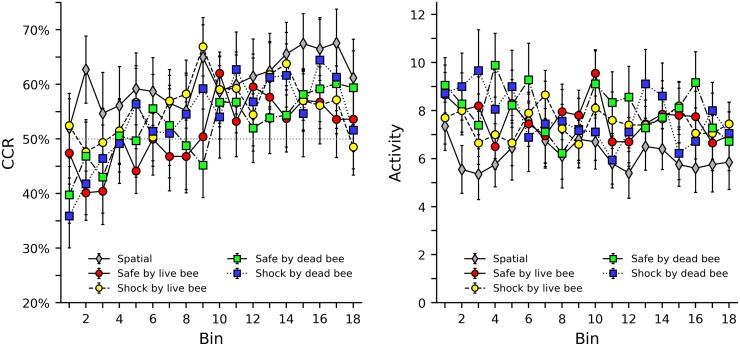
The purpose of this experiment was to investigate whether honey bees (Apis mellifera) are able to use social discriminative stimuli in a spatial aversive conditioning paradigm. We tested bees' ability to avoid shock in a shuttle box apparatus across multiple groups when either shock, or the absence of shock, was associated with a live hive mate, a dead hive mate, a live Polistes exclamans wasp or a dead wasp. Additionally, we used several control groups common to bee shuttle box research where shock was only associated with spatial cues, or where shock was associated with a blue or yellow color. While bees were able to learn the aversive task in a simple spatial discrimination, the presence of any other stimuli (color, another bee, or a wasp) reduced initial performance. While the color biases we discovered are in line with other experiments, the finding that the presence of another animal reduces performance is novel. Generally, it appears that the use of bees or wasps as stimuli initially causes an increase in overall activity that interferes with early performance in the spatial task. During the course of the experiment, the bees habituate to the insect stimuli (bee or wasp), and begin learning the aversive task. Additionally, we found that experimental subject bees did not discriminate between bees or wasps used as stimulus animals, nor did they discriminate between live or dead stimulus animals. This may occur, in part, due to the specialized nature of the worker honey bee. Results are discussed with implications for continual research on honey bees as models of aversive learning, as well as research on insect social learning in general.
本实验旨在研究蜜蜂(Apis mellifera)是否能够在空间厌恶条件反射范式中使用社交辨别刺激。我们在多个组中测试了蜜蜂在穿梭箱设备中避免电击的能力,当电击或不电击与活体蜂伙伴、死蜂伙伴、活体 Polistes exclamans 黄蜂或死黄蜂相关联时。此外,我们使用了蜜蜂穿梭箱研究中的几个常见对照组,其中仅电击与空间线索相关联,或者电击与蓝色或黄色相关联。虽然蜜蜂能够在简单的空间辨别任务中学习厌恶任务,但任何其他刺激物(颜色、另一只蜜蜂或黄蜂)的存在都会降低初始表现。虽然我们发现的颜色偏差与其他实验一致,但发现另一种动物的存在会降低性能是新颖的。一般来说,似乎蜜蜂或黄蜂作为刺激物的使用最初会导致整体活动增加,从而干扰空间任务的早期表现。在实验过程中,蜜蜂会对昆虫刺激物(蜜蜂或黄蜂)产生习惯,并开始学习厌恶任务。此外,我们发现实验对象蜜蜂不会区分用作刺激动物的蜜蜂或黄蜂,也不会区分活体或死体刺激动物。这可能部分归因于工蜂的特殊性质。结果讨论了继续将蜜蜂作为厌恶学习模型的研究,以及昆虫社会学习的一般研究的意义。