Šubr Zdeno, Predajňa Lukáš, Šoltys Katarína, Bokor Boris, Budiš Jaroslav, Glasa Miroslav
Institute of Virology, Biomedical Research Center of the Slovak Academy of Sciences, Dúbravská cesta 9, 845 05 Bratislava, Slovakia.
Comenius University Science Park, Comenius University in Bratislava, Ilkovičova 8, 841 04 Bratislava, Slovakia.
Pathogens. 2020 Feb 21;9(2):145. doi: 10.3390/pathogens9020145.
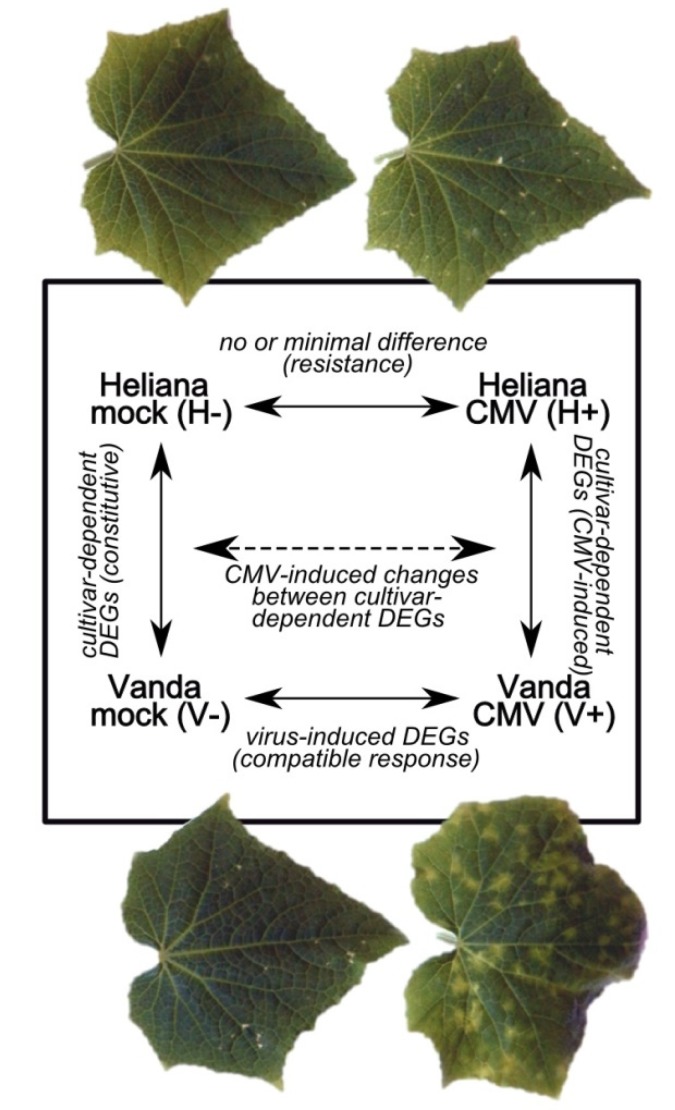
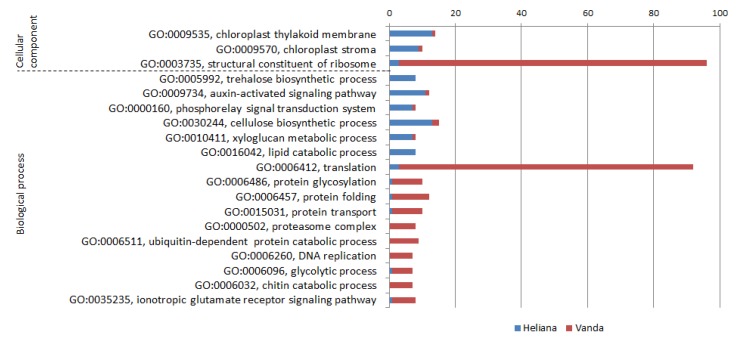
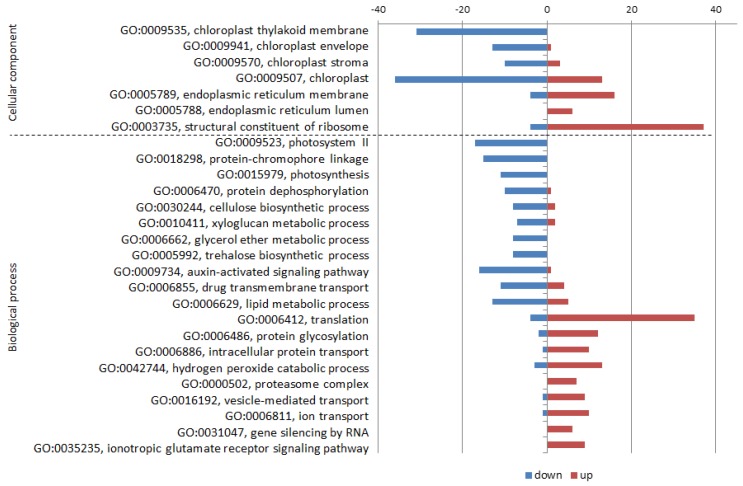
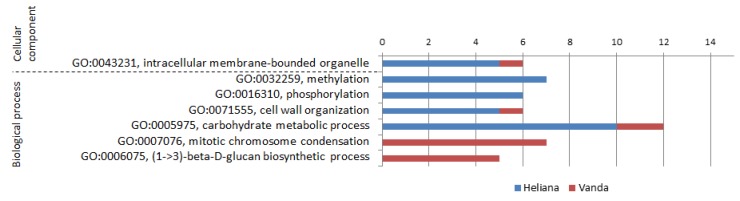
Cucumber mosaic virus (CMV), with extremely broad host range including both monocots and dicots around the world, belongs to most important viral crop threats. Either natural or genetically constructed sources of resistance are being intensively investigated; for this purpose, exhaustive knowledge of molecular virus-host interaction during compatible and incompatible infection is required. New technologies and computer-based "omics" on various levels contribute markedly to this topic. In this work, two cucumber cultivars with different response to CMV challenge were tested, i.e., sensitive cv. Vanda and resistant cv. Heliana. The transcriptomes were prepared from both cultivars at 18 days after CMV or mock inoculation. Subsequently, four independent comparative analyses of obtained data were performed, viz. mock- and CMV-inoculated samples within each cultivar, samples from mock-inoculated cultivars to each other and samples from virus-inoculated cultivars to each other. A detailed picture of CMV-influenced genes, as well as constitutive differences in cultivar-specific gene expression was obtained. The compatible CMV infection of cv. Vanda caused downregulation of genes involved in photosynthesis, and induction of genes connected with protein production and modification, as well as components of signaling pathways. CMV challenge caused practically no change in the transcription profile of the cv. Heliana. The main differences between constitutive transcription activity of the two cultivars relied in the expression of genes responsible for methylation, phosphorylation, cell wall organization and carbohydrate metabolism (prevailing in cv. Heliana), or chromosome condensation and glucan biosynthesis (prevailing in cv. Vanda). Involvement of several genes in the resistant cucumber phenotype was predicted; this can be after biological confirmation potentially applied in breeding programs for virus-resistant crops.
黄瓜花叶病毒(CMV)在全球范围内具有极其广泛的宿主范围,包括单子叶植物和双子叶植物,是最重要的病毒性作物威胁之一。目前正在深入研究天然或基因构建的抗性来源;为此,需要全面了解病毒与宿主在亲和性和非亲和性感染过程中的分子相互作用。不同层面的新技术和基于计算机的“组学”对这一课题有显著贡献。在这项研究中,测试了两个对CMV侵染反应不同的黄瓜品种,即敏感品种Vanda和抗性品种Heliana。在CMV接种或模拟接种18天后,从两个品种中提取转录组。随后,对获得的数据进行了四项独立的比较分析,即每个品种内模拟接种和CMV接种的样本、模拟接种品种之间的样本以及病毒接种品种之间的样本。由此获得了受CMV影响的基因的详细情况,以及品种特异性基因表达的组成差异。Vanda品种与CMV的亲和性感染导致参与光合作用的基因下调,以及与蛋白质生产和修饰相关的基因以及信号通路成分的诱导。CMV侵染对Heliana品种的转录谱几乎没有影响。两个品种组成型转录活性的主要差异在于负责甲基化、磷酸化、细胞壁组织和碳水化合物代谢的基因表达(在Heliana品种中占主导),或染色体凝聚和葡聚糖生物合成的基因表达(在Vanda品种中占主导)。预测了几个基因与黄瓜抗性表型的关系;经过生物学验证后,这些基因可能应用于抗病毒作物的育种计划。