Graduate School of Pharmaceutical Sciences, The University of Tokyo, 7-3-1 Hongo, Bunkyo-ku, Tokyo, 113-0033, Japan.
Graduate School of Pharmaceutical Sciences, Chiba University, 1-8-1 Inohana, Chuo-ku, Chiba, 260-8675, Japan.
Nat Commun. 2020 Feb 25;11(1):1038. doi: 10.1038/s41467-020-14842-8.
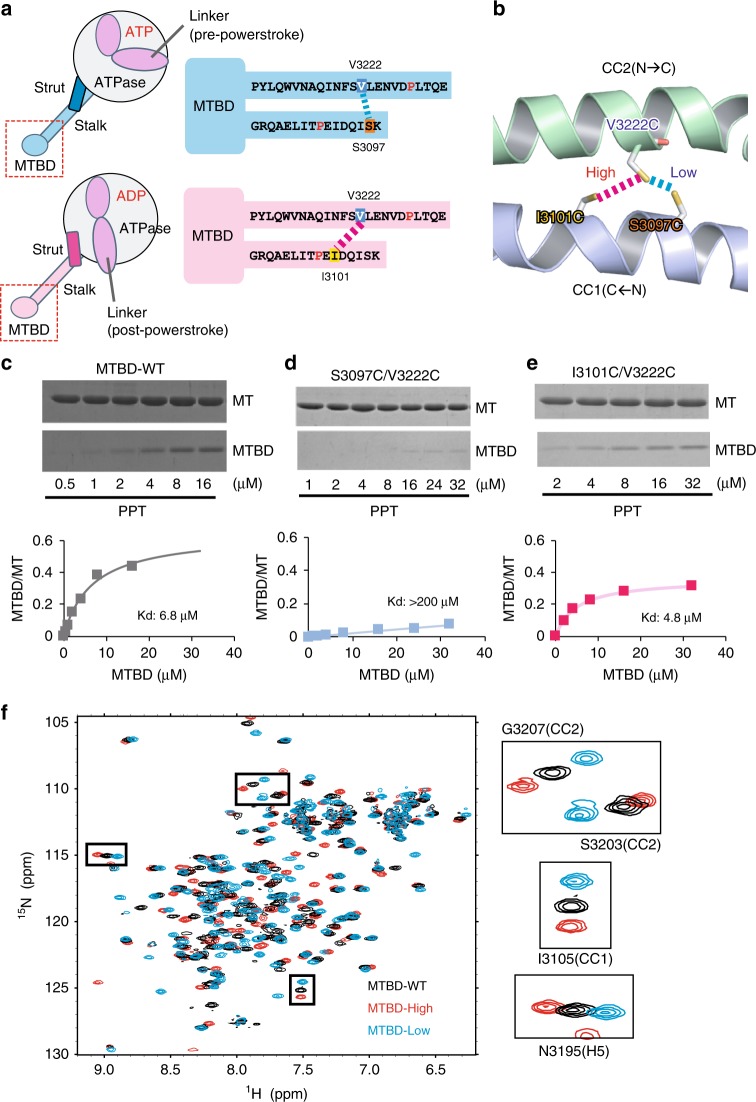
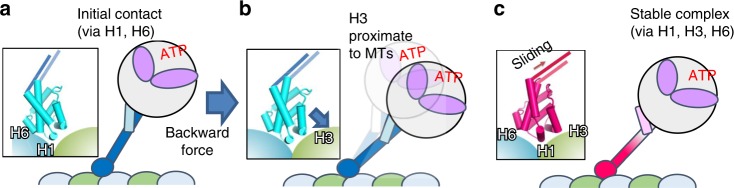
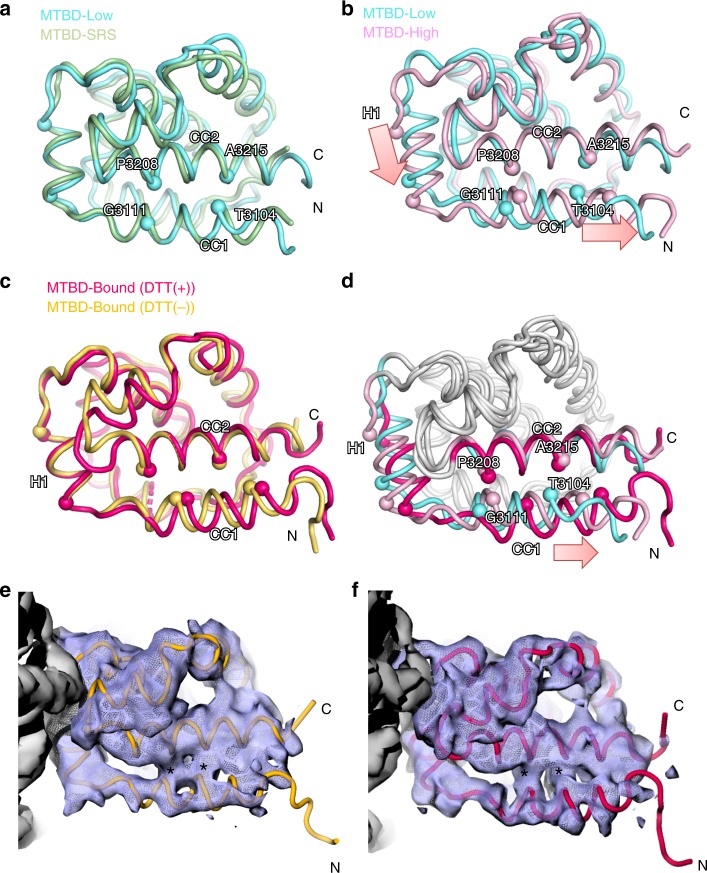
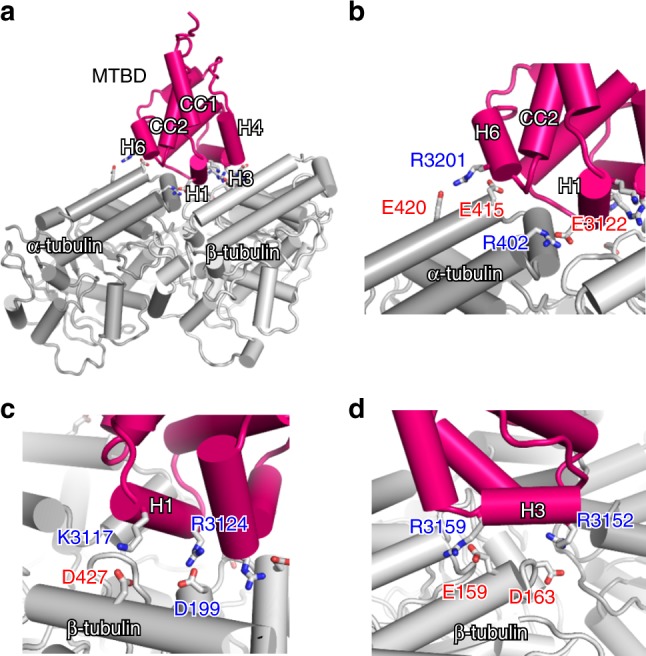
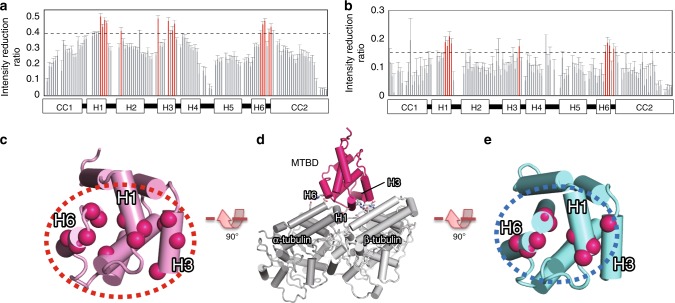
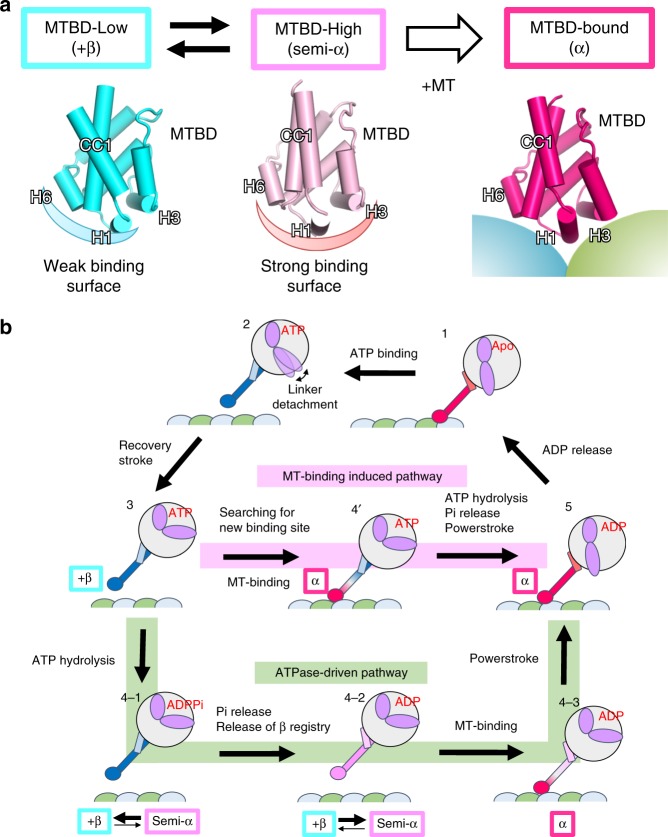
The movements of cytoplasmic dynein on microtubule (MT) tracks is achieved by two-way communication between the microtubule-binding domain (MTBD) and the ATPase domain via a coiled-coil stalk, but the structural basis of this communication remains elusive. Here, we regulate MTBD either in high-affinity or low-affinity states by introducing a disulfide bond to the stalk and analyze the resulting structures by NMR and cryo-EM. In the MT-unbound state, the affinity changes of MTBD are achieved by sliding of the stalk α-helix by a half-turn, which suggests that structural changes propagate from the ATPase-domain to MTBD. In addition, MT binding induces further sliding of the stalk α-helix even without the disulfide bond, suggesting how the MT-induced conformational changes propagate toward the ATPase domain. Based on differences in the MT-binding surface between the high- and low-affinity states, we propose a potential mechanism for the directional bias of dynein movement on MT tracks.
细胞质动力蛋白在微管 (MT) 轨道上的运动是通过微管结合域 (MTBD) 和 ATP 酶域之间通过卷曲螺旋茎进行的双向通讯来实现的,但这种通讯的结构基础仍然难以捉摸。在这里,我们通过在茎部引入二硫键来调节 MTBD 处于高亲和力或低亲和力状态,并通过 NMR 和 cryo-EM 分析得到的结构。在 MT 非结合状态下,通过茎部α-螺旋的半转滑动来实现 MTBD 的亲和力变化,这表明结构变化从 ATP 酶域传播到 MTBD。此外,即使没有二硫键,MT 结合也会导致茎部α-螺旋进一步滑动,这表明 MT 诱导的构象变化如何向 ATP 酶域传播。基于高亲和力和低亲和力状态下 MT 结合表面的差异,我们提出了一个关于动力蛋白在 MT 轨道上定向运动的潜在机制。