Department of Medicine, MacKay Medical College, New Taipei City, Taiwan.
Department of Orthopaedic Surgery, MacKay Memorial Hospital, Taipei, Taiwan.
Int J Nanomedicine. 2020 Jan 30;15:647-659. doi: 10.2147/IJN.S231885. eCollection 2020.
Graphene and its derivatives have recently gained popularity in the biomedical field. Previous studies have confirmed that both the mechanical strength and wear resistance of graphene-containing polyethylene have been greatly improved. Therefore, it is being considered as an alternative for artificial joint replacement liners. Based on the literature, the wear debris generated from the traditional polymers used for orthopedic liners could lead to particle-induced osteolysis and, consequently, failure of joint replacement. However, the biological response of this novel graphene-based polymer is still unclear. Therefore, the current study aimed to investigate the in vitro and in vivo biological effects of graphene and graphene oxide (GO) particles on bone.
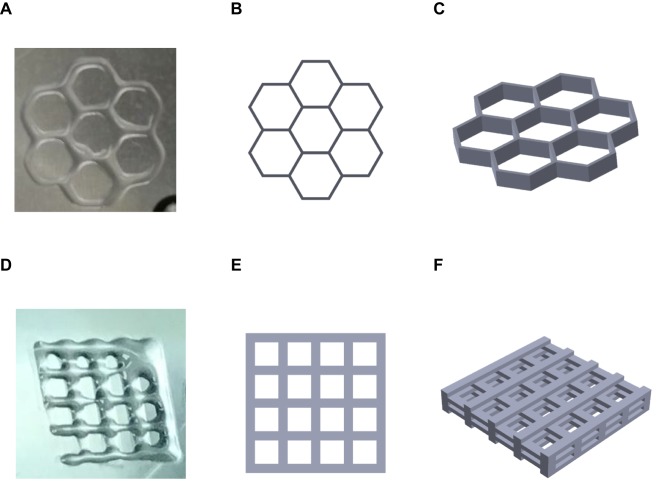
The biological responses of graphene and GO particles were tested via in vitro and murine calvarial in vivo models. In the in vitro model, murine macrophage cells were mixed with particles and hydrogel and printed into two differently designed scaffolds; the induced proinflammatory cytokines were then tested. In the murine in vivo model, the particle size distribution was measured via SEM, and these particles were then administrated in the calvarial area, referring to our established model. A micro-CT and histological analysis were performed to examine the biological effects of the particles on bone health. The data were analyzed via the one-way analysis of variance to determine the differences between the groups.
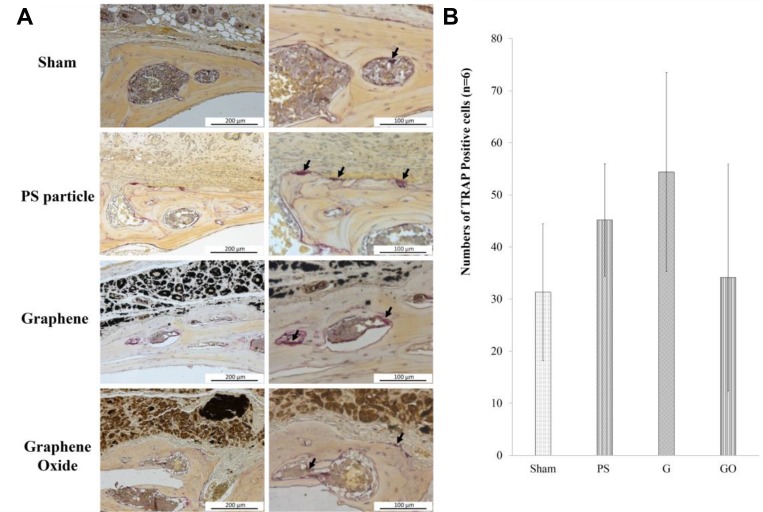
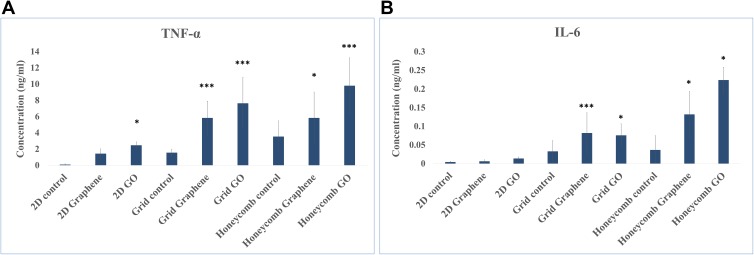
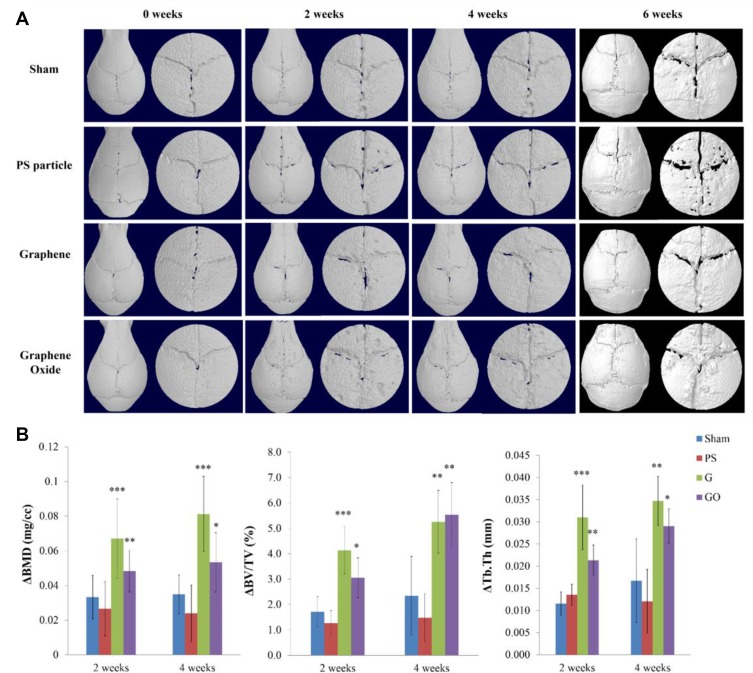
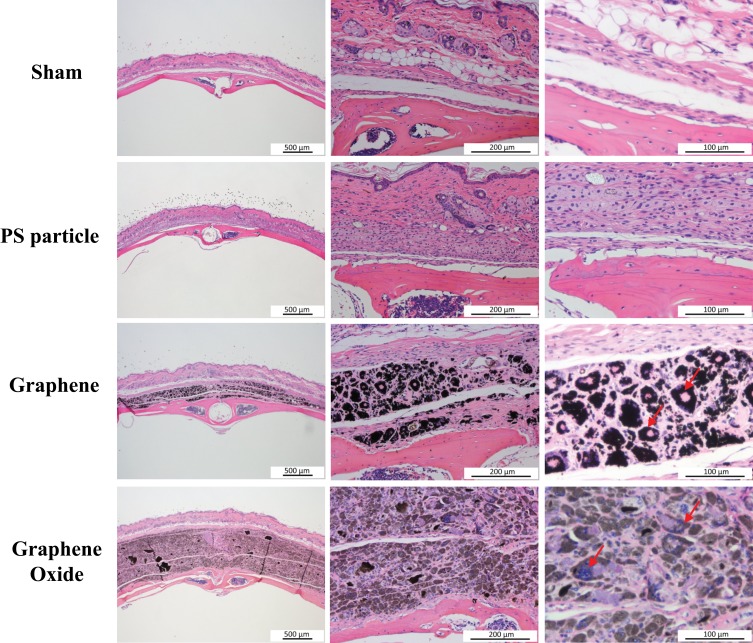
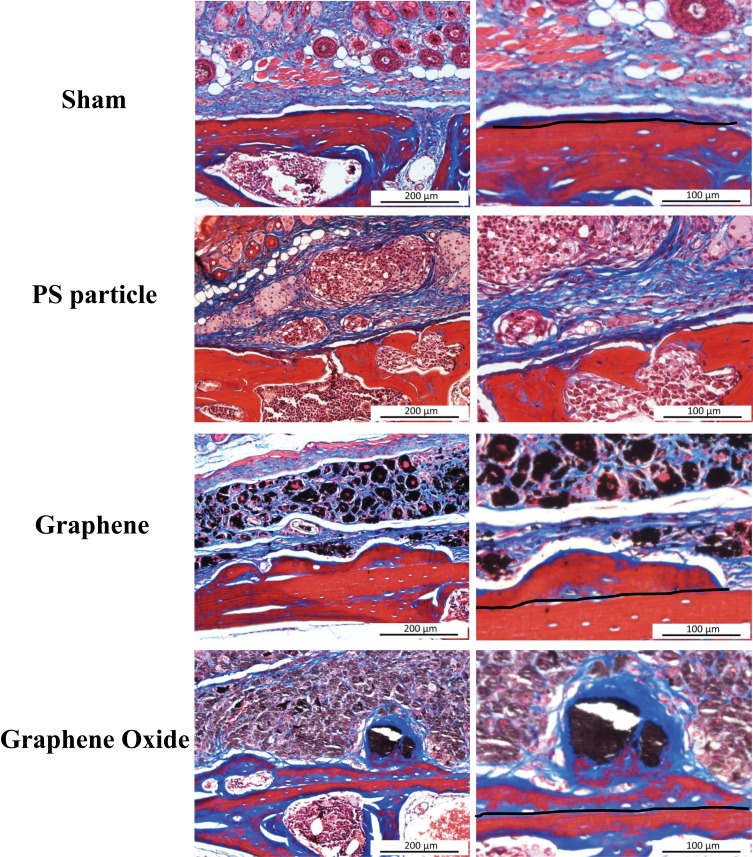
Both graphene and GO induced significantly higher TNF-α and IL-6 secretion compared with the control in the three-dimensional in vitro model. In the murine calvarial in vivo test, the graphene and GO particles increased the bone mass compared with the sham groups in the micro-CT analysis. Bone formation was also observed in the histological analysis.
In these in vivo and in vitro studies, the graphene and GO wear debris did not seem to induce harmful biological response effect to bone. Bone formation around the skull was observed in the calvarial model instead. Graphene-containing biomaterials could be a suitable new material for application in orthopedic prostheses due to their benefit of eliminating the risk of particle-induce osteolysis.
石墨烯及其衍生物在生物医学领域最近越来越受欢迎。之前的研究已经证实,含石墨烯的聚乙烯的机械强度和耐磨性都有了很大的提高。因此,它被认为是人工关节置换衬里的替代品。根据文献,传统用于骨科衬垫的聚合物产生的磨损颗粒会导致颗粒诱导性骨溶解,从而导致关节置换失败。然而,这种新型基于石墨烯的聚合物的生物反应尚不清楚。因此,本研究旨在研究石墨烯和氧化石墨烯(GO)颗粒对骨的体外和体内生物学效应。
通过体外和鼠颅骨体内模型测试了石墨烯和 GO 颗粒的生物反应。在体外模型中,将鼠巨噬细胞与颗粒和水凝胶混合,并将其打印成两种不同设计的支架;然后测试诱导的促炎细胞因子。在鼠体内模型中,通过 SEM 测量颗粒的粒径分布,然后将这些颗粒在颅骨区域给药,参照我们建立的模型。通过 micro-CT 和组织学分析检查颗粒对骨健康的生物学影响。通过单向方差分析对数据进行分析,以确定组间的差异。
与对照组相比,三维体外模型中石墨烯和 GO 均诱导 TNF-α 和 IL-6 的分泌显著增加。在鼠颅骨体内试验中,与假手术组相比,石墨烯和 GO 颗粒在 micro-CT 分析中增加了骨量。组织学分析也观察到了骨形成。
在这些体内和体外研究中,石墨烯和 GO 磨损颗粒似乎不会对骨产生有害的生物反应。在颅骨模型中观察到颅骨周围有骨形成。由于含石墨烯的生物材料可以消除颗粒诱导性骨溶解的风险,因此它可能成为骨科植入物的一种合适的新材料。