Institution of NanoEngineering and MicroSystems, National Tsing Hua University, Hsinchu, Taiwan.
Department of Medical Laboratory Science and Biotechnology, National Cheng Kung University, Tainan City, Taiwan.
PLoS One. 2020 Feb 26;15(2):e0229610. doi: 10.1371/journal.pone.0229610. eCollection 2020.
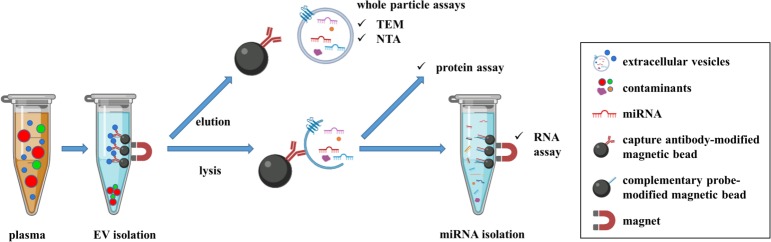
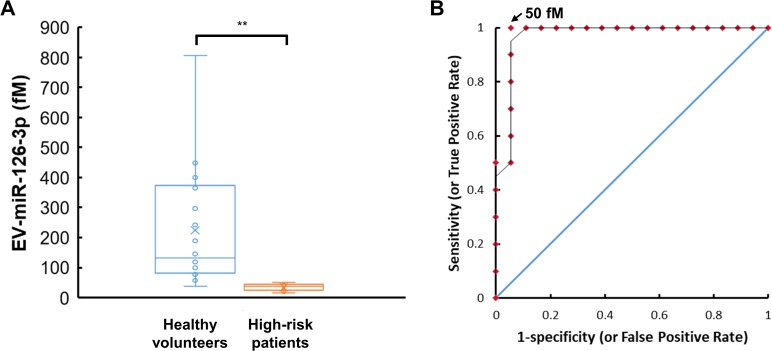
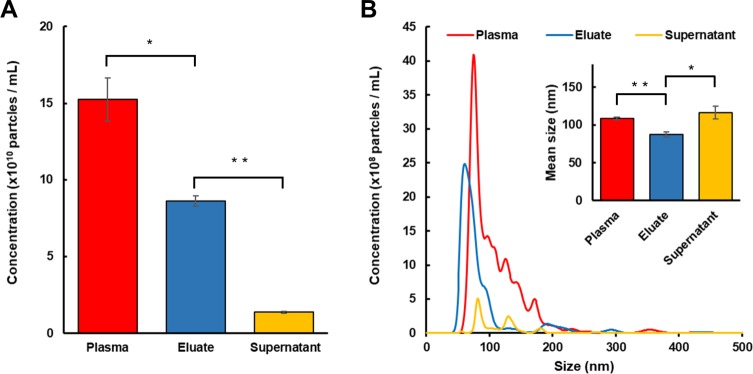
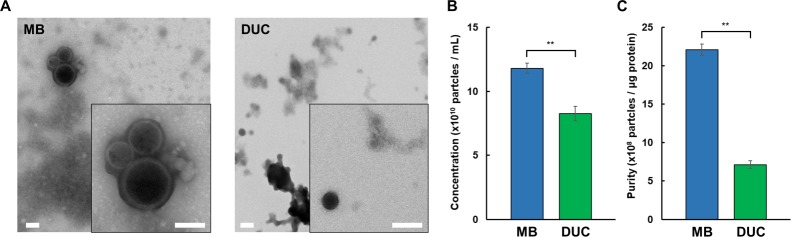
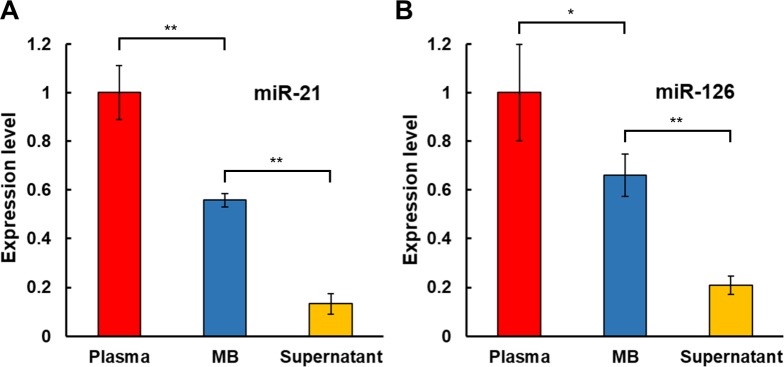
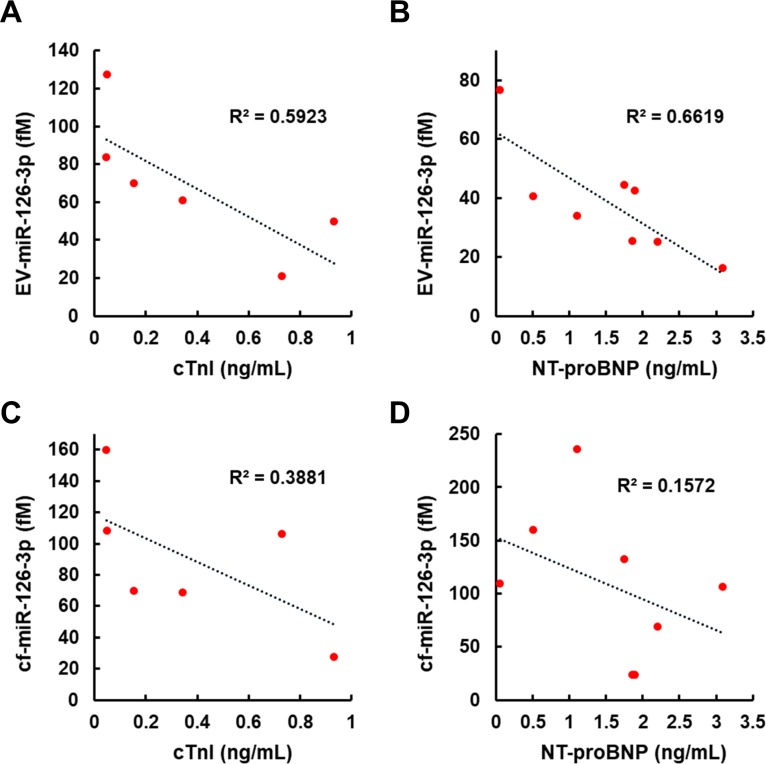
Extracellular vesicles (EVs) have attracted increasing attention because of their potential roles in various biological processes and medical applications. However, isolation of EVs is technically challenging mainly due to their small and heterogeneous size and contaminants that are often co-isolated. We have thus designed a two-step magnetic bead-based (2MBB) method for isolation a subset of EVs as well as their microRNAs from samples of a limited amount. The process involves utilizing magnetic beads coated with capture molecules that recognize EV surface markers, such as CD63. Captured EVs could be eluted from beads or lyzed directly for subsequent analysis. In this study, we used a second set of magnetic beads coated with complementary oligonucleotides to isolate EV-associated microRNAs (EV-miRNAs). The efficiencies of 2MBB processes were assessed by reverse transcription-polymerase chain reaction (RT-PCR) with spiked-in exogenous cel-miR-238 molecules. Experimental results demonstrated the high efficiency in EV enrichment (74 ± 7%, n = 4) and miRNA extraction (91 ± 4%, n = 4). Transmission electron micrographs (TEM) and nanoparticle tracking analysis (NTA) show that captured EVs enriched by 2MBB method could be released and achieved a higher purity than the differential ultracentrifugation (DUC) method (p < 0.001, n = 3). As a pilot study, EV-miR126-3p and total circulating cell-free miR126-3p (cf-miR126-3p) in eight clinical plasma samples were measured and compared with the level of protein markers. Compared to cf-miR126-3p, a significant increase in correlations between EV-miR126-3p and cardiac troponin I (cTnI) and N-terminal propeptide of B-type natriuretic peptide (NT-proBNP) was detected. Furthermore, EV-miR126-3p levels in plasma samples from healthy volunteers (n = 18) and high-risk cardiovascular disease (CVD) patients (n = 10) were significantly different (p = 0.006), suggesting EV-miR126 may be a potential biomarker for cardiovascular diseases. 2MBB technique is easy, versatile, and provides an efficient means for enriching EVs and EV-associated nucleic acid molecules.
细胞外囊泡 (EVs) 因其在各种生物过程和医学应用中的潜在作用而受到越来越多的关注。然而,由于其小尺寸和异质性以及经常共分离的污染物,EVs 的分离技术具有挑战性。因此,我们设计了一种两步基于磁珠的 (2MBB) 方法,用于从有限量的样品中分离 EV 及其 microRNAs 的亚群。该过程涉及利用涂有识别 EV 表面标志物(如 CD63)的捕获分子的磁珠。捕获的 EV 可以从珠上洗脱或直接裂解,以便后续分析。在这项研究中,我们使用了第二组涂有互补寡核苷酸的磁珠来分离与 EV 相关的 microRNAs (EV-miRNAs)。通过反转录-聚合酶链反应 (RT-PCR) 用外源性 cel-miR-238 分子进行了 2MBB 过程效率的评估。实验结果表明,EV 富集的效率很高 (74 ± 7%,n = 4),miRNA 提取效率也很高 (91 ± 4%,n = 4)。透射电子显微镜 (TEM) 和纳米颗粒跟踪分析 (NTA) 显示,通过 2MBB 方法富集的捕获 EV 可以被释放,并达到比差速离心 (DUC) 方法更高的纯度 (p < 0.001,n = 3)。作为一项初步研究,在 8 个临床血浆样本中测量了 EV-miR126-3p 和总循环无细胞 miR126-3p (cf-miR126-3p),并与蛋白标志物的水平进行了比较。与 cf-miR126-3p 相比,在 EV-miR126-3p 与心肌肌钙蛋白 I (cTnI) 和 B 型利钠肽前体 (NT-proBNP) 之间检测到显著增加的相关性。此外,来自健康志愿者 (n = 18) 和高心血管疾病 (CVD) 风险患者 (n = 10) 的血浆样本中的 EV-miR126-3p 水平差异显著 (p = 0.006),表明 EV-miR126 可能是心血管疾病的潜在生物标志物。2MBB 技术简单、通用,为富集 EV 及其相关核酸分子提供了一种有效手段。