Zaragozá Cristina, Villaescusa Lucinda, Monserrat Jorge, Zaragozá Francisco, Álvarez-Mon Melchor
Biomedical Sciences Department, Pharmacology Unit, University of Alcalá, Alcalá de Henares, 28871 Madrid, Spain.
Laboratory of Immune System Diseases and Oncology, Department of Medicine and Medical Specialties, University of Alcalá, Alcala de Henares, 28871 Madrid, Spain.
Molecules. 2020 Feb 24;25(4):1017. doi: 10.3390/molecules25041017.
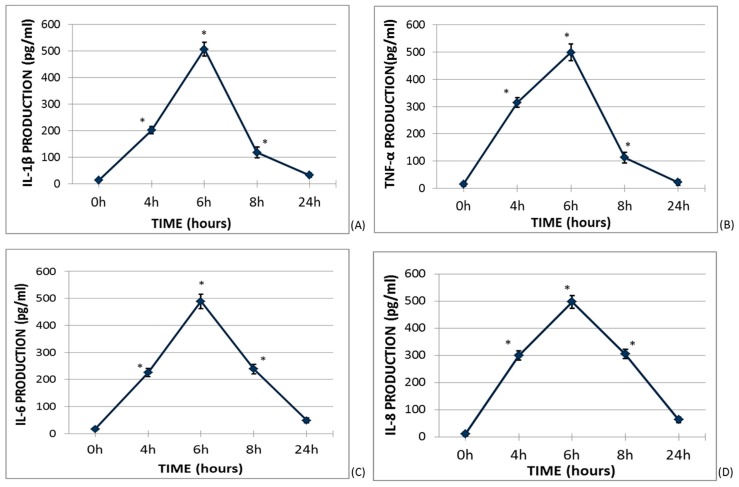
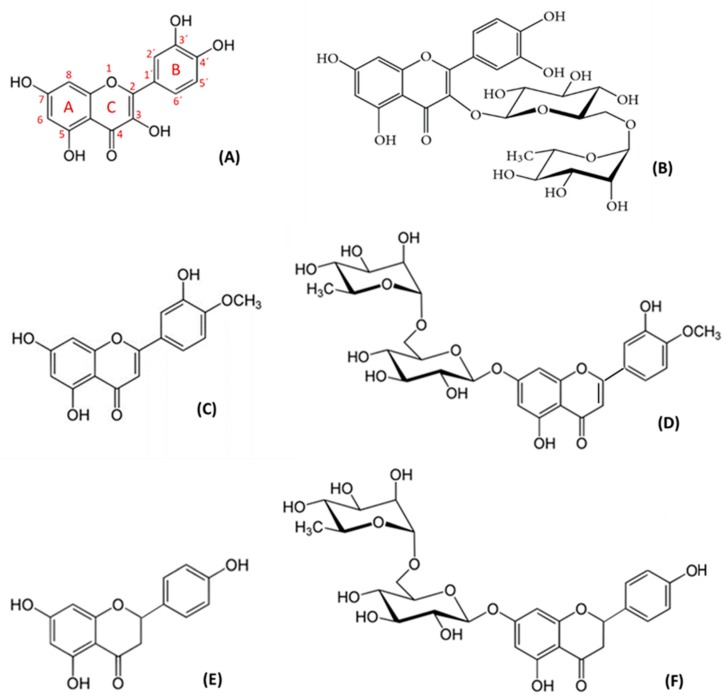
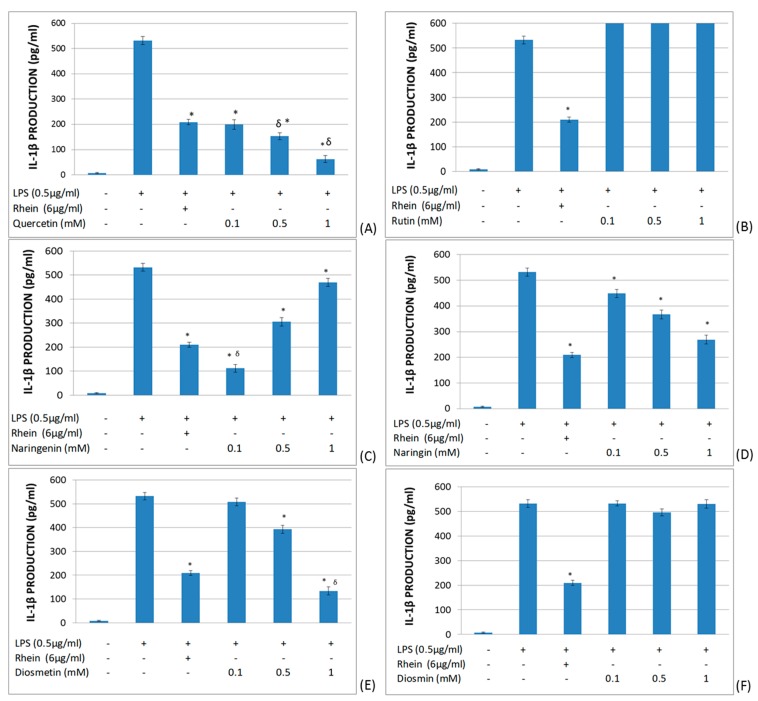
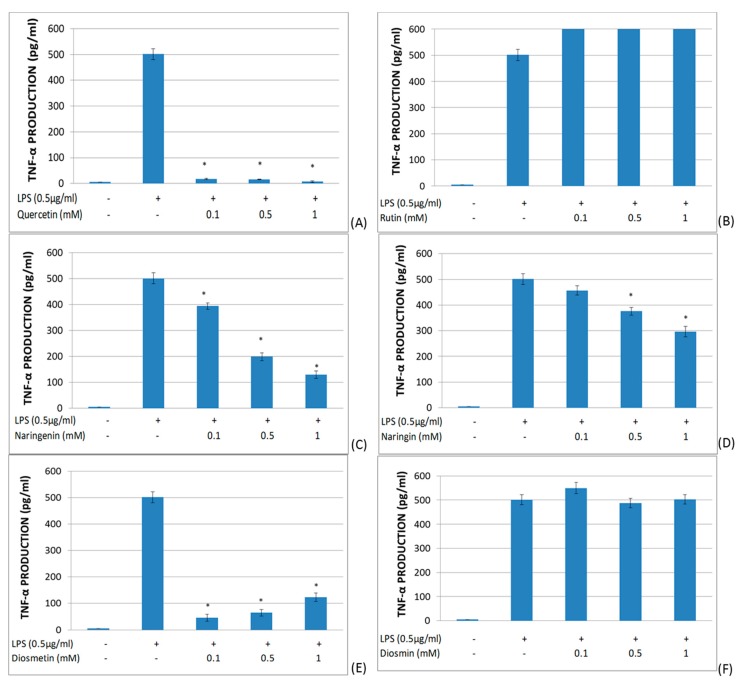
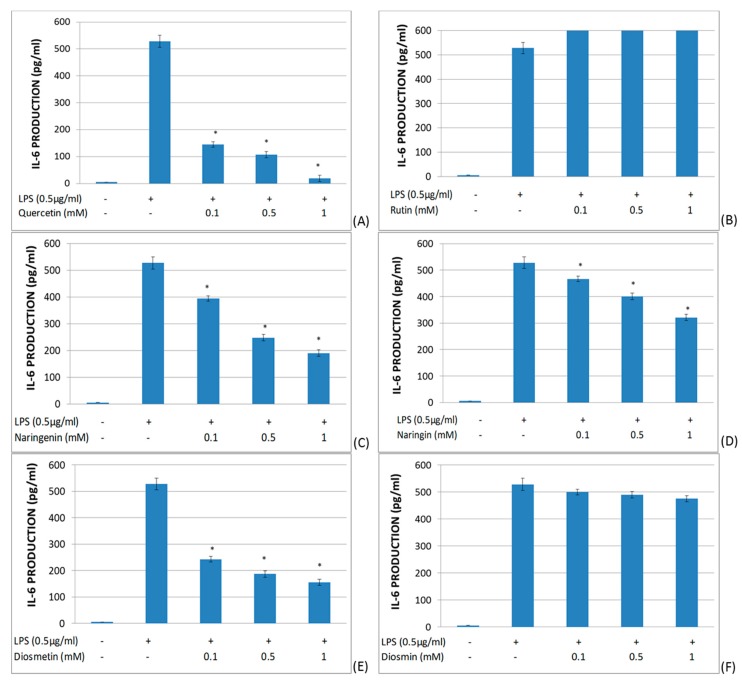
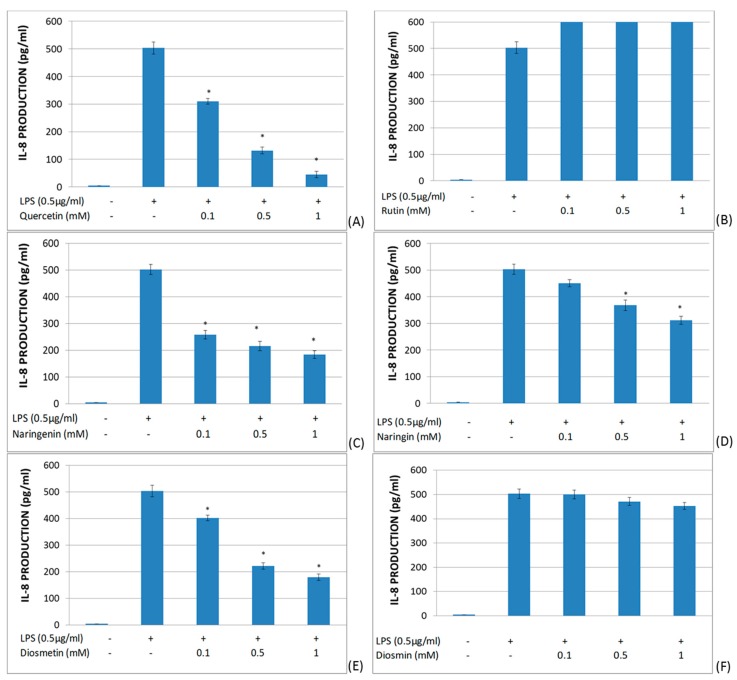
Systemic inflammation, circulating immune cell activation, and endothelial cell damage play a critical role in vascular pathogenesis. Flavonoids have shown anti-inflammatory effects. In this study, we investigated the effects of different flavonoids on the production of pro-inflammatory interleukin (IL) 1β, 6, and 8, and tumor necrosis factor α (TNF-α), in peripheral blood cells. Methods: We studied the whole blood from 36 healthy donors. Lipopolysaccharide (LPS)-stimulated (0.5 μg/mL) whole-blood aliquots were incubated in the presence or absence of different concentrations of quercetin, rutin, naringenin, naringin, diosmetin, and diosmin for 6 h. Cultures were centrifuged and the supernatant was collected in order to measure IL-1β, TNF-α, IL-6, and IL-8 production using specific immunoassay techniques. This production was significantly inhibited by quercetin, naringenin, naringin, and diosmetin, but in no case by rutin or diosmin. Flavonoids exert different effects, maybe due to the differences between aglycons and glucosides present in their chemical structures. However, these studies suggest that quercetin, naringenin, naringin, and diosmetin could have a potential therapeutic effect in the inflammatory process of cardiovascular disease.
全身炎症、循环免疫细胞活化和内皮细胞损伤在血管发病机制中起关键作用。黄酮类化合物已显示出抗炎作用。在本研究中,我们调查了不同黄酮类化合物对外周血细胞中促炎白细胞介素(IL)-1β、6和8以及肿瘤坏死因子α(TNF-α)产生的影响。方法:我们研究了36名健康供体的全血。在存在或不存在不同浓度的槲皮素、芦丁、柚皮素、柚皮苷、香叶木素和地奥司明的情况下,将脂多糖(LPS)刺激(0.5μg/mL)的全血等分试样孵育6小时。将培养物离心并收集上清液,以便使用特定免疫测定技术测量IL-1β、TNF-α、IL-6和IL-8的产生。槲皮素、柚皮素、柚皮苷和香叶木素可显著抑制这种产生,但芦丁或地奥司明在任何情况下均无此作用。黄酮类化合物发挥不同作用,可能是由于其化学结构中存在的苷元和糖苷之间的差异。然而,这些研究表明,槲皮素、柚皮素、柚皮苷和香叶木素在心血管疾病的炎症过程中可能具有潜在的治疗作用。