Fasina Folorunso O, Kissinga Henry, Mlowe Fredy, Mshang'a Samora, Matogo Benedict, Mrema Abnery, Mhagama Adam, Makungu Selemani, Mtui-Malamsha Niwael, Sallu Raphael, Misinzo Gerald, Magidanga Bishop, Kivaria Fredrick, Bebay Charles, Nong'ona Solomon, Kafeero Fred, Nonga Hezron
Food and Agriculture Organization of the United Nations, Dar es Salaam 14111, Tanzania.
Zonal Veterinary Center, South West Zone, Sumbawanga 55101, Tanzania.
Pathogens. 2020 Feb 25;9(3):155. doi: 10.3390/pathogens9030155.
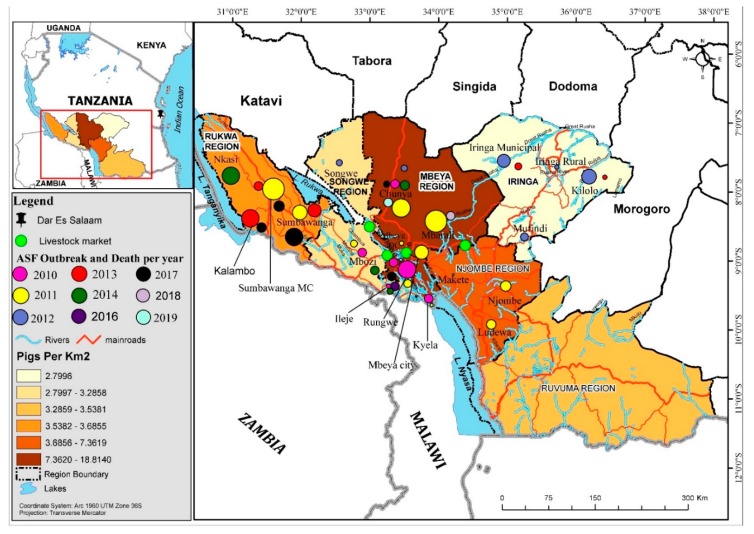
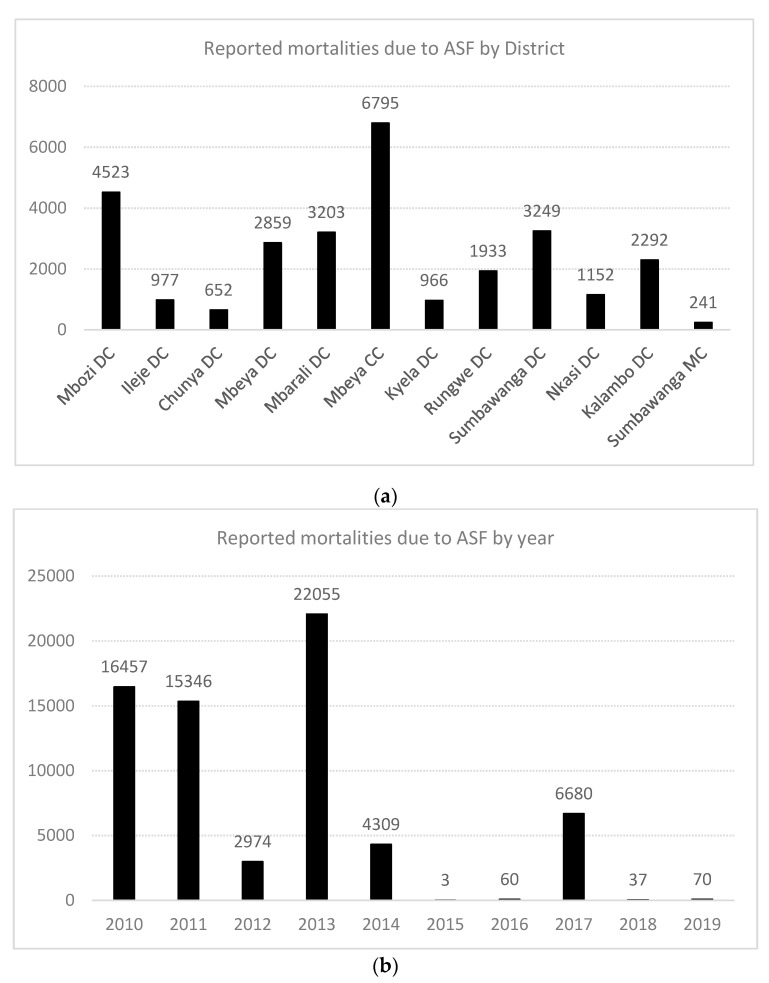
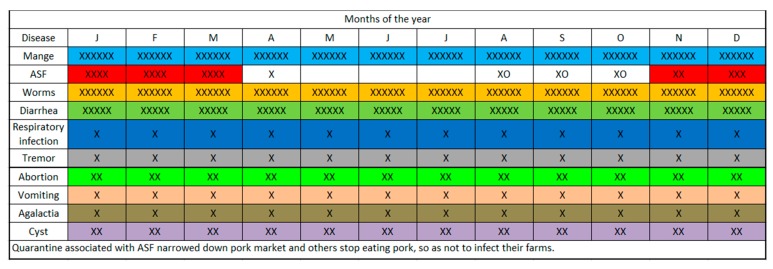
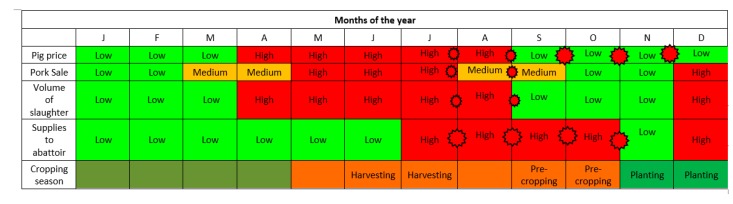
African swine fever remains an important pig disease globally in view of its rapid spread, economic impacts and food implications, with no option of vaccination or treatment. The Southern Highlands zone of Tanzania, an important pig-producing hub in East Africa, is endemic with African swine fever (ASF). From approximately the year 2010, the recurrence of outbreaks has been observed and it has now become a predictable pattern. We conducted exploratory participatory epidemiology and participatory disease surveillance in the Southern Highlands to understand the pig sector and the drivers and facilitators of infections, risk factors and dynamics of ASF in this important pig-producing area. Pigs continue to play a major role in rural livelihoods in the Southern Highlands and pork is a major animal protein source. Outbreaks of diseases, particularly ASF, have continued to militate against the scaling up of pig operations in the Southern Highlands. Intra- and inter-district and trans-border transnational outbreaks of ASF, the most common disease in the Southern Highlands, continue to occur. Trade and marketing systems, management systems, and lack of biosecurity, as well as anthropogenic (human) issues, animals and fomites, were identified as risk factors and facilitators of ASF infection. Changes in human behavior and communication in trade and marketing systems in the value chain, biosecurity and pig management practices are warranted. Relevant training must be implemented alongside the launch of the national ASF control strategy for Tanzania, which already established a roadmap for combating ASF in Tanzania. The high-risk points (slaughter slabs, border areas, and farms with poor biosecurity) and high-risk period (November-March) along the pig value chain must be targeted as critical control points for interventions in order to reduce the burden of infection.
鉴于非洲猪瘟传播迅速、经济影响重大且涉及食品安全,又无疫苗接种或治疗手段,它仍是全球重要的猪病。坦桑尼亚南部高地地区是东非重要的生猪养殖中心,也是非洲猪瘟的疫区。自2010年左右以来,该地区疫情反复出现,如今已形成可预测的规律。我们在南部高地开展了探索性参与式流行病学和参与式疾病监测,以了解该重要生猪产区的养猪业情况、感染的驱动因素和促进因素、非洲猪瘟的风险因素及动态。猪在南部高地农村生计中仍发挥着重要作用,猪肉是主要的动物蛋白来源。疾病爆发,尤其是非洲猪瘟疫情,持续阻碍着南部高地养猪业的扩大。南部高地最常见的疾病——非洲猪瘟,在区内、区际和跨境跨国范围内的疫情仍在不断发生。贸易和营销系统、管理系统、生物安全措施的缺失以及人为因素、动物和污染物,都被确定为非洲猪瘟感染的风险因素和促进因素。有必要改变价值链中贸易和营销系统中的人类行为及沟通方式、生物安全措施和生猪管理做法。在坦桑尼亚已经制定了抗击非洲猪瘟路线图的国家非洲猪瘟控制战略启动之际,必须开展相关培训。猪价值链上的高风险点(屠宰场、边境地区和生物安全措施差的农场)和高风险时期(11月至次年3月)必须作为关键控制点进行干预,以减轻感染负担。