Yona Clara, Makange Mariam R, Moshiro Eva, Hakizimana Jean N, Mfumbilwa Zakile A, Lupala Abel S, Chengula Augustino A, Misinzo Gerald
Department of Biosciences, College of Natural and Applied Sciences, Sokoine University of Agriculture, Morogoro, Tanzania.
OR Tambo Africa Research Chair for Viral Epidemics, SACIDS Foundation for One Health, Sokoine University of Agriculture, Morogoro, Tanzania.
Transbound Emerg Dis. 2025 Aug 27;2025:3922067. doi: 10.1155/tbed/3922067. eCollection 2025.
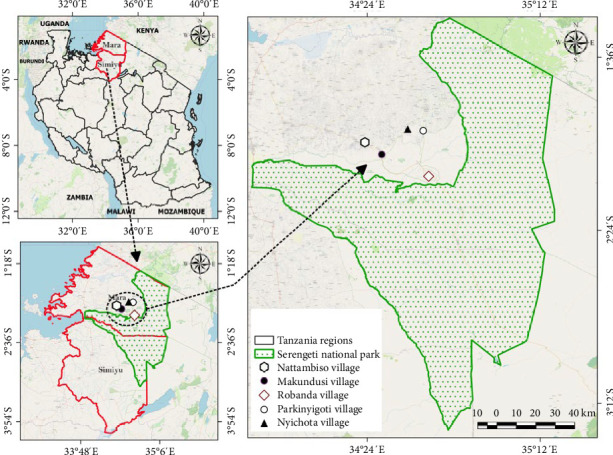
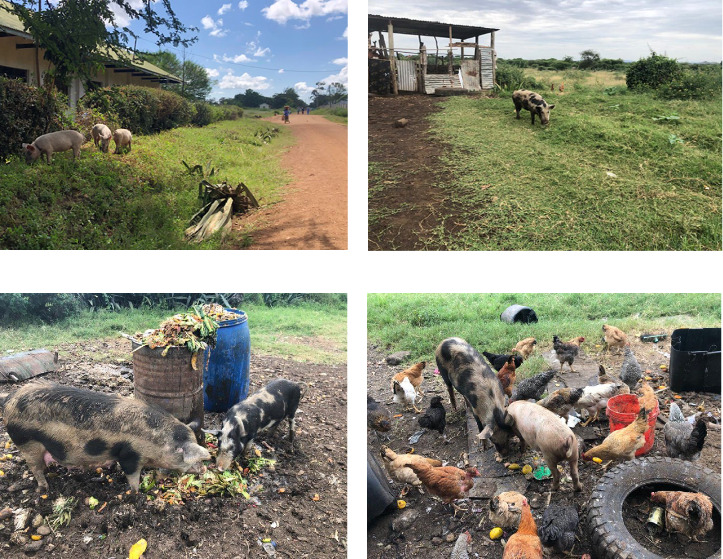
African swine fever (ASF) is a hemorrhagic disease of domestic pigs and wild boars. The ASF virus (ASFV), a sole member of the family Asfarviridae and genus , causes this devastating disease. In sub-Saharan Africa, ASFV is maintained through three interlinked cycles: the domestic cycle, the pig-tick cycle, and the sylvatic cycle, which collectively sustain its endemic presence in the region. Interaction between wild and domestic pigs at livestock-wildlife interfaces, particularly in protected areas, poses a significant threat to smallholder farmers. This study aimed to investigate the socioeconomic impact and identify potential risk factors associated with ASF in Serengeti National Park's (SNP's) wildlife management area (WMA) in Tanzania. A cross-sectional study involving 110 domestic pig-keeping households in the five villages of SNP's WMA was carried out. A semistructured questionnaire was used to collect data on risk factors and socioeconomic impact associated with ASF from consenting smallholder farmers. Additionally, the observational approach was used to assess pig production's facilities, behaviors and practices involved in domestic pig production and management. Tissue samples including spleen, lymph nodes, and kidney were also collected from dead domestic pigs belonging to two villages, Nattambiso and Robanda, to confirm the existence of the virus in the study area by using polymerase chain reaction (PCR). Descriptive statistics, univariable, and multivariable logistic analyses were performed to determine risk factors associated with ASF occurrence between October 2021 and April 2022 in the study area. A total of 12 ASF outbreaks affecting 1198 cases that led to 969 domestic pig deaths were reported. The ASFV was confirmed to be positive in all domestic pigs from which tissue samples were collected in the included villages. The case fatality rates (CFRs) from the reported previous ASF incidence varied from 77.5% to 85.2% with an overall CFR of 80.8%. A sum of 163,300,000 Tanzanian Shillings (approximately equivalent to 70,085 USD) loss was recorded in the studied WMA. The major risk factors that correlated with ASF occurrence were encountered ASF previously (odds ratio [OR] = 13.58, 95% confidence interval [CI] = 2.79-87.28), selling pig products with ASF before (OR = 9.43, CI = 1.76-70.02), whilst taking no risk action to prevent loss (OR = 0.14, CI = 0.03-0.63) and swill treatment (OR = 0.10, CI = 0.01-0.54) negatively correlated with ASF. Improving awareness on farm-level biosecurity, husbandry, and management practices is vital to preventing ASF outbreaks and wildlife spillover, safeguarding livestock health, and promoting economic stability in wildlife-livestock-human interfaces.
非洲猪瘟(ASF)是家猪和野猪的一种出血性疾病。非洲猪瘟病毒(ASFV)是非洲猪瘟病毒科唯一的成员,可引发这种毁灭性疾病。在撒哈拉以南非洲,ASFV通过三个相互关联的循环得以存续:家猪循环、猪蜱循环和野生动物循环,这三个循环共同维持了该病毒在该地区的地方性流行。野生动物与家猪在畜牧-野生动物界面的互动,尤其是在保护区内,对小农户构成了重大威胁。本研究旨在调查坦桑尼亚塞伦盖蒂国家公园(SNP)野生动物管理区(WMA)内与ASF相关的社会经济影响,并确定潜在风险因素。在SNP的WMA的五个村庄中,对110个家庭养猪户开展了一项横断面研究。采用半结构化问卷,从同意参与的小农户那里收集与ASF相关的风险因素和社会经济影响的数据。此外,采用观察法评估家猪生产和管理中涉及的养猪设施、行为和做法。还从纳坦比索和罗班达这两个村庄的病死家猪身上采集了包括脾脏、淋巴结和肾脏在内的组织样本,通过聚合酶链反应(PCR)来确认研究区域内病毒的存在。进行描述性统计、单变量和多变量逻辑分析,以确定2021年10月至2022年4月研究区域内与ASF发生相关的风险因素。共报告了12起ASF疫情,涉及1198例病例,导致969头家猪死亡。在所纳入村庄采集组织样本的所有家猪中,ASFV均被确认为阳性。报告的以往ASF发病率的病死率(CFR)在77.5%至85.2%之间,总体CFR为80.8%。在所研究的WMA中记录到总计1.633亿坦桑尼亚先令(约合70,085美元)的损失。与ASF发生相关的主要风险因素包括此前曾遇到ASF(比值比[OR]=13.58,95%置信区间[CI]=2.79-87.28)、之前出售过感染ASF的猪产品(OR=9.43,CI=1.76-70.02),而未采取预防损失的风险措施(OR=0.14,CI=0.03-0.63)和泔水处理(OR=0.10,CI=0.01-0.54)与ASF呈负相关。提高农场层面的生物安全、饲养和管理做法的意识,对于预防ASF疫情和野生动物传播、保障牲畜健康以及促进畜牧-野生动物-人类界面的经济稳定至关重要。