WHO Collaborating Centre for Research and Training in Mental Health, Neurosciences and Substance Abuse, Department of Psychiatry, University of Ibadan, Ibadan, Nigeria.
Department of Psychiatry, University of Ibadan, Ibadan, Nigeria.
Trials. 2020 Feb 27;21(1):231. doi: 10.1186/s13063-020-4086-9.
Adolescent pregnancy is a pressing public health issue globally, and particularly in low and middle-income countries. Depression occurring in the perinatal period is common among women and more so among adolescent mothers. Effective treatments for the condition have been demonstrated in adults but the needs of adolescents are often unique, making such treatments unlikely to meet those needs.
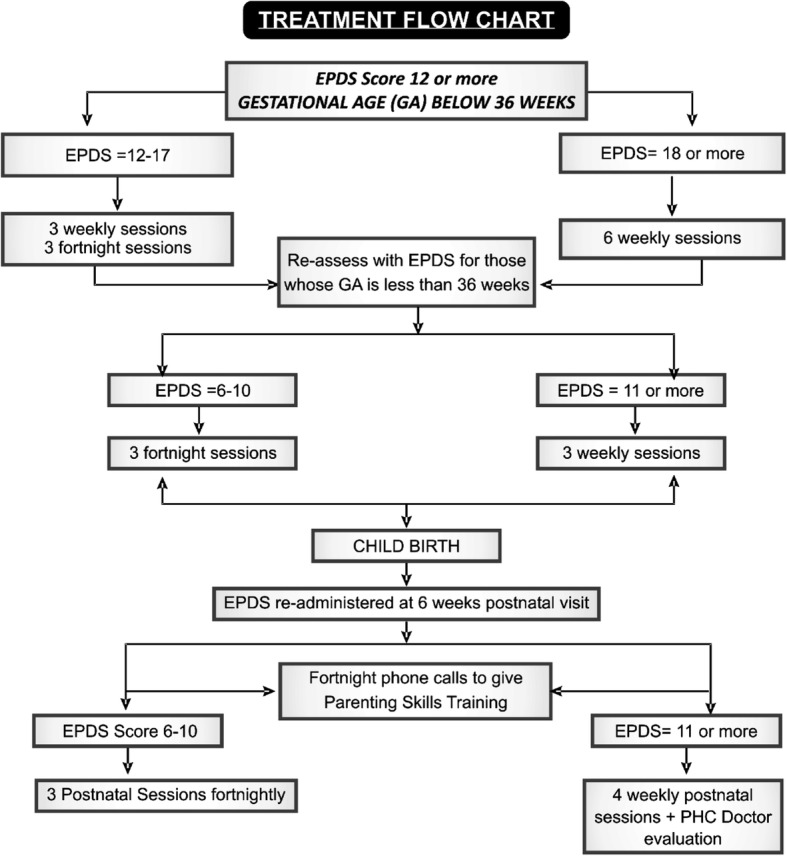
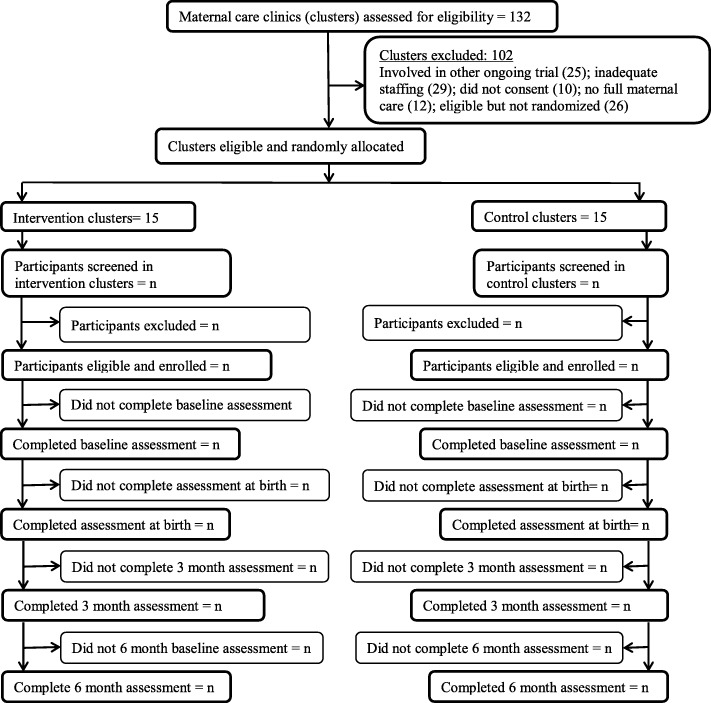
METHOD/STUDY DESIGN: A hybrid effectiveness-implementation research study is described in which a cluster randomized trial design is used to explore the effectiveness as well as the utility in routine practice of an intervention package specifically designed for adolescents with perinatal depression. Consenting pregnant adolescents (aged less than 20 years) who are newly registered for antenatal care are enrolled into the trial if their fetal gestational age is less than 36 weeks and they score 12 or more on the Edinburgh Postnatal Depression Scale (EPDS). The intervention package consists of structured sessions of behavior activation, problem-solving treatment, and parenting skills training, and is delivered by primary maternal health care providers, complemented by support provided by a "neighborhood mother" identified by the adolescent. Mothers in the control arm receive care as usual. The trial is conducted in clinics where the maternal providers are trained to deliver routine depression care with the use of the WHO Mental Health Gap Action Programme, intervention guide. Assessments are undertaken by trained blinded assessors at baseline, at childbirth, and at 3 and 6 months postpartum. The primary outcome, assessed at 6 months, is the level of maternal depression (measured with the EPDS). The secondary outcome is parenting skills (assessed with the Home Observation Measurement of the Environment, Infant-Toddler version), while tertiary outcomes include measures of disability, quality of life, mother-child bonding, as well as infants' nutritional and growth indices.
This, to the best of our knowledge, will be the first fully-powered trial of an intervention package specifically designed to address the unique needs of adolescents with perinatal depression.
ISRCTN16775958. Registered on 30 April 2019.
青少年怀孕是一个全球性的紧迫公共卫生问题,在中低收入国家尤其如此。围产期抑郁在女性中很常见,在青少年母亲中更为常见。成人的有效治疗方法已经得到证实,但青少年的需求往往是独特的,因此这些治疗方法不太可能满足他们的需求。
方法/研究设计:描述了一项混合有效性-实施研究,该研究采用集群随机试验设计,旨在探索专门为围产期抑郁青少年设计的干预方案在常规实践中的有效性和实用性。如果胎儿胎龄小于 36 周且爱丁堡产后抑郁量表 (EPDS) 得分为 12 分或以上,新登记接受产前保健的怀孕青少年(年龄小于 20 岁)同意参加试验。干预方案包括行为激活、解决问题治疗和育儿技能培训的结构化课程,由初级产妇保健提供者提供,并由青少年确定的“邻里母亲”提供支持。对照组中的母亲接受常规护理。该试验在诊所进行,这些诊所的产妇提供者接受了使用世界卫生组织精神卫生差距行动计划干预指南提供常规抑郁护理的培训。由经过培训的盲法评估员在基线、分娩时以及产后 3 个月和 6 个月进行评估。主要结局是 6 个月时的产妇抑郁程度(用 EPDS 测量)。次要结局是育儿技能(用家庭观察测量婴儿-学步儿版评估),而三级结局包括残疾程度、生活质量、母婴联系以及婴儿的营养和生长指数。
据我们所知,这将是第一个专门针对围产期抑郁青少年独特需求设计的干预方案的全效试验。
ISRCTN84762501。于 2019 年 4 月 30 日注册。