Charité - Universitätsmedizin Berlin, corporate member of Freie Universität Berlin, Humboldt-Universität zu Berlin, and Berlin Institute of Health, Medizinische Klinik mit Schwerpunkt Kardiologie und Angiologie, Campus Mitte, Charitéplatz 1, 10117, Berlin, Germany.
DZHK (German Centre for Cardiovascular Research), partner site Berlin, Berlin, Germany.
Sci Rep. 2020 Feb 27;10(1):3591. doi: 10.1038/s41598-020-60162-8.
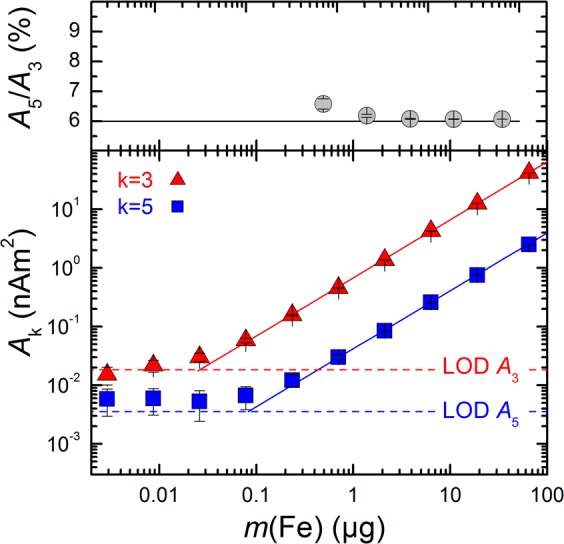
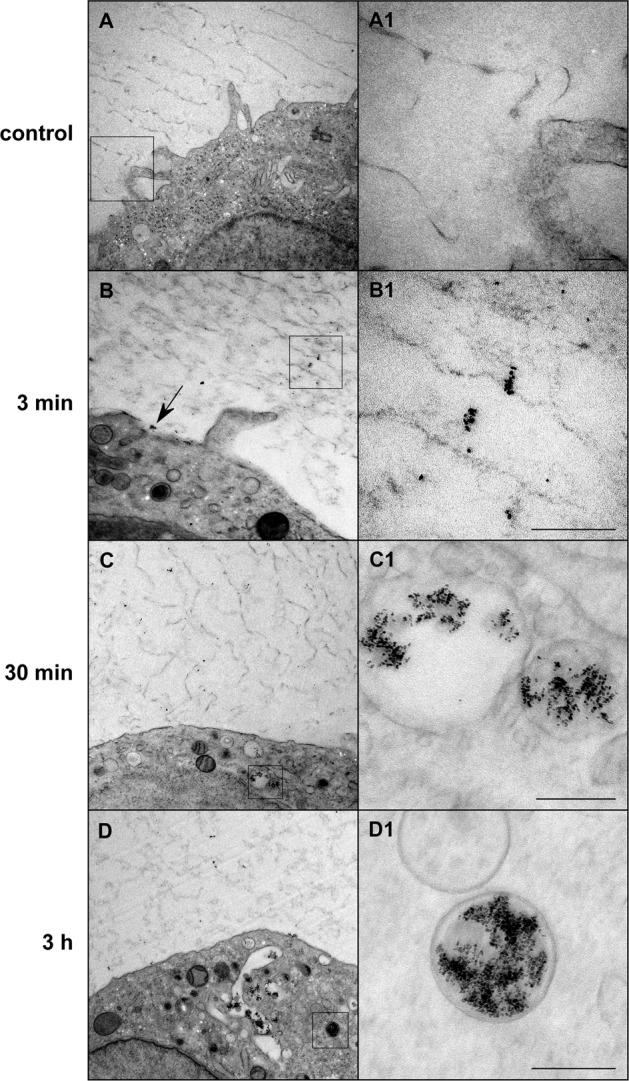
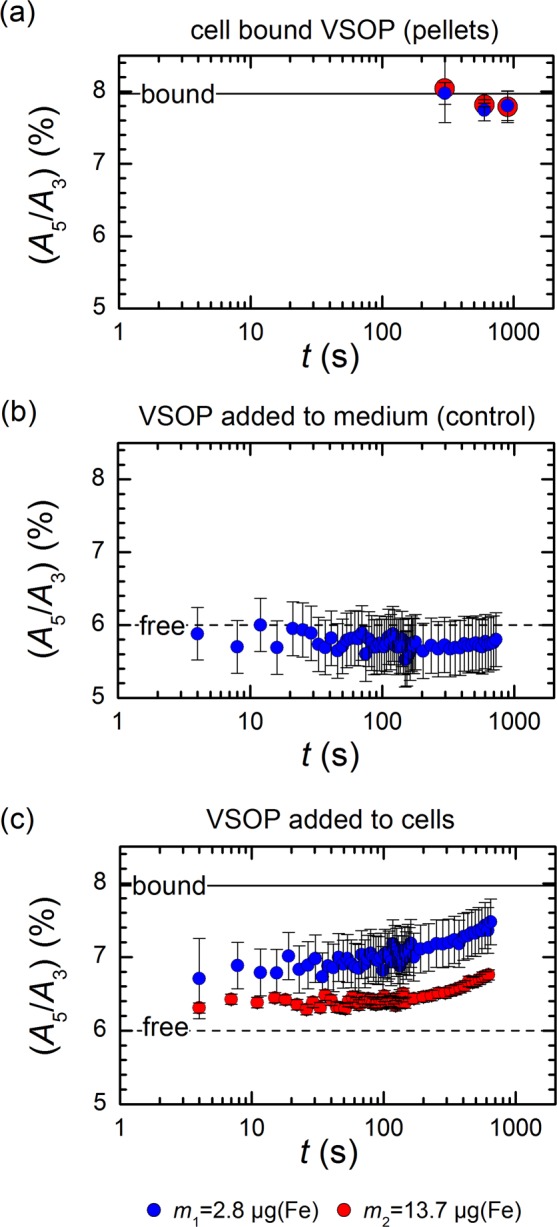
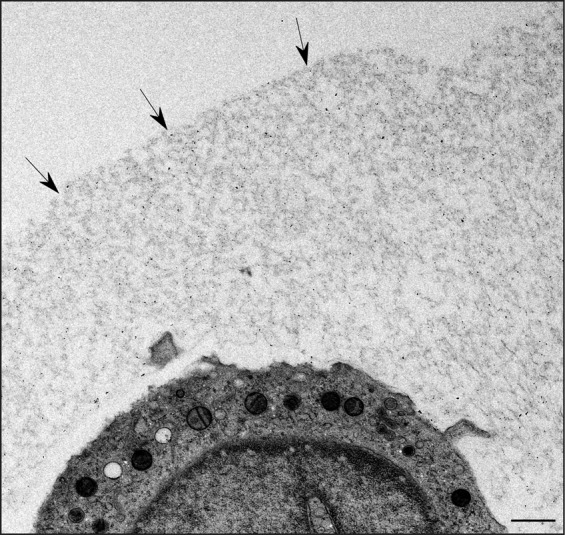
Interaction with biological material can alter physicochemical parameters of magnetic nanoparticles and might thereby change their magnetic behavior with potentially important implications for various nanoparticle applications. Little is known about changes of the magnetic behavior that occur during the initial phase of cell binding and uptake. We investigate the magnetic behavior of very small superparamagnetic iron-oxide nanoparticles (VSOP) during initial contact with THP-1 monocytes. We combine real-time magnetic particle spectroscopy (MPS), a fast and sensitive method for specific detection of magnetic nanoparticles in biological specimen with high-pressure-freezing/freeze-substitution transmission electron microscopy (HPF/FS-TEM), enabling us to generate snapshots of the interaction of VSOP with the cellular glycocalyx. MPS reveals significant changes of the dynamic magnetic behavior within seconds after VSOP injection into monocyte suspensions that correlate with the formation of nanoparticle clusters in the glycocalyx. The combination of real-time MPS and HPF/FS-TEM provides an ideal platform to analyze magnetic behaviors of nanoparticles upon interaction with cells and tissues.
与生物材料的相互作用会改变磁性纳米粒子的物理化学参数,并可能改变其磁行为,这对各种纳米粒子的应用具有重要意义。然而,关于细胞结合和摄取初始阶段发生的磁行为变化,我们知之甚少。我们研究了非常小的超顺磁性氧化铁纳米粒子(VSOP)在与 THP-1 单核细胞初始接触时的磁行为。我们将实时磁粒子光谱(MPS)与高压自由/冷冻取代透射电子显微镜(HPF/FS-TEM)相结合,MPS 是一种快速、灵敏的方法,可用于在生物标本中特异性检测磁性纳米粒子,而 HPF/FS-TEM 使我们能够生成 VSOP 与细胞糖萼相互作用的快照。MPS 揭示了 VSOP 注入单核细胞悬浮液后几秒钟内动态磁行为的显著变化,这与糖萼中纳米粒子簇的形成相关。实时 MPS 和 HPF/FS-TEM 的结合为分析纳米粒子与细胞和组织相互作用时的磁行为提供了理想的平台。