Yang Chunxue, Zhao Wenna, Wang Yingnan, Zhang Liang, Huang Shouchen, Lin Jixiang
College of Landscape Architecture, Northeast Forestry University, Harbin 150040, China.
Key Laboratory of Saline-alkali Vegetation Ecology Restoration, Ministry of Education, Northeast Forestry University, Harbin 150040, China.
Microorganisms. 2020 Feb 26;8(3):327. doi: 10.3390/microorganisms8030327.
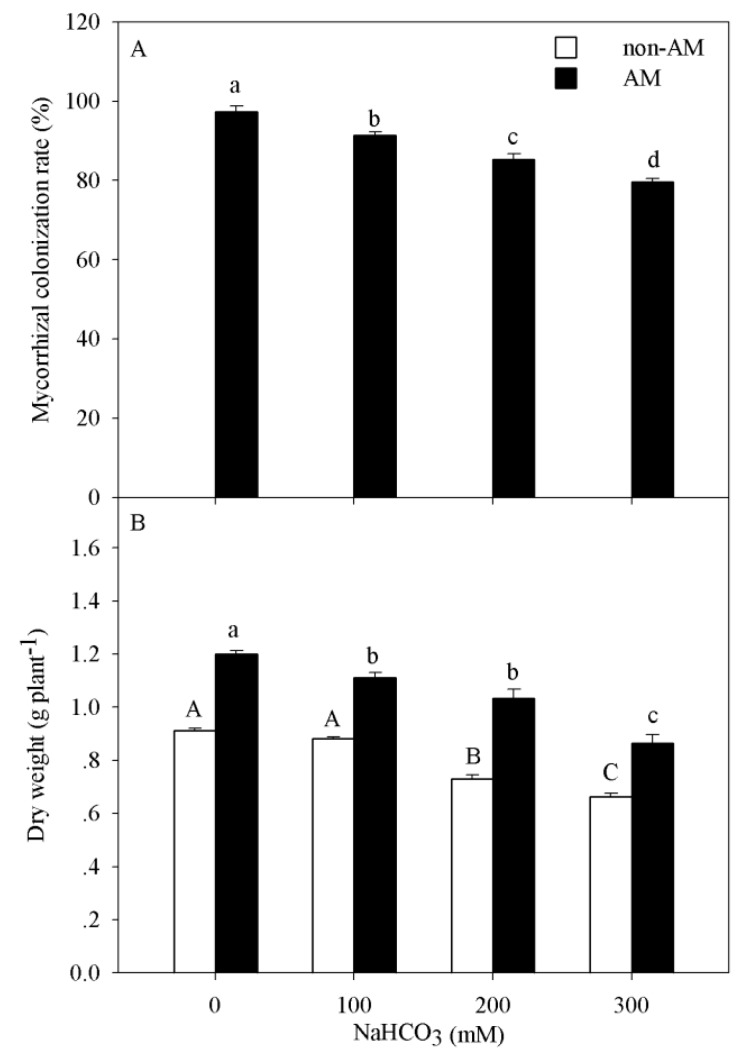
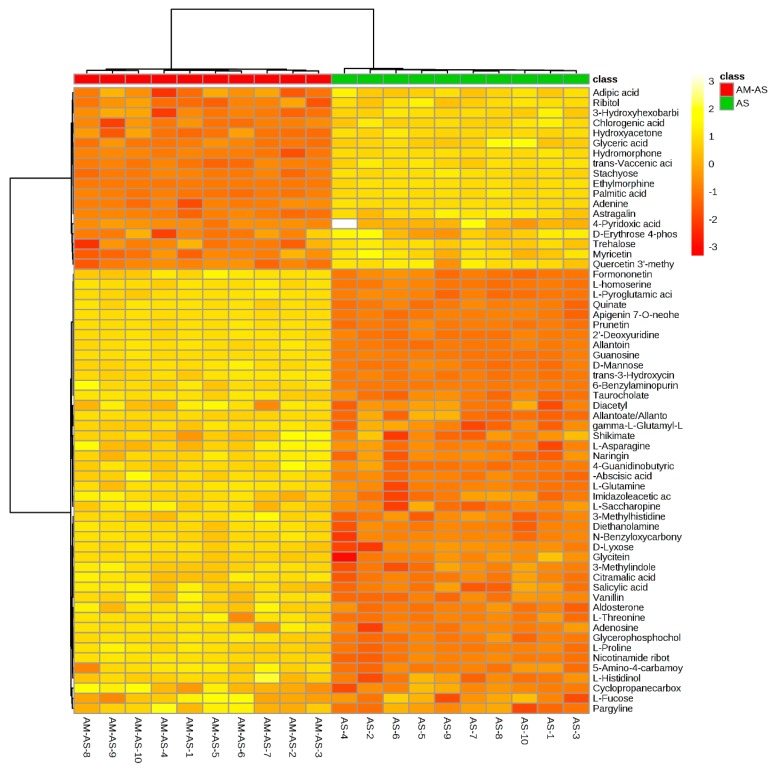
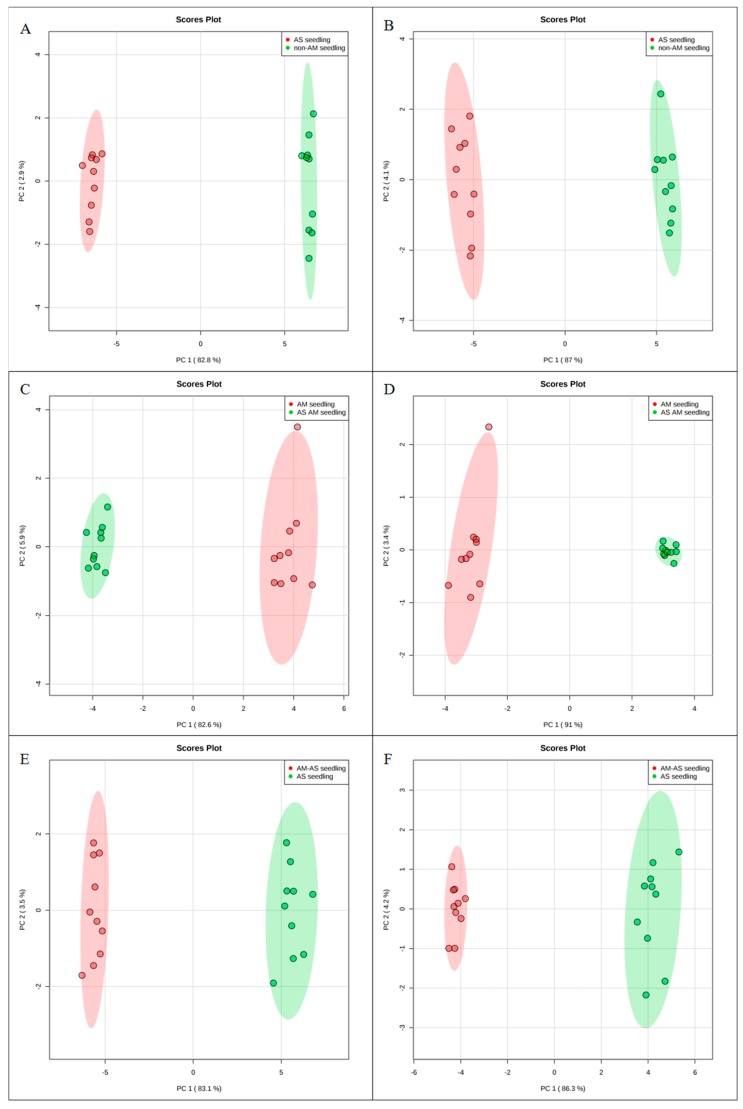
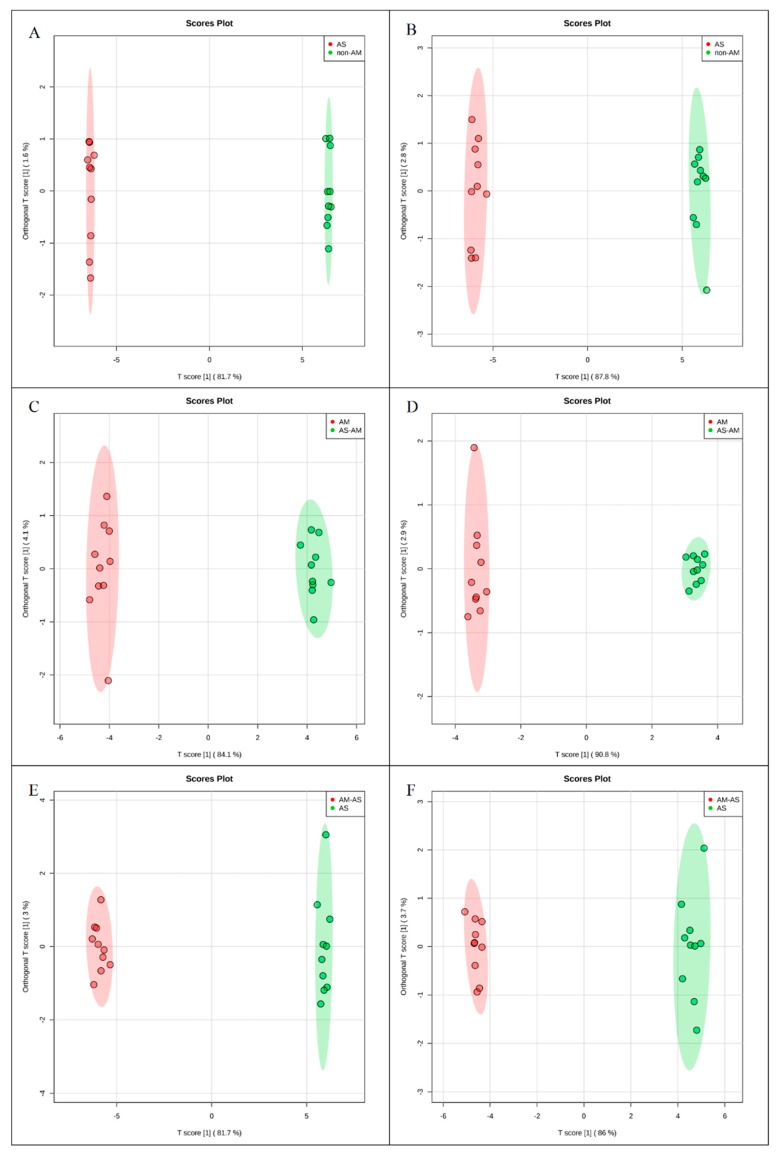
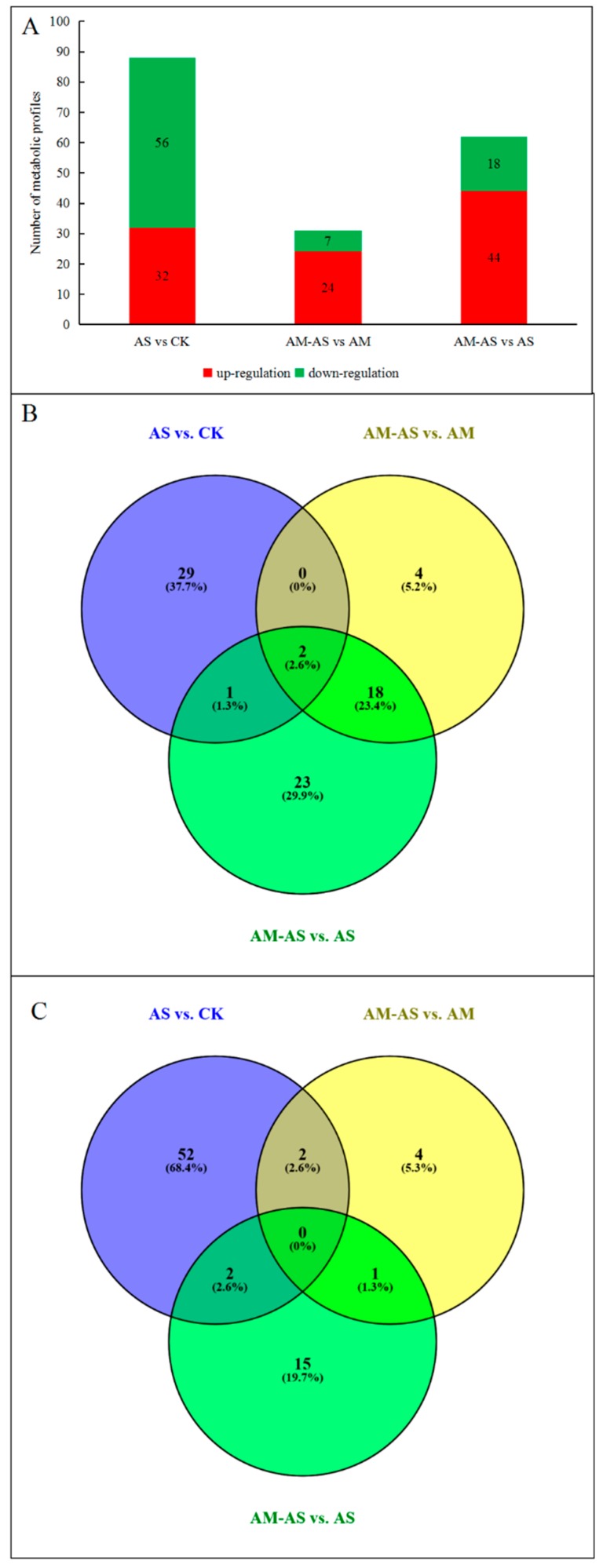
Soil alkalization is a major environmental threat that affects plant distribution and yield in northeastern China. is an alkali-tolerant grass species that is used for salt-alkali grassland restoration. However, little is known about the molecular mechanisms by which arbuscular mycorrhizal fungi (AMF) enhance responses to alkali stress. Here, metabolite profiling in seedlings with or without arbuscular mycorrhizal fungi (AMF) under alkali stress was conducted using liquid chromatography combined with time-of-flight mass spectrometry (LC/TOF-MS). The results showed that AMF colonization increased seedling biomass under alkali stress. In addition, principal component analysis (PCA) and orthogonal projections to latent structures discriminant analysis (OPLS-DA) demonstrated that non-AM and AM seedlings showed different responses under alkali stress. A heat map analysis showed that the levels of 88 metabolites were significantly changed in non-AM seedlings, but those of only 31 metabolites were significantly changed in AM seedlings. Moreover, the levels of a total of 62 metabolites were significantly changed in seedlings after AMF inoculation. The results suggested that AMF inoculation significantly increased amino acid, organic acid, flavonoid and sterol contents to improve osmotic adjustment and maintain cell membrane stability under alkali stress. seedlings after AMF inoculation produced more plant hormones (salicylic acid and abscisic acid) than the non-AM seedlings, probably to enhance the antioxidant system and facilitate ion balance under stress conditions. In conclusion, these findings provide new insights into the metabolic mechanisms of seedlings with arbuscular mycorrhizal fungi under alkali conditions and clarify the role of AM in the molecular regulation of this species under alkali stress.
土壤碱化是一种主要的环境威胁,影响中国东北地区的植物分布和产量。羊草是一种耐碱草种,用于盐碱地草地恢复。然而,关于丛枝菌根真菌(AMF)增强羊草对碱胁迫响应的分子机制知之甚少。在此,利用液相色谱结合飞行时间质谱(LC/TOF-MS)对碱胁迫下接种或未接种丛枝菌根真菌(AMF)的羊草幼苗进行了代谢物谱分析。结果表明,AMF定殖增加了碱胁迫下幼苗的生物量。此外,主成分分析(PCA)和正交投影到潜在结构判别分析(OPLS-DA)表明,非AM和AM幼苗在碱胁迫下表现出不同的响应。热图分析表明,88种代谢物的水平在非AM幼苗中显著变化,但在AM幼苗中只有31种代谢物的水平显著变化。此外,接种AMF后,羊草幼苗中共有62种代谢物的水平显著变化。结果表明,接种AMF显著增加了氨基酸、有机酸、黄酮类化合物和甾醇的含量,以改善渗透调节并在碱胁迫下维持细胞膜稳定性。接种AMF后的羊草幼苗比未接种AM的幼苗产生更多的植物激素(水杨酸和脱落酸),可能是为了增强抗氧化系统并在胁迫条件下促进离子平衡。总之,这些发现为碱条件下接种丛枝菌根真菌的羊草幼苗的代谢机制提供了新的见解,并阐明了AM在该物种碱胁迫下分子调控中的作用。