Zeng Qingquan, Sun Shuolei, Li Yaxian, Li Xiaoling, Li Zuwei, Liang Hao
Department of Nephrology, Maoming People's Hospital, Maoming, China.
Department of Urology, Peking University Shenzhen Hospital, Shenzhen, China.
Front Oncol. 2020 Feb 5;9:1555. doi: 10.3389/fonc.2019.01555. eCollection 2019.
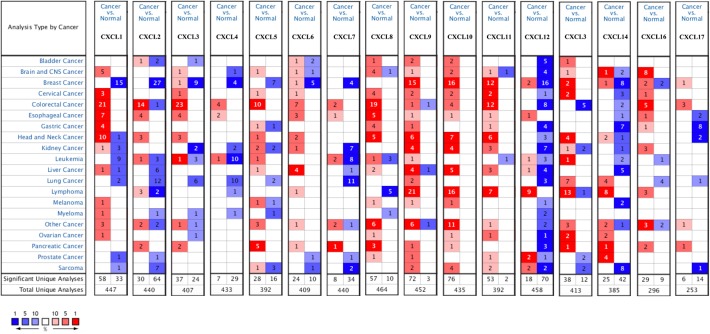
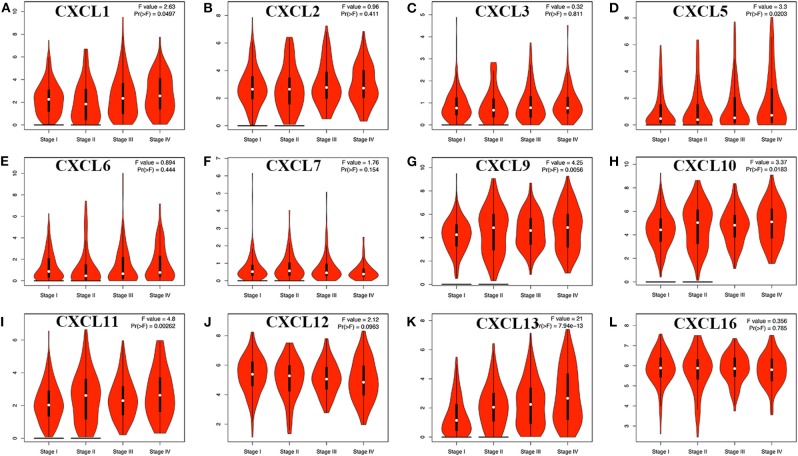
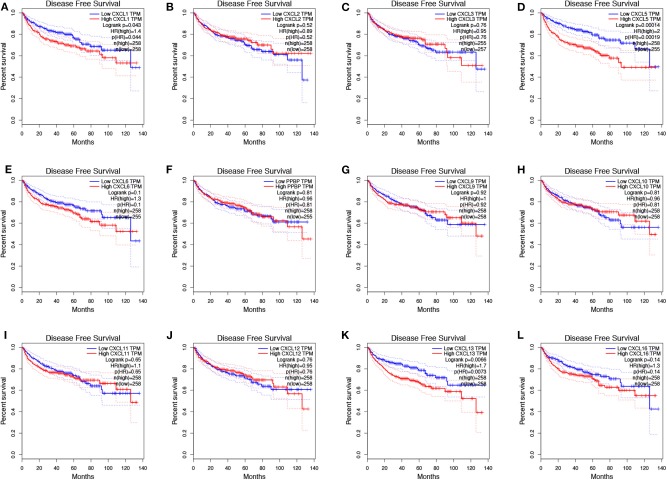
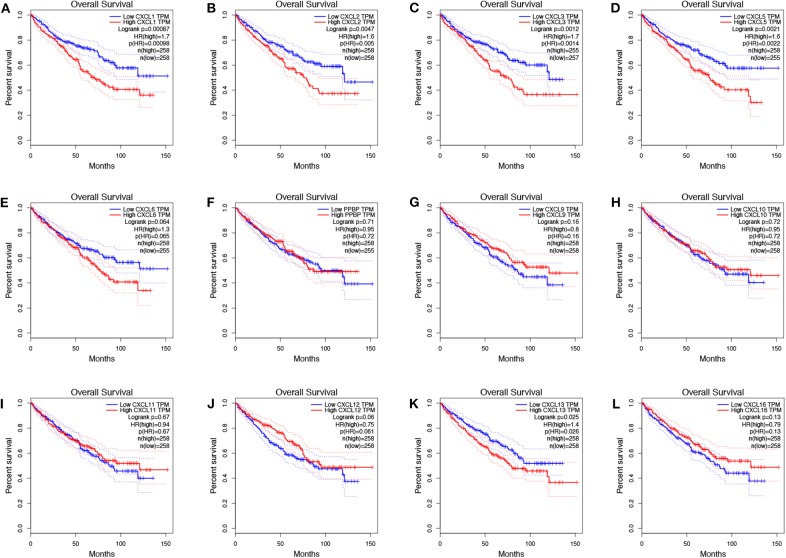
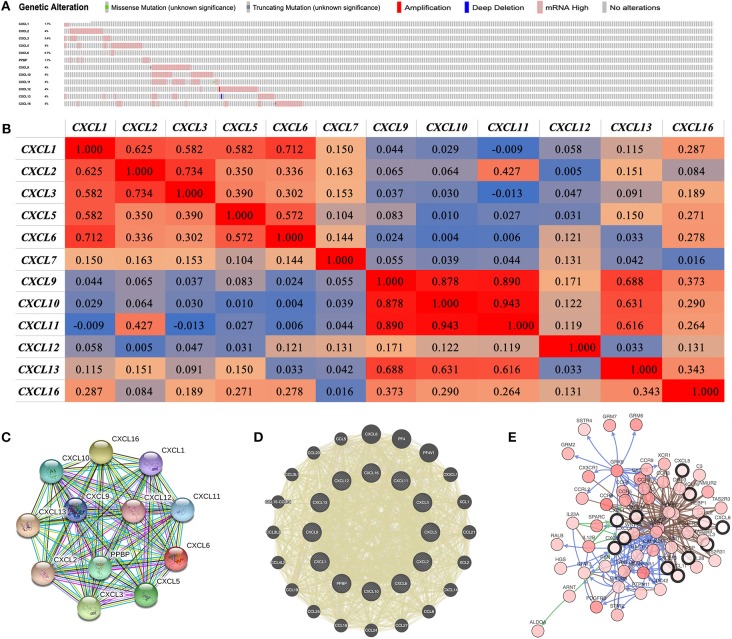
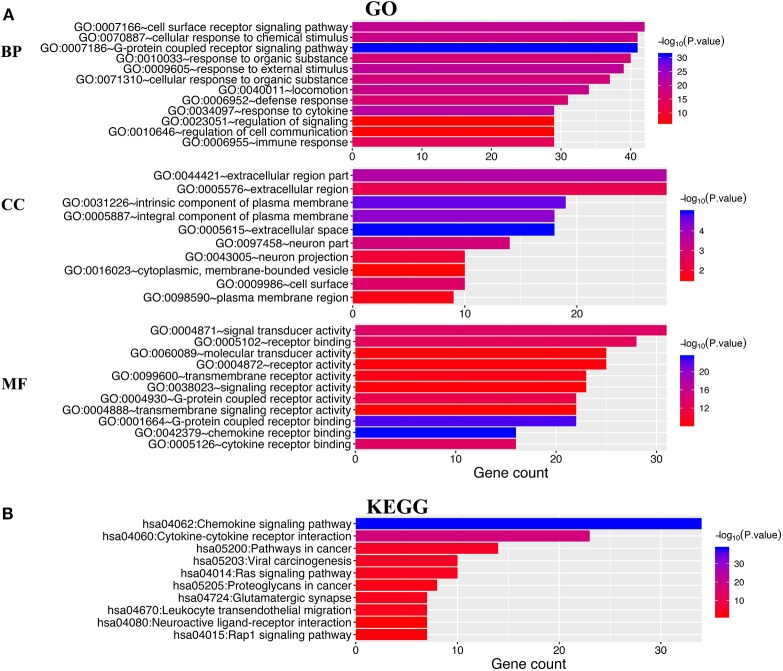
Renal cell carcinoma (RCC) is one of the most common malignances with an ever-increasing incidence and high mortality. Cross-talk between cancer cells and interstitial cells exerts significant effects on neoplasia and tumor development and is modulated in part by chemokines. CXC chemokines in the tumor microenvironment can modulate immune cell trafficking and regulate tumor cell activities, thus exerting anti-tumor immunological effects and affecting patient outcomes; however, the expression and prognostic values of CXC chemokines in RCC have not been clarified. ONCOMINE, GEPIA, UALCAN, cBioPortal, GeneMANIA, DAVID 6.8, Metascape, TRRUST, LinkedOmics, and TIMER were utilized in this study. The transcriptional levels of in RCC tissues were significantly elevated while the transcriptional levels of CXCL3/7/12/13 were significantly reduced. A significant correlation was found between the expression of and the pathological stage of RCC patients. RCC patients with low transcriptional levels of were associated with a significantly better prognosis. The functions of differentially expressed CXC chemokines are primarily related to the chemokine signaling pathway, cytokine-cytokine receptor interactions, and the ILK signaling pathway. Our data suggest that RELA, NFKB1, and SP1 are key transcription factors for CXC chemokines, and the SRC family of tyrosine kinases (LCK, LYN, and FYN), mitogen-activated protein kinases (MAPK1 and MAPK3), and CSNK1D are CXC chemokine targets. We found significant correlations among the expression of CXC chemokines and the infiltration of six types of immune cells (B cells, CD8 T cells, CD4 T cells, macrophages, neutrophils, and dendritic cells). Our results may provide novel insights for the selection of immunotherapeutic targets and prognostic biomarkers for renal cell carcinoma.
肾细胞癌(RCC)是最常见的恶性肿瘤之一,其发病率不断上升且死亡率高。癌细胞与间质细胞之间的相互作用对肿瘤形成和肿瘤发展具有重要影响,并且部分受趋化因子调节。肿瘤微环境中的CXC趋化因子可调节免疫细胞迁移并调节肿瘤细胞活性,从而发挥抗肿瘤免疫作用并影响患者预后;然而,RCC中CXC趋化因子的表达及预后价值尚未阐明。本研究使用了ONCOMINE、GEPIA、UALCAN、cBioPortal、GeneMANIA、DAVID 6.8、Metascape、TRRUST、LinkedOmics和TIMER。RCC组织中[此处原文缺失相关趋化因子名称]的转录水平显著升高,而CXCL3/7/12/13的转录水平显著降低。发现[此处原文缺失相关趋化因子名称]的表达与RCC患者的病理分期之间存在显著相关性。转录水平低的RCC患者预后明显更好。差异表达的CXC趋化因子的功能主要与趋化因子信号通路、细胞因子-细胞因子受体相互作用以及ILK信号通路有关。我们的数据表明,RELA、NFKB1和SP1是CXC趋化因子的关键转录因子,酪氨酸激酶SRC家族(LCK、LYN和FYN)、丝裂原活化蛋白激酶(MAPK1和MAPK3)以及CSNK1D是CXC趋化因子的靶点。我们发现CXC趋化因子的表达与六种免疫细胞(B细胞、CD8 T细胞、CD4 T细胞、巨噬细胞、中性粒细胞和树突状细胞)的浸润之间存在显著相关性。我们的结果可能为肾细胞癌免疫治疗靶点的选择和预后生物标志物提供新的见解。