Department of Chemistry, University of Warwick, Gibbet Hill Road, Coventry, CV4 7AL, UK.
Diamond House, Harwell Science and Innovation Campus, Fermi Ave, Didcot, OX11 0DE, UK.
J Biol Inorg Chem. 2020 Mar;25(2):295-303. doi: 10.1007/s00775-020-01761-8. Epub 2020 Mar 2.
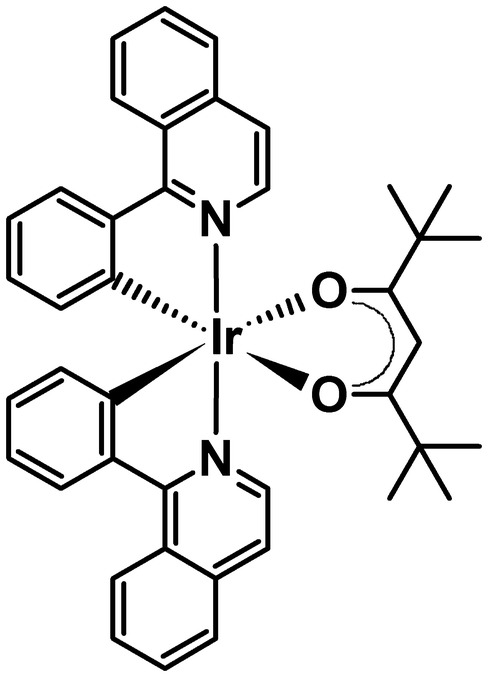
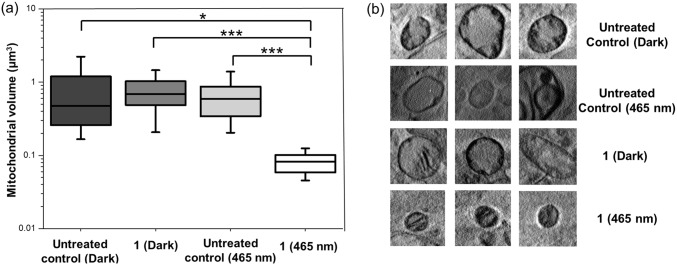
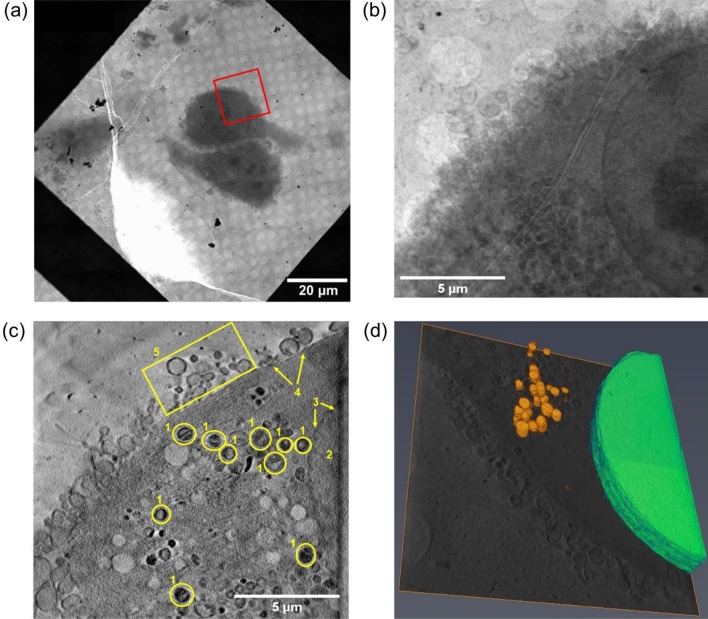
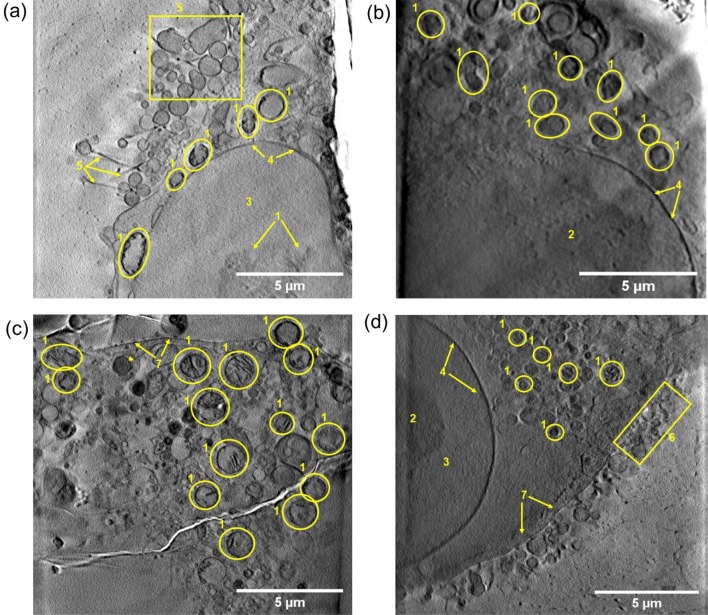
The organoiridium complex Ir[(C,N)(O,O)] (1) where C, N = 1-phenylisoquinoline and O,O = 2,2,6,6-tetramethyl-3,5-heptanedionate is a promising photosensitiser for Photo-Dynamic Therapy (PDT). 1 is not toxic to cells in the dark. However, irradiation of the compound with one-photon blue or two-photon red light generates high levels of singlet oxygen (O) (in Zhang et al. Angew Chem Int Ed Engl 56 (47):14898-14902 https://doi.org/10.1002/anie.201709082,2017), both within cell monolayers and in tumour models. Moreover, photo-excited 1 oxidises key proteins, causing metabolic alterations in cancer cells with potent antiproliferative activity. Here, the tomograms obtained by cryo-Soft X-ray Tomography (cryo-SXT) of human PC3 prostate cancer cells treated with 1, irradiated with blue light, and cryopreserved to maintain them in their native state, reveal that irradiation causes extensive and specific alterations to mitochondria, but not other cellular components. Such new insights into the effect of O generation during PDT using iridium photosensitisers on cells contribute to a detailed understanding of their cellular mode of action.
其中 C、N=1-苯基异喹啉,O、O=2,2,6,6-四甲基-3,5-庚二酮的有机铱配合物 Ir[(C,N)(O,O)](1)是一种很有前途的光动力治疗(PDT)光敏剂。1 在黑暗中对细胞没有毒性。然而,用单光子蓝光或双光子红光照射该化合物会产生高水平的单线态氧(O)(Zhang 等人,Angew Chem Int Ed Engl 56 (47):14898-14902 https://doi.org/10.1002/anie.201709082,2017),无论是在细胞单层内还是在肿瘤模型中。此外,光激发的 1 氧化关键蛋白,导致癌细胞发生代谢改变,具有很强的抗增殖活性。在这里,用冷冻软 X 射线断层扫描(cryo-SXT)对用 1 处理并用蓝光照射的人 PC3 前列腺癌细胞获得的断层扫描图像,并冷冻保存以保持其天然状态,揭示了照射会导致线粒体发生广泛而特定的改变,但不会引起其他细胞成分的改变。这种对使用铱光敏剂进行 PDT 时 O 生成对细胞影响的新见解有助于深入了解其细胞作用模式。