Saremi Bahar, Bandi Venugopal, Kazemi Shahrzad, Hong Yi, D'Souza Francis, Yuan Baohong
Ultrasound and Optical Imaging Laboratory, Department of Bioengineering, The University of Texas at Arlington, Arlington, TX 76019, USA.
Joint Biomedical Engineering Program, The University of Texas at Arlington and The University of Texas Southwestern Medical Center at Dallas, Dallas, TX 75390, USA.
Polymers (Basel). 2020 Mar 2;12(3):540. doi: 10.3390/polym12030540.
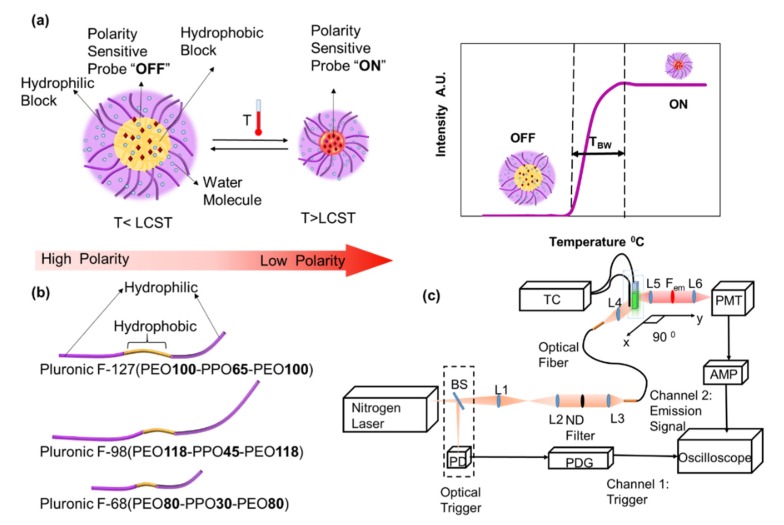
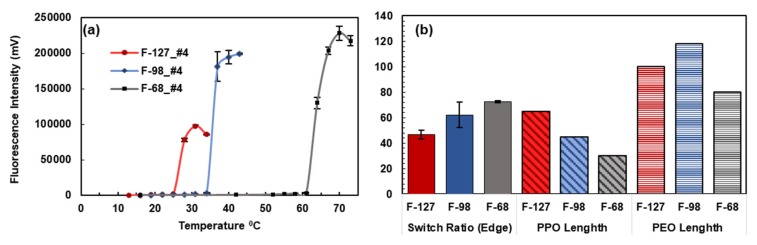
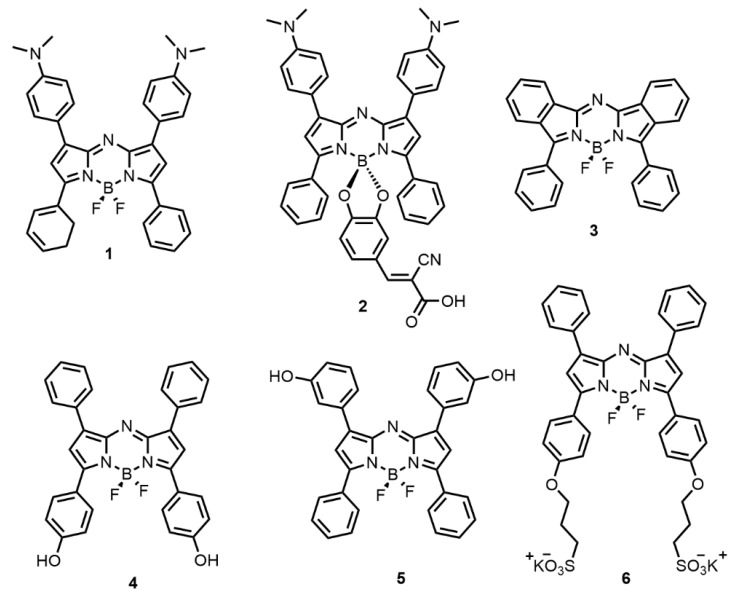
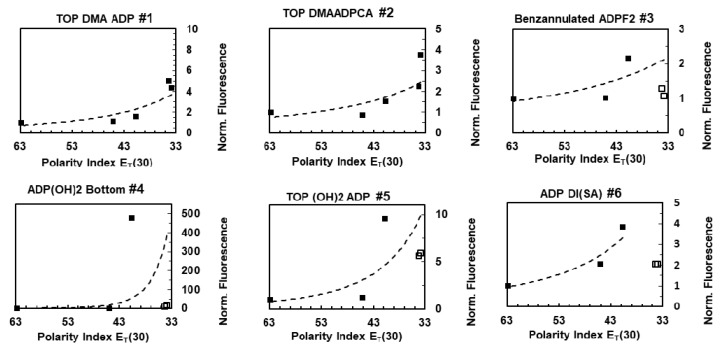
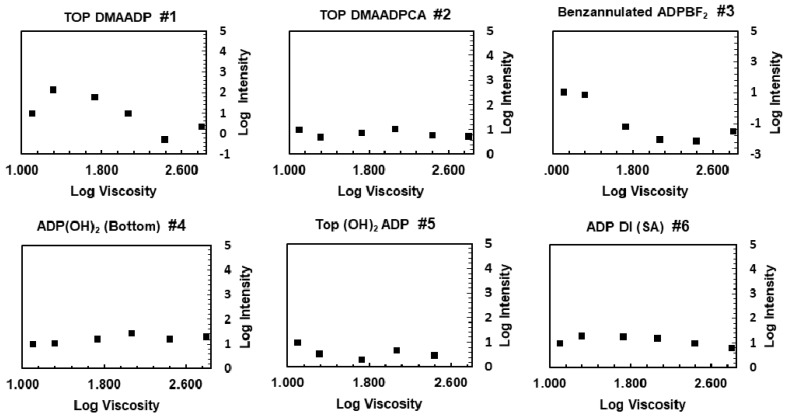
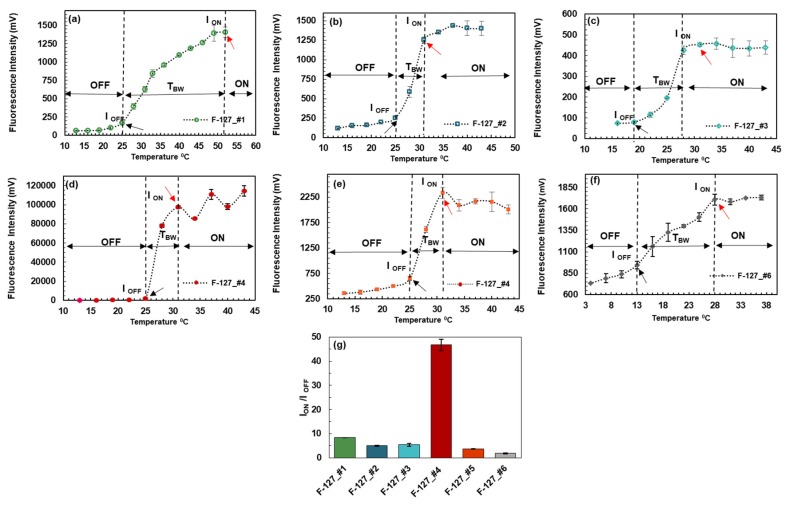
Because of their deep penetration capability in tissue, red or near infrared (NIR) fluorophores attract much attention in bio-optical imaging. Among these fluorophores, the ones that respond to the immediate microenvironment (i.e., temperature, polarity, pH, viscosity, hypoxia, etc.) are highly desirable. We studied the response of six NIR aza-BODIPY-based and structurally similar fluorophores to polarity and viscosity for incorporation inside Pluronic nanoparticles as switchable fluorescent probes (SFPs). Based on our results, all of these fluorophores were moderately to strongly sensitive to the polarity of the microenvironment. We concluded that attaching amine groups to the fluorophore is not necessary for having strong polarity sensitive probes. We further studied the response of the fluorophores when embedded inside Pluronic nanoparticles and found that four of them qualified as SFPs. We also found that the switching ratio of the fluorophore-encapsulated Pluronic nanoparticles (I-to-I) is related to the length of the hydrophobic chain of the Pluronic tri-block copolymers. As such, the highest switching ratio pertained to F-68 with the lowest hydrophobic block poly (propylene oxide) (PPO chain of only 30 units).
由于其在组织中的深度穿透能力,红色或近红外(NIR)荧光团在生物光学成像中备受关注。在这些荧光团中,能够对即时微环境(即温度、极性、pH值、粘度、缺氧等)做出响应的荧光团是非常理想的。我们研究了六种基于氮杂硼二吡咯且结构相似的近红外荧光团对极性和粘度的响应,以便将它们作为可切换荧光探针(SFP)掺入普朗尼克纳米颗粒中。根据我们的结果,所有这些荧光团对微环境的极性都有中度到强烈的敏感性。我们得出结论,对于具有强极性敏感探针而言,在荧光团上连接胺基并非必要。我们进一步研究了嵌入普朗尼克纳米颗粒中的荧光团的响应,发现其中四种符合可切换荧光探针的标准。我们还发现,荧光团封装的普朗尼克纳米颗粒的切换比率(I-to-I)与普朗尼克三嵌段共聚物的疏水链长度有关。因此,切换比率最高的是F-68,其具有最短的疏水嵌段聚环氧丙烷(PPO链仅30个单元)。