de Souza Neto Lauro Ribeiro, Moreira-Filho José Teófilo, Neves Bruno Junior, Maidana Rocío Lucía Beatriz Riveros, Guimarães Ana Carolina Ramos, Furnham Nicholas, Andrade Carolina Horta, Silva Floriano Paes
LaBECFar - Laboratório de Bioquímica Experimental e Computacional de Fármacos, Instituto Oswaldo Cruz, Fundação Oswaldo Cruz, Rio de Janeiro, Brazil.
LabMol - Laboratory for Molecular Modeling and Drug Design, Faculdade de Farmácia, Universidade Federal de Goiás, Goiânia, Brazil.
Front Chem. 2020 Feb 18;8:93. doi: 10.3389/fchem.2020.00093. eCollection 2020.
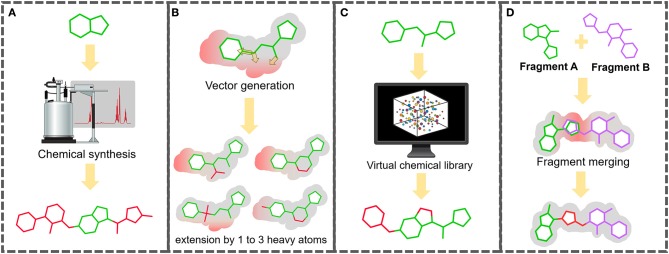
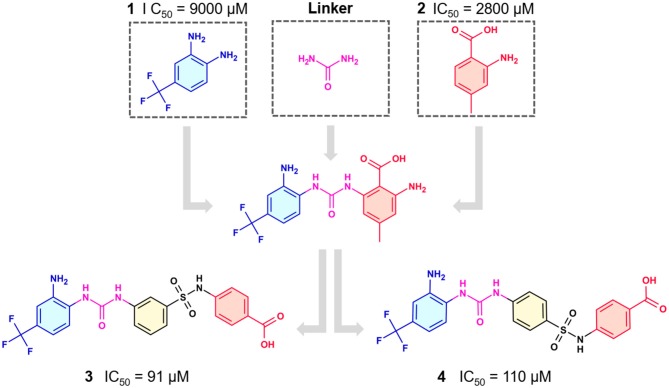
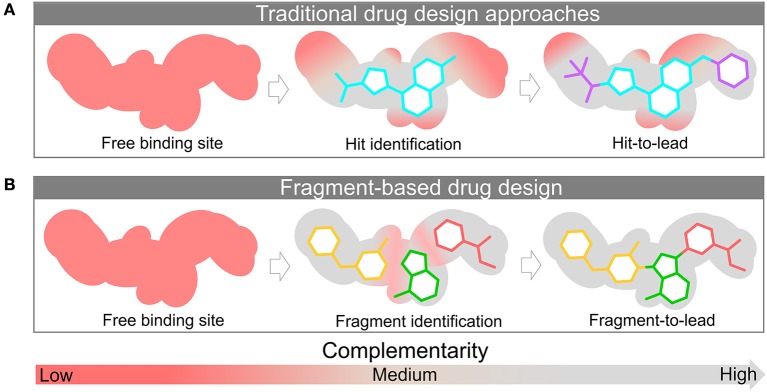
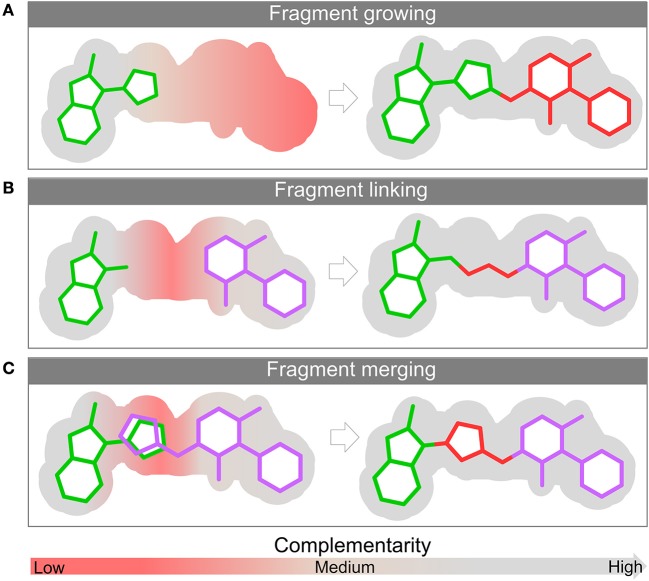
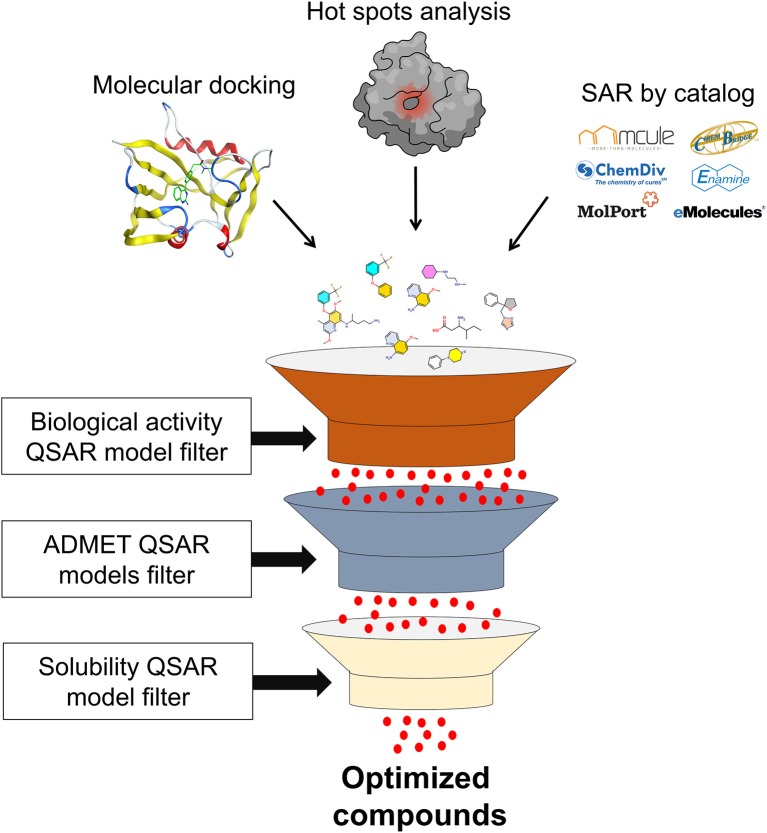
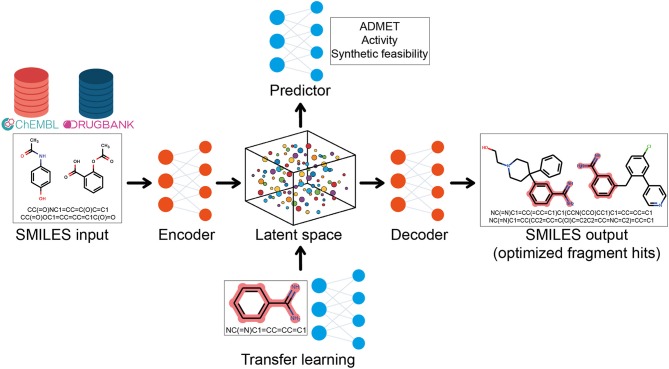
Fragment-based drug (or lead) discovery (FBDD or FBLD) has developed in the last two decades to become a successful key technology in the pharmaceutical industry for early stage drug discovery and development. The FBDD strategy consists of screening low molecular weight compounds against macromolecular targets (usually proteins) of clinical relevance. These small molecular fragments can bind at one or more sites on the target and act as starting points for the development of lead compounds. In developing the fragments attractive features that can translate into compounds with favorable physical, pharmacokinetics and toxicity (ADMET-absorption, distribution, metabolism, excretion, and toxicity) properties can be integrated. Structure-enabled fragment screening campaigns use a combination of screening by a range of biophysical techniques, such as differential scanning fluorimetry, surface plasmon resonance, and thermophoresis, followed by structural characterization of fragment binding using NMR or X-ray crystallography. Structural characterization is also used in subsequent analysis for growing fragments of selected screening hits. The latest iteration of the FBDD workflow employs a high-throughput methodology of massively parallel screening by X-ray crystallography of individually soaked fragments. In this review we will outline the FBDD strategies and explore a variety of approaches to support the follow-up fragment-to-lead optimization of either: growing, linking, and merging. These fragment expansion strategies include hot spot analysis, druggability prediction, SAR (structure-activity relationships) by catalog methods, application of machine learning/deep learning models for virtual screening and several design methods for proposing synthesizable new compounds. Finally, we will highlight recent case studies in fragment-based drug discovery where methods have successfully contributed to the development of lead compounds.
基于片段的药物(或先导物)发现(FBDD或FBLD)在过去二十年中得到了发展,已成为制药行业早期药物发现和开发的一项成功关键技术。FBDD策略包括针对具有临床相关性的大分子靶点(通常是蛋白质)筛选低分子量化合物。这些小分子片段可以结合在靶点上的一个或多个位点,并作为先导化合物开发的起点。在开发片段时,可以整合那些能够转化为具有良好物理、药代动力学和毒性(ADMET——吸收、分布、代谢、排泄和毒性)特性的化合物的吸引人的特征。基于结构的片段筛选活动使用一系列生物物理技术进行筛选,如差示扫描荧光法、表面等离子体共振和热泳,然后使用核磁共振或X射线晶体学对片段结合进行结构表征。结构表征也用于后续对选定筛选命中物的片段生长分析。FBDD工作流程的最新迭代采用了一种高通量方法,即通过对单个浸泡片段进行X射线晶体学的大规模平行筛选。在这篇综述中,我们将概述FBDD策略,并探索各种方法来支持后续的片段到先导物的优化,即:片段生长、连接和融合。这些片段扩展策略包括热点分析、成药性预测、通过目录方法进行的构效关系(SAR)研究、应用机器学习/深度学习模型进行虚拟筛选以及几种提出可合成新化合物的设计方法。最后,我们将重点介绍基于片段的药物发现中的近期案例研究,其中这些方法已成功地推动了先导化合物的开发。